
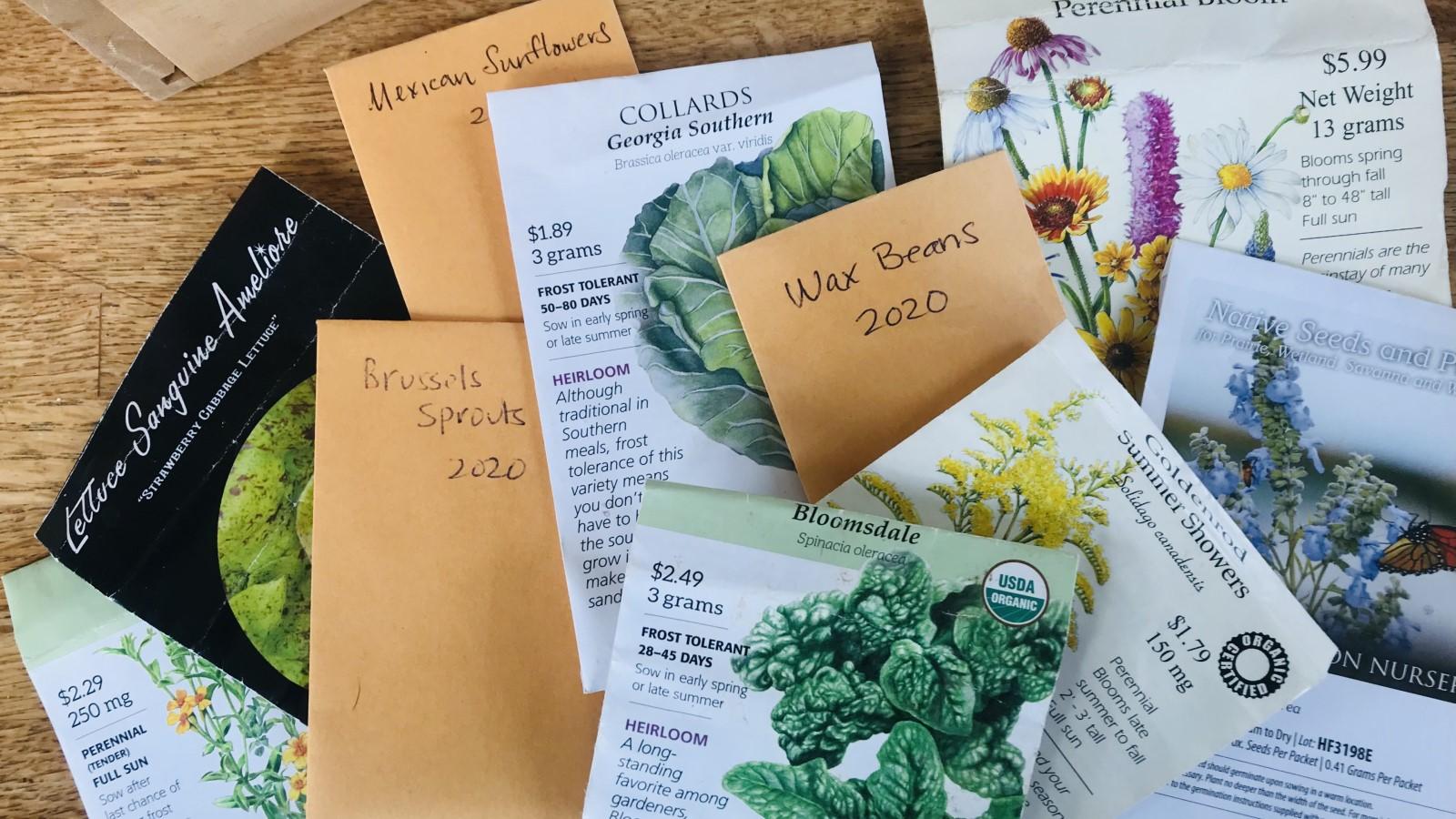
An assortment of vegetable and flower seed packets. Photo: Christa Carignan.
Calendar guides for planting vegetables in Maryland
-
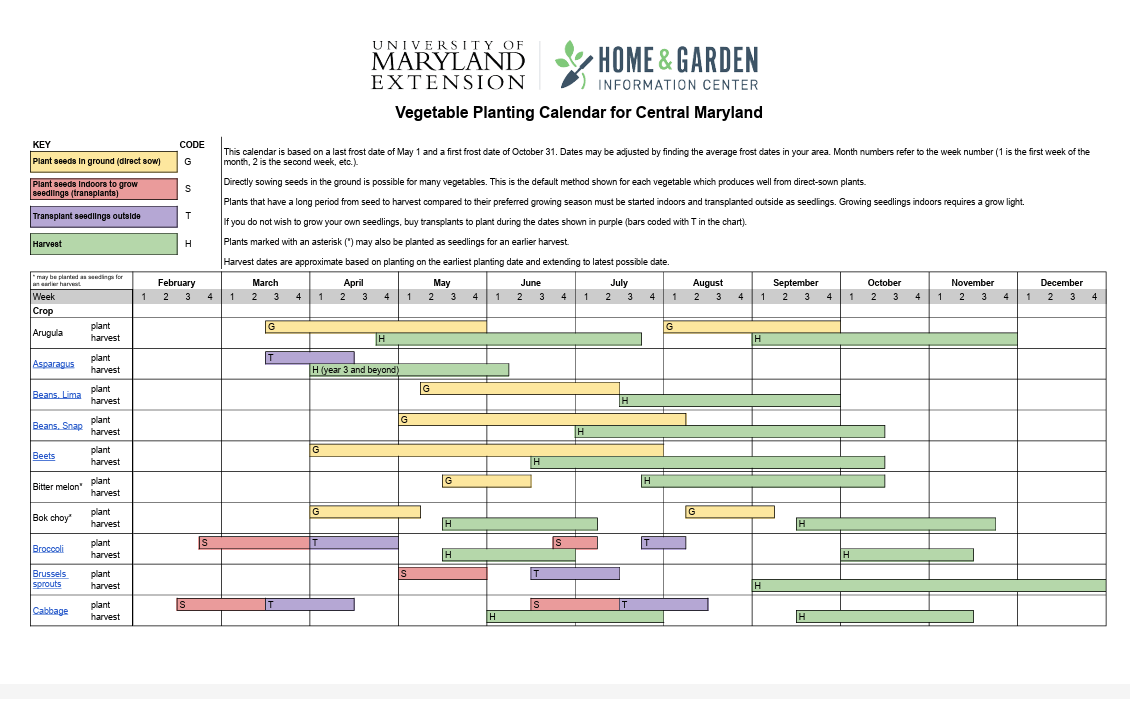
Vegetable Planting Calendar for Central Maryland (PDF)
Vegetable Planting Calendar for Central Maryland (PDF)Click the image to open the document.
This PDF is intended for printing. For an accessible version, see the following text-only table. -
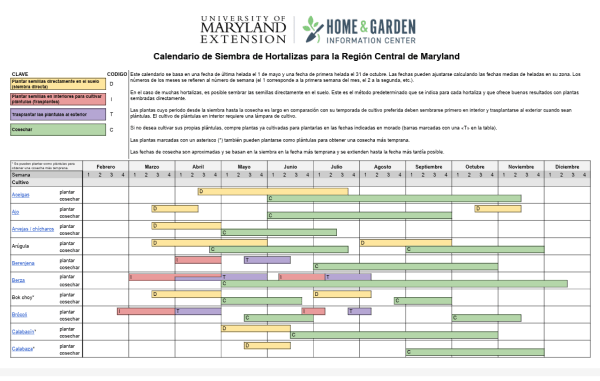
Calendario de Siembra de Hortalizas para la Región Central de Maryland (PDF)
Calendario de Siembra de Hortalizas para la Región Central de Maryland (PDF)Haga clic en la imagen para abrir el documento.
Este PDF está destinado a la impresión. Para una versión accesible, consulte la siguiente tabla de solo texto.
Calendar author: Chrissa Carlson, former UME SNAP-Ed Healthy School Communities Coordinator
Vegetable planting calendar - text version
- Directly sowing seeds in the ground is possible for many vegetables. This is the default method shown for each vegetable that produces well from direct-sown plants. Plants marked with an asterisk (*) may also be planted as seedlings for an earlier harvest. Plants without an asterisk do not transplant well and should only be direct-sown (planted outside and not germinated indoors first).
- Plants whose seed-to-harvest period is long compared to the length of their preferred growing season must be started indoors and transplanted outside as seedlings. Starting seedlings indoors requires the use of grow lights to provide enough light intensity and duration to produce good-quality transplants.
- If you do not wish to grow your own seedlings, buy transplants to plant during the transplant period shown in the planting time column in the table.
- Harvest dates are approximate, based on planting on the earliest planting date and extending to the latest possible date. Achieving a sustained harvest through this period may depend on planting several successions.
Vegetable planting calendar - text version
| Crop | Planting time(s) and method | Harvest period |
|---|---|---|
| Arugula | Spring: Mid-March through May, plant seeds directly in the ground Fall: August through September, plant seeds directly in the ground | Spring: Late April through the third week of July Fall: September through November |
| Asparagus | Mid-March through mid-April, plant seedlings or purchased bare-root crowns in the ground | April through the first week of June (once plants are in their third year of growth) |
| Beans, Lima | Mid-May through the mid-July, plant seeds directly in the ground | Mid-July through September |
| Beans, Snap | May through the first week of August, plant seeds directly in the ground | July through mid-October |
| Beets | April through July, plant seeds directly in the ground | Mid-June through mid-October |
| Bitter melon | Mid-May through mid-June, plant seeds directly in the ground | Late July through mid-October |
| Bok choy* | Spring: April through the first week of May, plant seeds directly in the ground Fall: The second week of August through the first week of September, plant seeds directly in the ground | Spring: Mid-May through the first week of July Fall: Mid-September through the third week of November |
| Broccoli | Spring: Late February through March, plant seeds indoors to grow transplants; in April, transplant seedlings into the ground Fall: Late June through early July, plant seeds indoors to grow transplants; late July through early August, transplant seedlings into the ground | Spring: Mid-May through June Fall: October through mid-November |
| Brussels Sprouts | In May, plant seeds indoors to grow transplants Mid-June through mid-July, transplant seedlings into the ground | September through December |
| Cabbage | Spring: Mid-February through mid-March, plant seeds indoors to grow transplants; mid-March through mid-April, transplant seedlings into the ground Fall: Mid-June through mid-July, plant seeds indoors to grow transplants; mid-July through mid-August, transplant seedlings into the ground | Spring: June through July Fall: Mid-September through mid-November |
| Cabbage, Chinese* | Spring: Mid-March through April, plant seeds directly in the ground Fall: July through the first week of August, plant seeds directly in the ground
| Spring: May through the third week of June Fall: Last week of August through September |
| Callaloo | Mid-April through mid-May, plant seeds directly in the ground | Mid-May through the third week of October |
| Cantaloupe/Muskmelon* | Mid-May through mid-June, plant seeds directly in the ground | July through September |
| Carrots | Mid-April through May, and again mid-June through July, plant seeds directly in the ground | Mid-June through October |
| Cauliflower | Spring: In March, plant seeds indoors to grow transplants; in April, transplant seedlings into the ground Fall: In June, plant seeds indoors to grow transplants; in July, transplant seedlings into the ground | Spring: Mid-May through June Fall: Mid-September through mid-November |
| Chard, Swiss* | Mid-April through the third week of July, plant seeds directly in the ground | June through mid-November |
| Collards | March through April, and again early June through early July, plant seeds indoors to grow seedlings April and May, and early July through early August, transplant seedlings into the ground | May through mid-December |
| Cucumber* | Mid-May through mid-July, plant seeds directly in the ground | Early June through October |
| Eggplant | In April, plant seeds indoors to grow transplants Mid-May through mid-June, transplant seedlings into the ground | July through October |
| Garlic | Mid-October through mid-November, or from mid-March through mid-April, plant individual garlic cloves in the ground | June through September |
| Ground cherries* | May through the first week of June, plant seed directly in the ground | July through the first week of October |
| Hibiscus* | May through the first week of June, plant seed directly in the ground | Second week of June through the first week of December |
| Jute leaves* | April through the first week of May, plant seed directly in the ground | The last week of May through the first week of October |
| Kale* | Spring: The first through third weeks of April, plant seeds directly in the ground Fall: Second week of July through mid-August, plant seeds directly in the ground | May through December |
| Kohlrabi* | Spring: April through mid-May, plant seeds directly in the ground Fall: Early July through mid-August, plant seeds directly in the ground | Spring: Second week of May through the third week of June Fall: Second week of August through the third week of September |
| Leek* | In April, plant seeds directly in the ground | Mid-July through August |
| Lettuce, head | Spring: In March, plant seeds indoors to grow transplants; in April, transplant seedlings into the ground Fall: During the first two weeks of July, plant seeds indoors to grow transplants; in the first three weeks of August, transplant seedlings into the ground | Spring: May through mid-June Fall: September |
| Lettuce, leaf* | Spring: Mid-March through May, plant seeds directly in the ground Fall: Mid-July through August, plant seeds directly in the ground | Spring: Late April through mid-July Fall: September through October |
| Lettuce, Romaine* | Spring: April through mid-May, plant seeds directly in the ground Fall: mid-July through August, plant seeds directly in the ground | Spring: mid-May through mid-July Fall: September through October |
| Mustards* | Spring: April through mid-May, plant seeds directly in the ground Fall: Mid-July through mid-August, plant seeds directly in the ground | Spring: Mid-May through June Fall: September through October |
| Okra* | The second week through the last week of May, plant seeds directly in the ground | Mid-July through September |
| Onions | In February, plant seeds indoors to grow seedlings In April, transplant seedlings into the ground | Late July through September |
| Parsley | In April, plant seeds directly in the ground | Mid-June through November |
| Parsnips | In April, plant seeds directly in the ground | Late July through September |
| Peas | Mid-March through April, plant seeds directly in the ground | May through mid-July |
| Peas, Southern | Mid- to late May, plants seeds directly in the ground | July through August |
| Peppers, all varieties | Mid-March through mid-April, plant seeds indoors to grow seedlings Mid-May through mid-June, transplant seedlings into the ground | Mid-July through September |
| Potatoes | Mid-March through mid-May, plant seed pieces or whole seed potatoes directly in the ground | June through September |
| Pumpkins* | Mid-May through mid-June, plant seeds directly in the ground | September through November |
| Radishes | Spring: Mid-March through early May, plant seeds directly in the ground Fall: Mid-July through mid-September, plant seeds directly in the ground | Spring: Mid-April through mid-June Fall: Mid-August through October |
| Rutabagas | In July, plant seeds directly in the ground | October through mid-November |
| Salsify | April through mid-May or into June, plant seeds directly in the ground | August through mid-October |
| Shallots* | Spring: Late March through April, plant seeds directly in the ground Fall: Late September through mid-October, plant seeds directly in the ground | Second week of June through August |
| Soybeans | Mid-May through June, plant seeds directly in the ground | September through October |
| Spinach | Spring: Second week of March through the third week of April, plant seeds directly in the ground Fall: August through early September, plant seeds directly in the ground | Spring: mid-April through mid-June Fall: mid-September through mid-December |
| Squash, summer* | May through mid-June, plant seeds directly in the ground | Mid-June through October |
| Squash, winter* | Mid-May through mid-June, plant seeds directly in the ground | Mid-August through November |
| Sweet Corn | May through early July, plant seeds directly in the ground | Mid-June through September |
| Sweet Potatoes | Mid-April through mid-May, sprout slips indoors to grow transplants Mid-May through mid-June, transplant rooted cuttings into the ground | Mid-September through October for roots, July through August for young leaves |
| Tomatillos | Late March through mid-April, plant seeds indoors to grow seedlings May through mid-June, transplant seedlings into the ground | Mid-July through October |
| Tomatoes | Mid-March through the third week of May, plant seeds indoors to grow seedlings May through early July, transplant seedlings into the ground | July through October |
| Turnips | Spring: mid-March through April, plant seeds directly in the ground Fall: The second week of July through August, plant seeds directly in the ground | Spring: May through June Fall: September through November |
| Waterleaf* | May through early June, plant seeds directly in the ground | June through the first week of October |
| Watermelon* | Mid-May through mid-June, plant seeds directly in the ground | July through September |
Adjust planting dates for your location
The growing season is the amount of frost-free time between the last frost of spring and the first frost of autumn. The vegetable planting calendar was created for central Maryland, based on a last frost date of April 15 and a first frost date of October 25. With careful planning, a wide range of warm and cool-season crops can be grown in Maryland.
- The number of frost-free growing days in Maryland ranges from 155 in the far western counties to 230 on the Lower Eastern Shore, and is lengthening overall due to climate change.
- Depending on your location, you can shift planting a week or two earlier (Southern Maryland, the Eastern Shore, and Baltimore) or later (Western and Northern Maryland).
- You can find average first and last frost dates (based on zip code) from resources like the National Gardening Association. Find more detailed, county-level predictions with Purdue's Freeze Date Tool. This site provides the likelihood of occurrence of a last and first frost for various dates.
- The likelihood of frost will vary across landscapes within the same town or even neighborhood, due to factors such as wind, elevation, and proximity to buildings and bodies of water.
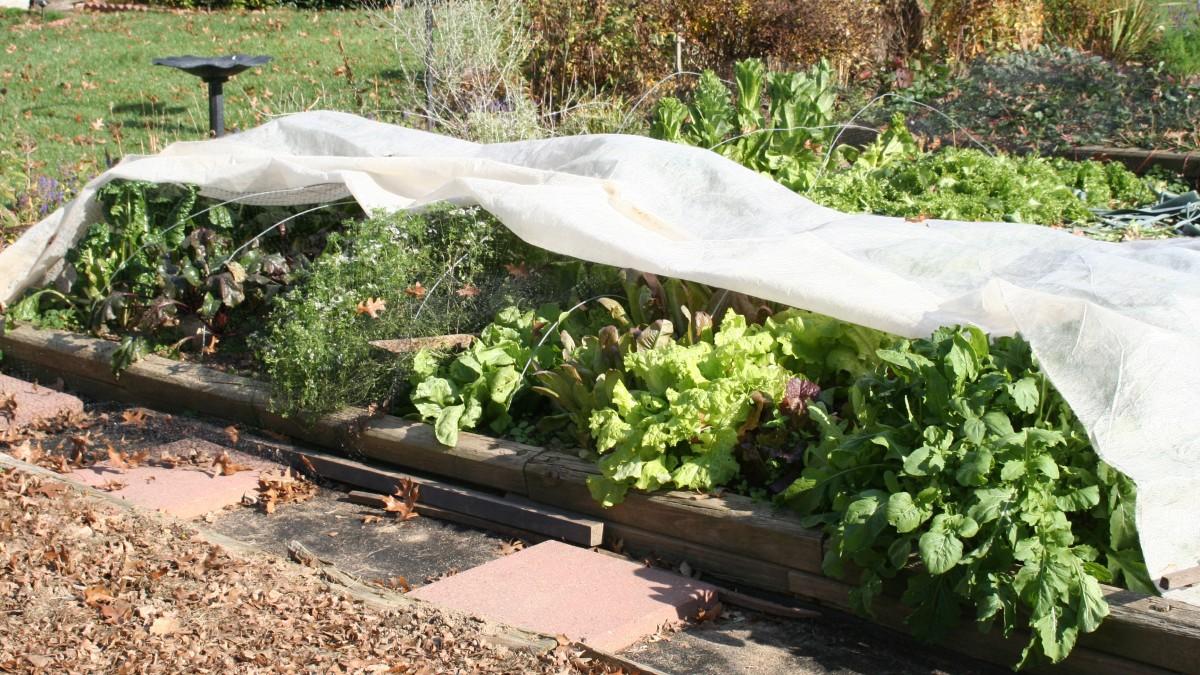
Photo: Jon Traunfeld
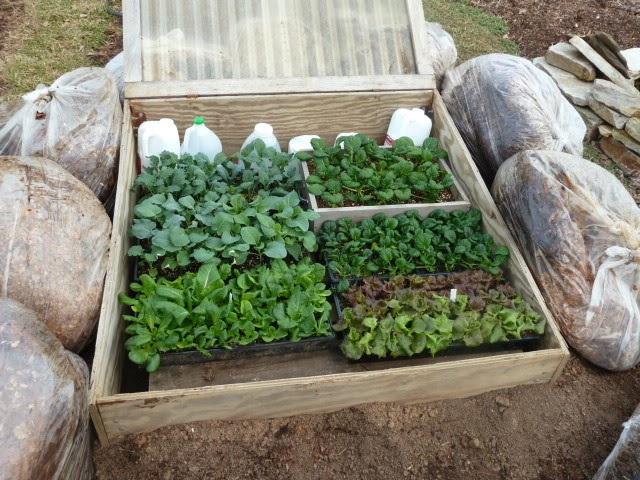
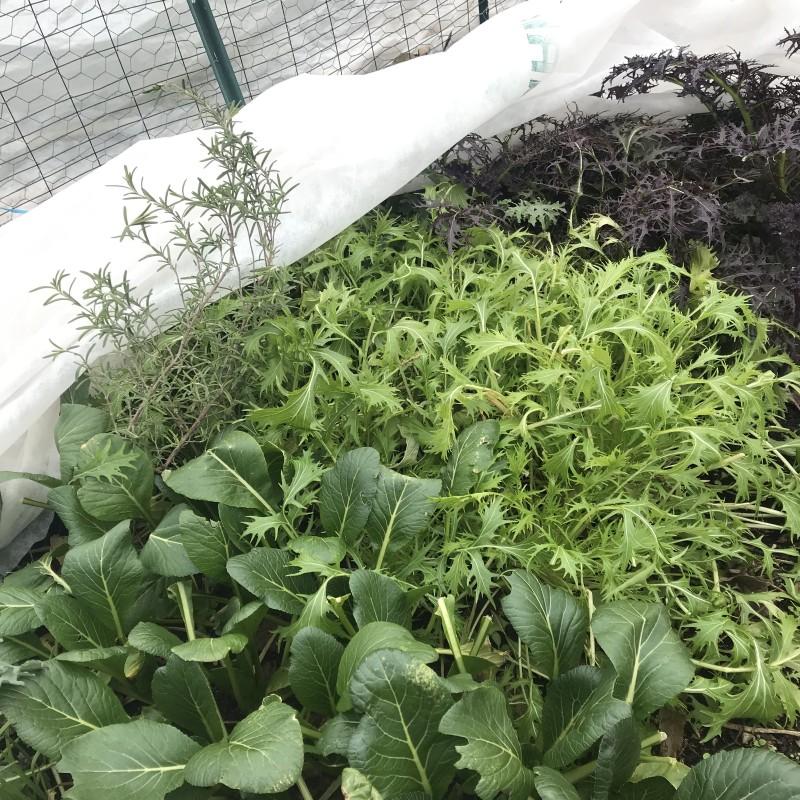
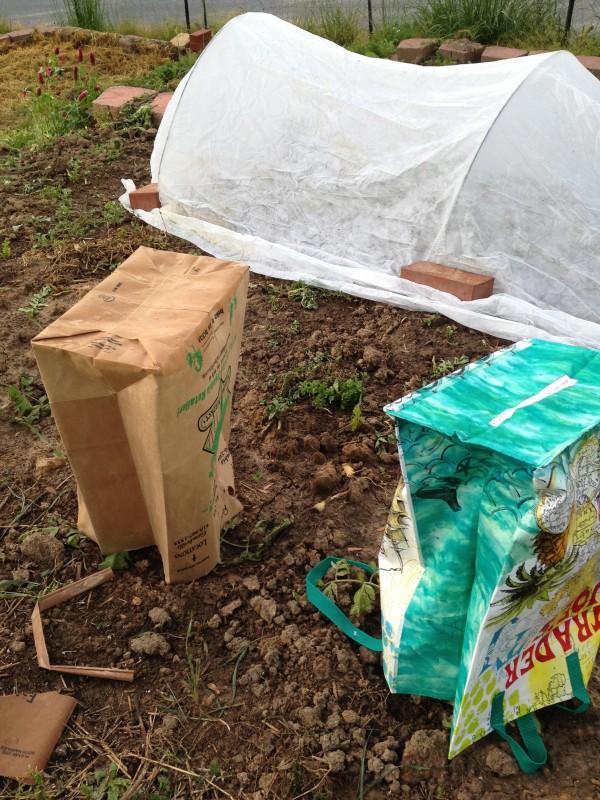
In spring, avoid the temptation to plant warm-season crops like tomatoes, basil, and peppers in the ground too early; their roots will not grow well in cold soil. After planting, closely monitor weather forecasts and be prepared to protect tender plants from frost using floating row covers, lightweight blankets, tarps, baskets, or paper bags.
In autumn, tender crops like basil, tomato, cucumber, and pepper are damaged or killed by freezing temperatures. Plan to gather your final harvest before the first significant frost (often called a “hard frost” or “killing frost”). Pumpkins, winter squash, potatoes, and sweet potatoes can also be injured by a hard frost. Cold temperatures will improve the flavor and texture of kale, collards, cabbage, and turnip greens.
Monitor soil temperature
Soil temperature is useful to know when direct-seeding beans, cucumbers, melons, and other crops that require soil temperatures of at least 60°F to germinate. Cool, wet soils slow germination and make seeds more susceptible to rot.
You can buy a soil thermometer or use online tools like an interactive Soil Temperature Map (searchable by zip code) and Maryland Mesonet to track the approximate soil temperature in your area.
Harvest dates
Harvest dates are determined by the average number of days from seed sowing to maturity. Different plant varieties, cultivation practices (such as planting early under the protection of a row cover), and growing conditions (full sun versus partial shade) can affect harvest time.
Some plants are harvested over a long period, such as kale, collards, Swiss chard, tomatoes, and peppers. Harvesting slows or stops after 3 to 4 weeks for other crops, such as bush beans, cucumbers, and squash. Some crops are harvested only once in their life cycle, such as head-type lettuces, radishes, carrots, and other root vegetables. Pest and disease injury may shorten harvesting periods.
Warm-season and cool-season crops
Most vegetable crops are annual plants: they complete their life cycle in one growing season. Annual vegetable life cycles range from 25 days (radish, baby greens) to 110 days (large-fruited pumpkin). Some crops treated as annuals are actually tender perennials (not frost-hardy) in the regions where they originated (tomato and pepper). Others are biennials, which complete their life cycle in two growing seasons with flowering and seed production happening just before the plant dies. These biennials are grown as annuals because gardeners are most interested in the vegetative parts (roots, leaves) or immature parts (such as young flower buds) rather than seeds. Carrots, beets, and broccoli are examples of biennial crops that are treated like annuals.
Annual crops can be further divided by the particular part of the growing season in which they are grown and harvested:
- Cool-season crops are planted in spring and harvested in spring and early summer, then planted again in midsummer and early fall for fall harvesting.
- Planting and harvesting times vary considerably between crops, in part due to different degrees of frost tolerance and how quickly crops mature.
- Cool-season crops include beets, broccoli, cabbage, carrot, green peas, many leafy greens, leeks, lettuce, radish, and spinach.
- Warm-season crops are planted in late spring and summer and grow best in warm weather.
- Warm-season crops include amaranth, beans, cucumbers, eggplants, okra, peppers, potatoes, summer squash, Southern peas, sweet corn, sweet potatoes, Swiss chard, tomatoes, watermelons, winter squash, and pumpkins.
- Garlic and onion foliage grows best during spring and fall, with the bulbs enlarging during warmer weather.
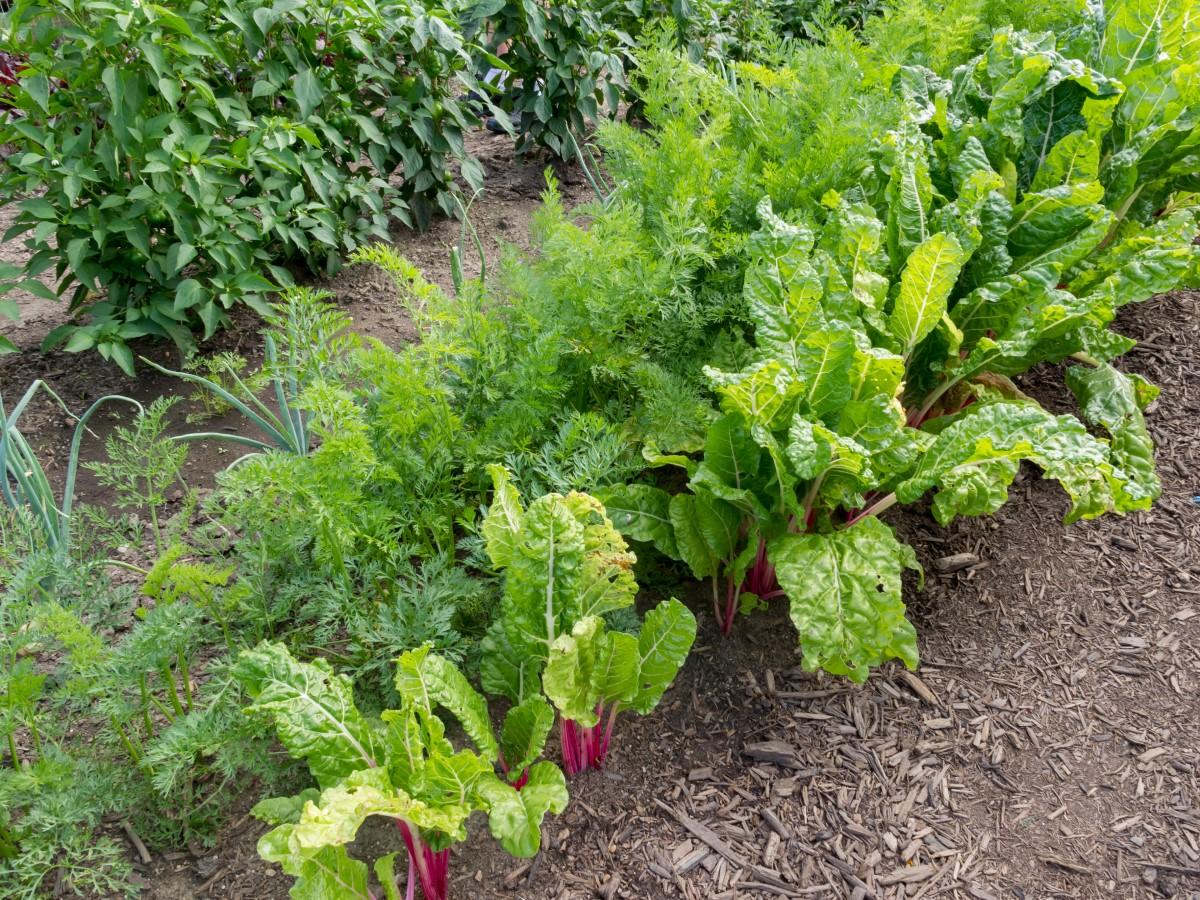
Photo: Miri Talabac, University of Maryland Extension
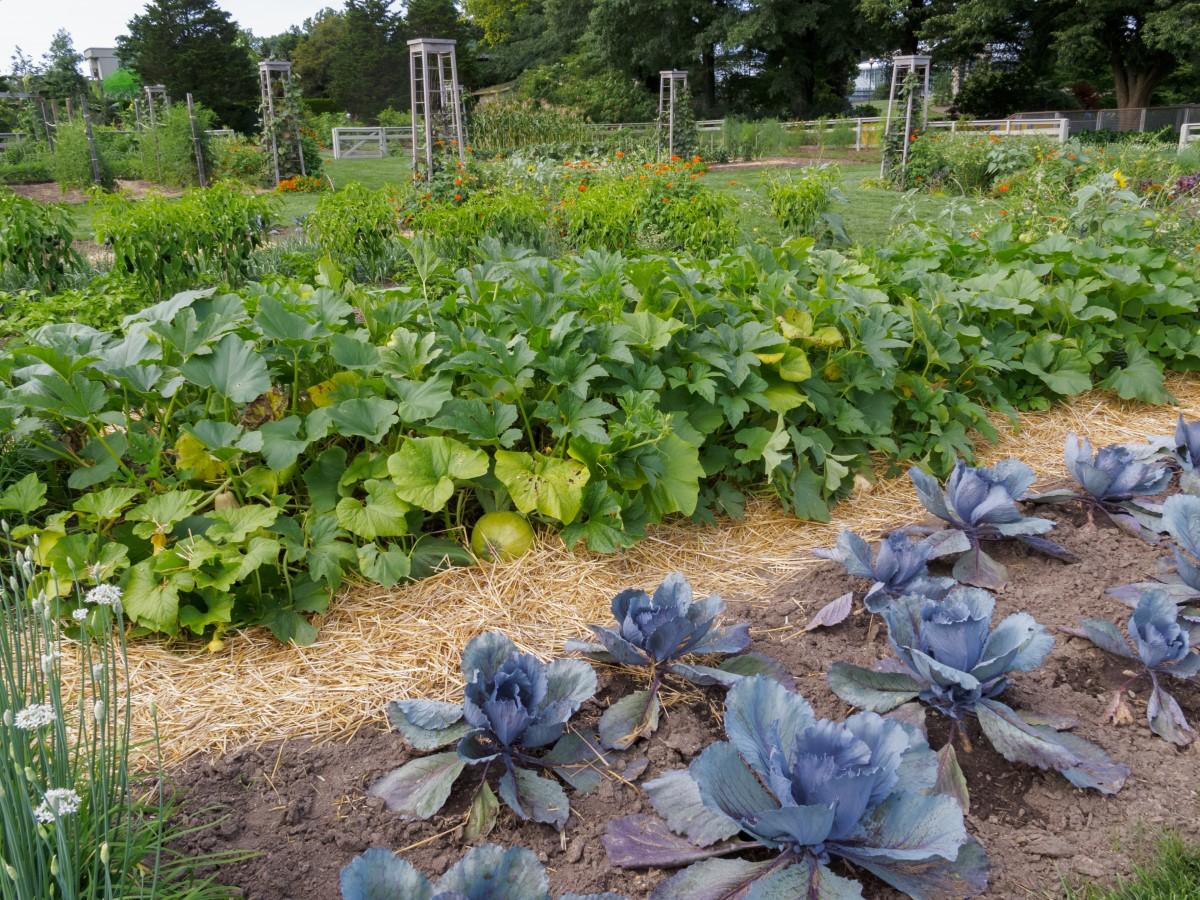
Photo: Miri Talabac, University of Maryland Extension
Perennial vegetable crops include sorrel, horseradish, asparagus, multiplier onions, rhubarb, and globe artichokes. They are propagated by seeds and/or root and crown pieces.
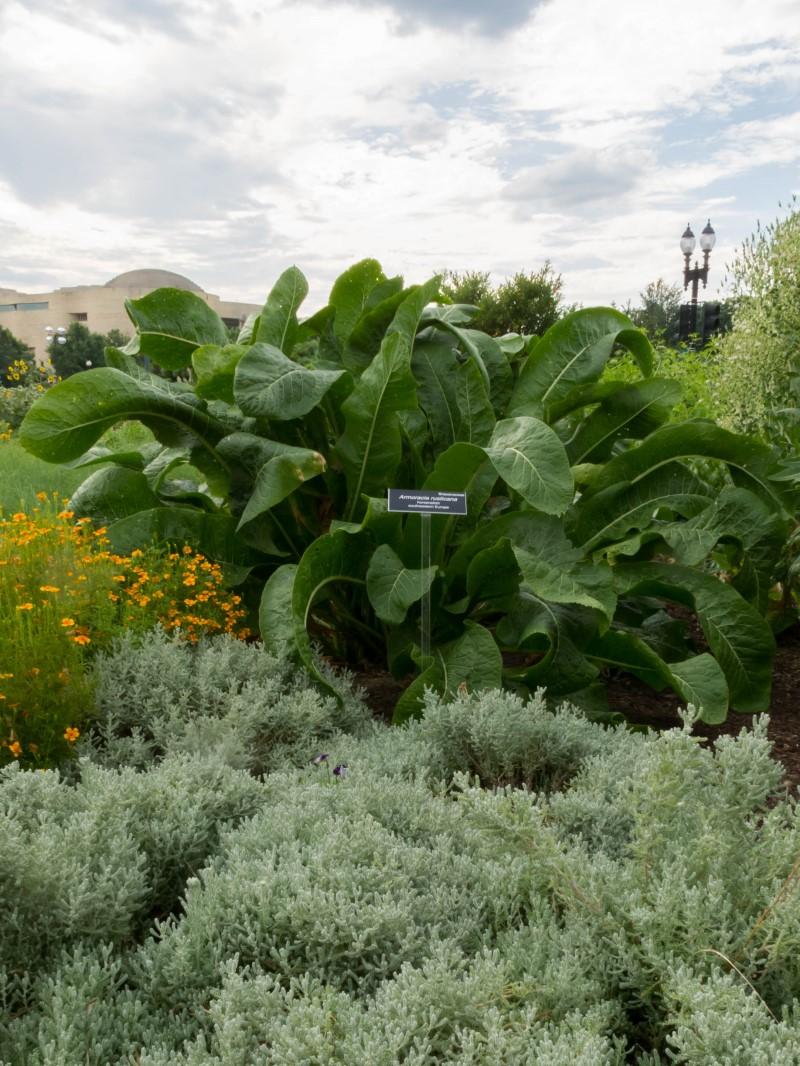
Photo: Miri Talabac, University of Maryland Extension
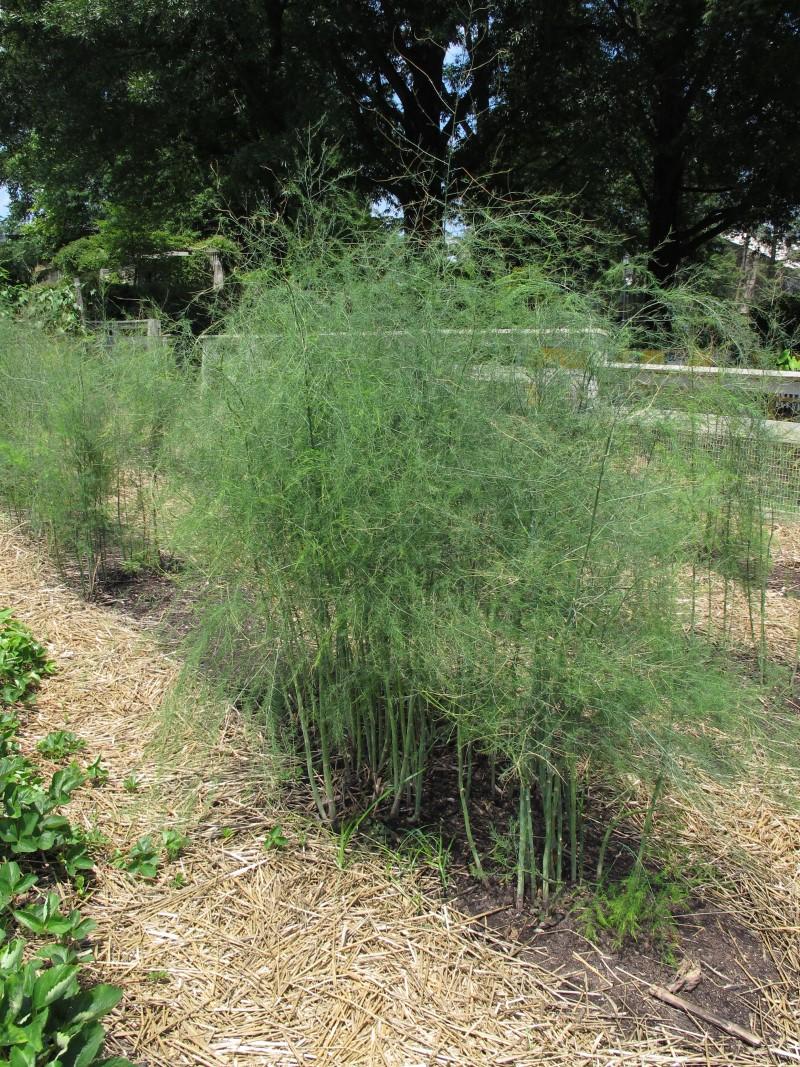
Photo: Miri Talabac, University of Maryland Extension
Seed packets and seed viability
Seeds are amazing living packages that connect the growing seasons, conveying genetic information from one season to the next. All vegetable crops grown as annuals in Maryland, along with a few perennial crops, are started from seed. Asparagus, potatoes, sweet potatoes, garlic, rhubarb, and horseradish are propagated most often from plant parts other than seeds.
Federal and state laws and regulations ensure that all commercially available vegetable seeds are properly labeled, do not include noxious weed seeds, and meet or exceed minimum germination standards. All seed sold in Maryland (or through online seed companies), regardless of price, must meet these standards. Gardeners can also save seeds from open-pollinated cultivars, trade seeds with friends and neighbors, and participate in local seed swaps.
You can buy seeds in local stores or through mail-order companies online. Ask your friends and neighbors which crops and varieties they are growing!
Frequently-encountered seed terms
- Cultivar: Shorthand for “cultivated variety” and often used interchangeably with “variety,” a cultivar is a human-selected variant of a specific species/crop. The variant could have arisen as a natural mutation or been deliberately bred to have certain traits, like a different leaf color, fruit color, or mature plant size. Cultivar names are written in single quotes; for example, ‘Red Ace’ is a beet cultivar.
- Open-pollinated: An inbred variety where individual plants in a group planting of the same variety cross-pollinate each other and produce nearly-identical offspring. When open-pollinated varieties are grown using appropriate precautions against cross-pollination, their seeds are true-to-type (identical to last year’s plants) when collected and saved from year to year.
- Hybrid: The controlled cross-breeding of two distinct, inbred, open-pollinated cultivars. The seed of the intentional cross will produce an F1 (first filial) hybrid. Hybrids tend to be vigorous, uniform, and productive, and many have some disease resistance. Seeds saved from hybrid cultivars and planted the next season will not be true-to-type.
- Heirloom: Open-pollinated cultivars with a long history of cultivation because their seed is saved and passed down from one generation of gardeners to the next. They contain valuable germplasm (genetic information) that would be lost without the efforts of individual gardeners, farmers, small seed companies, seed-saving groups, and the USDA. The lineages of heirloom varieties are preserved for a range of reasons, such as a cultivar’s good flavor or yield potential, its cultural significance and family or community history, and its adaptability to local growing conditions.
- Treated seed: Seed coated with a synthetic fungicide to prevent damage from soil-dwelling infectious diseases after the seeds are planted. The most commonly treated crops are corn, peas, and beans. Another treatment is to immerse seeds in hot water to kill pathogens on the surface of and inside seeds.
- Organic seed: Harvested from crops that are grown and certified according to the USDA National Organic Program (NOP) guidelines. To be certified “organic,” seed must be produced and handled by certified organic producers.
- Disease-resistant: The ability to resist infection or impede a disease-causing pathogen. When a variety is noted to be disease-resistant, the level of resistance may be high or intermediate. Resistance can also apply to insect injury. For example, sweet corn cultivars with long, tight ear leaves resist corn earworm feeding. The best source of information on disease-resistant vegetable cultivars is the Cornell University College of Agriculture and Life Sciences: Cornell Vegetables.
- Disease-tolerant: The ability of a cultivar to tolerate a disease infection or adverse environmental condition (like drought or cold temperatures) without a significant reduction in growth or yield.
- Indeterminate/determinate: The shoots of indeterminate tomato cultivars grow and branch throughout the season until frost. The shoots of determinate cultivars reach a certain length and terminate in a flower cluster. Determinate tomato cultivars range in height from less than one foot to five feet tall and are sometimes referred to as “self-topping.”
- Days to maturity or days to harvest: The approximate number of days to harvest from planting seeds or transplants. For tomatoes, peppers, eggplants, muskmelons, watermelons, broccoli, cabbage, cauliflower, and Brussels sprouts, the number usually indicates the number of days from transplanting. For all other annual crops, the number refers to the number of days from direct seeding (planting seeds outdoors).
- Parthenocarpic: This term essentially translates into “unfertilized fruit/seed.” Flowers are able to develop into seedless fruits without pollination and the fertilization of ovules by sperm cells. Parthenocarpic varieties are sometimes referred to as “self-pollinating.” Growing a seeded cultivar nearby will lead to seeds forming in the parthenocarpic cultivar because pollen from the other variety will fertilize it.
- Gynoecious: The flowers are predominantly female, leading to more fruits per plant for crops that produce both male and female flowers on the same individual plant. Unlike parthenocarpic cultivars, gynoecious cultivars require pollination. Some companies include a second cultivar to plant for this purpose which has both male and female flowers (termed monecious). Otherwise, you’ll need to buy and plant a second variety.
- Pelleted: Small seeds (carrot, lettuce, onion) contained inside individual clay pellets, making handling, spacing, and planting easier.
- Primed: Pelleted seeds may also be “primed” to reduce germination time. Seeds receive enough water to almost germinate, and are then dried and stored. These primed seeds break dormancy and germinate quickly when planted. However, the priming process shortens the seed’s storage life.
- Bolting: The plant flowers prematurely (earlier in its lifespan than normal) and declines as seeds form and grow. Bolting is often caused by high or low temperatures, drought, or poor-quality transplants. Spinach, lettuce, cilantro, broccoli, and endive are prone to bolting.
Related information
Additional Resources
Maryland Grows Blog topics
Long-Term Vegetable Seed Storage | Carolina Farm Stewardship Association
How to Store Leftover Garden Seeds | South Dakota State University Extension
Author: Jon Traunfeld, Extension Specialist (retired), Home/Community Food Gardening, May 2026.
Copy editing by Nancy Klein, Maryland Master Gardener, July 2026.
Still have a question? Contact us at Ask Extension.
Para saber más sobre temas relacionados, puede también visitar este Blog de Extensión en Español.