

False blue indigo (Baptisia australis) with a bumble bee visitor. Photo: David Clement, University of Maryland Extension
Sustainable gardening
- Try growing some of your own food this summer. Enjoy delicious produce, save money, and reduce climate-warming gas emissions associated with long-distance transportation and packaging of store-bought foods. Planting vegetables in containers is one way to get started.
- Learn how to manage pests without the use of pesticides. Use row covers over vegetable crops to exclude pests. Grow a variety of flowering plants to attract beneficial insects like ladybugs, lacewings, and flower flies that provide natural pest control by eating pest insects.
- Avoid purchasing invasive plants such as Japanese barberry, privet, and Norway maple. They have negative impacts on wildlife and natural areas.
Trees & shrubs
- If azaleas, rhododendrons, and other spring-flowering shrubs are growing too large, prune them after they are finished blooming.
- Thin-out crowded boxwood branches to improve air circulation and reduce disease problems such as volutella blight. Monitor boxwoods for symptoms of boxwood blight and box tree moth so you can intervene before damage becomes extensive.
- The older leaves of evergreen hollies and magnolias may begin to yellow and drop. This is a natural process of regeneration and does not indicate a problem with the trees.
Edible plants
- Begin setting-out transplants of warm-season crops like squash, pepper, eggplant, and tomato. There is still a small possibility of late frosts: be prepared to protect plants with row cover, a tarp, paper bags, or a light blanket if overnight frost is expected. Remove the cover after the danger of frost has passed.
- Pinch off the flower buds or any open blooms from vegetable and annual flower transplants before you plant them outside. This will help direct energy to root development and will result in more productive plants. Gently break up the roots of root-bound transplants before planting.
- Did your garden get overtaken by weeds last year? Start spreading mulch around individual vegetable plants and between rows. Use dried grass clippings (from a lawn not treated with herbicide), fallen leaves collected last autumn, sections of newspaper covered with straw, or biodegradable landscape paper. Arborist wood chips are excellent for paths between and around beds and rows.
- Cover strawberry plants with insect mesh netting, tulle (found in fabric stores), or a row cover before the berries ripen in order to exclude birds, squirrels, and other hungry wildlife.
- Flea beetles are emerging as adults from their overwintering sites. Remove nearby weeds, rotate crop planting sites to minimize pest population buildup, and place row cover over susceptible seedlings (like eggplant and tomato) to exclude this common pest.
- Cucumber beetles are emerging from their overwintering sites. Place row cover over the seedlings and transplants of squash, melon, and cucumber until they bloom, when the cover needs to be lifted for pollinator access. To avoid peak cucumber beetle abundance, consider waiting to plant cucurbits (like squash and cucumbers) until mid-June.
Flowers
- Summer bulbs like gladiolus, tuberous begonia, canna, caladium, and dahlia can be planted now.
- Attract pollinators and natural enemies (beneficial species that combat pests) to your landscape by planting a wide variety of flowering annuals and perennials, including native plants that will bloom over the entire growing season.
Lawns
Leave grass clippings on the lawn: "grasscycling" by using a mulching mower to finely-cut clippings that are not bagged and removed saves time and labor, adds organic matter and nutrients to the soil, and does not contribute to thatch buildup.
Insects
Beneficial insects
- Lacewing larvae are emerging. The small alligator-shaped larvae are predators that feed on a wide range of garden pests. Learn what the larvae, eggs, and pupae look like so you can leave them in your landscape and know they will be providing sustainable insect pest control. Reduce or eliminate pesticide use to support these beneficial insects. Ensure your landscape has a diversity of floral resources to support adult lacewing nutrition.
- Bumble bee queens are emerging from their overwintering sites and seeking nectar resources and a nesting location. Ensure your landscape has floral resources available to support bumble bee nutrition and their valuable pollination services. If you find a bumble bee nest, leave the nest alone, create a barrier around the nest to keep people and pets a safe distance away, or contact a professional to relocate the nest if it is in an undesirable location. Help us learn more about bumble bees by submitting photos to the community science project Bumble Bee Watch.
- Mining bee adults are becoming active. This group of bees are important solitary pollinators that nest underground. When possible, leave the underground nests alone and consider adding educational signage indicating your conservation areas. Nesting can be deterred by increasing lawn density as these bees prefer sandy, well-drained areas with limited vegetation. Help us learn more about ground nesting bees by submitting photos to the community science project, Project GNBee.
- Carpenter bee adults are active. They are important pollinators of vegetable plants and a variety of ornamental and native plants. Consider adding carpenter bee nesting sites by providing unwanted pieces of soft wood (like cedar or redwood) in the yard, or by adding plants with hollow reeds or stems (such as stiff goldenrod, Solidago rigida, or raspberry/blackberry, Rubus species). To deter carpenter bees from tunneling in wooden human-made structures, avoid building them out of soft wood (cedar, redwood, and clear pines), paint and seal exposed wood, and caulk/seal any holes or cracks.
Pests
- Boxwood psyllid nymphs (juveniles) are emerging amongst boxwood leaves and producing a visible white waxy substance. Infested branches can be left alone, pruned out before mid-May, or sprayed with horticultural oil or insecticidal soap in early May.
- Lace bugs are emerging and may be seen on rhododendrons, azaleas, and herbaceous plants such as asters and goldenrods. Monitor for their piercing-sucking feeding damage (small light-colored stippling visible on the upper side of leaves) and for small, dark, tarlike frass (poop) spotting and shed exoskeletons on the underside of leaves. Outbreaks can be discouraged using a strong spray of water to knock most of the lace bugs off of the plant. Naturally-occurring predators and parasitoids will also reduce their numbers. Heavy infestations can be managed with insecticidal soap or horticultural oil applications to the underside of leaves, where the insects are typically found.
- White prunicola scale crawlers (newly-hatched juveniles) are emerging and commonly found on cherry laurel (Prunus laurocerasus), other Prunus, and a few other shrub or tree species. Monitor for crawler emergence by wrapping a piece of double-sided tape around scale-infested branches. When crawlers are seen stuck to the tape, that is the ideal time to apply horticultural oil to smother that vulnerable life stage. Heavily-infested plants may need to be removed and replaced with less-susceptible species.
- Spotted lanternfly (SLF) eggs will start hatching into nymphs (juveniles). Report any SLF egg hatch / early nymph sightings to the Maryland Department of Agriculture. If SLF eggs or nymphs are found in high numbers, the recommended control approach is to destroy the SLF physically. SLF does not harm landscape or garden plants enough to justify the risks of using pesticides that could harm beneficial insects and other wildlife.
- Ticks are active when the temperature is above freezing. Wear light-colored clothing and get in the habit of thoroughly checking people and pets for ticks after spending time outdoors. Repellents are also an effective tool to keep ticks away.
- Four-lined plant bugs feed on a wide range of herbaceous plants in May and June, leaving small, dark, somewhat-rectangular spots on the foliage. The spots eventually turn brown and may crumble out of the leaf as the tissue dries out, creating small holes. These insects are difficult to manage with insecticides, but there is only one generation per year and most plants grow out of the damage on their own by midsummer.
- Cutworms will begin feeding on the stems, foliage, and roots of fruit plants, vegetables, and turfgrass. (Cutworms have a very wide host plant range). Use row cover over susceptible seedlings to exclude larvae, and consider placing a "collar" (a cylinder 3 inches tall and pushed into the soil) of newspaper, cardboard, or aluminum foil around a plant's main stem to prevent this caterpillar from chewing through the stem as it feeds. Monitor for damage, maintain vigorous, dense lawns (or consider reducing your lawn), reduce pesticide use to encourage natural predators and parasitoids to keep pest populations low, and physically remove and destroy any cutworm larvae found.
- Jumping worms are hatching from their overwintering eggs in the soil. As the season progresses, monitor for these invasive worms and their granular castings that resemble coffee grounds. Discourage jumping worm spread by inspecting any plant material you bring into your yard or garden, and opting for bare-root plants from plant swaps or shares. If you already have jumping worms in the soil, avoid sharing or moving plants or plant-based materials (like compost and fallen leaves). Hand-pick and destroy any identified jumping worms. There are currently no chemical control methods for invasive jumping worms.
Diseases
- Small reddish spots may appear on dogwood petals (called bracts) or foliage due to a fungal infection by Elsinoë corni. Spotting can be an eyesore — and may be more severe in years with wet spring weather — but is generally not a threat to long-term tree health.
- Rose rosette disease is a common and incurable viral infection in roses that is transmitted and spread by nearly-microscopic eriophyid mites. The disease can kill roses, including varieties resistant to other infections (such as the Knock Out series cultivars). Replace infected roses with other shrubs, or replant and try to create a wind-blocking barrier of companion plants that intercept the mites as they blow from infected roses (often the invasive species growing in natural areas) to healthy roses.
Indoor plant and insect tips
Indoor plants
Move houseplants outdoors after the danger of frost has passed. To avoid sunscald, first place them in a shady location, and over a period of two weeks or so, gradually introduce them to more direct sunlight.
Pests
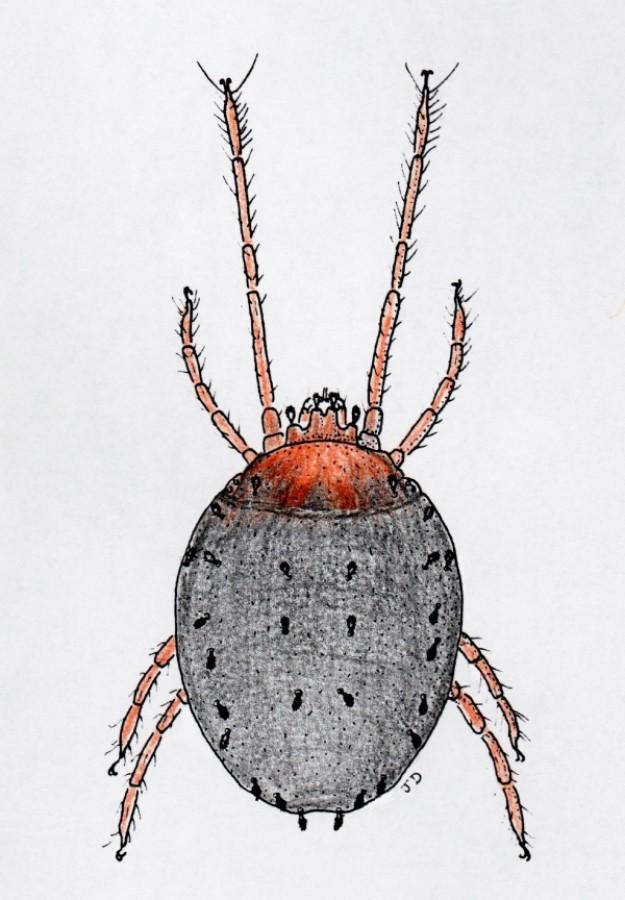
Illustration: John Davidson, UMD Department of Entomology

- Clover mites are usually most noticeable in the spring when temperatures are between 45°F and 80°F and the humidity is high. On warm days, they cross turfgrass and crawl up the sunny sides of buildings, and will possibly enter homes. They do not bite, carry diseases, or damage food or household furnishings except by leaving a red stain if crushed.
- Fleas are sometimes observed in homes where there are no pets. The most likely source is a wild animal such as a raccoon living in the attic, crawl space, chimney, or some other sheltered area connected to the inside of the home. If you have pets that have a flea problem, contact your veterinarian for the safest and most effective flea control products.