Pruning terms
- Pinching is removing the top few inches of soft growth on a stem with either a sharp, clean pair of shears or by pinching it off between your thumbnail and index finger.
- Disbudding is the removal of small, immature flower buds.
- Removing of the top (terminal) bud causes the plant to produce more numerous, but smaller, flowers.
- Removal of the side (lateral) buds will produce a larger flower on a longer stem. Dahlias, carnations, chrysanthemums, and peonies are commonly disbudded.
- Deadheading is the removal of spent, faded flowers. Flowers that go to seed consume large amounts of a plant’s energy, diverting it from vegetative growth or more blooms. When practical, plants can be deadheaded to a lateral leaf, flower or bud. In the case of a single flower stem that has few or no leaves, the flower stem should be cut off close to the base.
Reasons for pruning
Removing spent flowers
In general, perennials should be deadheaded after blooming, although there are exceptions when:
- self-seeding is desired, such as allowing a groundcover to spread
- the seed heads are attractive
- the seeds are a food source for wildlife
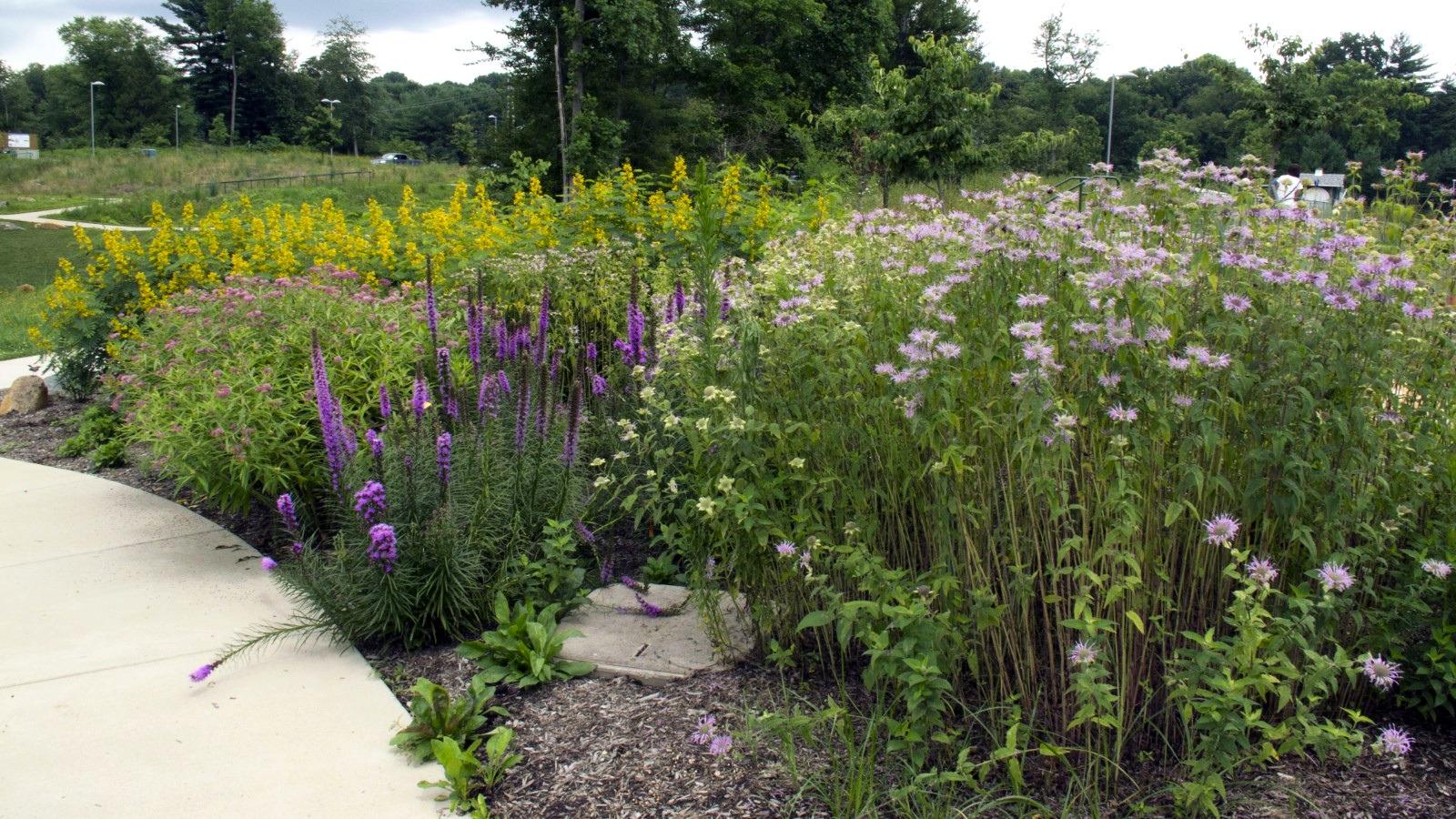
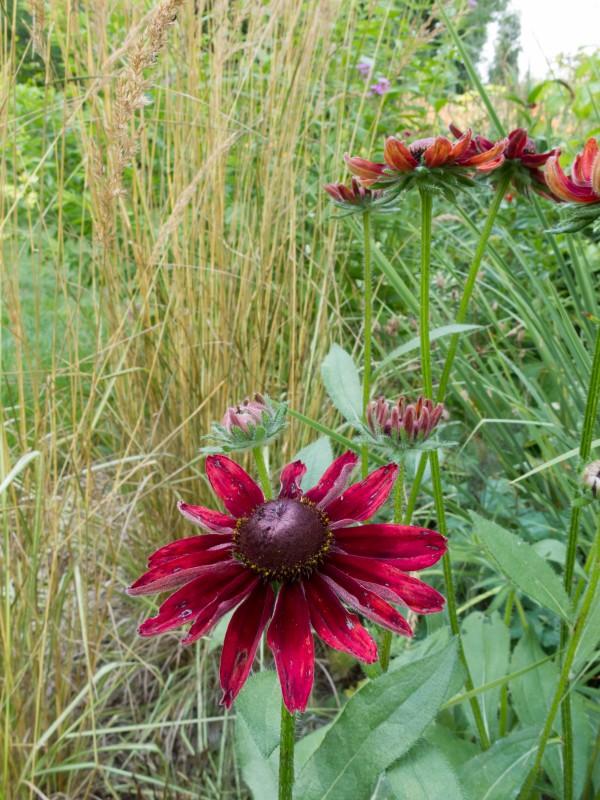
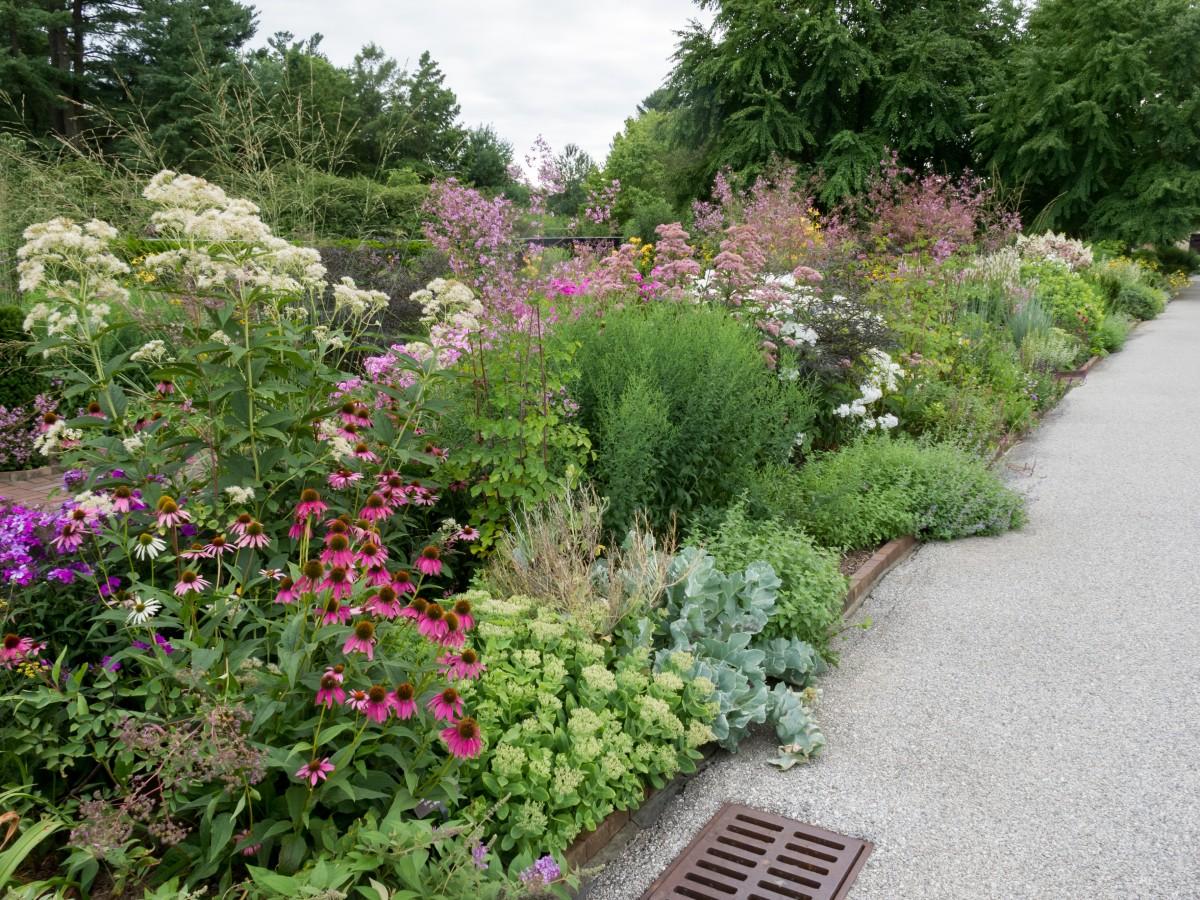
Many gardeners allow short-lived perennials like foxglove (Digitalis), and native wildflowers like Eastern columbine (Aquilegia canadensis), to go to seed to generate new plants. The seed heads of coneflower (Echinacea), Joe-pye weed (Eutrochium), beebalm (Monarda), mountain-mint (Pycnanthemum), and black-eyed Susan (Rudbeckia) are considered both attractive in winter and a good food source for birds.
Promoting plant health and aesthetics
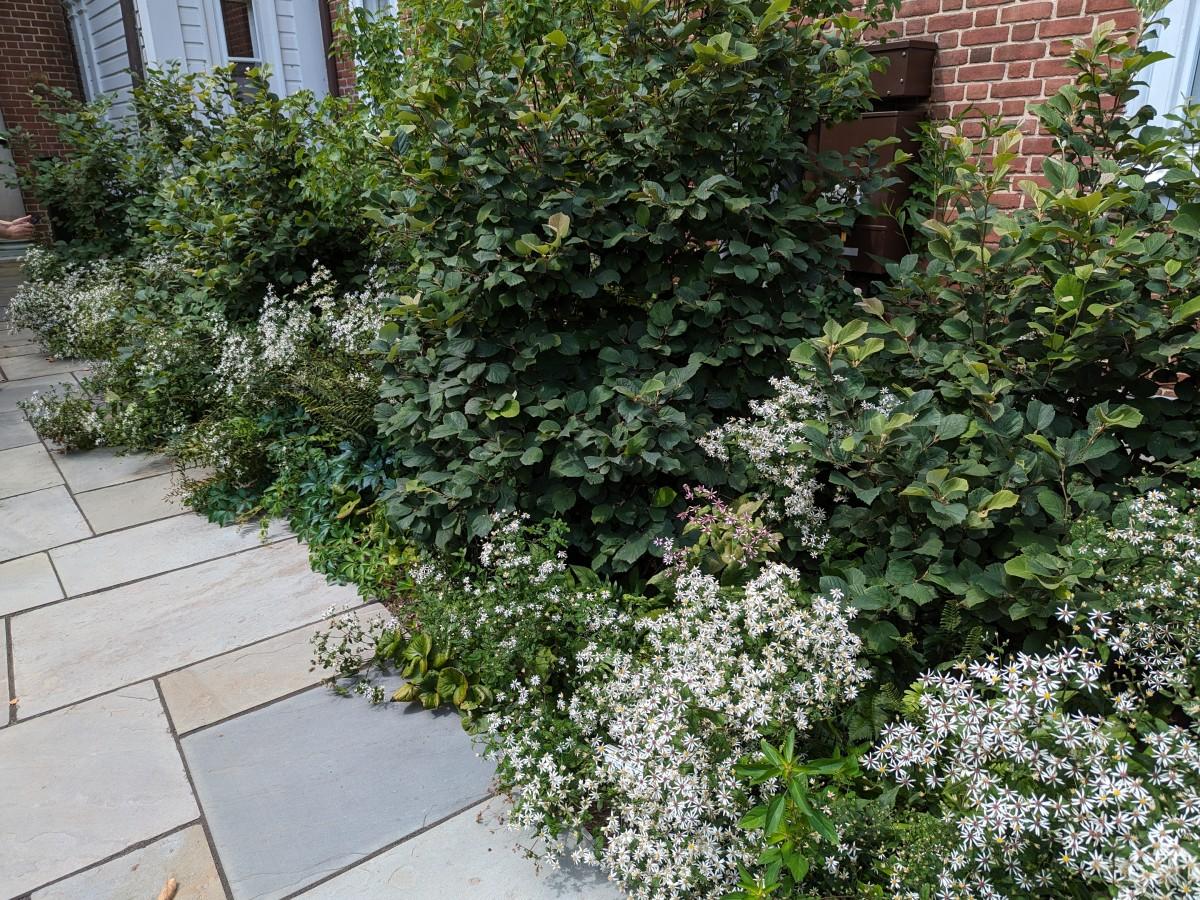
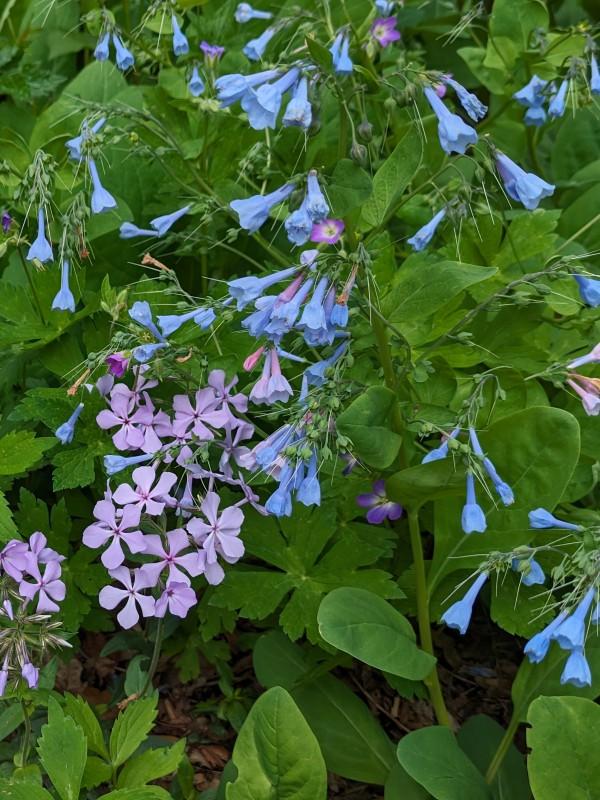
Some perennials are thinned to reduce the risk of disease from crowding, to increase flower size, or to improve the plant's appearance. Thin by cutting some stems at the base of the plant. This improves air circulation around the plant, reducing the risk of disease outbreaks. Phlox, aster, beebalm, and delphinium benefit from being thinned because they are prone to mildew or rot.
Influencing growth
Pinching promotes bushy growth for many species. To avoid staking and to produce more compact plants with stronger stems, pinch back perennials such as chrysanthemums and asters several times before mid-July. Generally, the first pinching is done as soon as there are several sets of leaves on each stem.
Pinching delays flowering. Pinching only some of the stems results in an extended blooming season, since the pinched portions will bloom later, and the rest of the stems will bloom "on time." To stagger plant heights or bloom times, perennials such as garden phlox (Phlox paniculata) and 'Autumn Joy' sedum can be cut back once or twice in the summer before mid-July.
Perennials with one leafy or unbranched stalk, such as a lily, and those with leafless flowering stalks, such as iris, should not be pinched back before bloom.
End-of-season clean-up
Traditionally, cutting non-evergreen perennials to the ground in autumn would tidy-up the garden for aesthetics. Removing old plant debris can also reduce the risk of harboring a pest insect or infectious disease for the following year.
However, this clean-up can also remove the winter weather protection that broken, bent stalks provide to tender basal foliage and crowns. Perennials (including ornamental grasses) that are not cut back in autumn provide shelter from weather and predators, as well as food like seeds, for birds and other wildlife in winter. It also provides overwintering sites for pollinators and natural enemies (beneficial organisms) that work in our favor to control garden pests.
It is a personal preference whether to leave the plant debris or cut it back. Around plants that contracted severe disease or a significant pest outbreak, it may be best to remove debris once autumn frosts have killed stems and foliage. For all other plants, especially native species, leaving that material in place provides ecological benefits that can outweigh the risk of harboring a pest or pathogen.