
Techniques such as covering vegetable plantings for weather protection and pest exclusion as well as increasing the density and turnover of crops can help to maximize the harvest potential of home vegetable gardens.
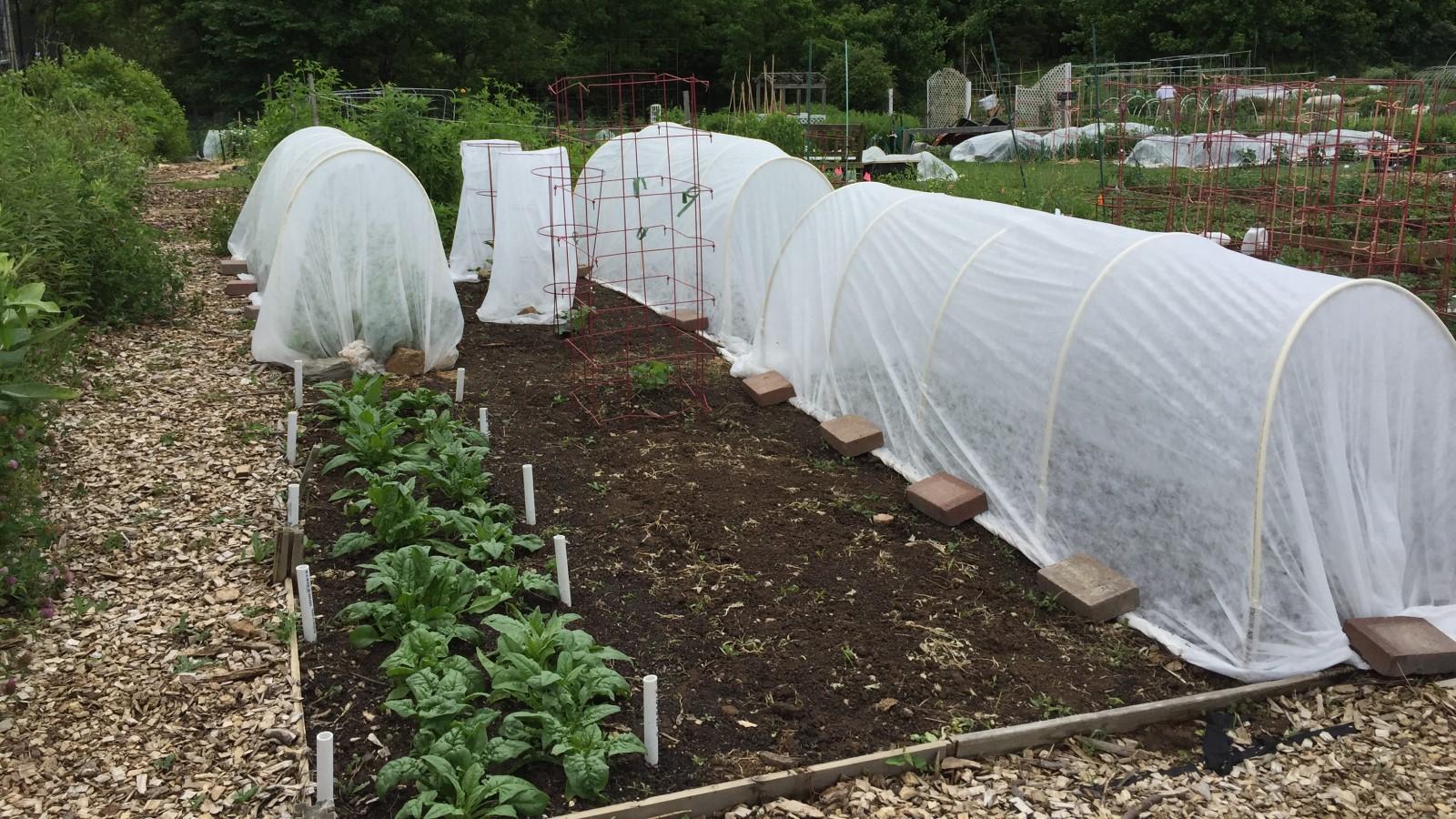
Row covers protecting spring crops from insect pests in a community garden. Photo: Jon Traunfeld
Using row cover to protect plants
Row cover is a white, lightweight, non-woven fabric made from spun-bonded polyester or polypropylene. It has a gauzy appearance and allows air, sunlight, and water to easily penetrate. Row covers are an effective and flexible tool for vegetable gardeners that can significantly increase garden productivity. Use it to:
- enhance plant growth in spring and fall by increasing the temperature and humidity under the cover
- extend the growing season in spring and fall by providing 2 to 8°F of frost protection
- exclude large and small animals, especially insect pests, making it an exceptional organic pest management tool
Row cover material is relatively inexpensive, and can be easily cut to size with scissors and reused for 2 to 3 years. Row covers are available in many widths, lengths, and weights (thicknesses):
- Lightweight grade (0.45 ounce per square yard) is marketed as an insect barrier, has 90% to 95% light transmittance, gives 2°F of frost protection, and can be left on some crops (such as beets, snap beans, salad greens) from seeding to harvest.
- Medium-weight grade (0.5 to 1.0 ounce per square yard) has 70% to 85% light transmittance and gives 4 to 6°F of frost protection. Useful for spring and fall crops as well as overwintering crops.
- Heavyweight grade (1.5 to 2.2 ounces per square yard) allows 30% to 50% light transmittance and gives up to 8°F of frost protection. Useful to cover overwintering crops.
Row cover can be purchased through mail-order seed and garden supply companies and at some local garden centers. Search “floating row cover” online to identify and compare options.
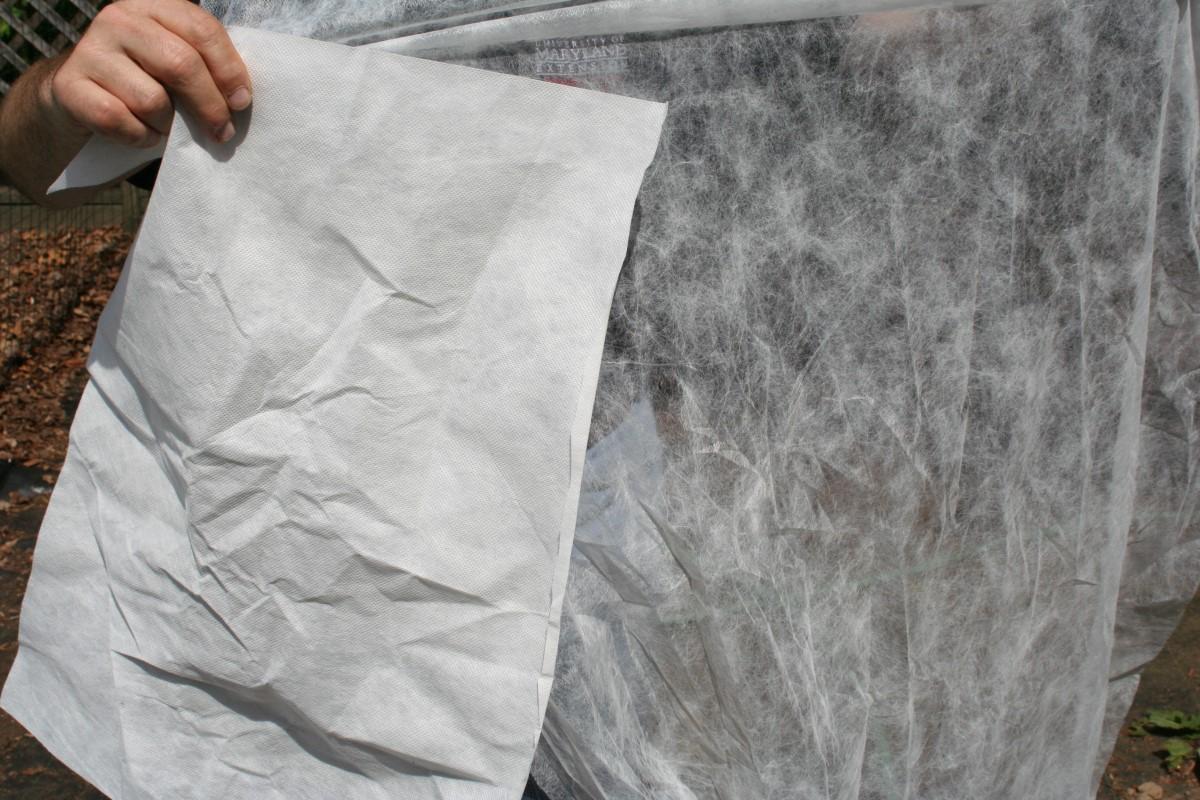
Photo: Ria Malloy
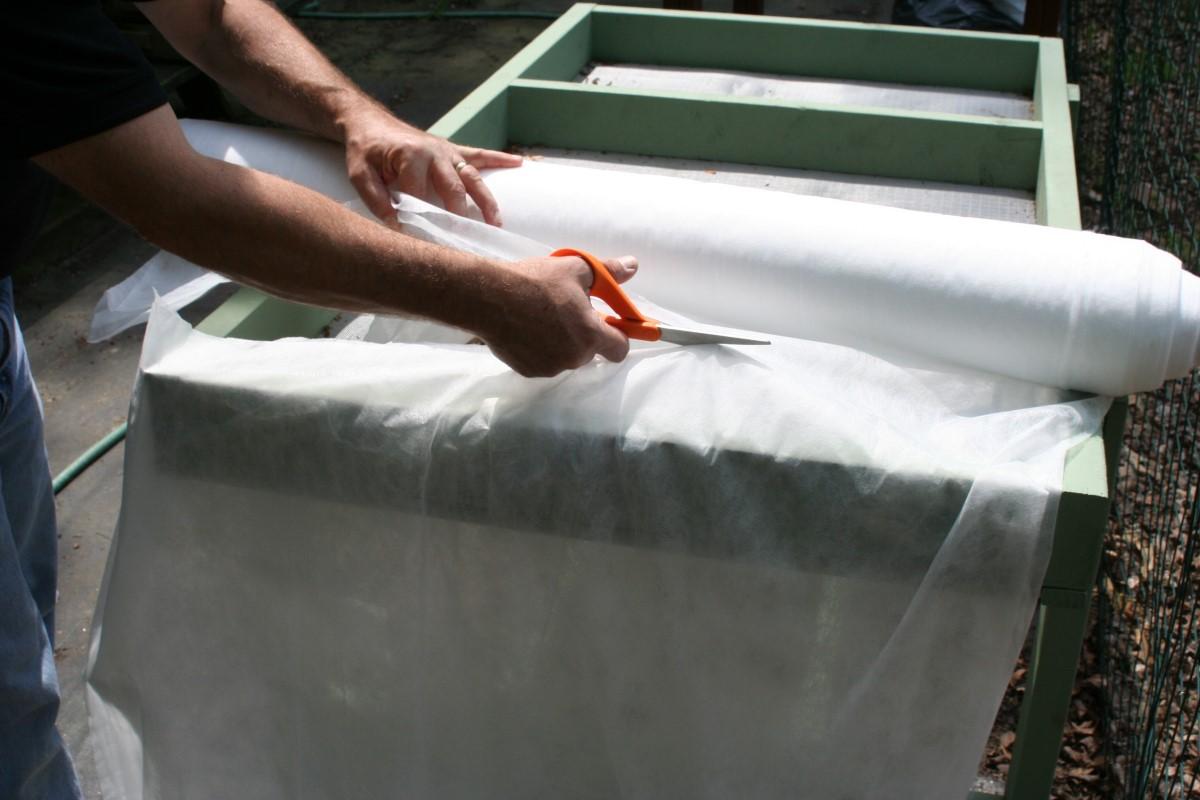
Photo: Ria Malloy
How to use row cover
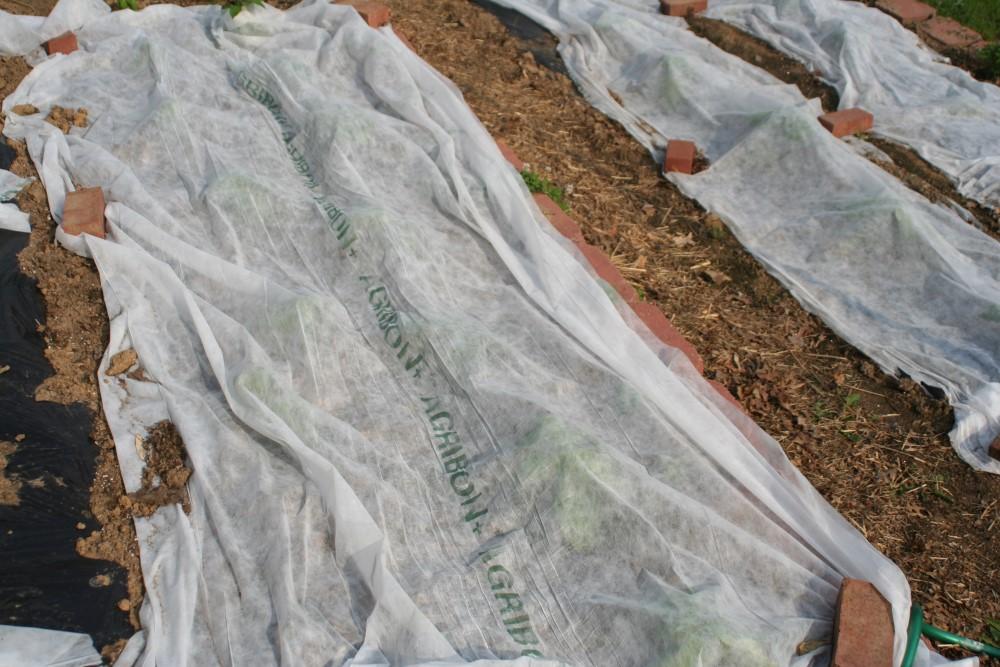
Row cover can be held above vegetable plants on support structures or laid directly onto the crop. When used without support and draped on the plants, it’s often referred to as “floating” row cover. With adequate slack, the growing plants push the cover upwards. You can cover individual plants, rows or groups of plants, or entire planting beds.
- Install soon after planting: Cover spring transplants and newly-emerged seedlings as soon as possible.
- Weather protection hastens plant establishment and shields plants from damaging winds and intense rainfall.
- Animal exclusion protects against significant feeding damage from pest insects, mites, rabbits, deer, birds, and groundhogs. To be effective against pests, row cover must be installed over plants soon after planting and held tightly to the ground.
- Build a support structure (optional): Assemble simple frames using wood, slender PVC pipe, #9 gauge wire, or other available materials to support the row cover above the plants. Using a support is recommended when using medium- and heavy-weight row covers.
- Secure the fabric: Anchor the cover to the ground with sod pins (also called landscape fabric anchors or staples), wooden boards, bricks, sandbags, rocks, or soil.
- Monitor for weeds: For the same reason row covers can boost vegetable growth, weeds also grow faster under row covers. Temporarily pull back the covers to hand-pull or cut down weeds. Alternatively, put down an organic (biodegradable) mulch over any bare soil to suppress weed seed germination before covering the plants.
- Monitor for watering: Rainfall and water from a hose or watering can will pass through row cover fabric, but it’s best to pull the cover back if hand-watering. This also gives you a chance to deal with weeds and closely inspect plants for signs and symptoms of plant problems. Use drip irrigation or a soaker hose under row covers to irrigate plants easily and efficiently.
- Leave in place (for some crops): Crops that don’t need their flowers pollinated by insects, like spring leafy greens and green beans, can be kept covered until harvest.
- Out-of-season storage: Mice can nest in stored row cover material, ruining it for next season. Store them either indoors or outdoors in tightly-sealed containers.
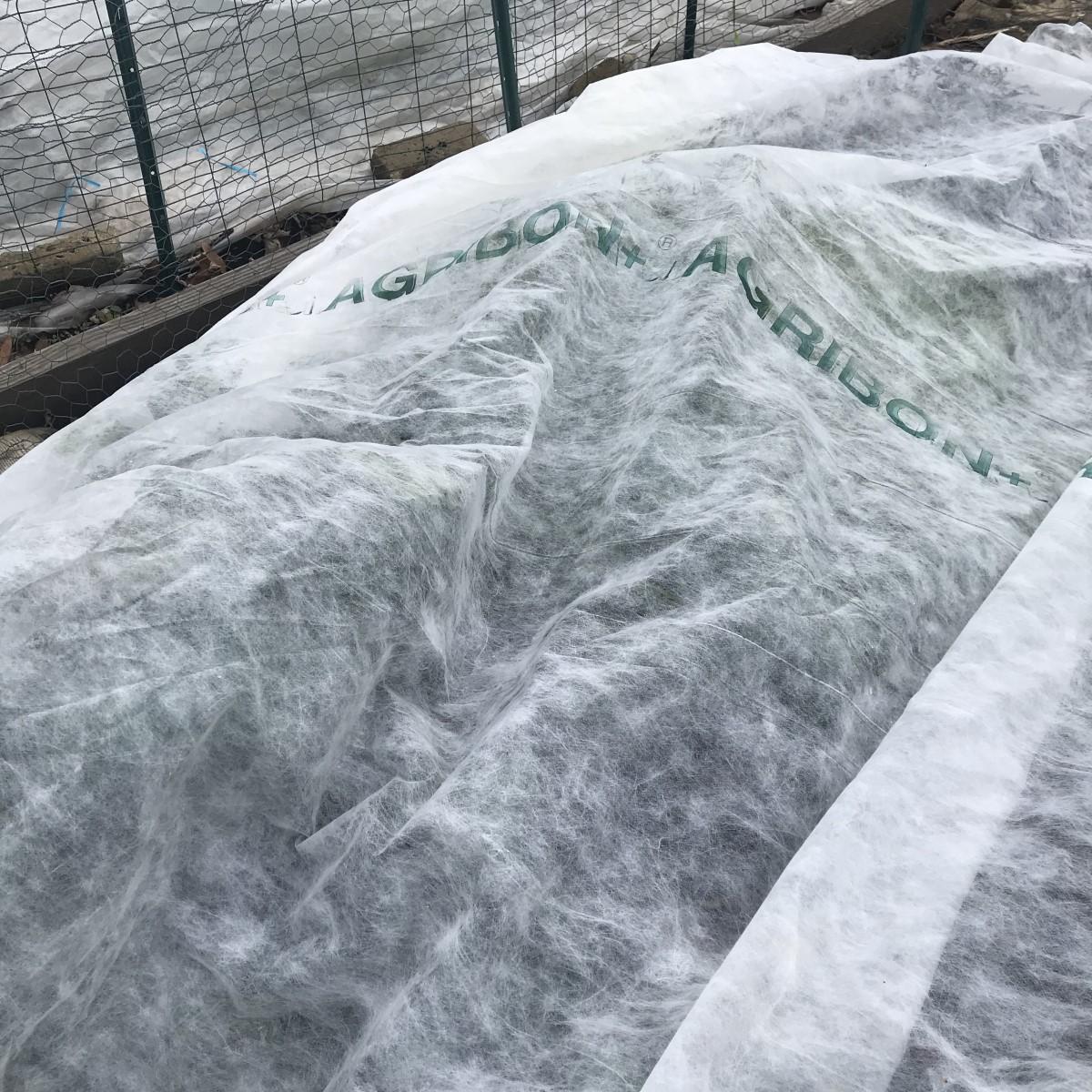
Photo: Christa Carignan
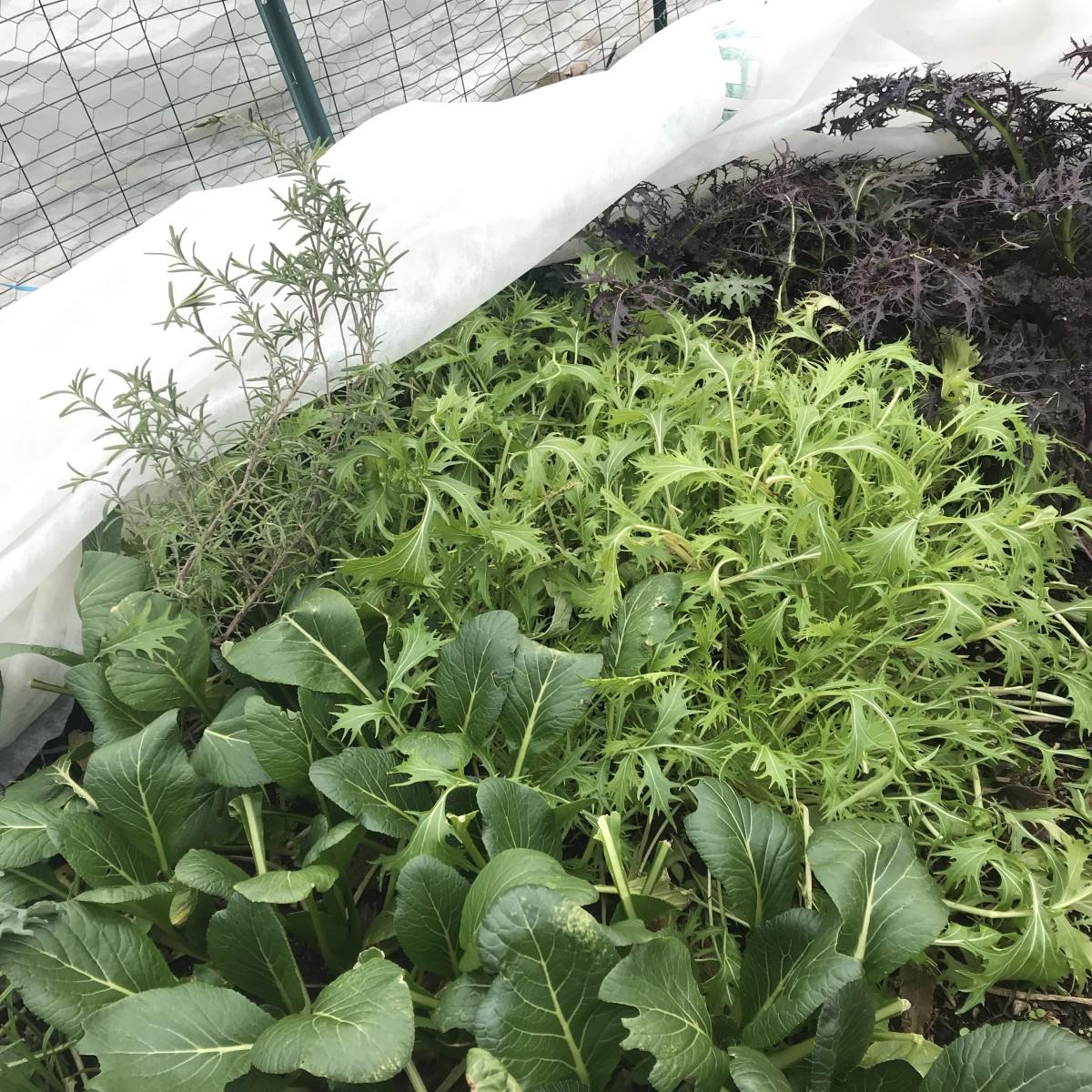
Photo: Christa Carignan
Possible disadvantages of row cover use
Row cover is difficult to use over tall plants, and its delicate composition makes it vulnerable to wear-and-tear from severe storms and contact abrasion with rocks, stakes, wires, and other objects. Although it provides a number of benefits for vegetable plants, it could increase the risk of certain plant problems.
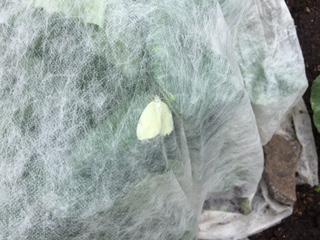
Photo: Jon Traunfeld
- Trapping pests: Pest insects can become trapped under row covers. They may enter through gaps or tears in the fabric, or were already present, unnoticed on plants before the row cover was applied. Some pests overwinter in the soil near host plants, emerging the following spring under a cover. (Examples include the adult flies of root maggots, flea beetles, and Colorado potato beetles.) Be sure to monitor plants under row covers.
- Heat buildup: In summer, temperatures under a row cover can be 5 to 15°F higher than outside temperatures, leading to heat stress. For example, the flowers and fruits of beans, tomatoes, and peppers may fall off when daytime temperatures top 90°F. Monitor plants growing under covers in summer for symptoms of heat stress. Plants that need protection from insect pests in summer can be covered with insect netting.
- Disease risk: Fungal or bacterial infections may be more likely under the cover from increased temperature and humidity and reduced air movement. However, research studies have been inconclusive.
- Physical damage to plants: Although the material is fairly light, repeated rubbing may abrade and injure plant stems and foliage during windy weather. (This is more likely with floating row cover versus cover supported above the plants.) Periodically check the appearance and health of plants where they are in direct contact with row covers.
The useful life of row cover material is typically 1 to 3 years, depending on the weight/grade, use, and weather conditions. Regarding sustainability, it is made from fossil fuels and not currently recyclable. Weathering, UV radiation from sunlight, and contact with surfaces degrades the fabric’s fibers over time, contributing to microplastics contamination of air, water, and soil. Lightweight row covers degrade more easily than heavyweight row covers.
Building row cover frames
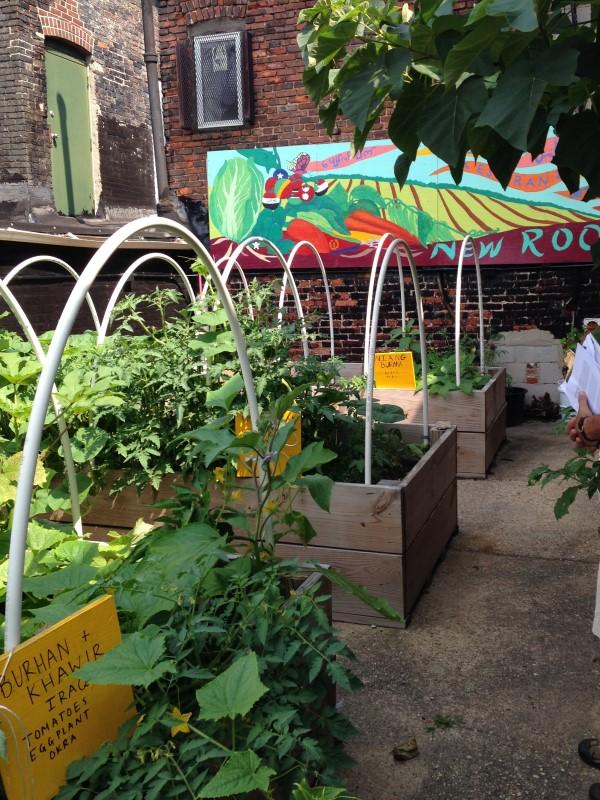
Homemade DIY supports for row covers are commonly used in home and community vegetable gardens. Materials can be sourced locally from hardware stores or other suppliers. Frames should be designed to be easy to construct and take down when not needed. In addition to supporting row cover, they can also support clear plastic (to increase temperature in cold weather) or shade cloth (to reduce temperature in hot weather and full sun exposures).
A high tunnel is a long, walk-in structure that acts like a greenhouse to provide weather protection for plants. Depending on the season and crop, translucent plastic, pest-excluding mesh, or shade cloth are secured to tall arches. A low tunnel is a miniature version that uses much shorter arches to support the cover material.
- Frame designs and materials can vary widely. Low tunnels 15 to 30 inches high, with hoops spaced 2 to 4 feet apart, are especially easy to make and use.
- After installing the hoops, measure, cut, and drape the row cover over the frame and secure it to the ground along the sides and at each end.
- Optional: connect the hoops at the top with a stretchy clothesline or twine to help support the row cover.
Make a low tunnel with PVC arch supports
- Hammer 2-foot-long pieces of ⅜-inch rebar into the ground along each side of the planting row, leaving 1 foot above the ground. Space the rebar supports 2 to 4 feet apart.
- Cut ½- or ¾-inch PVC pipe into lengths that will give you the desired tunnel height once arched over the bed.
- Slide each end of the pipe over the rebar on either side of the bed.
- You can make or buy plastic snap clamps and clips to secure row cover to the pipe frame.
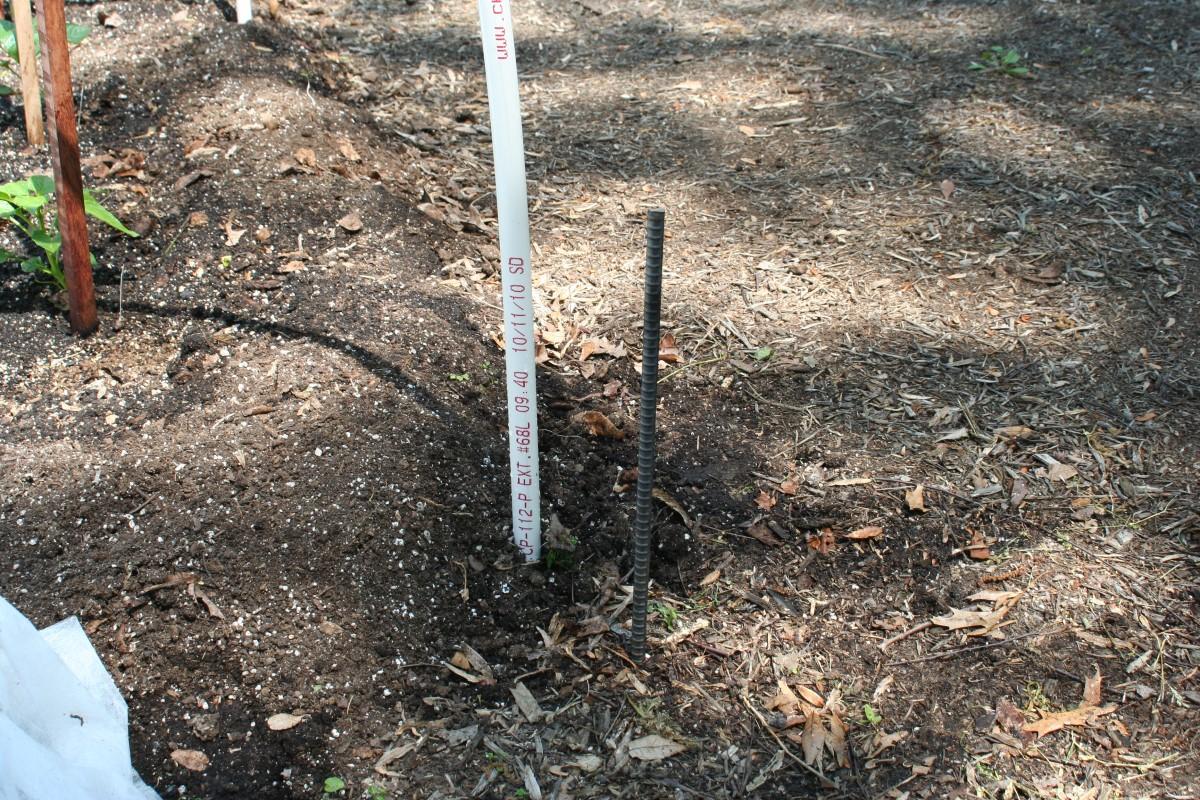
Photo: Jon Traunfeld
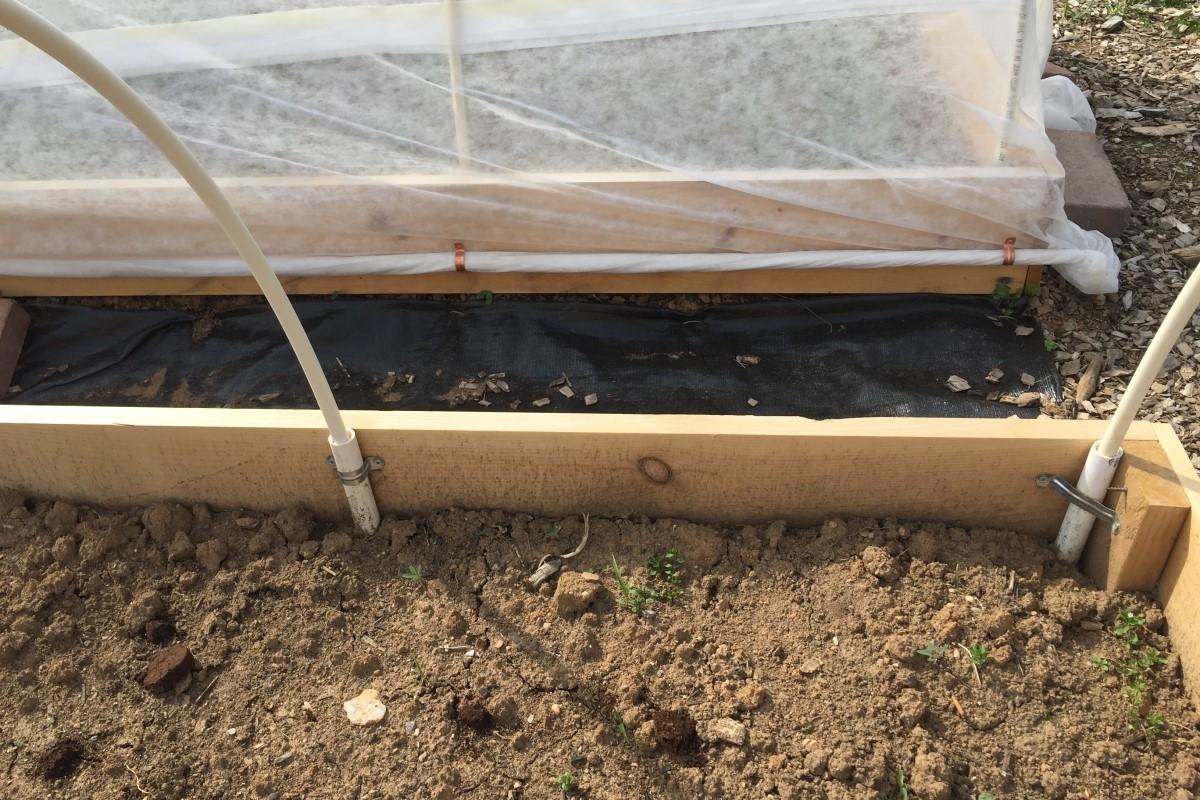
Photo: Jon Traunfeld
Make a low tunnel with #9 wire hoops
A #9 gauge wire is easy to cut and flexible enough to bend, but stiff enough to support any type of cover. This is the simplest and least expensive design and doesn’t require plastic pipes.
- Cut the wire into 7-foot lengths. This will make a 3-foot wide arch that is 2 feet tall at the center.
- Insert each wire end about 8 inches into the soil on either side of the bed.
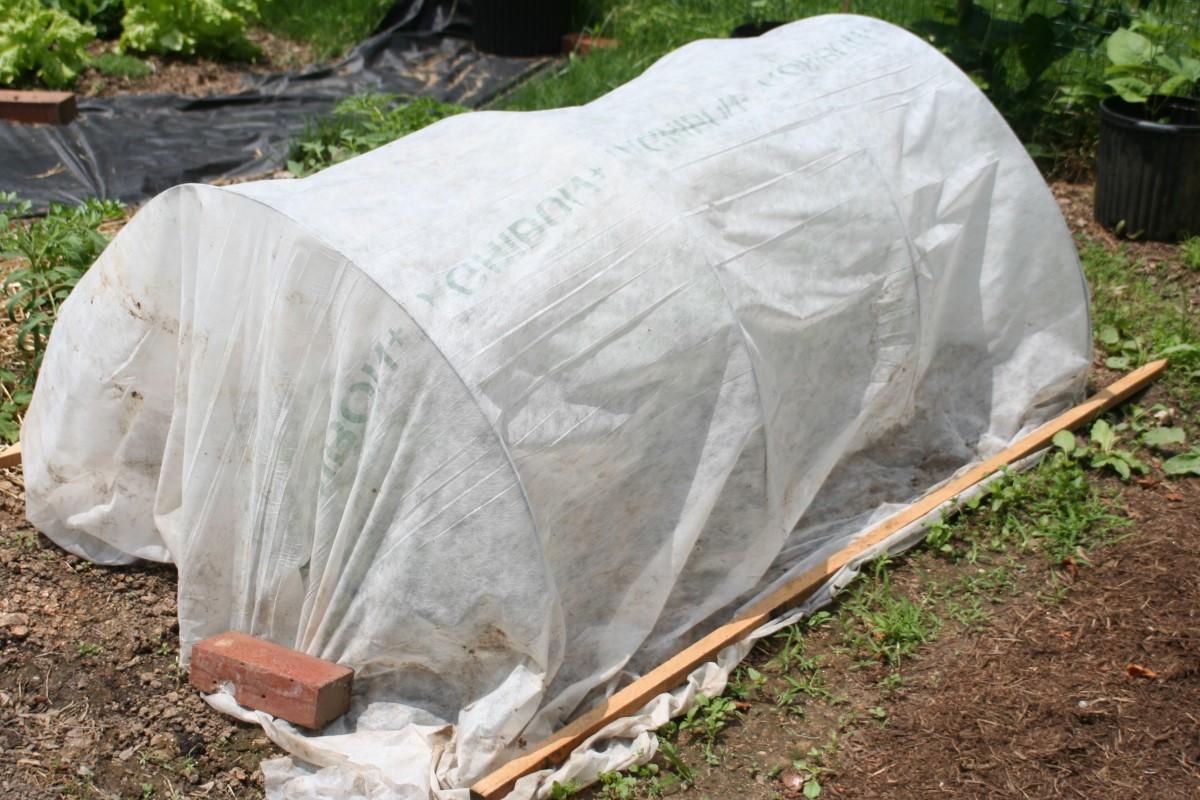
Photo: Jon Traunfeld
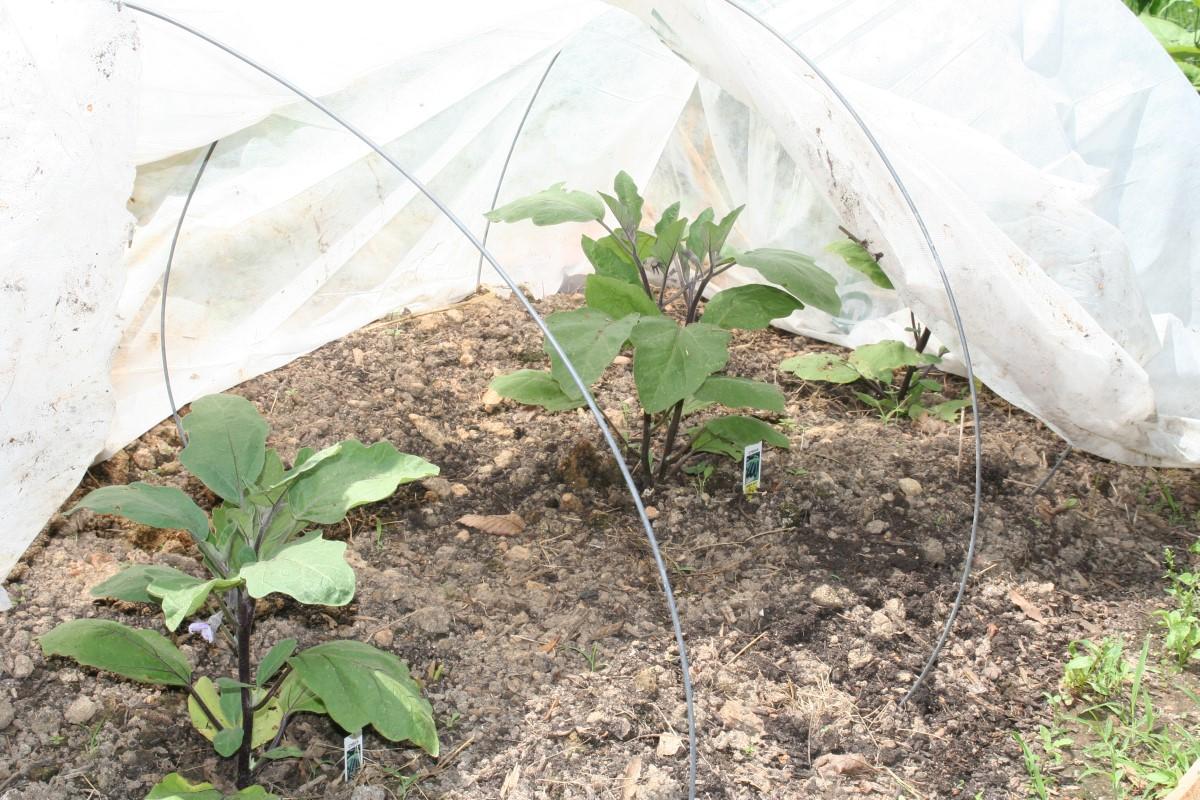
Photo: Jon Traunfeld
Insect netting
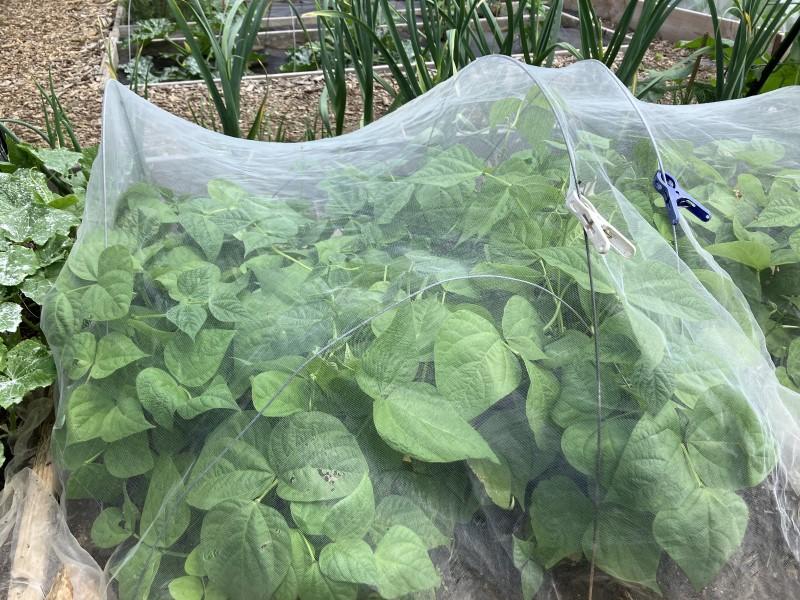
Insect netting, also known as insect barrier or insect mesh, is a see-through fabric made from polyethylene. It is an excellent choice for protecting crops during the summer when row cover would build up excessive heat. Mesh sizes vary, with the smallest size excluding thrips. Light transmission is about 80%, which is sufficient for crops that are best grown in full sun. It’s a flexible material but heavier than row covers, so should be installed over a support frame. It is UV-stabilized and should last at least five growing seasons.
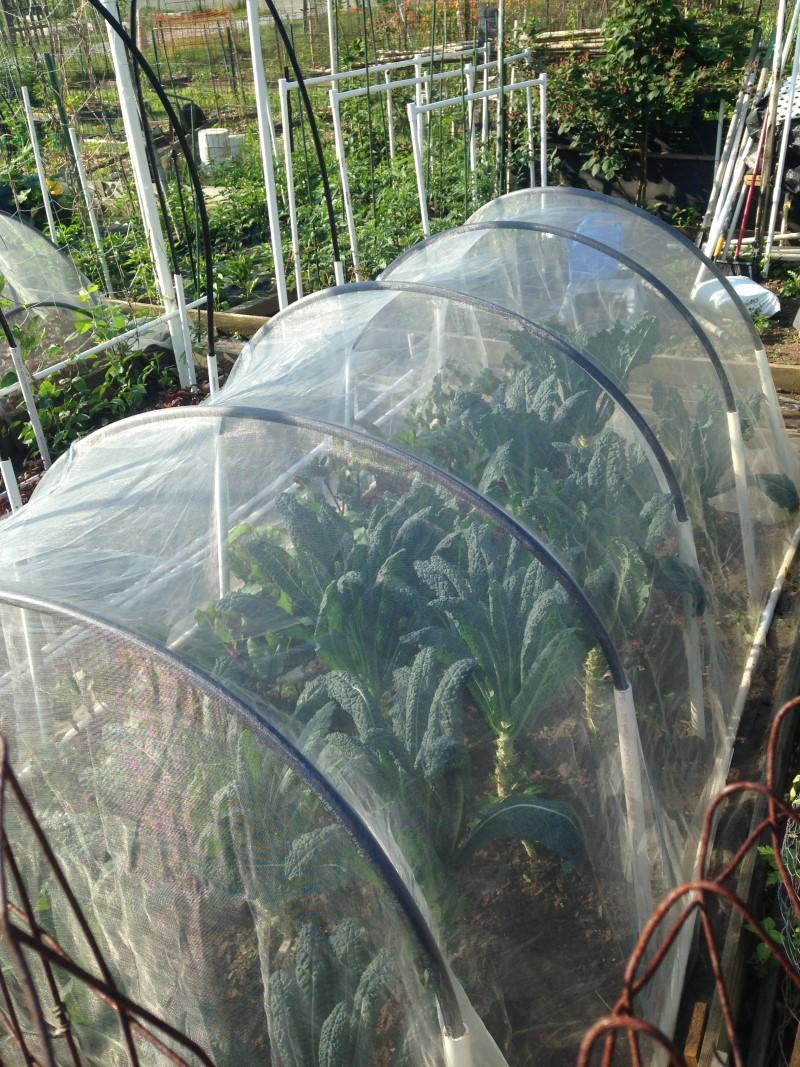
Photo: Jon Traunfeld
Shade cloth
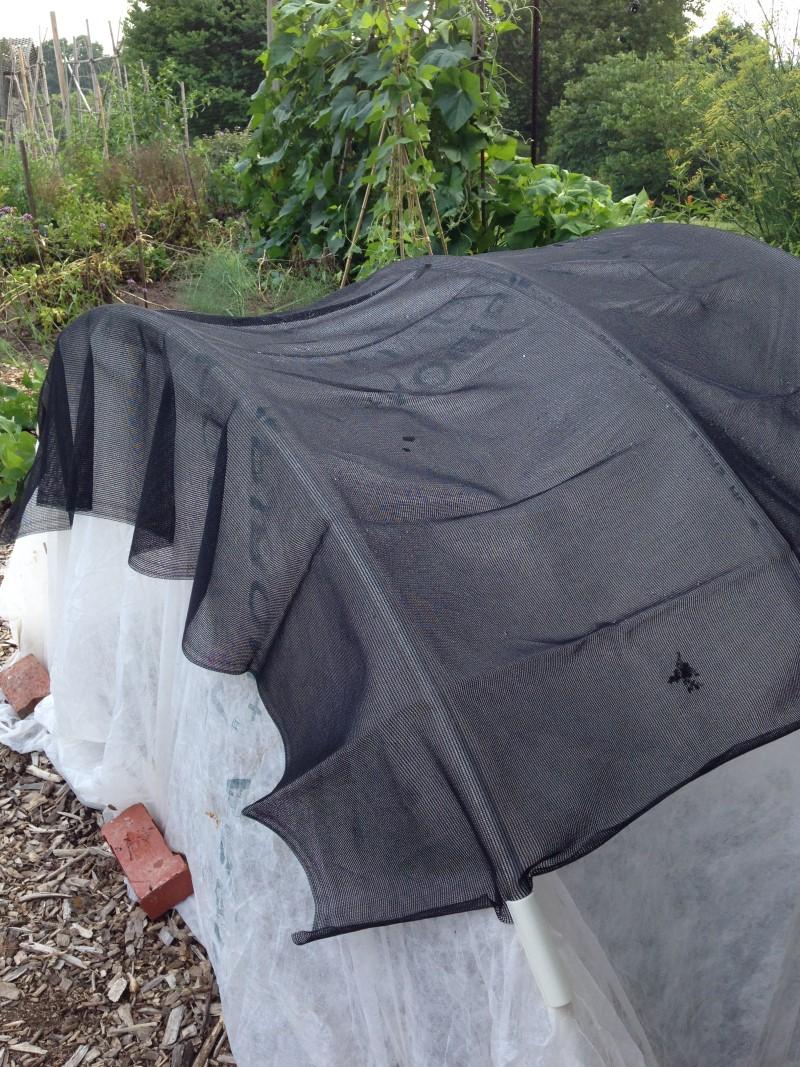
Photo: Jon Traunfeld
Shade cloth is a woven polyester material used to protect plants from excessive sunlight and to reduce the air temperature around plants. Researchers are exploring systems for using shade cloth to reduce the negative effects of heat stress in warm-season crops, such as flower and fruit drop. Shade cloth can also be used to lengthen the harvest period for cool-season crops in spring and to protect the seedlings of cool-season crops planted in July and August for fall harvest. Research results suggest that 30% black shade cloth (which excludes 30% of sunlight) is a good choice for reducing heat stress while providing plants with enough light.
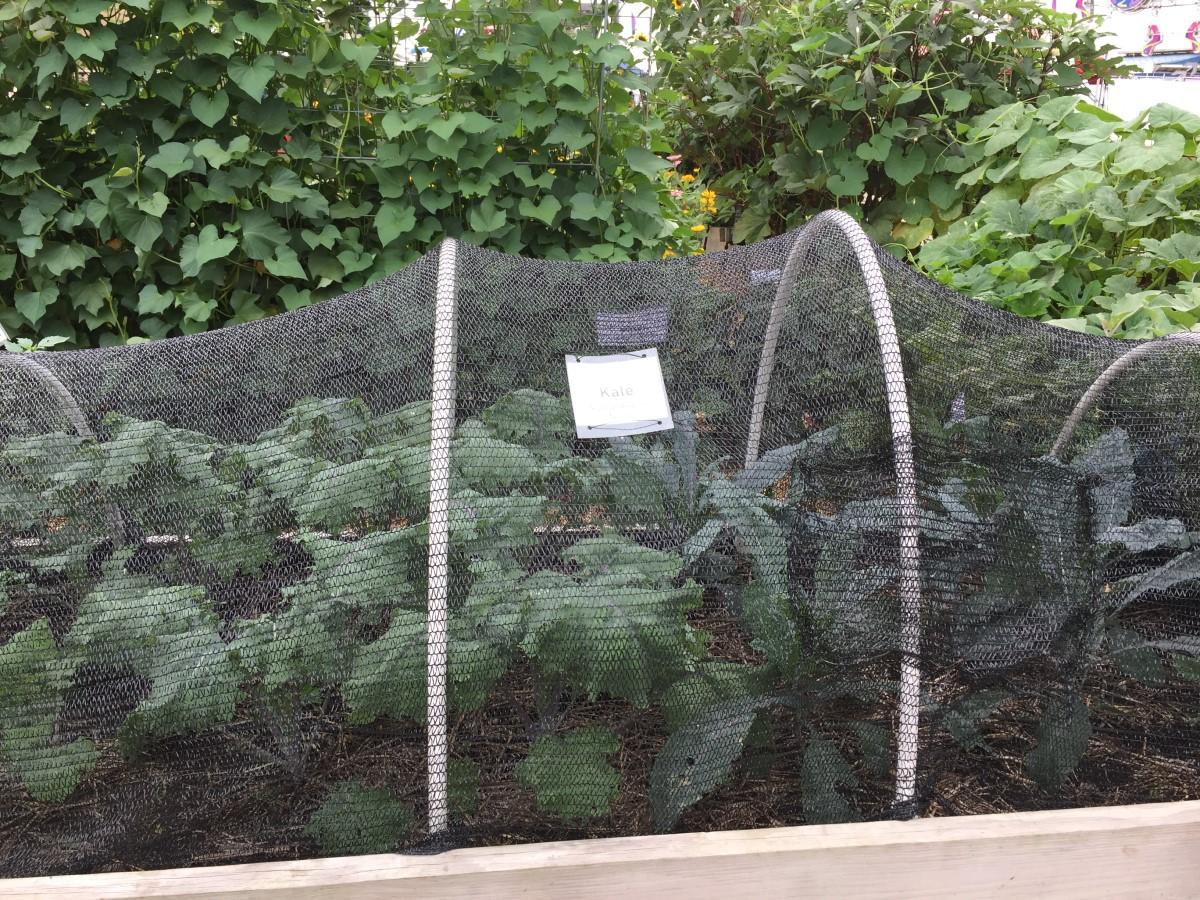
Photo: Jon Traunfeld
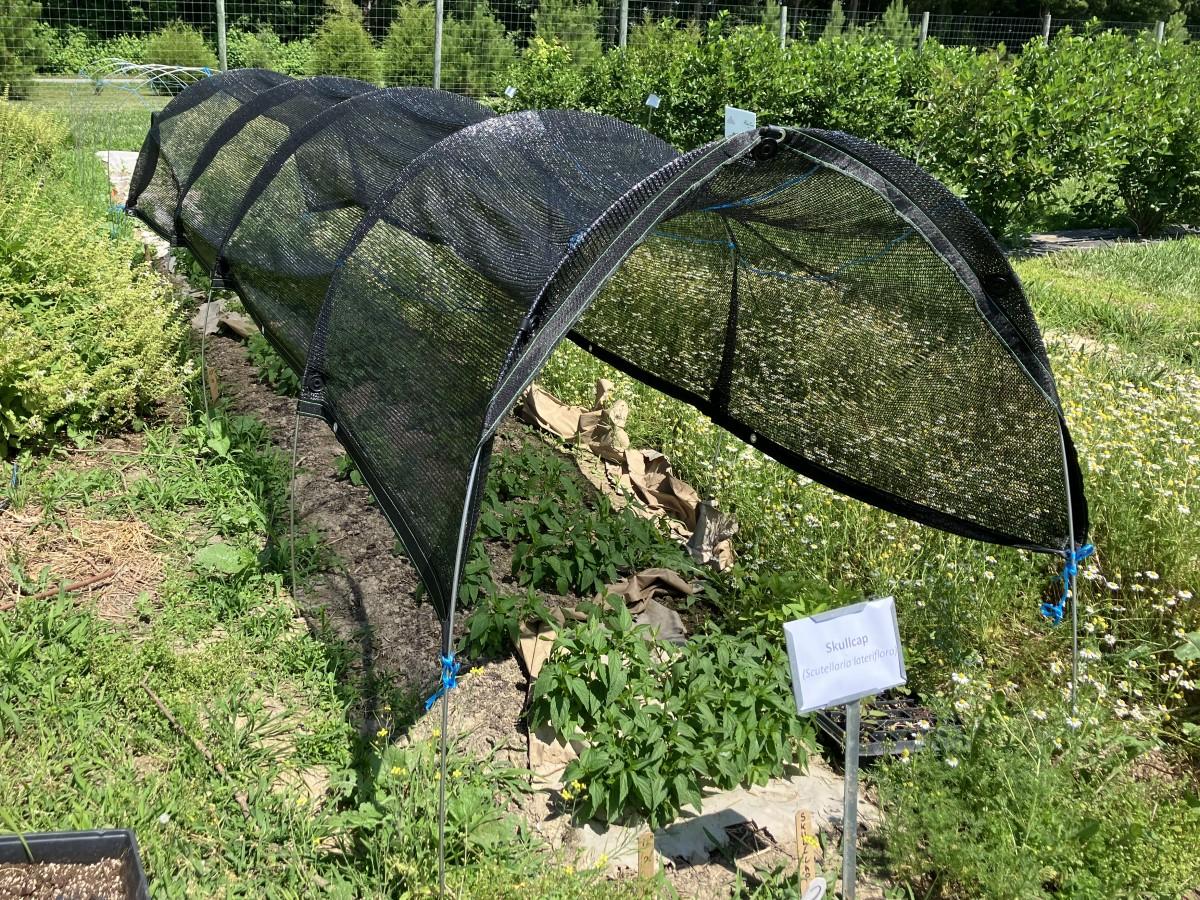
Photo: Jon Traunfeld
Related information
Additional resources
Floating Row Cover | University of Wisconsin
Row Covers for Vegetable Gardens | Washington State University
Using Row Covers in the Garden | University of New Hampshire
Author: Jon Traunfeld, Extension Specialist (retired), Home/Community Food Gardening, March 2026.
Copy editing by Nancy Klein, Maryland Master Gardener, August 2026.
Still have a question? Contact us at Ask Extension.