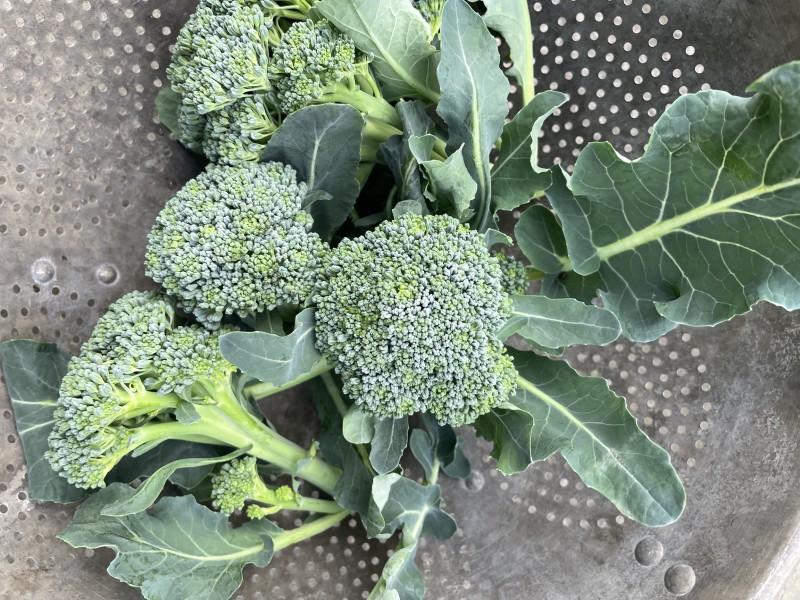
Each vegetable cultivar has a “days to maturity” number which appears on the seed packet and in catalogs. It refers to the number of days from seeding in the garden to harvestable maturity for crops like lettuce, spinach, beet, radish, and leafy greens; and the number of days from transplanting to maturity for crops like broccoli, cabbage, cauliflower, and Brussels sprouts. These days to maturity numbers increase for fall crops due to decreasing light and lower temperatures that slow growth.
The Short-Day Factor (SDF) helps to compensate for the light and temperature differences (although other environmental factors also affect maturity dates). Calculate the proper planting date by including a SDF of two weeks (14 days). You can use transplants for crops that are normally direct-sown, which will let you plant later into the fall – but don’t wait too long. Fall crops often fail because they are planted too late. The SDF is especially critical for crops that produce heads or pods; less so for root and leafy crops.
Example: You want to start harvesting beets on October 15th. The seed packet says 55 days to maturity. When should you plant?
- Take the desired harvest date (October 15) and subtract the days-to-maturity time (55 days). This would be August 20.
- Subtract the SDF (14 days) from August 20 to get August 7.
- Plant seeds around August 7.