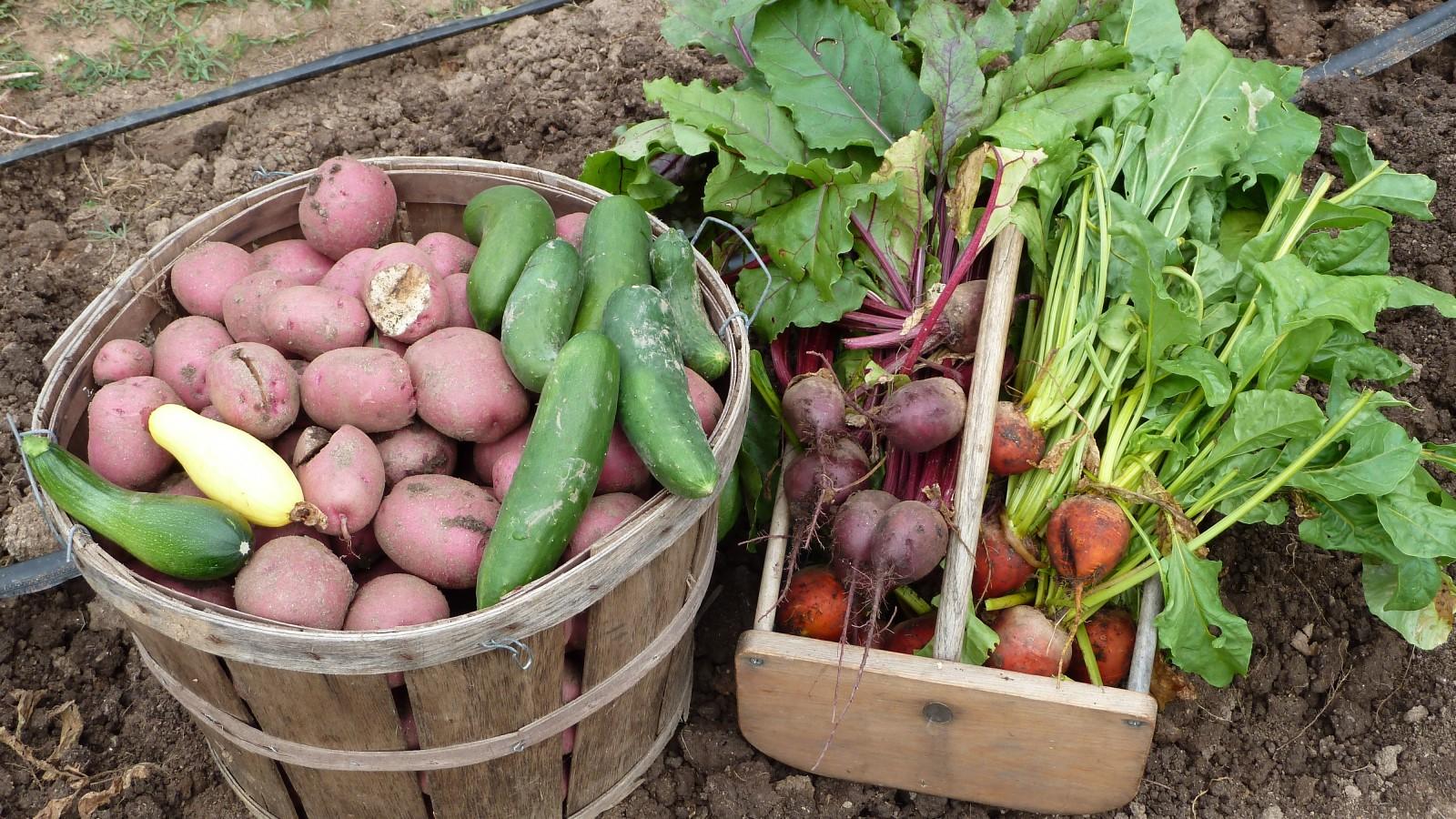
Early summer vegetable garden harvest. A wide range of vegetables can be grown throughout Maryland. Photo: Kent Phillips, UME Master Gardener
Updated: March 31, 2026
Beginner tips for vegetable gardening
Start small: A good starter garden size is 25 to 50 square feet. You can always expand later as you gain more experience.
Determine what you can handle: Match the type and size of your garden with the resources you have for planting, maintaining, and harvesting the crops.
Be prepared for surprises or potential crop failures: Plant growth and yields will vary by garden location, growing season, and garden management. Even experienced gardeners have unsuccessful crops or seasons, which serve as valuable learning opportunities. “Doing it right” doesn’t always guarantee success, and your crops won’t always resemble those pictured in seed catalogs.
Dedicate time: Vegetable gardens require at least a small amount of daily attention. Timely planting, staking of plants as they grow, weeding, scouting plants for problems, and regular harvesting are essential for a productive garden.
Manage expectations:
Accept some level of plant injury and imperfection while learning how to prevent and manage more serious problems. Pest insects and mites, diseases, and environmental factors can cause holes in leaves, leaf spots, slow growth, and smaller yields.
All crops have a harvest period; they don’t produce food endlessly. For example, bush bean plants produce for about three weeks before declining naturally. Favorable growing conditions and good plant care help to extend and increase the harvest.
Assemble helpful tools: A few simple hand tools will get you started. A tape measure or yard stick will help with plant spacing.
Keep learning: Take notes during the growing season. How did the green beans do? Which insect pests were a problem? How was your garden affected by weather? Did some plants suffer from over- or under-watering? This information can help prevent problems and improve your future gardening experiences.
Basic types of vegetable gardens
Consider what characteristics of each gardening style works best for your setting and needs. Vegetables and herbs can be grown in containers, raised beds, or at-grade (flat, ground-level) garden beds. For more complex layouts, gardens on slopes can be terraced, containers can be stacked vertically, and raised beds can be built to different heights or in modified configurations to accommodate different crops or gardener access.
Containers
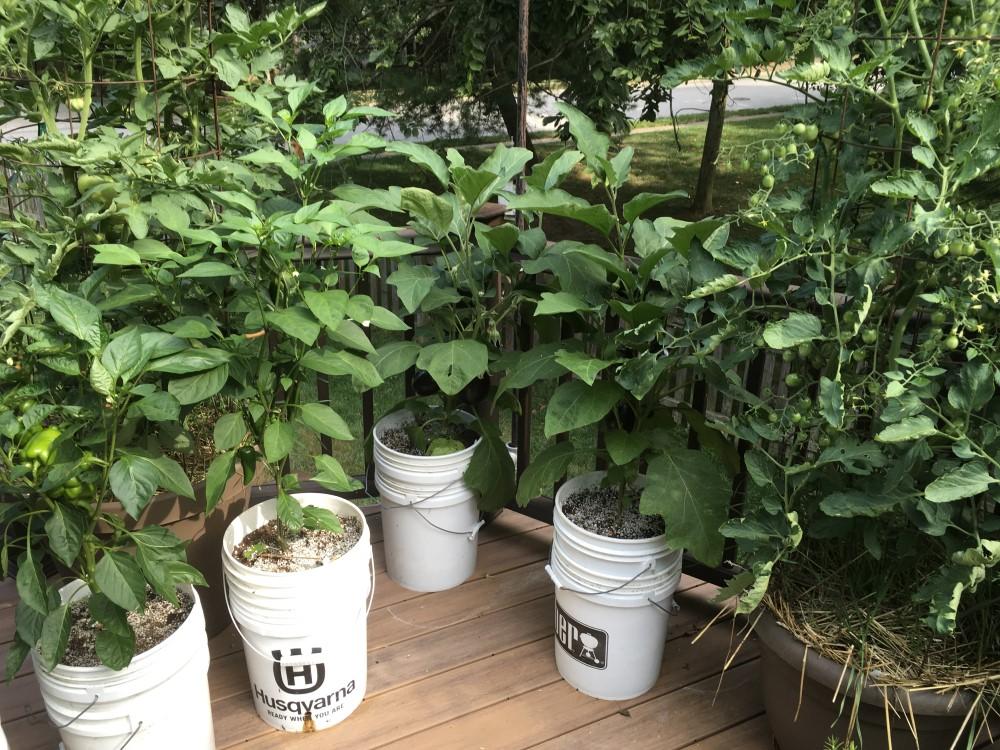
Growing in pots is a great way to start vegetable gardening. Containers can be inexpensive and you can place them in many spots, including on decks and balconies.
Eggplant, pepper, and tomato plants growing in self-watering 5-gallon buckets. Photo: Kent Phillips, UME Master Gardener
Raised beds
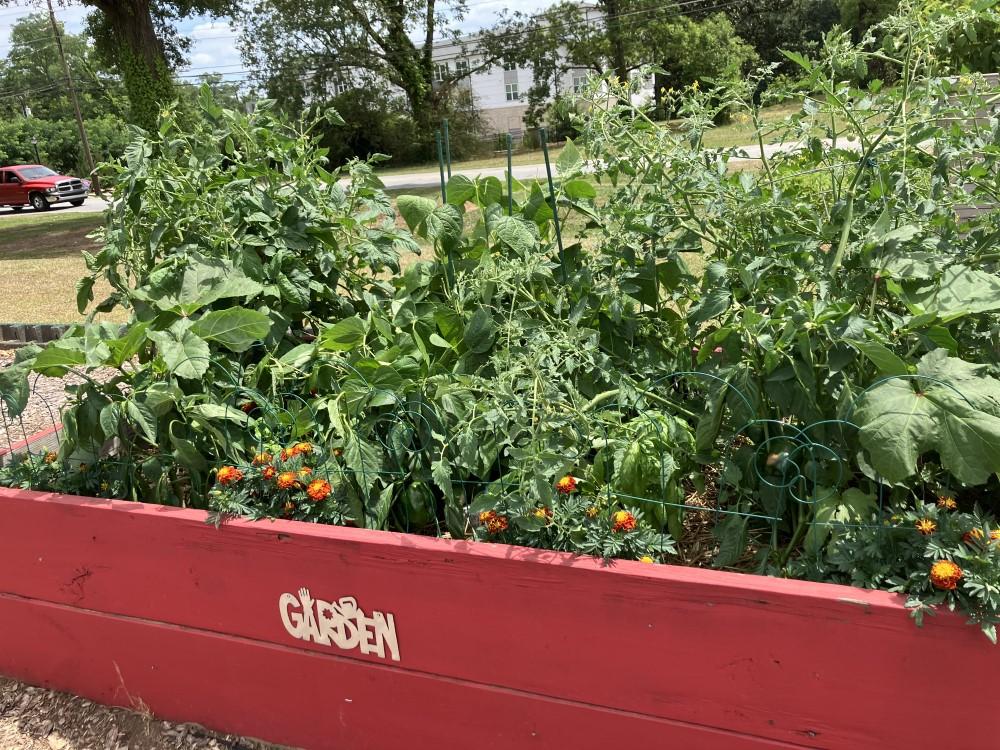
The soil inside raised beds drains well and doesn’t get compacted. The beds produce lots of vegetables in a small area and have a tidy appearance (as they are usually enclosed). They will require some upfront labor and materials costs.
Painted wooden raised bed in a community garden. Photo: Jon Traunfeld, University of Maryland Extension
Flat-ground (at-grade) garden beds
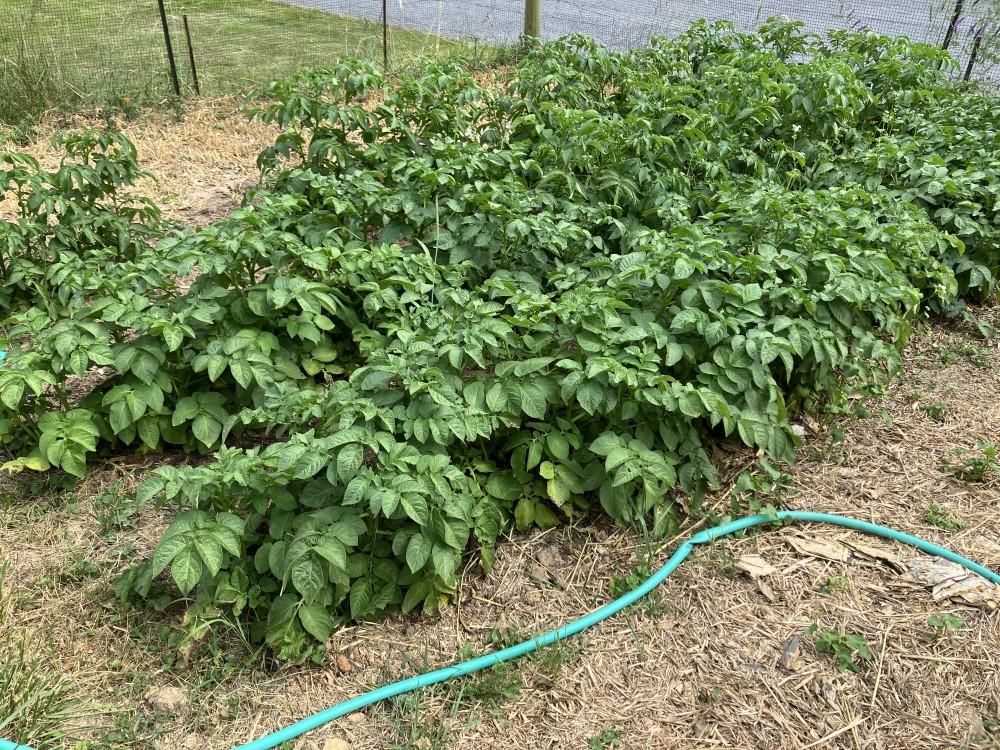
Vegetables planted in garden beds in the ground (level with the surrounding soil) require some additional work if you need to convert an area of lawn. Compared to raised beds, in-ground beds may require more weeding, but they are flexible and inexpensive to set up and maintain.
Potatoes growing in an in-ground garden bed in mid-June. Photo: Jon Traunfeld, University of Maryland Extension
Choosing a vegetable garden location
Several features of the site are important for best plant performance and your ease of use of the space:
Sunlight: The garden should be on level ground in an area that gets at least 6 hours (ideally more) of full sun a day. Full sun exposure should be unobstructed light with no tall objects or trees blocking sunlight on the south side. If you need to garden on a slope, create a terrace first.
Water: Easy access to water is essential. Locate your garden where it is accessible by a water hose from an outside spigot or hydrant.
Competition: Avoid sites bordered by trees and shrubs. They may block sunlight and limit airflow, and their root systems will interfere with the vegetable garden.
Wildlife: Know your local animal population and protect the garden with fencing as needed. If deer are in your area, build a deer fence before planting the first crops.
Accessibility: Make sure you have access to every part of your garden; include paths and room for water hoses, garden carts, and other tools and equipment.
Soil
Soil quality has a large impact on plant health, which in turn affects how well the plant produces a harvest.
If you are growing directly in the ground, have your soil tested to determine nutrient and acidity level (pH), and to be sure it is safe to grow food in (measures less than 400 parts per million of lead).
The soil should be crumbly, not muddy or hard and cracked. Water should drain through the soil and not sit on top for hours after a rain.
The best way to improve soil is to add organic matter, especially compost.
Laying out a vegetable garden
Create a layout plan before building any beds or preparing the planting site.
Allot space for each crop: Create a simple garden map to make it easier to account for how much space each vegetable type needs, and how the garden will fit into the existing landscape. Online tools can help you design your garden and make the most of your space.
Include aisles or paths: All garden areas should be accessible so you can easily water, fertilize, weed, and harvest.
Group plants by the season in which they grow (warm-season versus cool-season) for easier care, harvesting, and changing crops with the seasons.
Account for shadows: Place taller crops on the north and west sides of a garden bed or cluster containers so they will not cast shade on shorter sun-loving plants.
Go vertical to save space: Some vegetable plants grow quite large, and their sprawl or height can use up much of the space available. Sweet potato and winter squash stems spread out widely, pole beans and cucumbers climb or need to grow up a trellis, tomato plants are tall and need support, and corn is very tall and needs to grow in a large patch for good cross-pollination.
Plant in succession: As one crop finishes producing a harvest, another may be able to go in its place. You can grow quick-maturing cool-season crops like lettuce or radishes, harvest them, and then plant summer crops in the same place. It’s good to add some compost to your soil in between plantings.
Choosing what vegetables to grow
Most vegetable crops are annuals, or are grown as annuals: they are planted and harvested in one growing season. Horseradish and asparagus are examples of perennial vegetables. Widely-grown vegetable crops are not native to Maryland, although several are native to North and South America.
Crop selection tips
Taste: Grow what you and your family like to eat!
Cost-saving: Grow vegetables that are expensive to buy, so you can save money.
Easy to grow: Some of the easiest vegetable crops to manage are bush beans, tomatoes, cucumbers, peppers, lettuce, summer squash, and leafy greens (Swiss chard, kale, mustard, etc.)
Grow well in Maryland: Check to see which crops and varieties your friends and neighbors are growing. Look for cultivars with disease resistance. The best source of information on disease-resistant vegetable cultivars is the Cornell University College of Agriculture and Life Sciences reference Cornell Vegetables. You can buy seeds in local stores or through mail-order companies online.
Getting a head start: As a beginning gardener, you may want to buy vegetable seedlings (called transplants) for plants like broccoli, cabbage, tomatoes, and peppers that would otherwise need to be started from seed indoors before being transplanted outside. Many other vegetables can be started outdoors directly from seed. Use the vegetable planting calendar to find out how and when to start these seeds.
Author: Jon Traunfeld, Extension Specialist (retired), Home/Community Food Gardening, March 2026. Revision reviewed by Miri Talabac, Lead Horticulture Coordinator, HGIC. March 2026.
Copy editing by Nancy Klein, Maryland Master Gardener, March 2026.