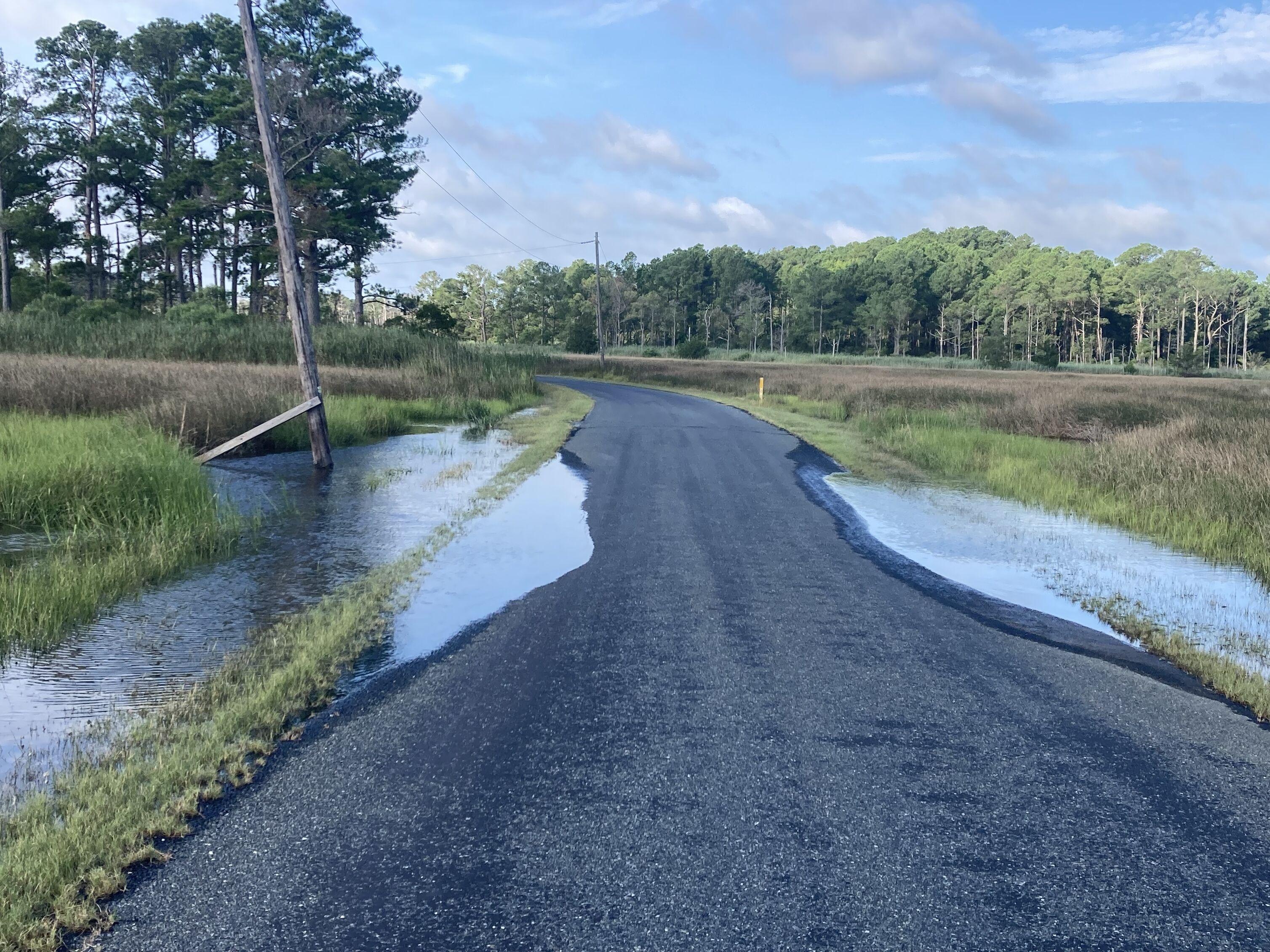
Communities across the Mid-Atlantic face imminent changes to existing infrastructure and water security as a result of rising sea levels and salt intrusion. In the most extreme cases individuals report complete submersion of their homes and destruction of roadways. Further, as more landscapes transition and/or are abandoned, road networks become no longer accessible and more vulnerable to hazards. In addition to infrastructure, interlinked waterways carry salts inland and towards groundwater aquifers affecting coastal communities' access to safe drinking water.
1. Well contamination
Saltwater moves into the surface and onto groundwater freshwater systems reducing the overall water quality for productive land use such as farm,forest operations, and human consumption. These effects can further be exacerbated by climatic factors and overpumping which lowers the water table.
3. Access, Hazards, & Subsidence
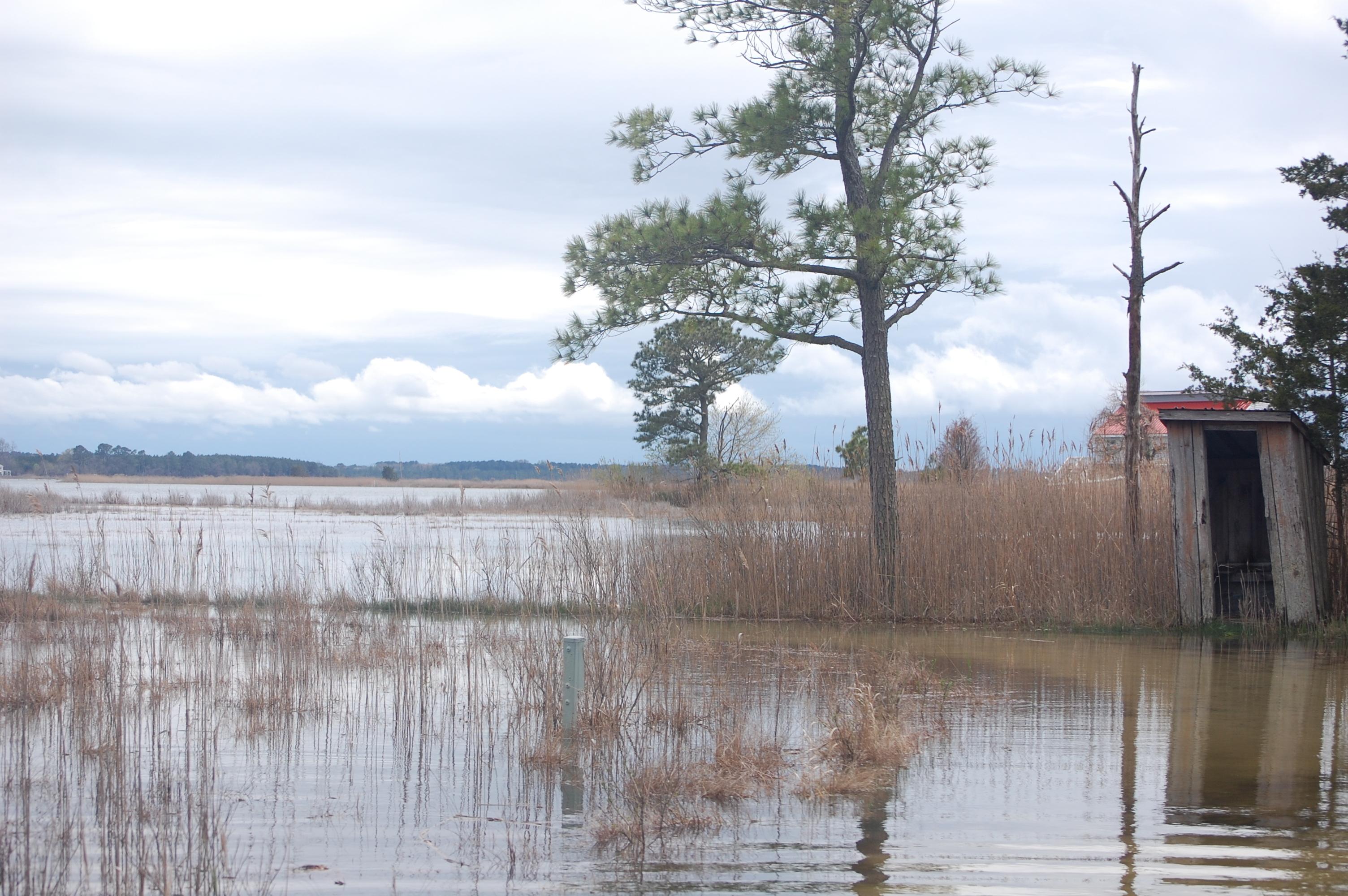
Coastal forests often function as protective buffers, reducing wind damage, stabilizing soils, and slowing storm surges and floodwaters. As salt stress causes tree mortality and canopy loss, properties may become more exposed to storm surge, shoreline erosion, and wind damage. Standing dead trees can also pose safety hazards during storms, increasing the need for tree removal and debris management.
Forest roads, farm lanes, and unpaved access routes are vulnerable to salinity. Prolonged soil saturation reduces load-bearing capacity, leading to rutting, subsidence, and washouts. Drainage ditches may clog or fail as hydrologic flow paths change. In low-lying areas, roads may become seasonally or permanently impassable, limiting access for forestry operations, emergency response, and routine property management.

2. Built infrastructure
Communities living on or in proximity to coastlines are vulnerable as a rising sea level increases flooding events and tidal surge inundating surrounding homes and built infrastructure. The migration of salt also corrodes and breaks down road pavement, bridges and pipes increasing the amount of repeated maintenance. In terms of waste water management systems in addition to worsening overall quality the presence of salt will damage the mechanism of the treatment and operation processes.