Saltwater intrusion and rising sea levels are transforming coastal forests throughout the Mid-Atlantic region. As saline groundwater and tidal flooding move inland, forest soils experience prolonged saturation and increasing salinity stress that many tree species cannot tolerate. Over time, affected forests may transition from healthy woodlands to sparsely vegetated “ghost forests” and eventually to tidal marsh.
1. Ghost forests
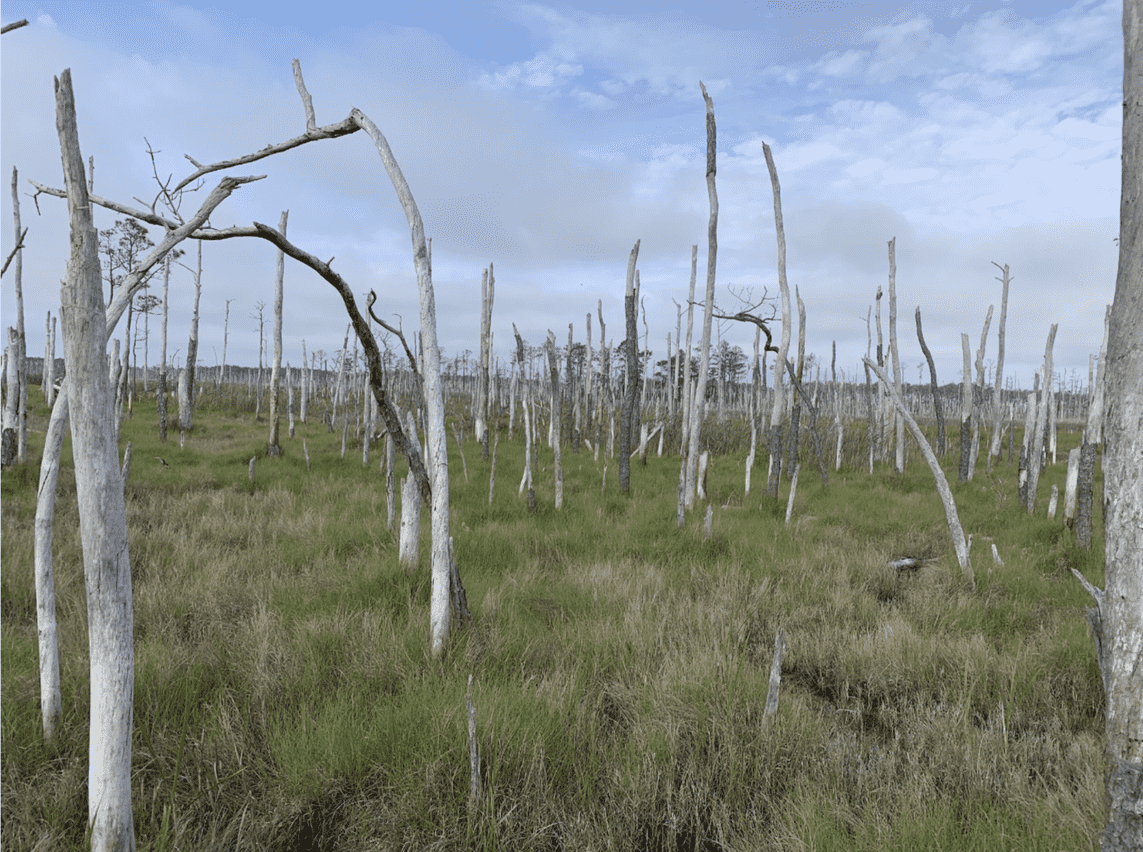
Widespread tree mortality due to saltwater intrusion creates landscapes known as ghost forests. These areas are characterized by standing dead trees that remain after prolonged salinity and waterlogging stress.
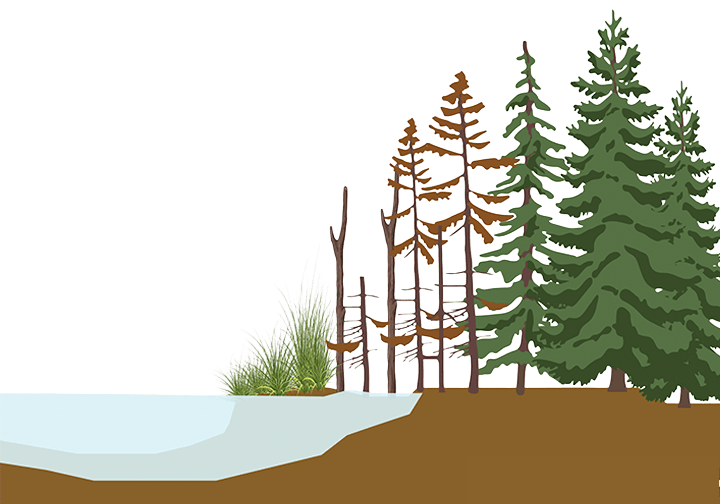
Salt stress and flooding interferes with tree water uptake and oxygen availability in the roots, causing root damage and prevention in nutrient uptake. Because mature trees may persist standing for years after death, ghost forests represent the intermediate stage in ecosystem transition. Seedlings of freshwater forest species struggle to establish under saline and saturated soil conditions, allowing marsh vegetation to gradually migrate inland.
Click here to learn how citizen scientists are documenting the formation of ghost forests
Widespread tree mortality as the result of long-term saltwater intrusion, where rising sea levels have poisoned the landscape (Photo:Unknown)
3. Species/ecological impacts
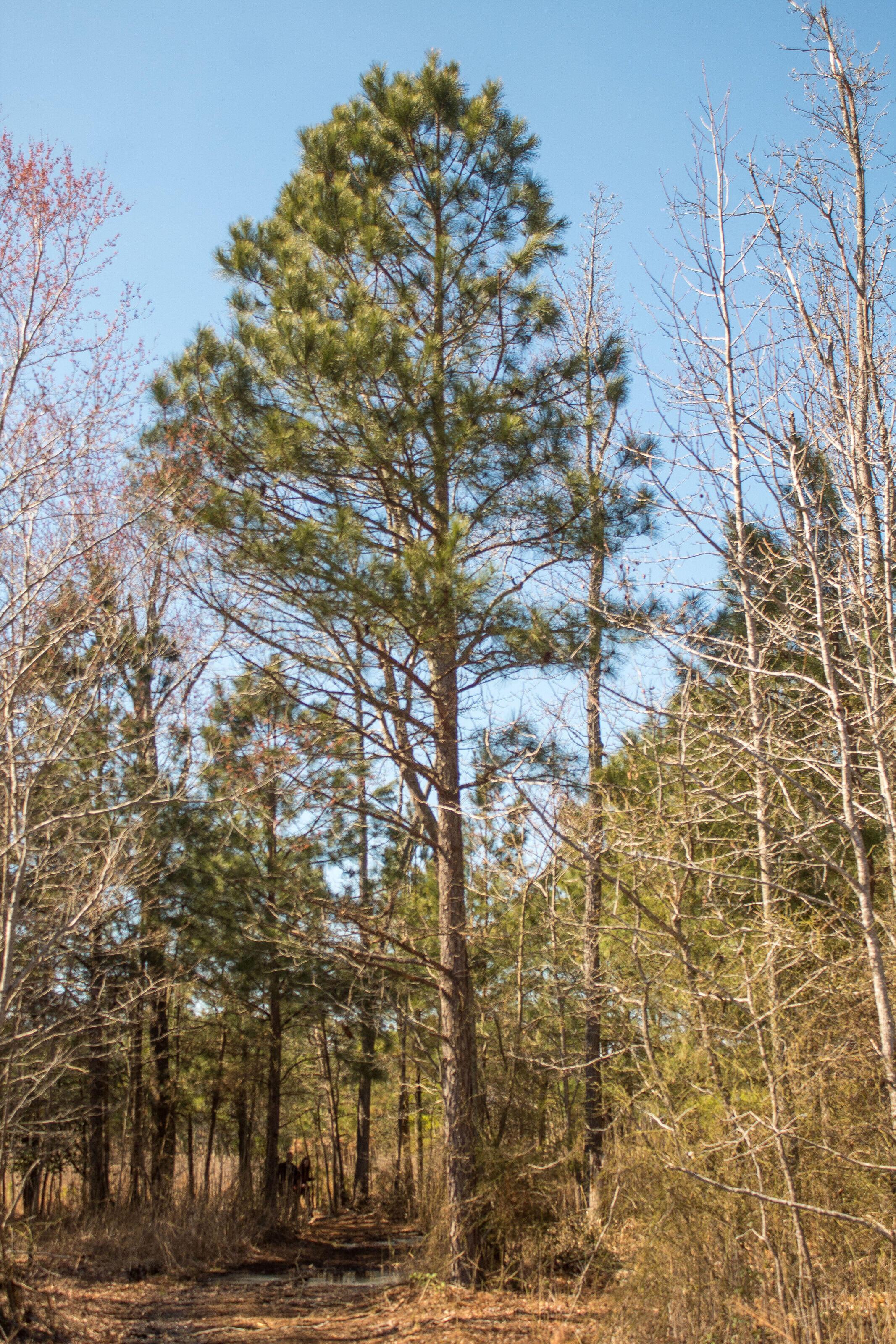
Saltwater intrusion alters forest species composition and ecosystem function. Most dominant coastal forest trees in the Mid-Atlantic (e.g., loblolly pine, red maple, and sweetgum) have low tolerance to salinity and prolonged flooding. As these species decline, salt-tolerant vegetation establishes, changing habitat structure, nutrient cycling, and C storage dynamics.
Transitioning forests often experience increased nutrient release as decomposing roots and organic matter break down under saturated conditions. This elevates C, N, and P export to nearby waterbodies.
Forest loss affects wildlife communities by reducing habitat for forest-dependent birds, shifting nesting and migrating corridors inland, and displacing wildlife that could eventually increase pressure on adjacent agricultural lands.
Salt water and rising sea level transform healthy forests into ghost forests as the uptake of saltwater poisons trees. ( Source: Created in BioRender, Adrianna Celtruda)
2. Harvest challenges
Rising water tables and prolonged soil saturation make forest soils softer and more prone to compaction during equipment use. This can limit access for logging equipment, increase operational costs and safety risks, damage remaining root systems, decrease wood quality, and reduce regeneration success during or following a harvest. In many coastal forests, harvest windows become shorter or disappear entirely as soils remain wet. Landowners may face difficult decisions as declining timber productivity reduces economic return while management costs increase. In severely affected areas, forests may transition faster than management plans can adapt.
Pictured here, a tall loblolly tree (Pinus taeda) which faces significant threats from saltwater intrusion in coastal regions of the Mid Atlantic ( Photo: Adrianna Celtruda)