Skip to main content
Menu
Get Involved
Give
Contact
Ask Extension
About
Leadership
UMD Extension Impact
Careers
Directory
Civil Rights Compliance
Extension Advisory Council and Committees
Program and Organizational Development
Resources
Animal Agriculture
Plant Agriculture
Yard & Garden
Pests
Natural Resources
Environment & Energy
Agribusiness Management
Food & Nutrition
Health & Well-Being
4-H & Youth Education
Programs
4-H Youth Development
Family & Consumer Sciences
Agriculture & Food Systems
Environment & Natural Resources
Home & Garden Information Center
Locations
Publications
News & Events
All News
Events
Insect Pest - Invasive
Home
Resources
Insect Pest - Invasive
For full functionality of this site it is necessary to enable JavaScript. Here are
instructions for how to enable JavaScript in your web browser
.
Sort by:
Date
Title
Updated: October 23, 2024
Allium Leaf Miner Active Soon
If you grow leeks or onions or other Allium species, now and for the next few weeks is the time to watch for the tell-tale marks left by Allium leaf miner. Allium leaf miner Phytomyza gymnostoma tell-tale marks consist of several small round white dots (made by the female’s ovipositor) in a row that appear on the middle towards the end of leaf blades (fig. 1) of their preferred hosts of leeks, onions, garlic and other Allium species.
Updated: October 23, 2024
Stinkbug Damage Found in Tomato Fields
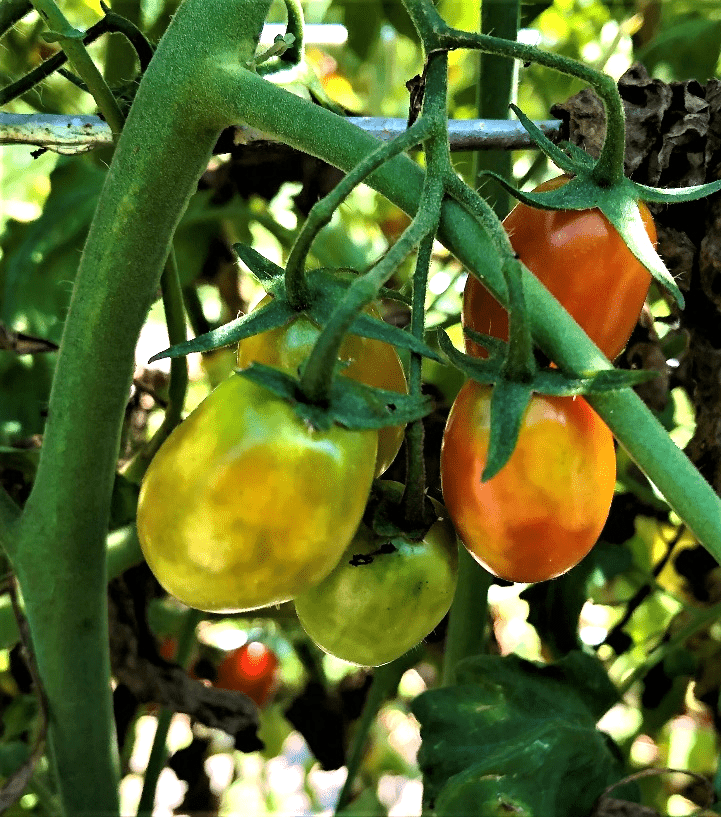
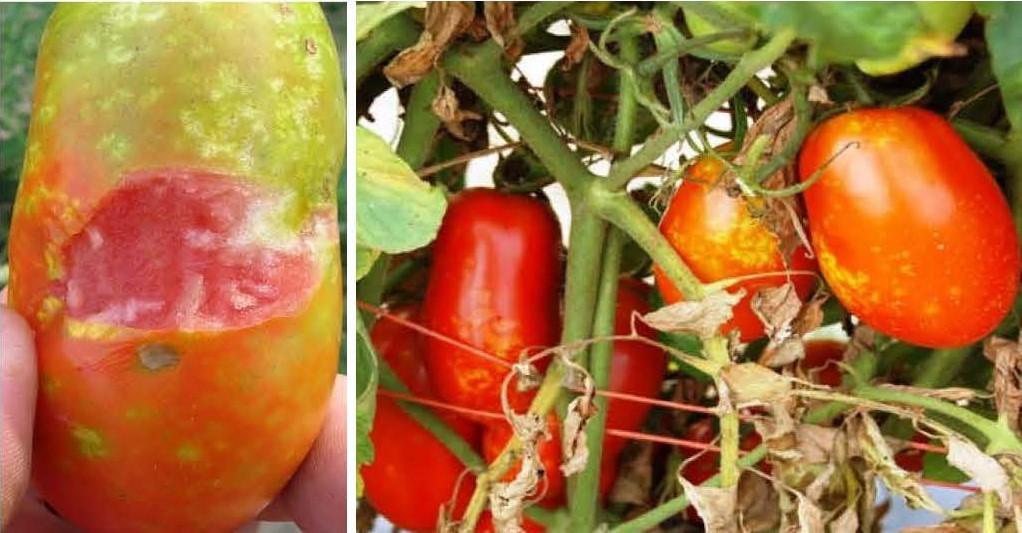
I have seen and have gotten reports of (and some really nice pictures of) stinkbug damage in tomatoes over the past few weeks from all over Maryland including the Eastern Shore. Stinkbug feeding damage is called cloudy spot in tomato fruit (fig. 1). It occurs when the adult or immature stinkbug puts its needle-like mouth parts into the fruit and removes material from a large number of cells. On green fruit the damage appears as whitish areas with a black dot in the center and indistinct borders (fig. 2) on ripe fruit the spots are golden yellow (fig. 1).
Updated: October 23, 2024
Stink Bug Damage Common in Tomatoes This Year (2013)
This has been a bad year for stink bug damage in tomatoes. Just about every field I walk into has at least some damage while others have moderate to heavy damage (>20% tomatoes not marketable). Cloudy spot of tomato fruit is caused by the feeding of various species of stink bug (SB). On green fruit the damage appears as whitish areas with indistinct borders (Fig. 1).
Updated: October 23, 2024
Using Flowering Plants to Help Parasitic Wasps Attack Stink Bug Eggs
Parasitic wasps are beneficial wasps that generally lay their eggs inside the egg, immature or adult stage of another insect commonly called its host. Eggs of these wasps then hatch, leaving the larval wasp which resembles a maggot to consume the contents of the host egg.
Updated: October 23, 2024
Common Stink Bugs of the Mid-Atlantic - Hemiptera: Pentatomidae
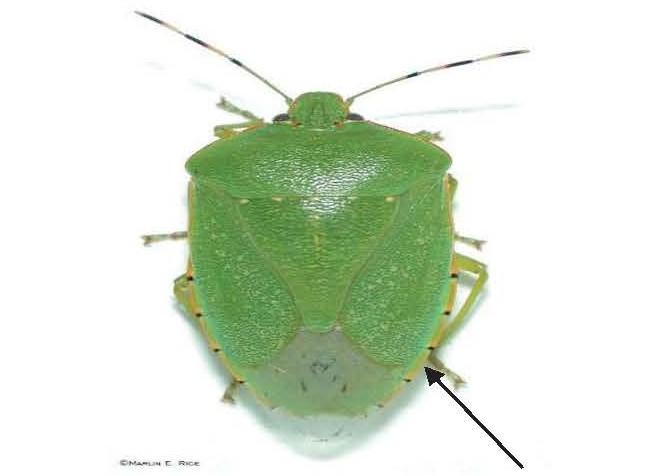
All adult stink bugs are shield shaped. Phytophagus: Green and southern green stink bugs are light green and measure ½" to ¾" long. The green stink bug is bordered by a narrow, orange-yellow line around most of its body (Fig. 1). Brown stink bugs are dull brownish-yellow in color and about ½" long (Fig. 2). The Brown Marmorated stinkbug is a newly introduced pest to the Mid-Atlantic area and can be distinguished from other brown stink bugs by their lighter bands on the antennae and darker bands on the overlapping part at the rear of the front pair of wings (Fig 3).
Updated: October 23, 2024
Brown Marmorated Stink Bug in Peppers
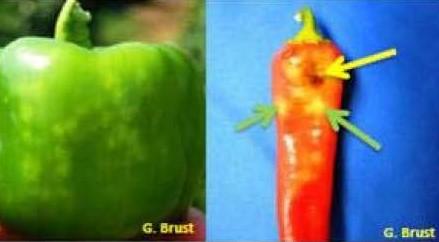
There has been a large and rapid increase in brown marmorated stink bug BMSB) in some pepper fields in the past week in central Maryland. Numbers just two weeks ago in these areas were very low with just a few nymphs observed. We know that BMSB populations tend to increase in August and through the fall into the first frost, but this was such a rapid increase that a great deal of damage was done to bell and banana peppers.
Updated: October 23, 2024
Transmission of the Yeast Eremothecium Coryli to Fruits and Vegetables by the Brown Marmorated Stink Bug
The Brown marmorated stink bug (BMSB) Halyomorpha halys (Figs. 1 and 1a) was accidentally introduced into the United States in shipping containers arriving from Asia. The first confirmed specimen was collected in Allentown, PA in October 2001, although there is evidence that it was collected from black light traps in New Jersey as early as 2000.
Updated: October 23, 2024
Branching Out Fall 2021 News and Notes
The News and Notes roundup for this issue features a way to get caught up on this fall's Woodland Wildlife Wednesday webinars, a way to remove adult Spotted Lanternflies using an empty water bottle, how to have your business listed in our new Natural Area Management Services Providers Directory, and how to order seedlings for spring planting projects from the Maryland State Nursery.
Updated: October 23, 2024
Forest Pests: Spotted Lanternfly
The spotted lanternfly (SLF) is a colorful non-native, invasive pest native to Asia that was first detected in the United States in 2014 in Berks County, Pennsylvania. In addition to Pennsylvania, it has been confirmed in Maryland, Delaware, New Jersey, West Virginia, and Virginia. In Maryland, Cecil and Harford Counties are under a quarantine. The first instar hatch was recorded in Cecil County in May 2020.
Updated: October 23, 2024
Fungal Entomopathogens: An Enigmatic Pest Control Alternative
Entomopathogens are bacteria, fungi, protozoans or viruses that can infect and subsequently cause disease in insects and other arthropods. They can indirectly impact cropping systems by serving as naturally suppressors of insect and mite pests. When there are epizootic outbreaks, entomopathogens are capable of causing rapid declines in large populations of their arthropod hosts. Many of these naturally occurring pathogens have been formulated and commercialized as insecticides.
First
Previous
Page
1
Current page
2
Page
3
Page
4
Next
Last