Skip to main content
Menu
Get Involved
Give
Contact
Ask Extension
About
Leadership
UMD Extension Impact
Careers
Directory
Civil Rights Compliance
Extension Advisory Council and Committees
Program and Organizational Development
Resources
Animal Agriculture
Plant Agriculture
Yard & Garden
Pests
Natural Resources
Environment & Energy
Agribusiness Management
Food & Nutrition
Health & Well-Being
4-H & Youth Education
Programs
4-H Youth Development
Family & Consumer Sciences
Agriculture & Food Systems
Environment & Natural Resources
Home & Garden Information Center
Locations
Publications
News & Events
All News
Events
Insect Pest - Invasive
Home
Resources
Insect Pest - Invasive
For full functionality of this site it is necessary to enable JavaScript. Here are
instructions for how to enable JavaScript in your web browser
.
Sort by:
Date
Title
Updated: October 23, 2024
Vegetable and Fruit News-July 2021
Fruit and Vegetable News, Volume 12, Issue 4 (July 15, 2021)
Updated: October 23, 2024
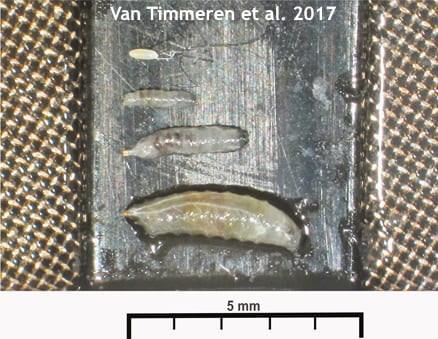
Reminders for Monitoring and Managing Spotted-Wing Drosophila
Spotted-wing drosophila (SWD, Drosophila suzukii) is a small fly that lays its eggs into ripening and ripe soft-skinned fruit, causing direct damage and wounds that other pests and pathogens can use. Although they prefer fully colored ripe fruit, they are capable of infesting fruit that is just starting to turn color and will do so when populations are high.
Updated: October 23, 2024
Reminder to Start Monitoring Spotted-wing Drosophila
Dr. Kelly Hamby reported the presence of Spotted-wing drosophila (SWD) in Central and Western Maryland. Effective strategies to manage SWD include setting up traps, conducting visual inspections, maintaining a 7-day spray interval, using various insecticide modes of action, and considering temperatures during and after spray application. For organic production, Entrust® is recommended. Other measures to reduce SWD populations and protect fruit quality include removing cull fruit, shortening harvest intervals, using mesh netting, and cooling fruit.
Updated: October 23, 2024
Timely Viticulture
Timely Viticulture is an electronic newsletter designed to remind grape producers of seasonal vineyard needs and considerations throughout the year.
Updated: October 23, 2024
Branching Out - Winter 2018
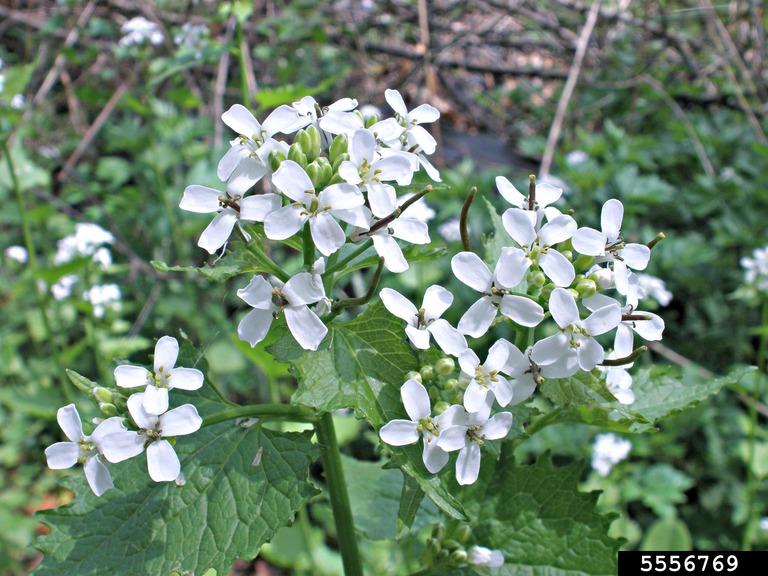
Read about the "Woodland Wildlife Spotlight" and "Invasives in Your Woodland," a recap of October's Maryland Woodland Stewards workshop, and the Brain Tickler challenge.
Updated: October 23, 2024
Branching Out - Fall 2018
Read the "Woodland Wildlife Spotlight" and "Invasives in Your Woodland," a new invasive insect you should know called Spotted Lanternfly, and the Brain Tickler challenge.
Updated: October 23, 2024
Vegetable and Fruit News-November 2021
Fruit and Vegetable News, Volume 12, Issue 7 (November 1, 2021)
Updated: October 23, 2024
Branching Out - Spring 2021
There's news about our new website, as part of the University of Maryland Extension's rebranding efforts. There's also information about the Spotted Lanternfly and about the rebounding forestry industry in Maryland. Our regular features include profiles of the striped skunk in the "Woodland Wildlife Spotlight" and lesser celandine in "Invasives in Your Woodland," as well as our events calendar and the Brain Tickler challenge. Plus, tidbits you may have missed, in the News and Notes section.
Updated: October 23, 2024
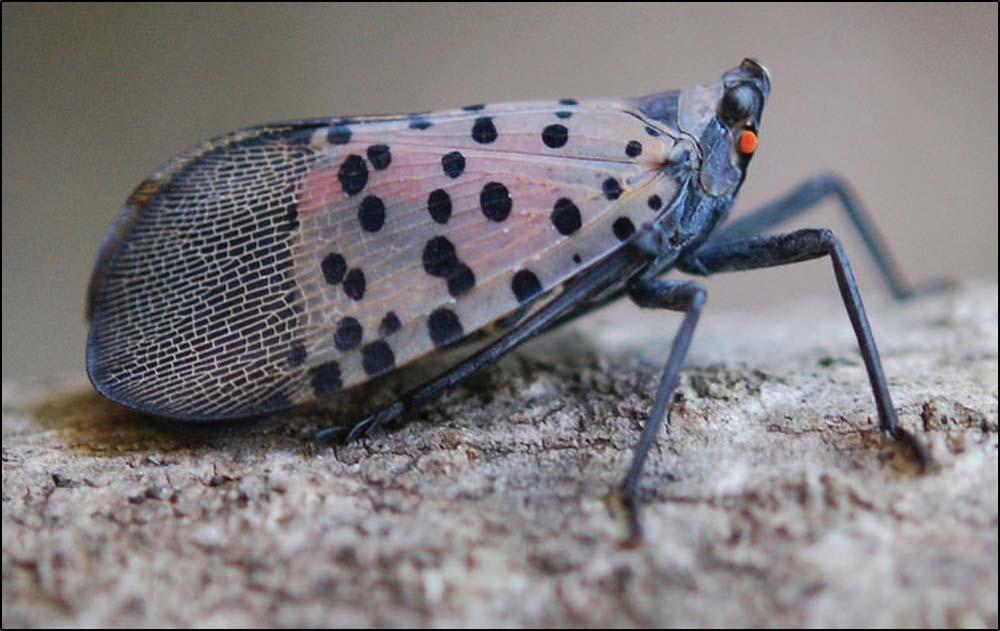
Spotted Lanternfly (SLF) II - Scouting and Management
The Spotted Lanternfly (SLF) is now confirmed in Cecil and Harford Counties in Maryland, and has the potential to be a very significant pest in vineyards. For background information, please see the TimelyVit Spotted Lanternfly (SLF) I—Background, for basic information. This Timely Viticulture was created to give growers information of how to scout for the pest and some management options and strategies.
Updated: October 23, 2024
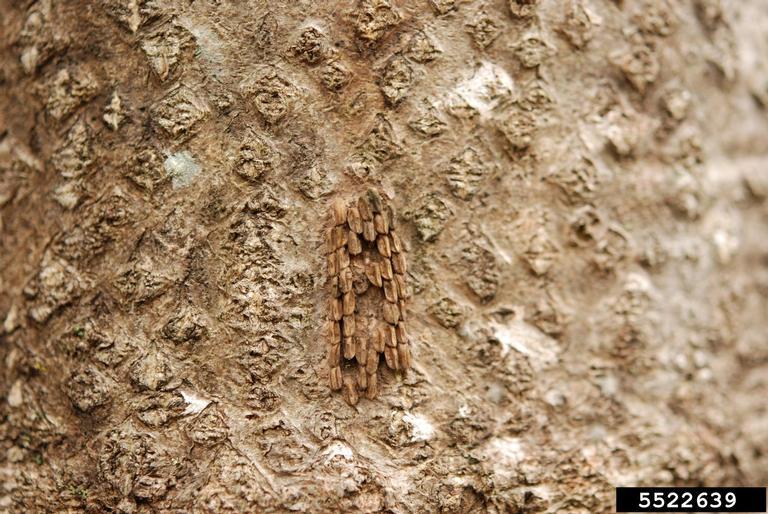
Removal of Spotted Lanternfly Egg Masses
Now is the time to remove the egg masses that the adult spotted lantern fly (SLF) laid last year. To do this you will need some hand sanitizer, a plastic bag, and a firm card for scraping.
First
Previous
Page
1
Page
2
Page
3
Current page
4