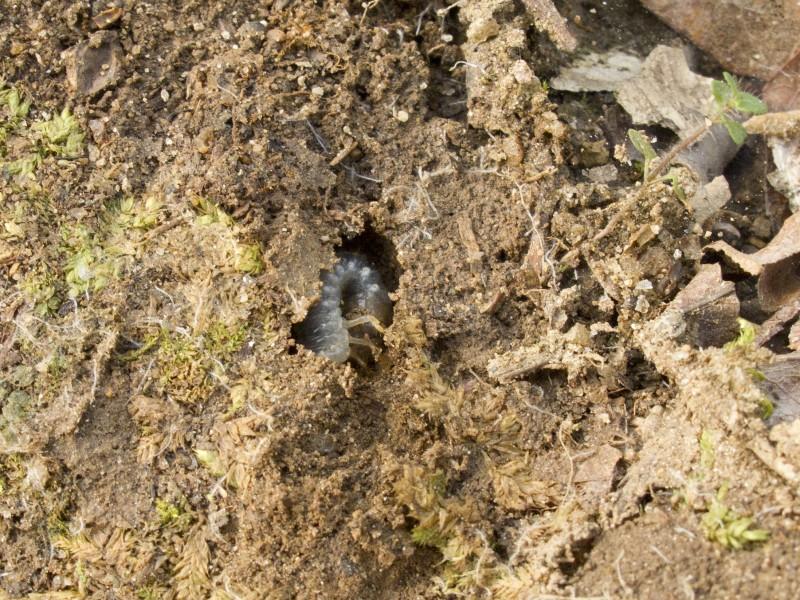
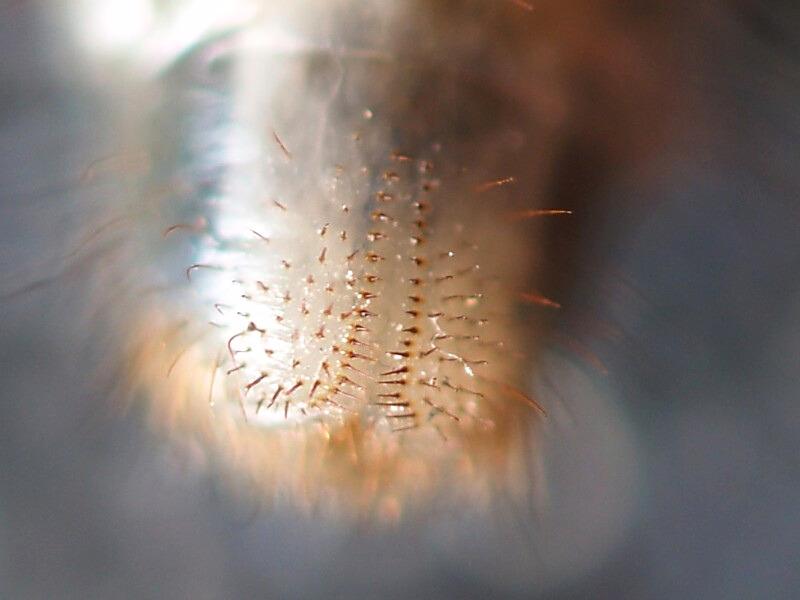
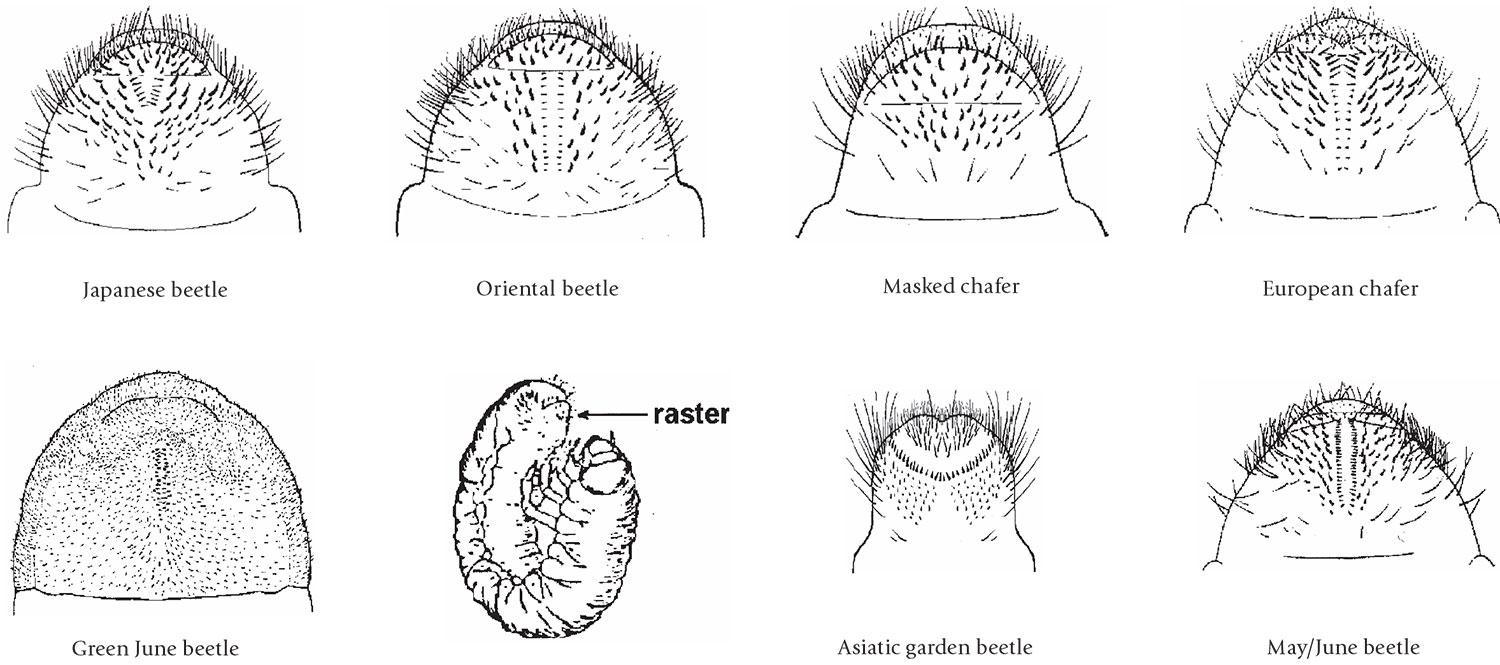
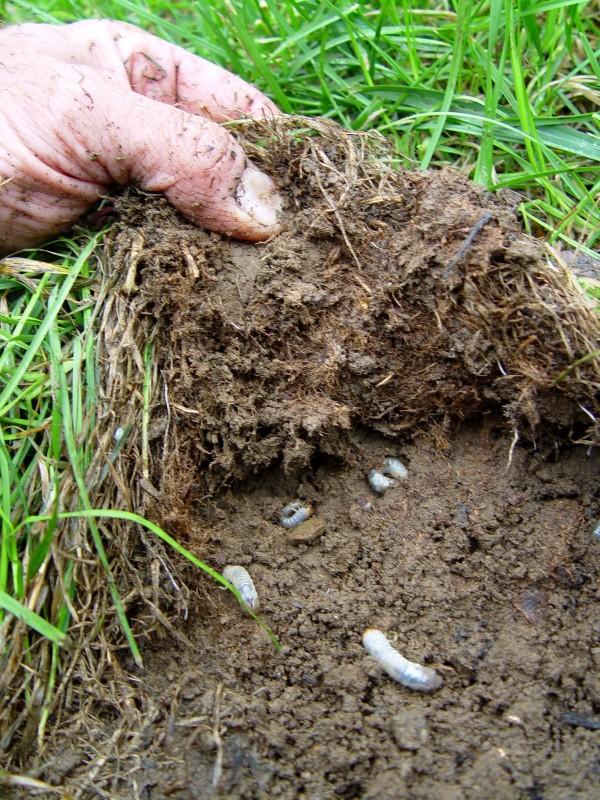
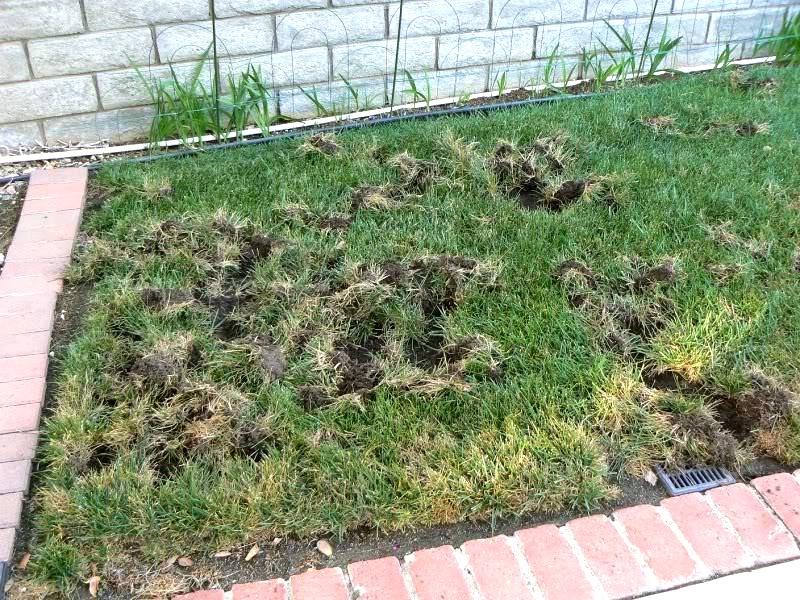
Investigate the cause of turfgrass stress by using a shovel to lift a square foot of sod off the soil. Look for grubs and count how many live in that area. Dig a few sample plots in an area of struggling lawn, since grubs may not be evenly distributed. In many cases, 5 to 10 grubs per square foot indicate controls may be needed, though this can vary by grub and grass species.
In general, most lawns can withstand damage to 10 to 15% of the grass without a substantial loss in quality or the need to intervene. The presence of adult scarab beetles on nearby plants, or drawn to outdoor night lighting, does not necessarily mean that grubs are causing problems in the lawn or garden beds.
If pesticides are not routinely used, older, well-established lawns tend to have enough natural predators, parasites, and insect-infecting pathogens to keep grub populations below damaging levels. Japanese beetle grubs tend to be most common in newer developments with Kentucky bluegrass sod.
Address white grub problems sustainably by using the principles of Integrated Pest Management (IPM). Chemicals (pesticides) are only considered as a last resort when other types of control methods fail, and when the degree of plant damage has become unacceptable.
Cultural control
Healthy turfgrass will tolerate more grub feeding than stressed turfgrass. Maintain lawns by following recommended mowing heights, applying fertilizer (and lime as needed), and performing aeration, overseeding, and other practices based on turf type: Maintaining an Established Lawn
Adult beetles will find irrigated lawns more appealing for egg-laying during a drought. Eggs and young grubs are vulnerable to drying out, which can kill them. However, once grubs begin feeding, the grass can better withstand root loss if it is irrigated during dry spells.
It is not practical to try to interrupt the life cycle by avoiding growing the particular plants adult beetles prefer feeding on. However, if those plants are abundant, grub numbers in a nearby lawn might increase if it is stressed or intensively maintained. A rose hedge, grape arbor, or a row of linden street trees, for example, can be favored by Japanese beetles. May/June beetles prefer oaks. Ripening fruit, such as peaches, grapes, and figs, as well as oozing tree sap attract Green June beetles. Masked and European chafer adults do not feed.
The adults of several scarab beetle species are night-flying and drawn to lights. Turn off landscape and exterior lighting, if possible. Street lamps can attract beetles that may then be more likely to lay eggs in turfgrass nearby.
Biological control
Maryland soils contain abundant organisms that will contribute to white grub control naturally. Some of these organisms or their byproducts are sold as pesticides (“biopesticides” or “biocontrols”) that are applied to the soil. Biocontrols are perishable: storage conditions and environmental conditions during and after application (like rainfall and temperature) impact how effective they are.
Entomopathogenic nematodes
These nematodes are microscopic roundworm parasites that specifically prey on insects (not plants). Soil-dwelling nematodes take refuge in and move through the thin layer of water that exists around soil particles (water films). Their effectiveness is reduced in dry soils and clay soils (which lack adequate pore spaces). They generally function best in moist, loamy soils rich in organic matter.
As live organisms, they need to be stored properly and used promptly. One of the main application methods is to mix the nematodes with water and apply the mixture with a sprayer or a watering can (ideally at dusk or dawn or on a cloudy day to protect them from direct sunlight), followed closely by rain or irrigation water that moves them down into the root zone.
For further application guidelines, refer to the New York State IPM fact sheet Nematodes for White Grubs. Read and follow all product label instructions. Certain nematode species target certain insect pests. Be sure you are selecting a nematode species that is appropriate for your target pest and be aware of any potential non-target insects the nematodes may attack.
No single species of beneficial nematode is effective against all types of white grubs. Because different grub species and life stages vary in their susceptibility, multiple nematode species may be required for the best overall control. The following are some nematode species that have been shown to control white grubs:
- Heterorhabditis bacteriophora has provided good white grub control, particularly of Japanese beetle (Popillia japonica) and Masked Chafer (Cyclocephala borealis) grubs.
- Steinernema scarabaei has shown good control of Japanese beetle (P. japonica), Oriental beetle (Anomala orientalis), Asiatic garden beetle (Maladera castanea), and May/June beetle (Phyllophaga spp.) grubs, but may be more difficult to find commercially. Check with your local professional lawn care companies.
Microbial pathogens
These pathogens are fungal or bacterial spores that infect insects. These insecticides have not provided consistent levels of control in various University field trials. If using any of these pathogens, do not apply any fungicides to the turfgrass immediately after application.
- Milky spore bacteria (Paenibacillus popilliae, formerly named Bacillus popilliae) – one available strain only affects Japanese Beetle grubs; other strains can affect different scarab grubs, but they are not commercially available. Commercially available spores have not been shown to effectively suppress Japanese Beetle grub populations in turfgrass. Infected grubs can take several weeks to die.
- Green fungus (Metarhizium species) – Three-year studies have shown up to a 50% reduction in grub density (Behle et al. 2015).
- White fungus (Beauveria bassiana) – May take several weeks to take effect.
Microbial toxins
These toxins are proteins produced by naturally-occurring bacteria which poison the insect once it ingests them.
- Bacillus thuringiensis (Bt) is a bacterium whose protein toxin damages the insect gut. Grubs will stop feeding soon after exposure, and die within several days. Bt strain galleriae (Btg) is used for white grub control.
- Based on a number of University studies, moderate control levels (70-80%) for Japanese beetle and masked chafer grubs occurred when Bt was applied to early-instar grubs (July to early August), but efficacy can vary; some studies have shown granular Btg fails to control Japanese beetle grubs in turfgrass. This product may be difficult to find on the market, and more research is needed regarding its impacts on the larvae of other beetle species, such as fireflies.
- Avoid applying/spraying foliar Btg near and in flower gardens to minimize nontarget impacts on butterfly and moth species (like monarch butterfly caterpillars).
Natural enemies
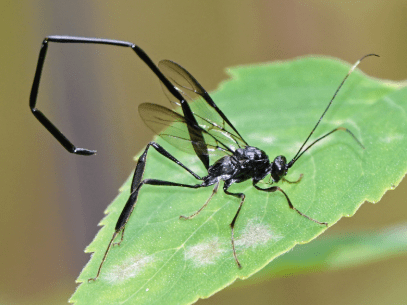
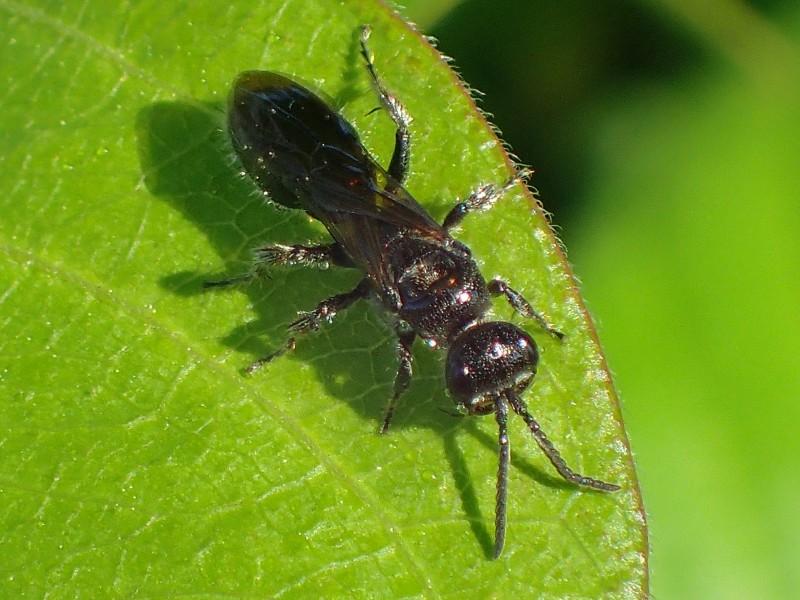
A wide range of natural enemies, including predatory and parasitic insects, feed on scarab beetle eggs, larvae (grubs), and adults. Grow a range of native plants to support predators and parasitoids, including perennials that bloom in late summer and early autumn to provide nectar for wasps that prey on white grubs. Spiders and various predatory or parasitic mites, beetles, wasps, and flies have been documented preying on white grubs.
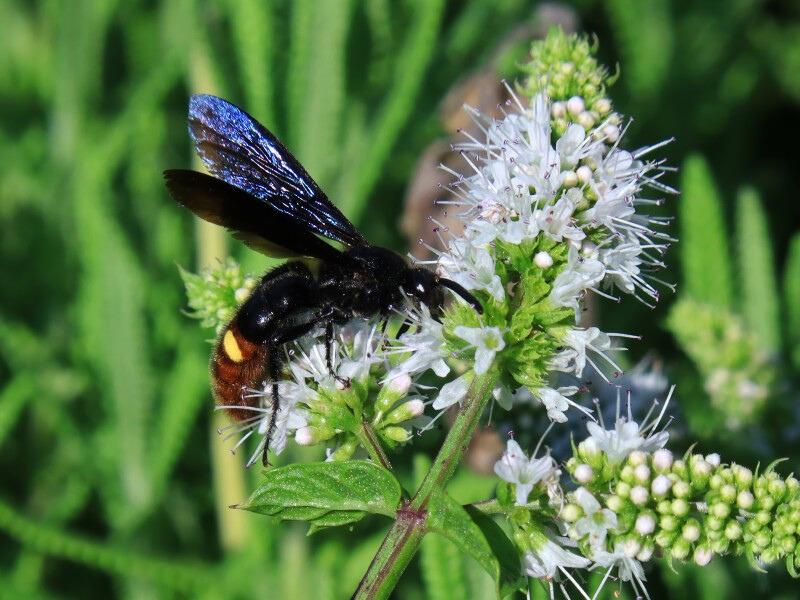
- Scoliid wasps: this family of wasps uses beetle grubs as prey for the parasitic wasp larvae. Adult wasps visit flowers for nectar, and are often seen flying over a lawn in search of prey or a mate.
- The blue-winged wasp (Scolia dubia) is common across Maryland. It has iridescent blue-black wings and a mostly-black hairy body. The rear half of its abdomen has a pair of yellow spots on a rusty-brown background. Adults are active in late summer, hunting for grubs during the day. Adult females locate, paralyze, and lay eggs on white grubs in the soil. They are not aggressive and ignore people if they are left alone.
Chemical control
Insecticides that are labeled for white grubs can provide excellent control when applied properly, but may have consequences for beneficial insects or other organisms. To reduce pesticide use, only treat turf areas that are damaged by grubs, not the entire lawn.
White grub chemical controls can be preventative or curative. If you have a history of grub issues in an area, use preventative chemical controls to help prevent future grub problems. Curative chemical controls target and help manage present grubs (larval stages). Carefully consider the time of year, and whether it would be best to apply a curative control (early to mid-summer) vs. a preventative control (late summer).
Timing is critical when applying grub-control chemical products, as many are only effective during specific stages of the white grub life cycle. If you choose to use chemical treatments, always read and follow the label instructions to ensure you are applying the product at the recommended time of year. Most products are not effective when applied in the spring. Depending on the product, the earliest recommended treatments typically begin around June. Other products will only be effective if applied in late summer.
Thatch buildup in lawns can significantly reduce the efficacy of grub control pesticides because the chemical becomes bound to the thatch, even if it is watered-in. (Excess thatch also attracts egg-laying green June beetle adults.)
- Remove thatch before applying an insecticide if the layer exceeds half an inch.
- Zoysia, bermudagrass, and Kentucky bluegrass tend to produce lots of thatch. Fescues and perennial ryegrass produce thatch slowly enough that it generally doesn’t need removal.
Another reason that chemical controls may fail is due to enhanced microbial degradation, a process where soil microorganisms begin breaking down the insecticide faster after the same product has been used repeatedly in the same area. To reduce this risk, avoid applying insecticides more often than necessary and limit broad blanket treatments.
Always read the product label carefully before choosing and using a pesticide. Note that all white grub chemical control products should be irrigated (watered-in) after treatment according to specific label directions. If using pesticides over multiple growing seasons, consider rotating pesticides with different modes of action to reduce the likelihood of resistance (the pest becoming resistant to the pesticide). Each pesticide label includes information about its mode of action, typically identified by a group number or letter. Active ingredients in products used for grub control can include:
- Chlorantraniliprole – Used as a preventative that can also help to manage surface-feeding lawn insects like sod webworms and cutworms; typically it is most effective when applied in May or June.
- Imidacloprid – Used as a preventative and sometimes as a curative. Maryland law restricts the use of this class of chemical (neonicotinoids) to certified pesticide applicators; they cannot be applied outdoors by home gardeners. Imidacloprid can have negative impacts on pollinators. Typically it is most effective when applied in late June or early August.
- Trichlorfon – Used as a curative and is typically most effective when applied late August or early September.