Well-nourished turfgrass supports healthy, vigorous growth that is resistant to stress and better able to rebound from damage. Lawns face many stresses, including regular mowing, wear-and-tear, drought, weed competition, and pest or disease outbreaks.
Fertilize responsibly
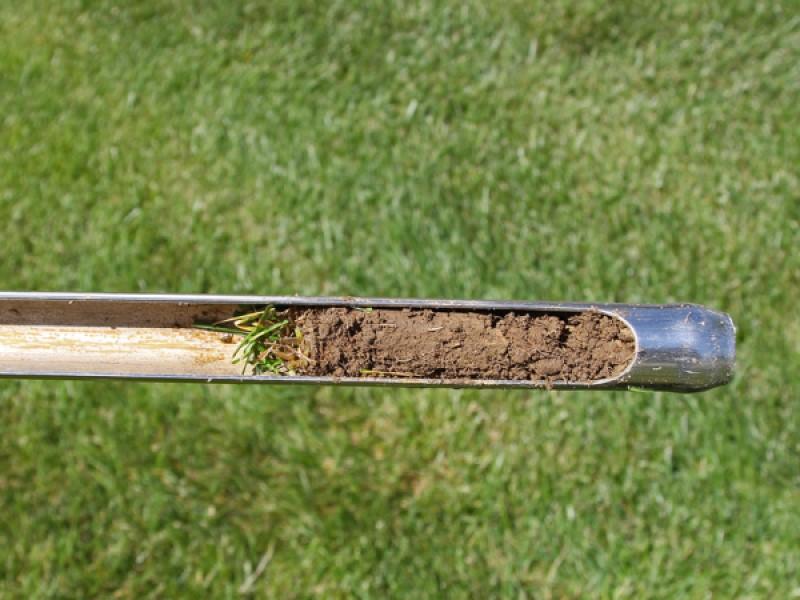
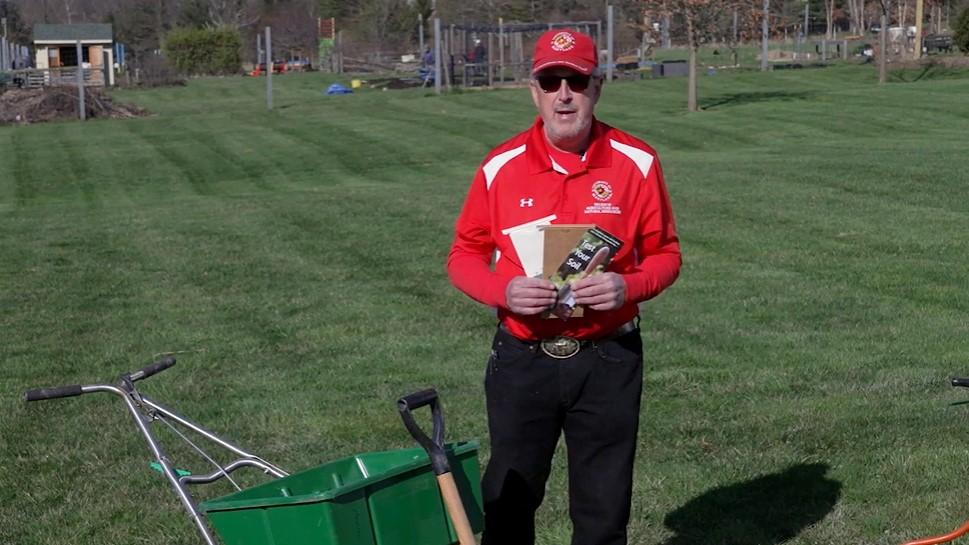
Do not guess what nutrients the lawn needs: measure them with a laboratory soil test. Testing once about every 3 years is sufficient. Over-applying and under-applying fertilizer can contribute to problems.
Fertilizer application rate and timing
How much fertilizer to apply, and what time of year to apply it, depends on lawn type:
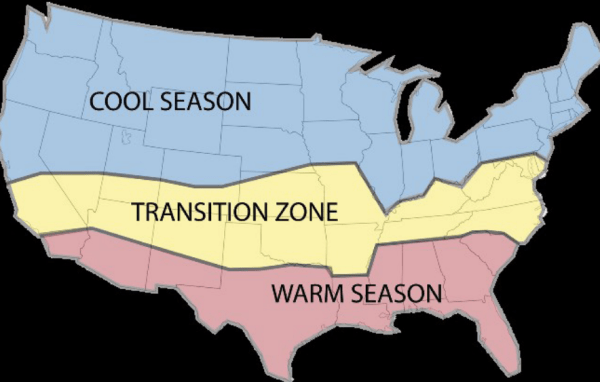
- Cool-season lawns (fescues and bluegrass) are best fertilized late summer into autumn.
- Warm-season lawns (zoysia and bermudagrass) are fertilized late spring into summer.
In the following chart, application amounts are listed in pounds of nitrogen (N) per 1,000 square feet of lawn. Fertilizer bags typically cover 5,000, 10,000, or 15,000 square feet. Do not over-fertilize: excessive nitrogen can make lawns more vulnerable to diseases and less resistant to stress.
Nitrogen application timing and rate (in pounds per 1,000 square feet of lawn) for each turf type.| Turf type (dominant grass) | September | October through Nov. 15 | May to early June | June to July | August | Maximum yearly N |
|---|
| Tall fescue | 0.7 to 0.9 | 0.7 to 0.9 | 0.5 to 0.9 (optional) | none | none | 2.7 |
| Kentucky bluegrass | 0.7 to 0.9 | 0.7 to 0.9 | 0.5 to 0.9 (optional) | none | none | 2.7 |
| Fine fescue | 0.7 to 0.9 | none | 0.5 (optional) | none | none | 1.4 |
| Zoysia | none | none | 0.7 to 0.9 | 0.5 to 0.9 (optional) | none | 1.8 |
| Bermudagrass | none | none | 0.7 to 0.9 | 0.7 to 0.9 | 0.5 to 0.9 (optional) | 2.7 |
Skip fertilizer applications listed as optional, except in any of these situations:
- Newly-established lawns, or lawns that need help recovering from heavy use, a pest or disease outbreak, or other causes of damage
- Lawns with poor vigor, density, or color (lighter green) – note that some grassy weeds naturally have a lighter color (like roughstalk bluegrass) or darker color (annual bluegrass) that are not reliable indicators of turfgrass health
- Grass clippings are removed and not mulched into the lawn
- History of a severe crabgrass infestation
- Skipped fall fertilization
Types of nitrogen
Nitrogen can be provided in water-soluble (quick-release) and water-insoluble (slow-release or controlled-release) forms. Water-soluble N is less expensive and can green-up a lawn quickly, but it only has short-term impacts and risks “burning” the grass from overexposure. Water-insoluble nitrogen (WIN) is more expensive but provides a more even release of N as soil microbes and other factors gradually convert WIN into soluble forms.
In the fertilizer chart, the low end of the N range applies to using water-soluble N sources, such as urea and ammonium sulfate. The high end of the range applies to using a product combining water-soluble and water-insoluble N.
In addition to promoting more uniform growth, slow-release N reduces the risk of leaching (polluting water runoff). Due to the faster loss of water-soluble nitrogen, lawns growing in a sandy soil or near a high water table should favor slow-release N.
Lawn fertilizers used in Maryland must contain a minimum of 20% slow-release N. Applied according to the label directions, they should provide no more than 0.9 pounds per 1,000 square feet of total N per application. “Maintenance” fertilizer formulations for routine use will also be P-free except for “starter” formulations that are intended for use on new lawns. When fertilizers can be used that do contain P, look for a general N-P-K ratio of about 3:1:2.
Account for compost nutrients
Compost contains low levels of slow-release nutrients, including nitrogen. If it is applied to an established lawn as a top-dressing to amend soil or sow seed, its nutrient content must be included in the annual application limits. About 5 to 10% of the N and 30 to 50% of the P in compost is available to plants in the year it is applied. Top-dressing with organic matter will not provide all of the turf’s N and P needs, so the lawn will likely still need fertilization.
Commercial bagged or bulk compost sources should have nutrient analysis data available (less than 2 years old). Homemade or farm-sourced compost would need to be tested to measure nutrient content. A standard soil test is not the same as a compost test; a compost analysis test may cost about $50.
Use compost nutrient analysis results to determine how much to apply to a lawn per 1,000 square feet (use the same equation for either N or P):
desired P application rate ÷ percentage P content from analysis = pounds of compost to apply
Lawns with more than one turf type
The fertilization of lawns with a combination of cool- and warm-season grasses is less straightforward, which is why restricting a lawn to one grass type is ideal. If the grasses grow in distinct areas (for example, zoysia in the front yard and fescue in the back yard), care for each area according to that turf type.
If the grasses intermingle throughout the lawn, a compromise will need to be made. For a mix of tall fescue and zoysia, make two fertilizer applications per year: one during the first fertilization window of time recommended for zoysia (late spring), and the second during the main fertilization window recommended for tall fescue (early autumn).
When a tall fescue lawn contains a high percentage of fine fescue, the total annual nitrogen application could be reduced to between 2.0 and 2.7 pounds of nitrogen per 1,000 square feet.
Nutrient sources
Nutrients can come from natural sources (organic matter in the soil) and from fertilizer. To rely less on synthetic fertilizers, allow finely-chopped (“mulched”) grass clippings and leaf litter to self-compost on the lawn instead of removing them. Recycling nutrients from these sources for at least two years can provide about 25% of your lawn's annual nutrient needs. This reduces fertilizer use by potentially eliminating one application each year.
Nitrogen is the nutrient lawns generally need supplemented the most. New lawns less than 2 years old should receive the maximum amount of nitrogen fertilizer to help with establishment. In subsequent years, the optional fertilizer application can be skipped. Healthy lawns established for about 10 years or more may only need one nitrogen application per year.
Corn gluten is an organic source of nitrogen that can be used to fertilize established lawns. It is also sold as an herbicide to prevent weed seed germination. However, when corn gluten is used to suppress weeds, the amount of nitrogen per application exceeds the amount allowed by the fertilizer law. Directions for use on the bag’s label should list separate rates of application for weed control and for fertilizing.
Fertilizer application tools
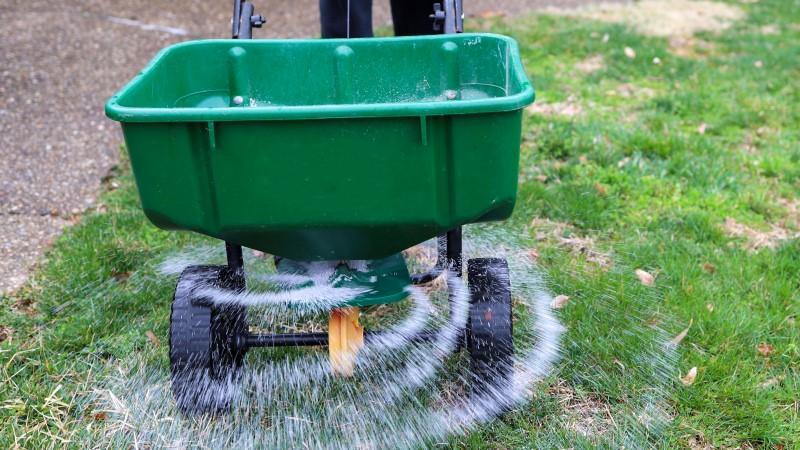
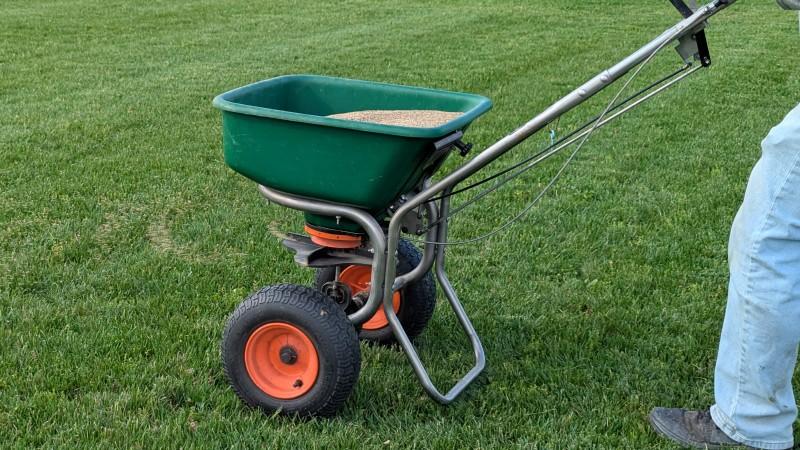
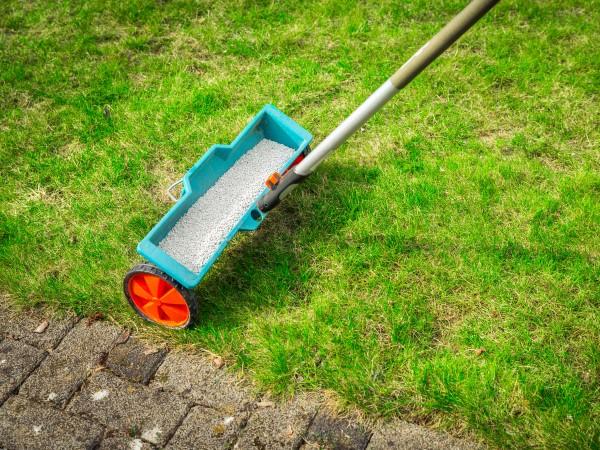
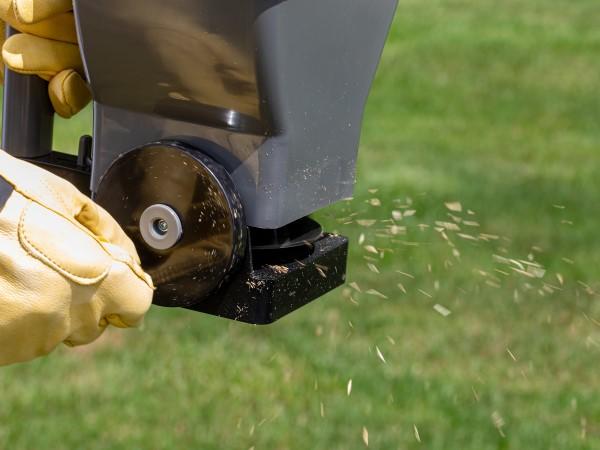
Lawn spreaders consist of a basin with an adjustable gate in the bottom where the fertilizer falls through. Spreaders can be wheeled walk-behind models or handheld. Calibration settings for how fast fertilizer is released vary from one brand of spreader to another; refer to the user manual.
- Drop spreaders let the fertilizer fall straight down onto the ground between the wheels. This style is the easiest to use for its precision next to pavement, in small spaces, or in curved lawn areas to avoid overlapping applications.
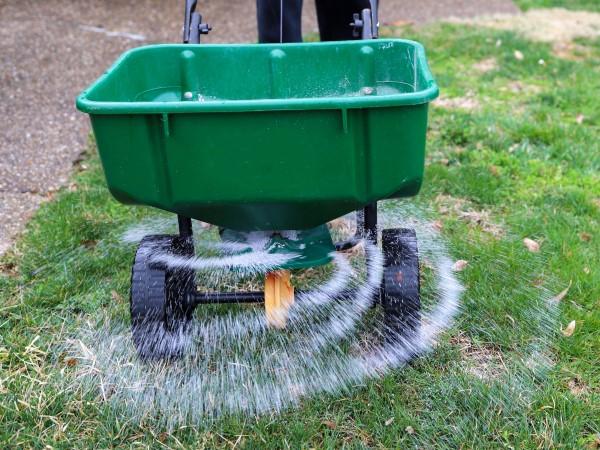
- Broadcast (rotary) spreaders use a spinning disc below the falling fertilizer to fling it out to a wider area. The rate of spin depends on either how fast you walk or how fast you crank a handle on a handheld model. Some broadcast spreaders have an adjustable or removable shield/deflector on one side of the disc to keep fertilizer from being applied to pavement, garden beds, or other surfaces.