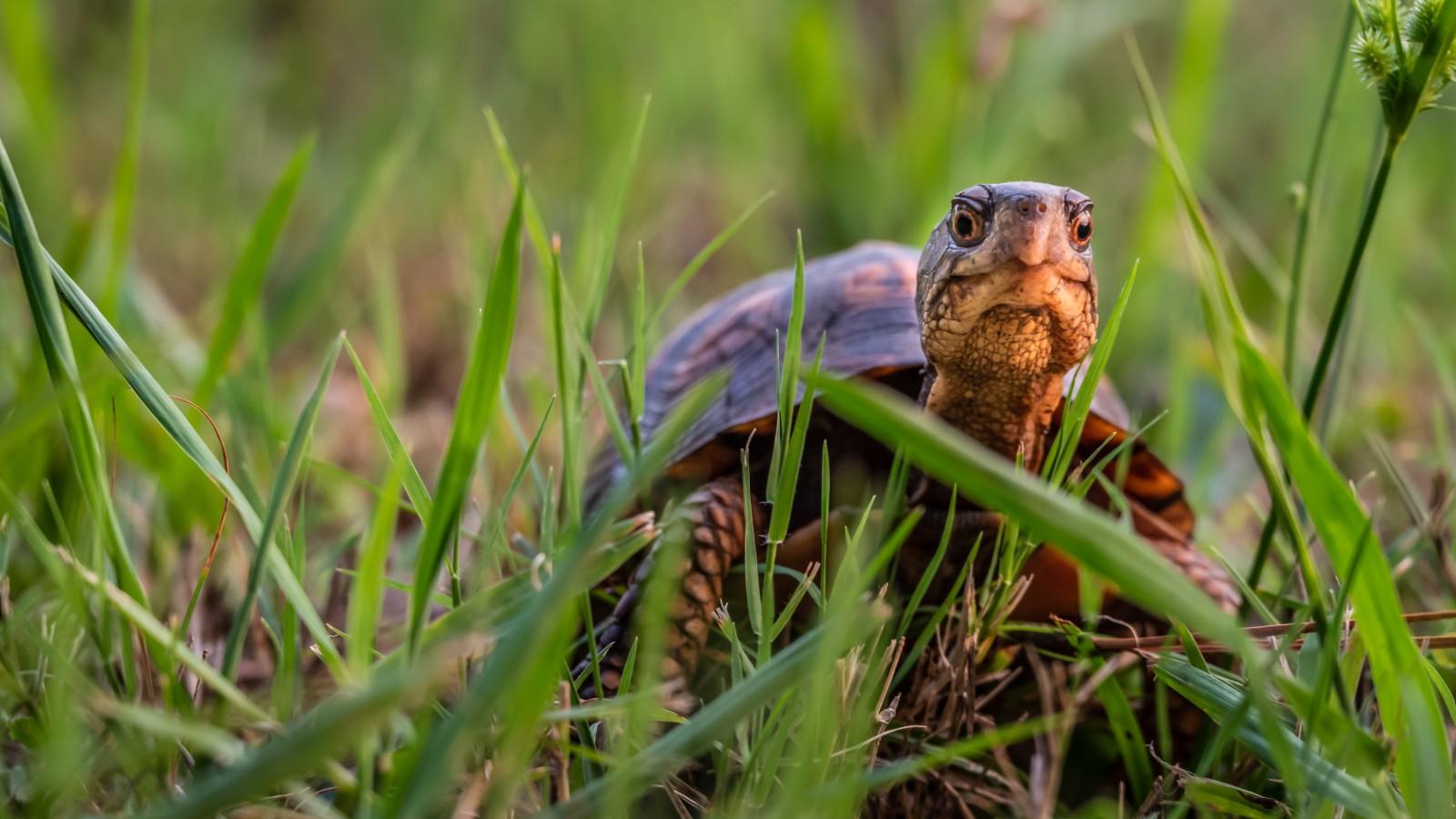
Box turtles can wander into lawns. Be mindful of their safety when mowing and deciding how to manage pests or weeds. Photo: Adobe Stock
Updated: March 16, 2026
Key points about environmentally-friendly lawn care
The goal of sustainable lawn care is to reduce the use of synthetic fertilizers and pesticides. It does not discontinue basic lawn care maintenance practices; rather, it uses more eco-conscious alternatives for the benefit of humans, pets, wildlife, pollinators, and the environment.
Research shows that a very low-maintenance approach of mowing alone is not necessarily the most environmentally-sound practice (Ervin, 2011), and may lead to areas of bare soil, contributing to soil erosion and runoff. Mowing more sporadically is also not recommended: learn more about "no-mow May" and its disadvantages.
Like conventional lawn care, organic lawn care requires an investment of time and money for the best results. If you need help, contact a lawn care company with an organic program.
When conditions for vigorous turf growth cannot be provided, consider using lawn alternatives that are better-suited to that location.
Explore lawn alternatives
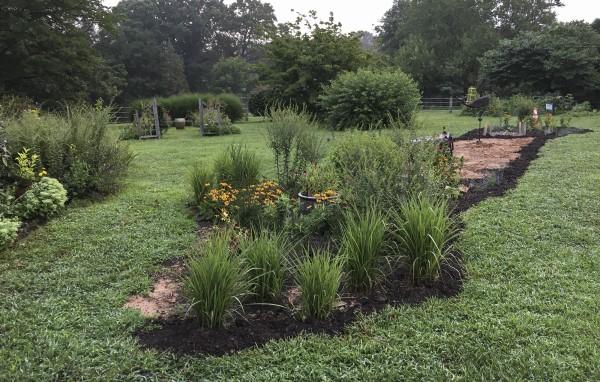
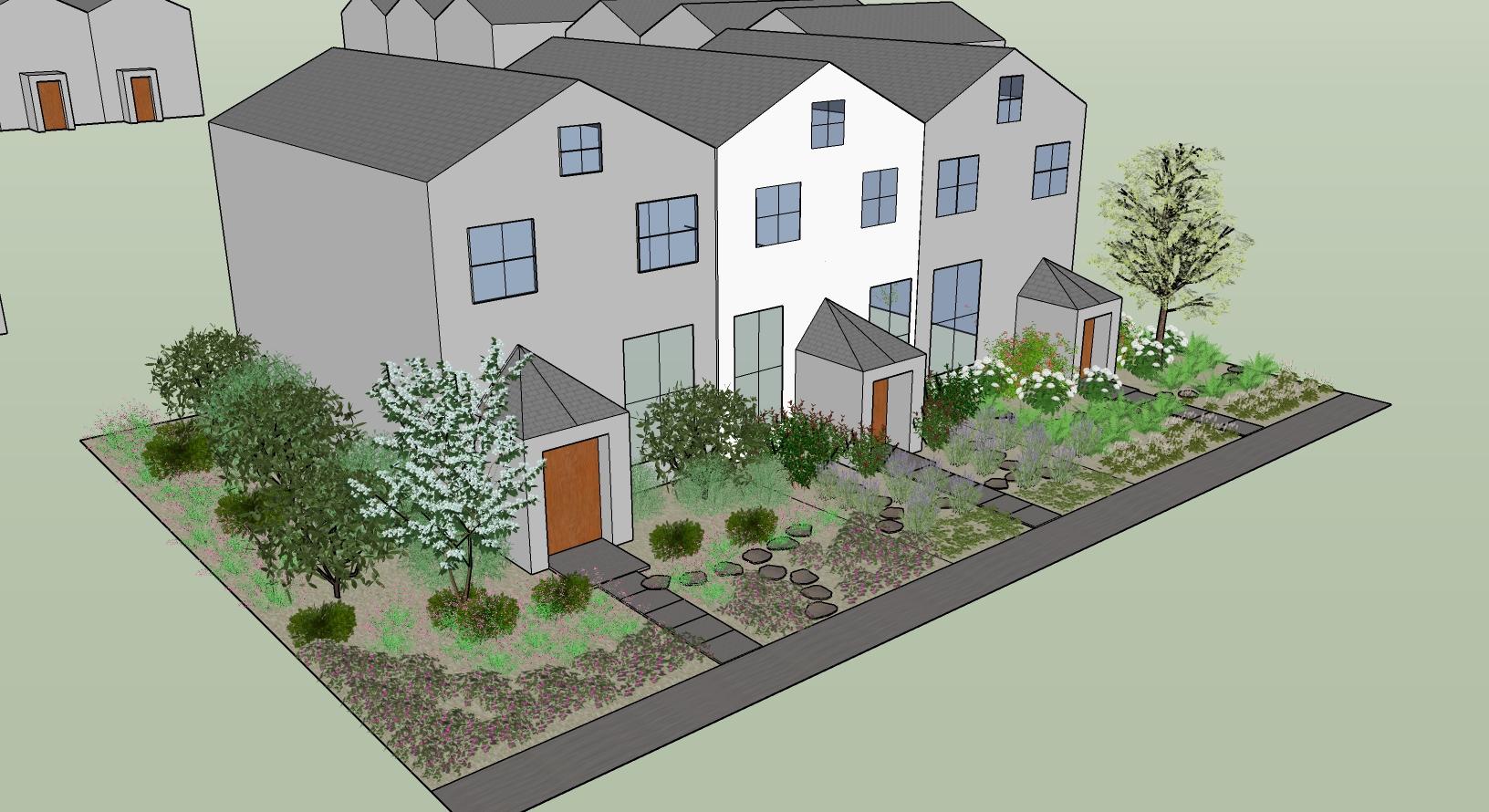
Converting Lawns Into Diverse Landscapes: Case Studies
Organic lawn care substitutes organic alternatives for any fertilizer or pesticide used in a conventional approach to lawn care and maintenance. Sustainable practices for recycling nutrients and supporting soil and grass health still apply: test the soil before applying lime or nutrients, use recommended turfgrass cultivars, and mow high with a mulching mower. Avoid pesticide applications to protect natural enemies (the predators of pests) so they can provide free, self-sustaining pest suppression.
Nutrient sources, soil health, and avoiding pollution
Organic lawn fertilizers are composed of ingredients like alfalfa meal, Chilean nitrate, corn gluten, feather meal, and cottonseed meal. They may cost more than synthetic fertilizers.
To comply with Maryland's Lawn Fertilizer Law, look for a product that contains zero phosphorus (the P in the N-P-K nutrient analysis) unless laboratory soil test results measured a phosphorus deficiency in your soil.
Although compost improves soil texture as a soil amendment, research done at the University of Maryland turfgrass testing facility showed that compost tea applied to lawns had little effect on turf growth. Compost tea is created by “steeping” finished compost in aerated water to extract beneficial microbes and nutrients.
Autumn leaves on the lawn can be raked aside or turned into soil-improving organic matter and a natural fertilizer. Running them over (when dry) with a mower a couple of times to shred them lets them filter down to the soil surface for decomposition. For ecosystem support, however, it’s better to keep the leaves whole and move them onto areas where they can decompose at their own pace while sheltering and feeding wildlife.
Gasoline-powered equipment is a large contributor to greenhouse gases. Consider electric and battery-powered options for any new or replacement equipment.
A perfect-looking lawn free of weeds and pest or disease damage is not realistic; it’s okay to have a few weeds or temporary blemishes from an insect or fungal issue. Even conventional lawn care methods can’t sustainably achieve this due to The Challenge of Growing a Lawn in Maryland. Local conditions are too stressful for turfgrass to thrive and remain vigorous year-round, and our climate is conducive to several turf diseases. If a problem area degrades too often for lawn renovation to fix, convert it to alternative plantings that aren’t vulnerable to the same issues.
Organic lawns and pesticide use
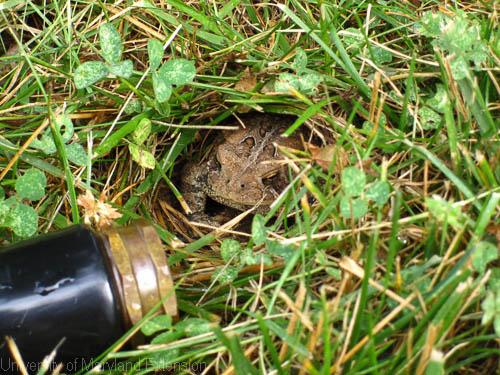
A toad hunkers-down into a depression in a lawn to stay moist and cool. Amphibians are highly sensitive to environmental pollutants. Photo: University of Maryland Extension
Ideally, pesticides should not be used, but if they are the only way to overcome a significant problem with pests, diseases, or weeds (instead of replacing the lawn in those areas), consider organic options.
Compared to synthetic pesticides, organic pesticide ingredients are found in nature, either biologically-derived (as live organisms or extracts from organisms) or mineral-based substances. All ingredients in an organic pesticide (both active and inert), plus its instructions for use, must meet the U.S. Department of Agriculture’s National Organic Program (NOP) criteria as approved by the Environmental Protection Agency (EPA).
Minimum-risk pesticides are not required to have EPA registration; most are considered organic. For example, acetic acid (horticultural-strength “vinegar”) is classified as a minimum-risk herbicide; how it was made determines if it is considered organic or synthetic.
Pesticide selection is influenced by product cost, availability, and ease of use. Reliability is also important, since several organic ingredients are more expensive than synthetic alternatives (in initial cost and due to necessary re-applications).
Local regulations
Some jurisdictions in Maryland regulate pesticide use on lawns and other areas. The restrictions apply to home gardeners as well as lawn care professionals.
Organic does not equal “harmless” or mean that the pesticide is safer than alternatives for people, pets, wildlife, or even turfgrass. Always refer to the product label for specific instructions regarding pests controlled, application details, allowed pesticide combinations, and storage. Read and follow all label directions. Product label comments on toxicity or relative safety refer to the active ingredient only, not necessarily the product’s complete formulation.
Managing problems sustainably
Pests
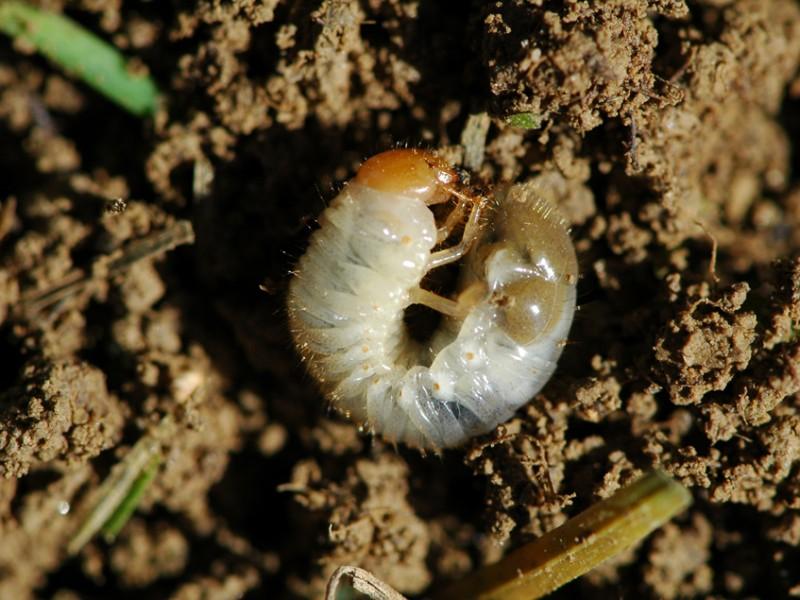
White grubs in low numbers are not damaging. Photo: Mike Raupp, University of Maryland Extension
Learn which lawn insects cause significant damage and which do not. Pest insects are rarely a significant problem in healthy lawns. Attempting to remove grass spiders and insects like ants and ground-nesting wasps from a lawn can harm beneficial and harmless insects like predatory ground beetles and fireflies.
White grubs can be an occasional problem, but are often wrongly blamed for grass decline. Alternatives exist to pesticide treatments for managing ticks and mosquitoes.
Diseases
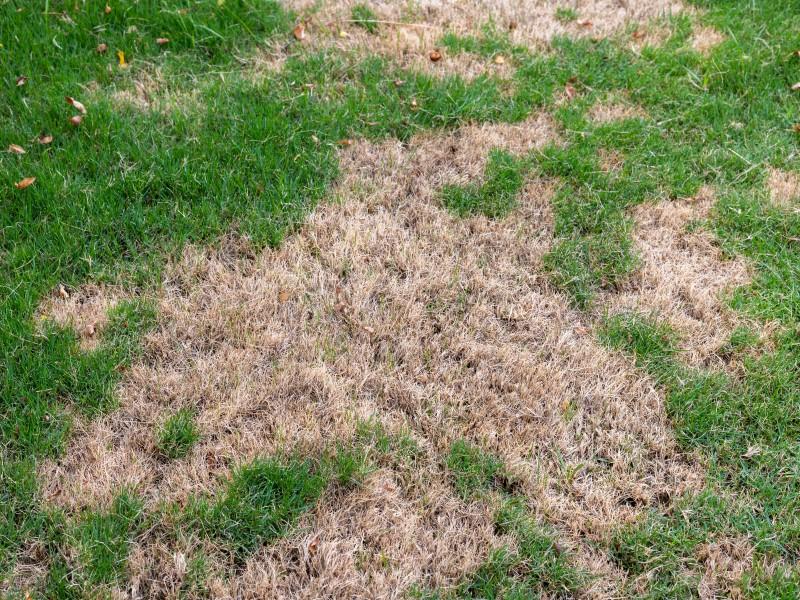
Patchy lawn dieback symptoms. Photo: Adobe Stock
Discourage diseases by avoiding conditions that make infections more likely, such as irrigating too often or too late in the day (so the grass blades don’t dry by nightfall). Conventional fungicides are not part of an organic lawn care program, and they cannot cure existing disease. Although some organic fungicides do exist, they are not reliably effective, and more research is needed before they would be recommended.
Brown patch is a common summer problem in Maryland’s fescue lawns. Affected lawns will typically recover with proper fertilization and the return of rainfall in autumn. Otherwise, reseed areas with dieback in early autumn or spring.
Weeds
Reconsider what qualifies as a lawn weed that needs to be removed; some may benefit pollinators, birds, or other wildlife. Prioritize invasive species for removal, but try to accept other native or non-native species that can cohabitate with the lawn without out-competing it. Examples of locally-native species commonly found in lawns include common blue violet and nimblewill.
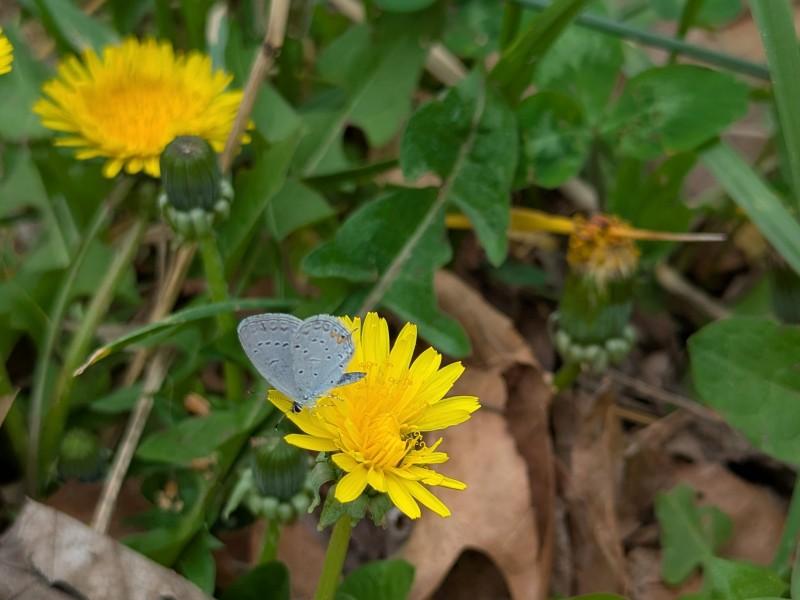
Eastern tailed blue butterfly visiting a dandelion flower. Photo: Miri Talabac, University of Maryland Extension
Any areas where weeds take over the grass imply that conditions aren’t suitable for the grass without improvement, and would be better-suited to lawn alternatives. If the underlying reason why a weed is present is not corrected, achieving long-term control of that weed is not likely, even when using an herbicide (organic or synthetic). Some weeds are associated with particular conditions that need addressing in order for turfgrass to grow well after weed removal. For example:
Yellow nutsedge prefers to grow in areas with damp soil due to poor drainage or over-irrigation.
Annual bluegrass is very tolerant of compacted, consistently-moist soil.
Pre-emergent herbicides prevent seeds from germinating successfully. They create a chemical barrier on the soil surface that needs to be undisturbed for the period of time weed seeds are sprouting. If the barrier is broken by digging, the application will be less effective.
Post-emergent herbicides affect weeds that are already rooted and growing leaves.
Selective herbicides target a particular group of plants by affecting that group more greatly than another group. Examples include grasses versus broadleaf plants, and warm-season versus cool-season grasses.
Non-selective herbicides will affect a wide range of plants, often any plant exposed to the application.
Contact herbicides only affect the plant parts the application directly contacts.
Systemic herbicides are absorbed into plant tissues in order to reach roots.
Organic herbicides
Organic herbicides can suppress most weeds in conjunction with practices that encourage lush turfgrass growth. Examples of their active ingredients include botanical oils, horticultural soaps, iron HEDTA, and acetic acid. Most organic herbicide ingredients are post-emergent, contact, and non-selective in action. Iron HEDTA is somewhat selective for broadleaf weeds and some grassy weeds growing among cool-season turfgrasses.
Weed-and-feed products are combinations of fertilizer and herbicide, and they are not part of an organic lawn care program. (They are not recommended for conventional lawn care either, because they do not allow for the separate use of either ingredient at the ideal time or dosage for what individual lawns need.) Certain herbicides in these products may also risk damage to trees and shrubs whose roots grow into the lawn.
Corn gluten, a byproduct of the commercial corn milling process, is widely sold and acts as a pre-emergent herbicide and a fertilizer. However, the dose needed to effectively prevent weed germination exceeds the nitrogen application restrictions of the Maryland lawn fertilizer law.
To avoid any herbicide use, identify unwanted weeds when they are young and remove them manually. To use less post-emergent herbicide, spot-treat weeds by targeting applications only to the weed itself, not broadcasting an application onto the entire lawn.
Considerations for pollinators
In general, pollinators will best be supported by converting lawns to other plantings, such as mixed-species groups of native plants with a variety of bloom times. A lawn’s value to pollinators, sometimes called a “bee lawn,” can be enhanced by providing nectar and pollen sources as well as minimal disturbances to nesting habitat.
If you pause mowing to benefit pollinators, gradually transition back to a regular mowing height so the turfgrass is not badly stressed or damaged by having a significant portion of the leaf blade removed at once. This can be difficult to do, since home mowers usually can’t raise the mower blades high enough to only remove one-third of the taller grass, which is the maximum recommended amount to cut off per mowing. A string trimmer may suffice until the grass is short enough to mow.
Flowering plants mixed into a lawn can benefit pollinators. However, only generalist bees and a few other insects may find non-native lawn weeds (such as white clover and common dandelion) useful. About a quarter of all northeastern bee species are pollen specialists. They require particular plants that typically won’t grow or bloom well in a lawn setting.
Lawns and microclover
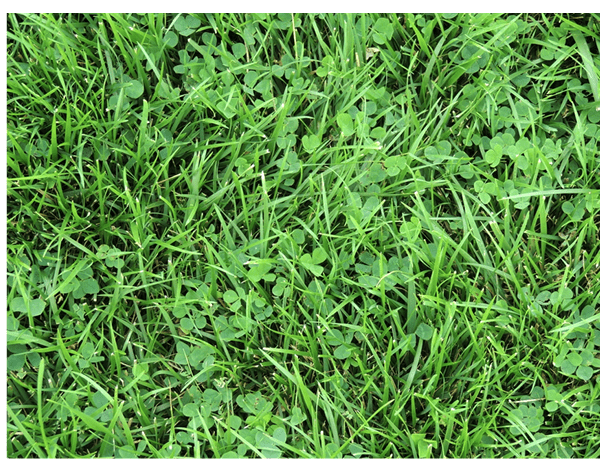
Tall fescue mixed with microclover. Photo: University of Maryland
Dutch white clover (Trifolium repens) is a perennial native to Europe. Microclover refers to dwarf cultivars of white clover, such as ‘Pirouette’ and ‘Pipolina’. They have smaller leaves, fewer flowers, and a lower growth habit that is more clump-forming and less aggressively spreading.
Lawns should not be converted from turfgrass to pure clover. Microclover can be included as a component of lawns, but no current research supports its successful use as a groundcover or lawn alternative in Maryland. All clovers lose leaves in winter, which is a problem where extensive clover growth displaces the grass. Seasonally-bare areas create opportunity for weed seeds to establish before the clover regrows, and can contribute to erosion that pollutes waterways.
Even though clover will be of limited benefit to pollinators as a nectar source or host plant (food for immature insects), it has other benefits as a legume. Through a symbiotic relationship with Rhizobium soil bacteria, legumes are able to transform (“fix”) nitrogen gas from the air into an organic form of nitrogen that can be used by plants. This process allows legumes to thrive in soils low in nitrogen, and it can make that nutrient more accessible to neighboring plants.
Prior to the 1950s introduction of broadleaf herbicides for home use, clover was a valued component of lawn seed mixtures for its ability to enrich the soil and improve turfgrass growth. Limiting nitrogen runoff from fertilizer applications helps to protect the health of the Chesapeake Bay watershed.
The University of Maryland conducted research on microclover used in combination with turf-type tall fescue, and found the following:
Advantages:
mixes well with tall fescue and Kentucky bluegrass for a uniform appearance
provides an organic source of nitrogen (in lawn clippings as they decay) to support turfgrass growth
may reduce annual nitrogen applications to once per year
blooms provide food for some bees and other pollinators
Disadvantages:
not very tolerant of high heat and drought; dies back as cool-season lawns enter summer dormancy
poor shade tolerance
not maintenance-free – requires reseeding yearly to maintain enough abundance in the lawn
seed tends to be expensive and not as widely available as grass seed
most broadleaf or non-selective herbicides labeled for use on tall fescue will kill clover
vulnerable to fungal southern blight outbreaks during periods of warm, humid overnight conditions
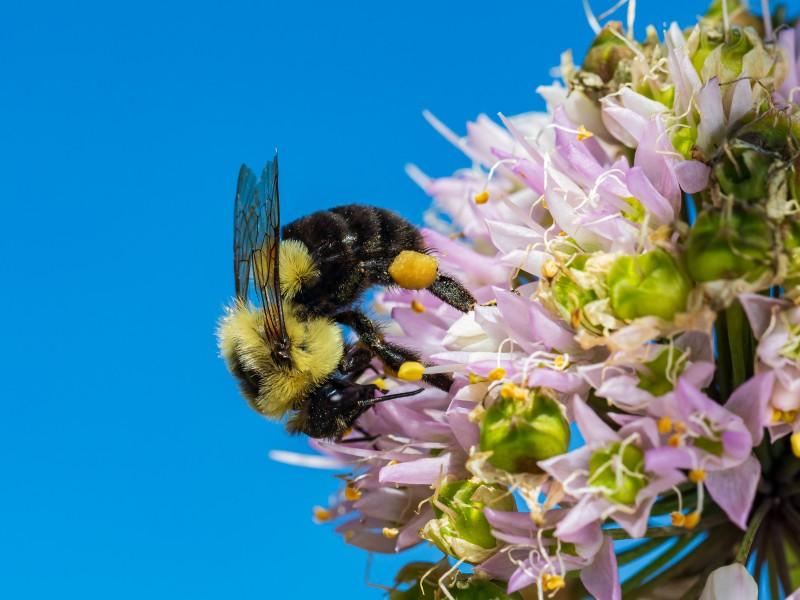
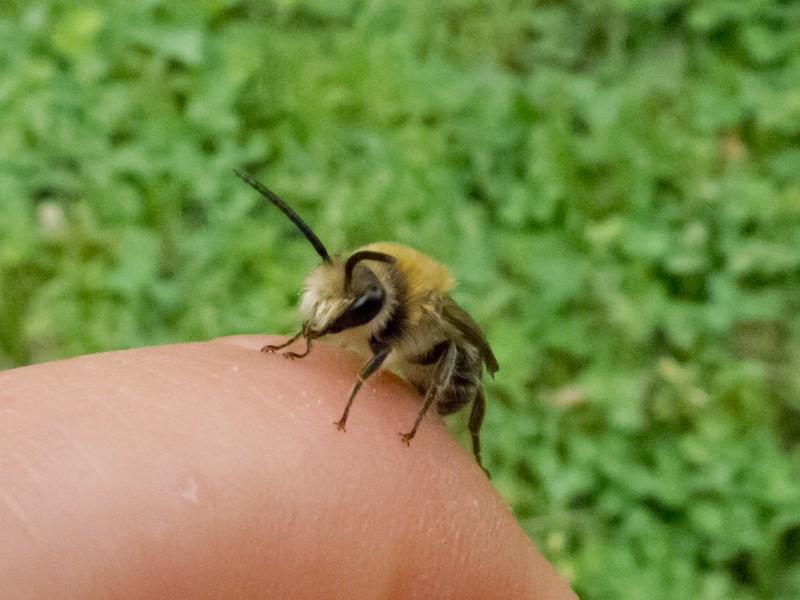
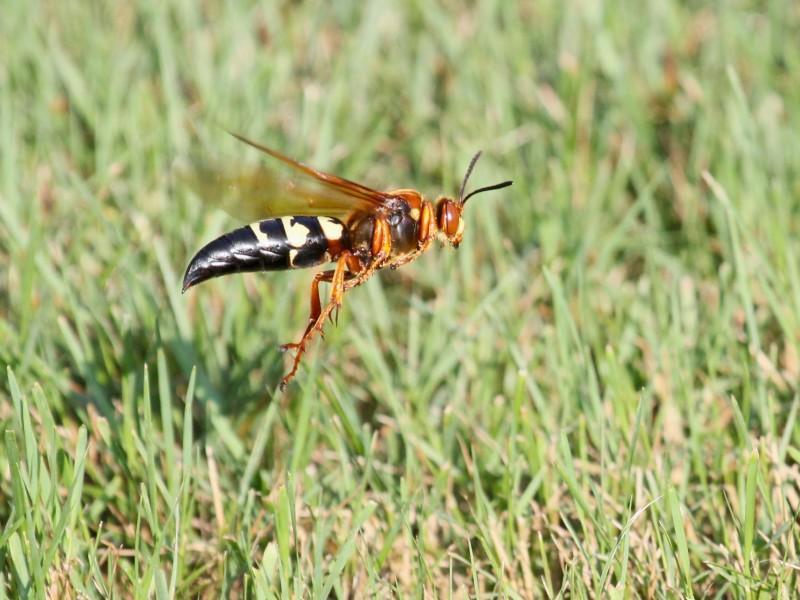
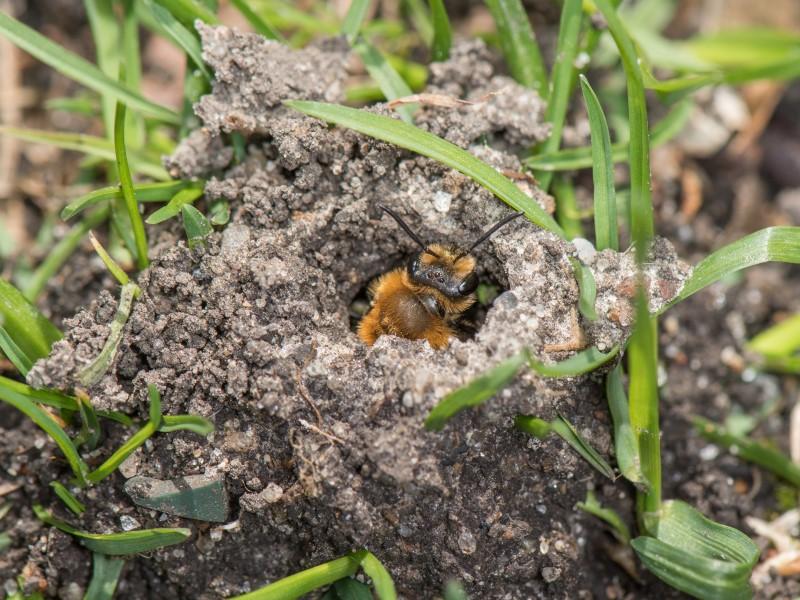
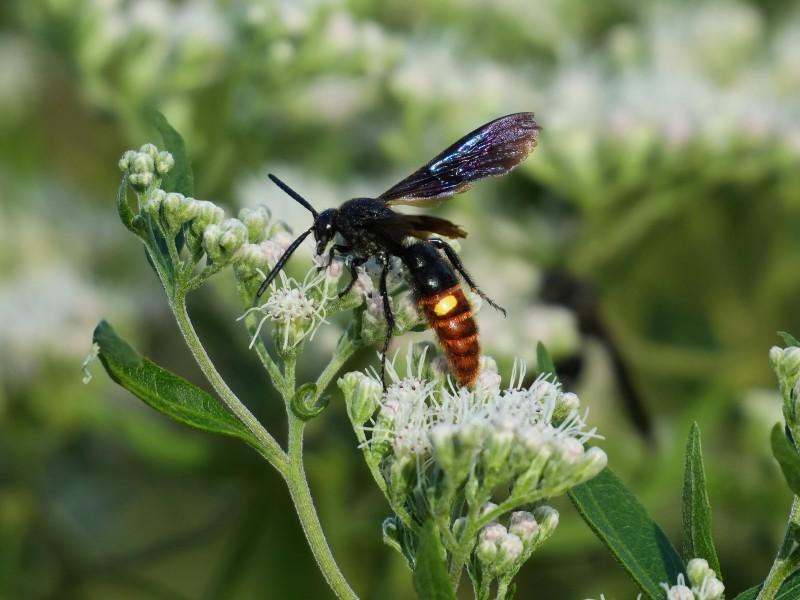
Many locally-native species of bees and wasps nest in underground burrows, and several species can use lawn soil for nesting. Bees and wasps pollinate flowers, and wasps hunt for other insects or spiders to feed to their young. Wasps are valuable to gardeners as free natural pest control. The piles or pellets of soil kicked out of nesting burrows may look messy, but they will weather away and the grass will fill in, either by itself or with autumn overseeding.
Aside from bumble bees and certain yellowjackets, ground-nesting bees and wasps do not create communal nests. Instead, a group of females can congregate in suitable habitat, each working by herself. These solitary bees and wasps are very unlikely to sting, especially if left alone.
When ground-nesting bees and wasps are active, and for how long, differs with the species. Males do not have a stinger, and will perch or fly around looking for mates or rivals. Females will busily dig and stockpile a burrow with food for the next generation. All of them are of little to no threat to people and pets using the lawn. When these tasks are finished, the adults die, and the larvae develop underground until the following year.
To protect these valued pollinators:
Avoid using any pesticides on the lawn.
Wait to mow when groups of bees or wasps are congregating in the lawn to mate or hunt. This may temporarily shift mowing to the morning or evening hours, depending when that species is the most active.
Let any burrows fill in naturally, to make sure the female is done provisioning food for her young. Tilling the area will destroy burrows and may kill any juveniles present.
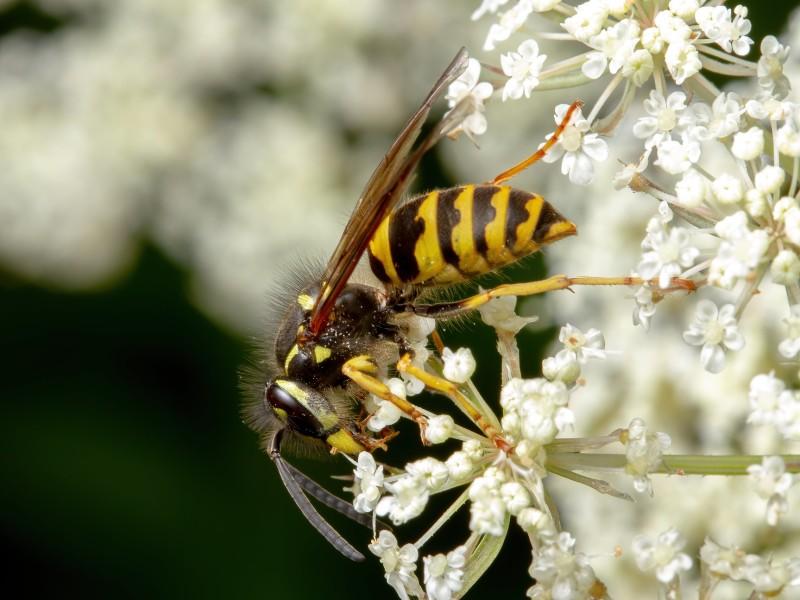
Identify the ground-nesting bee or wasp before assuming it is an aggressive yellowjacket wasp. Use the Wasp Identification Guide or send photos to Ask Extension.
If you choose to discourage these bees and wasps, keep the lawn dense and vigorous so little of the soil surface is readily accessible for digging. Heavy watering with a sprinkler may discourage females from creating nests, but it also risks over-watering the lawn or encouraging disease outbreaks. Many ground-nesting species favor sandier-textured soil over compacted or clay soil.
Examples of bee and wasp species found in or around lawns
Yellowjacket (several species). Photo: Matt Bertone, NC State University
Hiring help for organic lawn care
Ask a prospective lawn company about their organic maintenance approach and practices, especially regarding fertilization and pest management. Employees hired to apply lawn fertilizer need to be registered by the Maryland Department of Agriculture and work under the supervision of a certified applicator. Regardless of the type of fertilizer used, lawns have to be fertilized according to University of Maryland recommendations for the amount and timing of applications.
You can also request to see the Material Safety Data Sheet (MSDS, a document that lists details about the safety and hazards of a product) and product usage label for any pesticides to be applied to your property.
How does your company prevent or manage weed problems? The emphasis should be on cultural practices that keep your lawn thick and healthy, planting a lawn alternative where grass doesn't grow, and knowledge about the pros and cons of organic herbicides.
At what height will my lawn be mowed? Lawns should be mowed on a regular basis during the growing season and maintained at 3 to 4 inches tall. During the hottest, driest part of the summer, when cool-season grass is dormant, it should not be mowed until growth resumes.
When would you apply insecticides or fungicides? Which ones would you use? Routine use of lawn insecticides and fungicides should not be part of an organic lawn care program. Fescue lawns that are fertilized, mowed, and overseeded (each autumn, ideally) according to University of Maryland recommendations have few serious pest problems.
Will you do a soil test? Proper soil acidity and fertility play a large part in achieving a healthy lawn. A laboratory soil test should be part of any lawn management program, and is required for compliance with Maryland's lawn fertilizer law if anyone applies products containing phosphorus.
What kind of organic fertilizer will be applied? How often and in what amounts? The company should be familiar with UMD recommendations for your lawn type and keep their equipment calibrated so they use the correct application rate.
Author: Miri Talabac, Lead Horticulture Coordinator, HGIC, March 2026.
Content reviewed by: Geoff Rinehart, Lecturer and Turfgrass Management Advisor, Institute of Applied Agriculture, August 2025. David Clement, Ph.D., Extension Specialist in Plant Pathology, December 2025. Madeline Potter, Faculty Specialist/Entomology & Integrated Pest Management, September 2025.
Copy editing by Nancy Klein, Maryland Master Gardener, December 2025.