
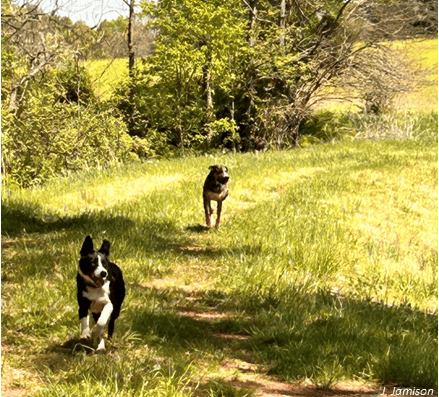
Figure 1. This border collie and catahoula have been helpful allies in driving off groundhogs on the Jamison Farm.
Testing GPS Dog Collars as a Tool for Crop Protection
With deer, goose, and groundhog pressure a problem for many farmers, some folks looking at a familiar ally for help: the farm dog. Recent improvements in GPS-based shock collars (also known as virtual fence collars) have made it easier than ever to turn your dog loose to patrol your fields—without needing to install physical fencing or bury electric wires. These collars are now affordable (ranging from $79 for Chinese-made NSPET Brand to $800 for American-made SpotOn GPS Dog Fence) and easy to program using a smartphone. Once set, the collar gives a beep, vibration, and—if necessary—a static correction to keep dogs inside your virtual boundary.
I’ve been testing this system on my own 77-acre farm with a Border Collie and a Catahoula. One barks and alerts, the other chases. Early results have been encouraging— groundhog activity is down, and the dogs are staying inside the boundaries reliably.
What We’re Trying to Learn
Past research has found success using dogs in orchards and plantations less than 20 acres, but we’re exploring the feasibility of using dogs to reduce wildlife damage on larger acreage properties.
We’re gathering insights about
- the best dog breeds
- techniques for training and managing dogs (e.g., rewards, motion lights at night, etc.),
- effectiveness of collars in containing dogs,
- time and expense in managing the dogs, and
- effectiveness in reducing damage.
Want to Get Involved?
If you have experience using dogs to reduce wildlife damage, please reach out, we’d love to hear how it has worked. If you’d like to try this on your own property with your own dogs, we’d love to work with you in sharing what has worked for us and sharing best practices to enhance effectiveness. We are considering applying for funding to help fund equipment and research on the topic, and we’d love to get in touch with potential collaborators.
If you’re interested or want to learn more, reach out to John Jamison (johnpjamison@gmail.com) or Dr. Luke Macaulay (lukemac@umd.edu).
This article appears in May 2025, Volume 16, Issue 2 of the Agronomy News.
Agronomy News is a statewide newsletter for farmers, consultants, researchers, and educators interested in grain and row crop forage production systems. This newsletter is published once a month during the growing season and will include topics pertinent to agronomic crop production. Subscribers will receive an email with the latest edition.
Subscribe