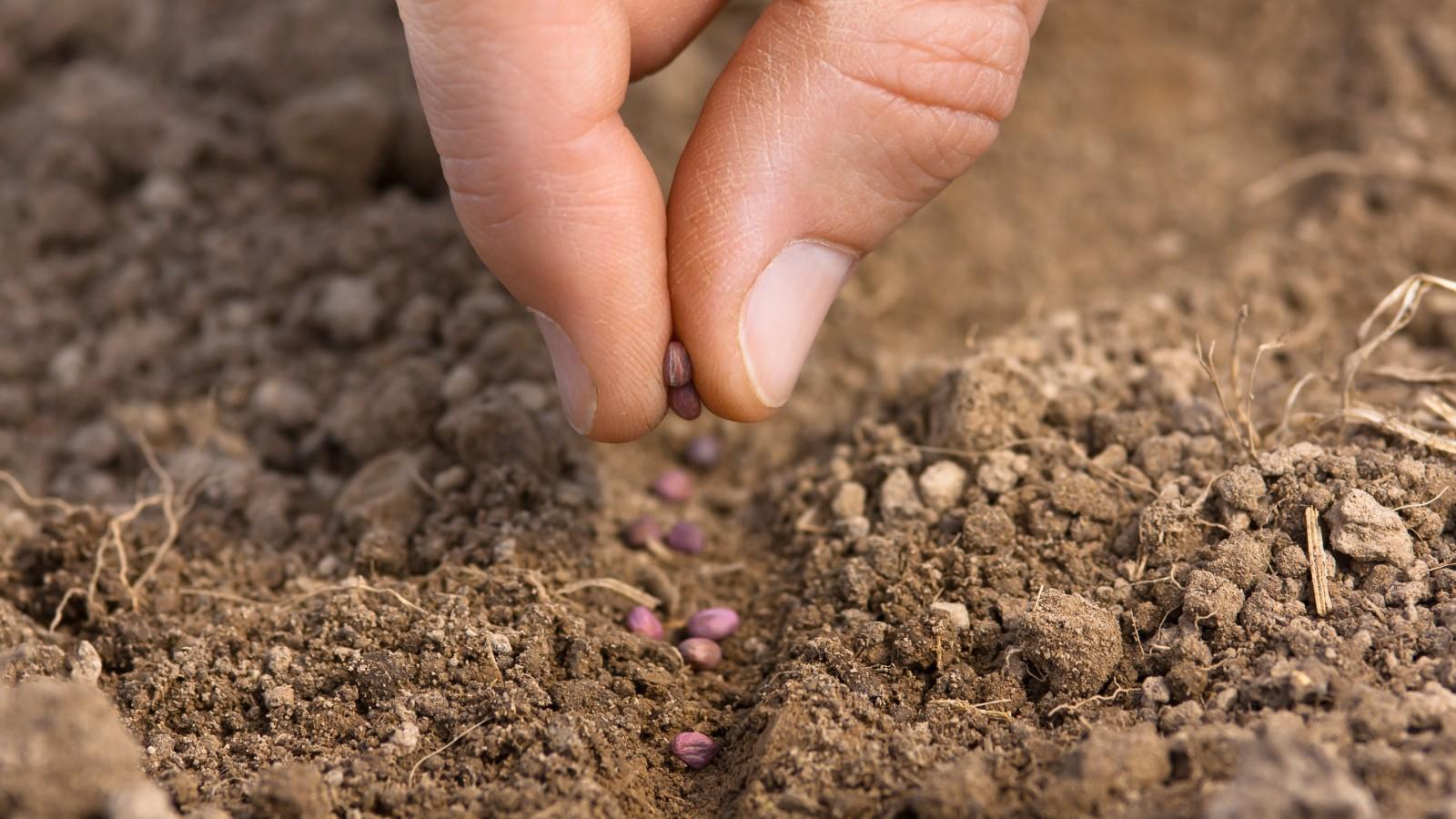
Seeds pinched between fingers being dropped into a shallow furrow in bare soil.

Dropping seeds by hand into a shallow soil furrow. Photo via Adobe Stock.

Updated: July 31, 2026

Direct-sowing seeds outside

Large vegetable seeds, such as pumpkin, squash, bean, and corn, can be properly spaced and sown directly into the soil. It is a little more difficult to precisely plant small seeds, so plan to thin out excess seedlings later to achieve the desired spacing.

Several different methods for direct-sowing seed are as follows:

Row planting
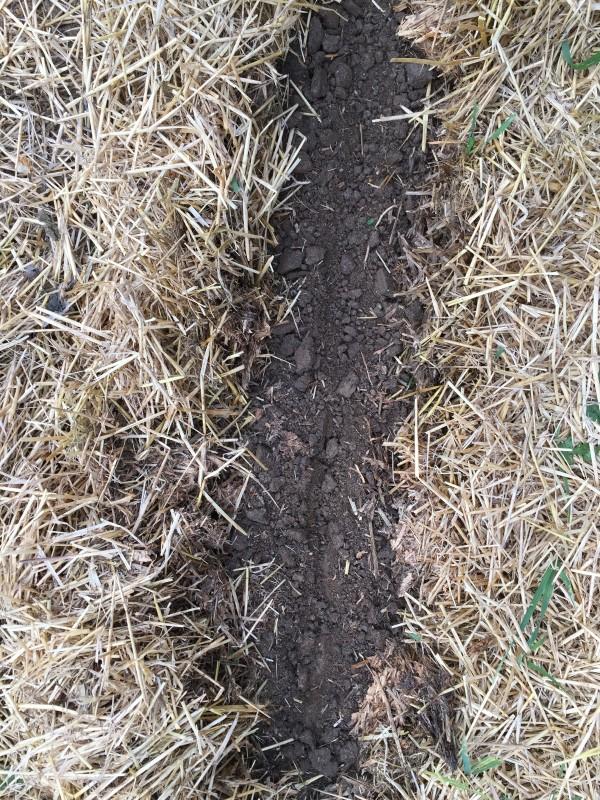
A narrow band of exposed soil with a slightly-deeper trench dug into it between two areas of dried, mown stubble of grassy cover crop debris.
A shallow furrow scraped into the soil for planting seeds in a single row. Cover crop debris mulches the rest of the soil in this no-till vegetable bed.
Photo: Jon Traunfeld
  1. Create shallow planting furrows by dragging a stick, tool handle, narrow hoe, or other garden tool through the soil.
  2. Drop seeds by hand or from the end of an open seed packet into the furrows. You can also use your fingers or the edge of your hand to sprinkle the seeds.
  3. Cover the seeds with soil: Just barely cover small seeds with soil or a thin layer of compost; cover larger seeds with ½ to 1 inch of soil, or as recommended on the seed packet.
  4. Press: Use your hand or a garden tool to gently tamp the soil to ensure good contact with the seed and increase the probability of germination.
Broadcast planting

Broadcasting is often done with the seeds of leafy greens, carrots, beets, radish, and cover crops. This is the least uniform planting method, but it can increase food production per square foot by making better use of available sunlight, water, and nutrients.

  1. Scatter seeds by sprinkling them over a designated area. This is also called “wide-row planting.”
  2. Press: seed-to-soil contact is critical to germination, so walk on the scattered seeds or gently crisscross the bed with a metal rake.

Hill planting

Soil mounded into a hill mimics a raised bed by increasing the available rooting area, and the better soil aeration will hasten seed germination and seedling growth. Mounds add some vertical growing space for vining crops like cucumber, squash, melon, and sweet potato.

  1. Create a mound by pulling the soil up using a spade and metal rake.
  2. Plant two to four seeds in each hill.

Direct seeding tips

Seed depth and spacing

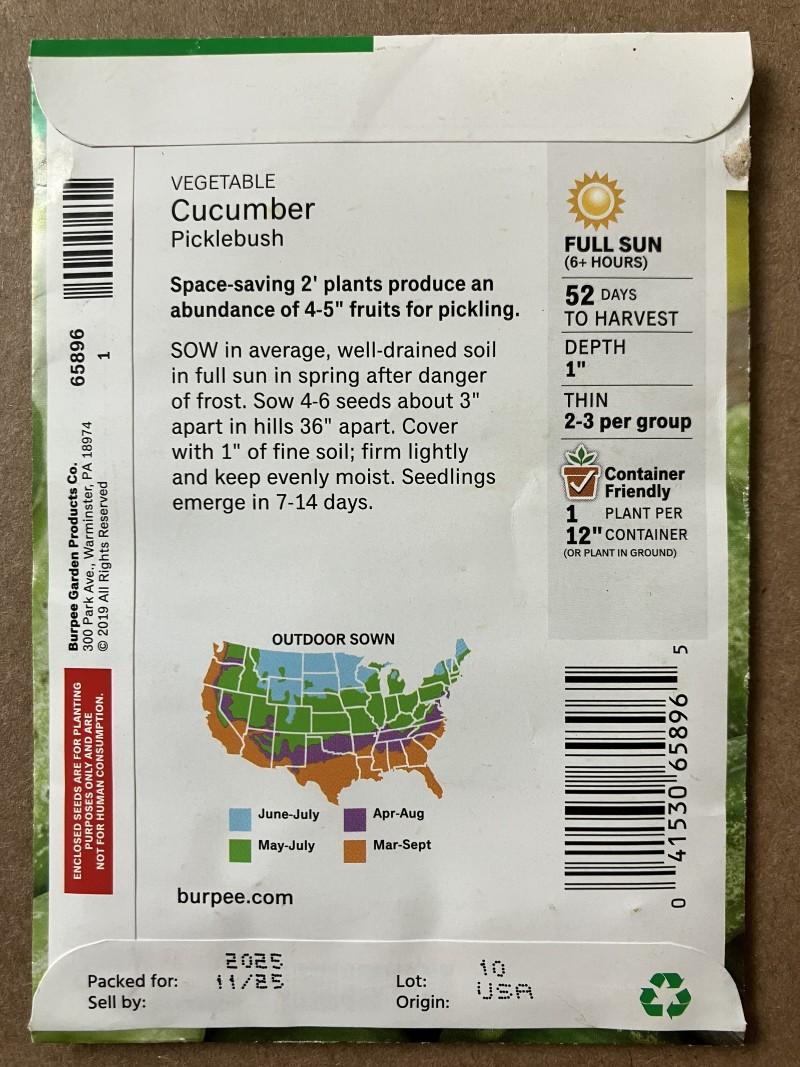
The back of a cucumber seed packet with planting instructions that include sun exposure, planting depth, and spacing between seeds.
Seed packet with planting instructions.
Photo: Jon Traunfeld
  • Consult the back of the seed packet for planting guidance. A good rule of thumb is to sow seeds at a depth that is two times their width. (For example, if a seed is a ¼-inch wide, plant it ½-inch deep.)
  • Sow seeds deeper in light, sandy soils and shallower in heavier clay soils.
  • Use a ruler, yardstick, or other measuring tool to ensure correct spacing between individual seeds and rows of seeds.

Covering seeds

  • Firm soil over the seeds to hasten germination. With cloddy or crusty soils, apply a narrow band of fine compost or vermiculite over the row after seeds are planted. This helps to hold soil moisture and reduce crusting, making it easier for germinating seedlings to push through.
  • Cover the area with row cover material to speed germination and protect seeds from animals. Check daily for signs of germination.

When to sow

  • Once the soil is warm enough: Soil temperature has a major effect on the speed of seed germination. In the spring, soil is often cold, and large seeds (such as corn and beans) may rot before they can sprout.
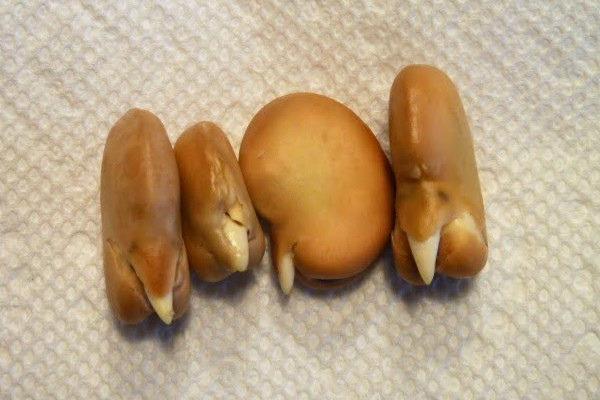
  • After a pre-soak: Slow-to-germinate seeds, such as fava bean and okra, can be soaked in water for 12 to 24 hours before planting to soften the seed coat and promote faster germination once in the soil.
Four fava bean seeds,slightly swollen from a water soak, each having one short, pointed white root emerging.
Fava bean seeds ready for planting after being soaked to hasten germination. The stubby white radicles (roots) are just beginning to emerge.
Photo via Ask Extension.

Thinning seedlings after germination

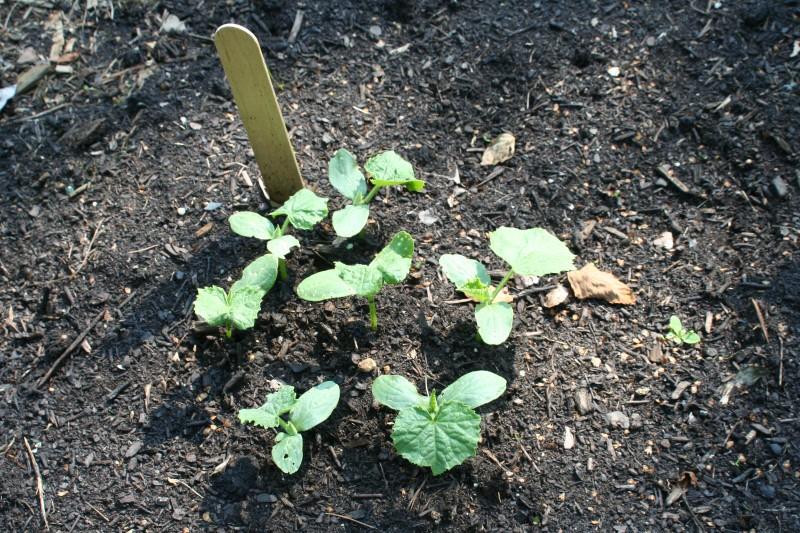
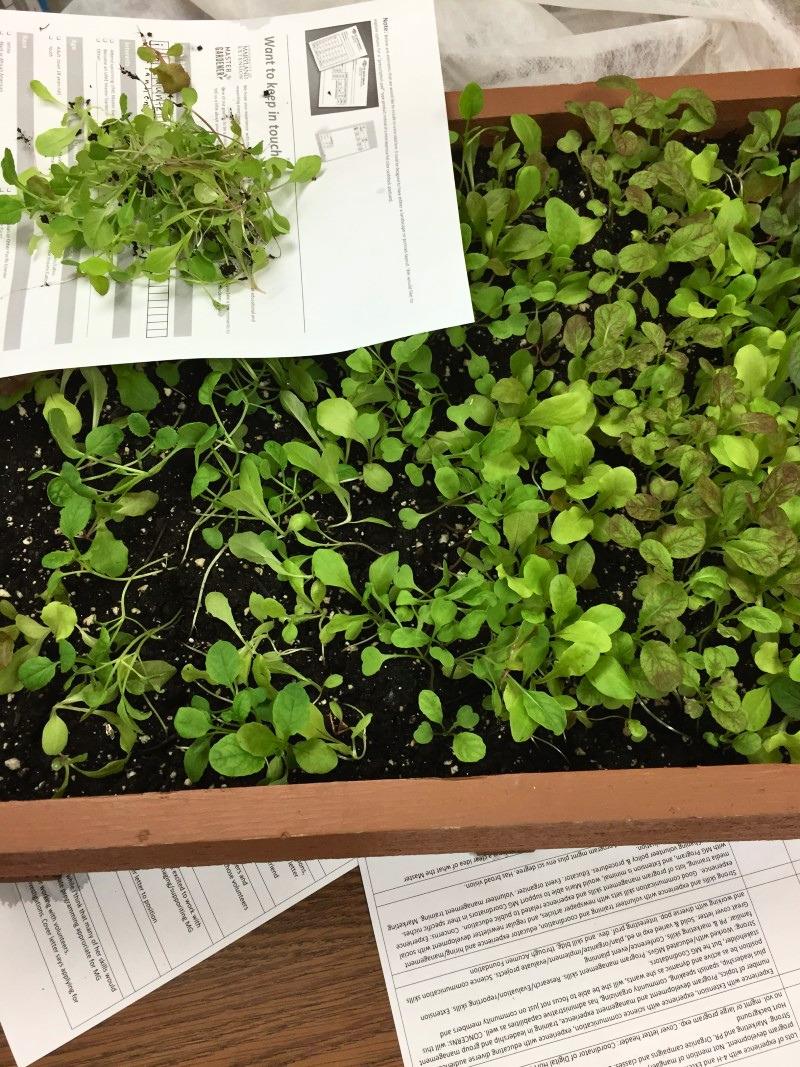
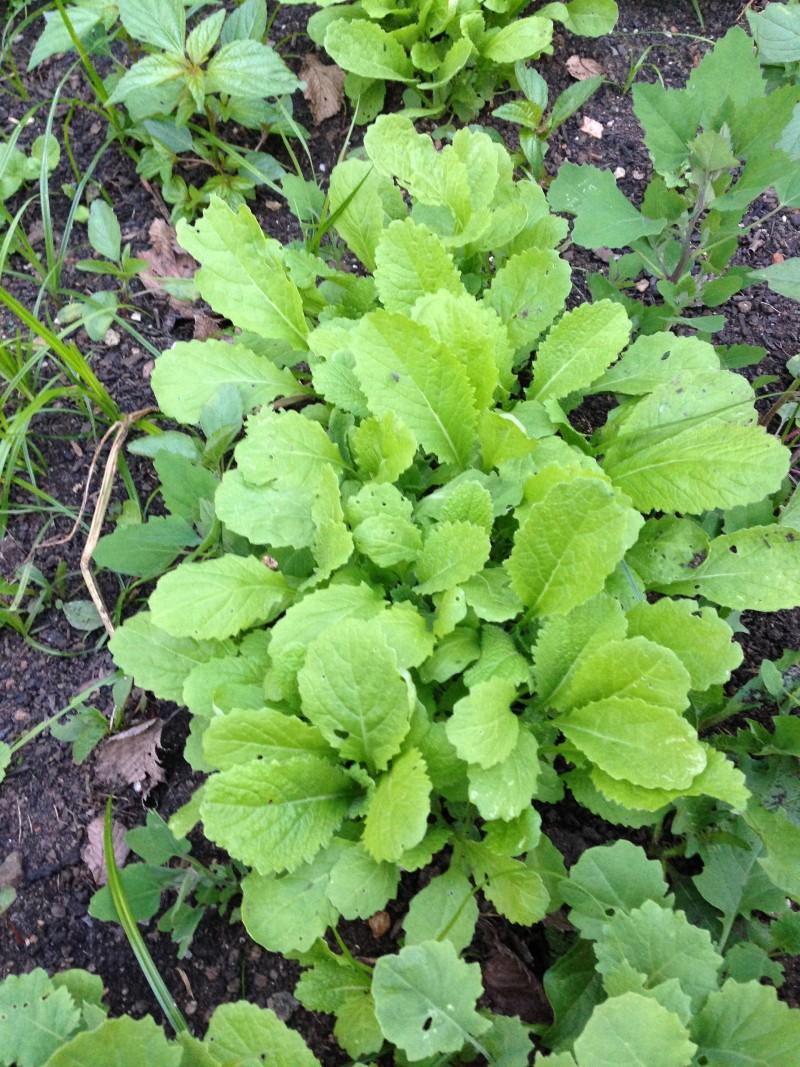
Removing excess seedlings is called thinning. It’s difficult to plant very small seeds at the desired spacing, so some need to be removed after germination to create space for the remaining plants. Failure to thin seedlings will stunt plant growth and reduce the harvest (yield).

Thinning can be done by hand, or by dragging a metal rake one inch deep through the planting. This will dislodge excess plants, which you can either remove and eat as microgreens or compost.

Close-space, intensive vegetable planting

In some cases, it may be possible to increase food production per square foot by planting seeds and transplants more closely than recommended in the vegetable crop profiles or on seed packets. For example, cucumber plants grown vertically on a trellis can be spaced 18 inches apart, and pepper plants can be planted in two staggered rows with plants spaced 2 feet apart in each direction.

However, closer spacing can reduce air circulation (which encourages disease) and increase competition for water, light, and nutrients, which can limit plant growth and yield per plant. Be observant as you experiment with techniques to maximize garden production. Deep, fertile soil and close attention to watering, weeding, and fertilizing may allow you to condense plant spacing a bit. However, pushing the envelope too far can reduce productivity and increase plant problems.

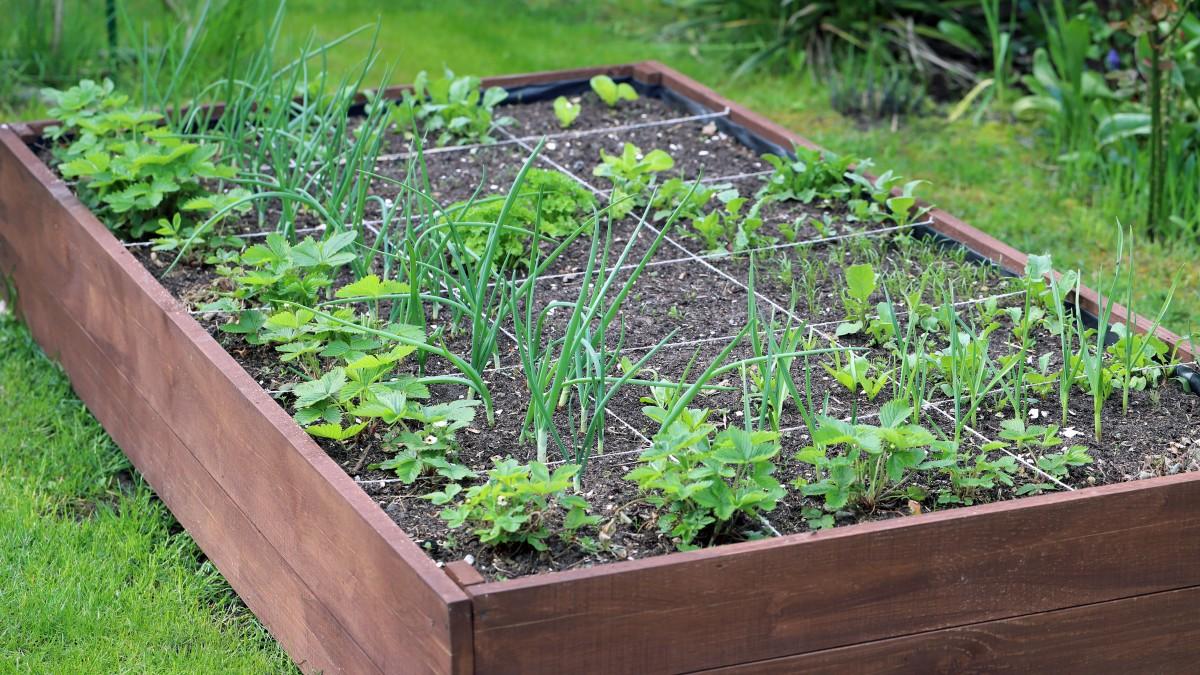
A raised bed about 1-foot high overlaid with string dividing the bed into a 3-by-6 grid of squares. A variety of young vegetable plants are growing in the bed, with some squares planted in the same pattern or mix of vegetables.
A partially-filled square-foot vegetable and flower planting in a raised bed. Photo via Adobe Stock.

Author: Jon Traunfeld, Extension Specialist (retired), Home/Community Food Gardening, May 2026.

Copy editing by Nancy Klein, Maryland Master Gardener, May 2026.

Still have a question? Contact us at Ask Extension.