Hardening-off is the process of gradually acclimating an indoor- or greenhouse-grown transplant to the harsher spring conditions in the garden. Hardening-off slows growth and causes soft, succulent tissue to toughen. This can be done over a 5- to 14-day period, depending on the crop, before transplanting into the garden.
The hardening process is intended to slow plant growth while plant tissues adapt to new environmental conditions. If carried to the extreme of stopping plant growth, significant damage can be done to certain crops. For example, cauliflower will produce thumb-sized heads and fail to develop further.
Acclimation process
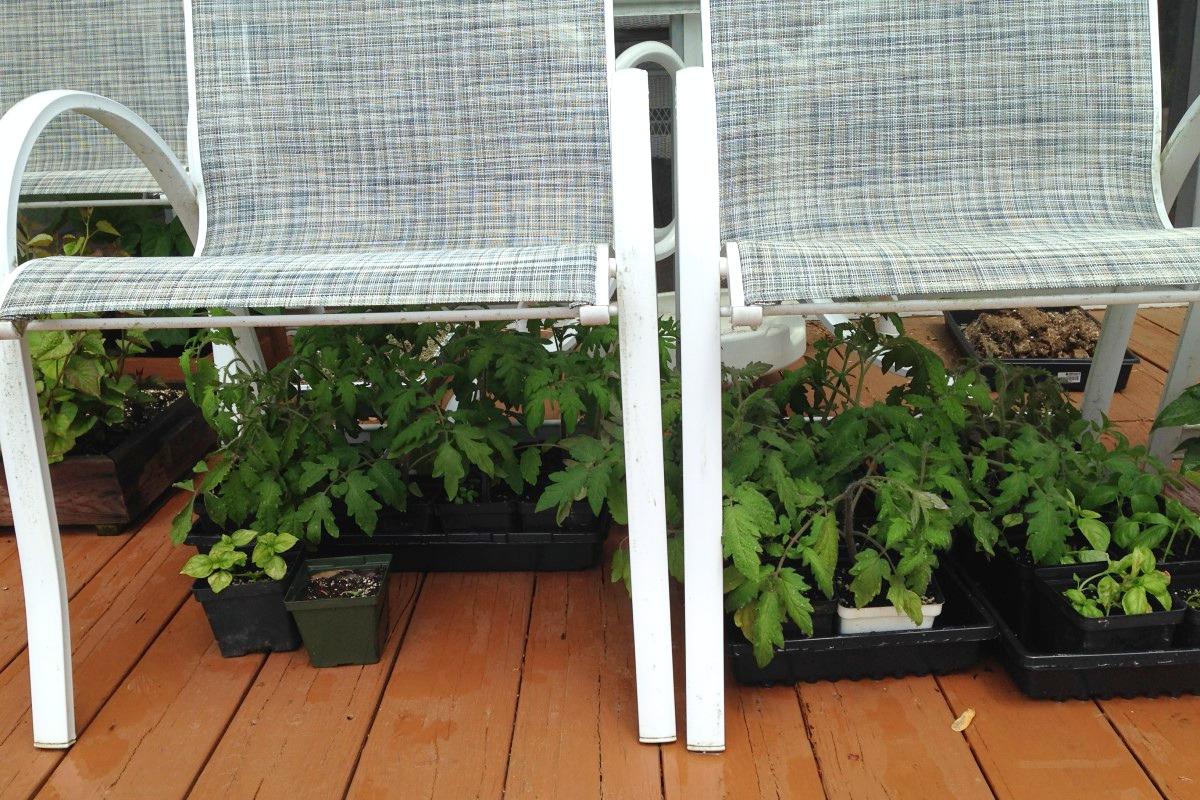
- Place the transplants outdoors in a shaded, wind-protected area for part or all of the day.
- Bring transplants back indoors at night:
- Cool-season crops (like lettuce and cabbage) should come inside at night if the temperature is expected to get below freezing.
- Warm-season crops (like tomato and pepper) should come inside at night if the temperature is expected to get below 50°F.
- Don’t put tender seedlings outdoors on windy days or when temperatures are below 45°F. Even cold-hardy vegetables can be injured if exposed to freezing temperatures before they are hardened-off.
- Increase exposure to sunlight by an hour or two each day.
- Reduce the frequency of watering to slow plant growth, but don’t allow plants to dry so much that they wilt.
Hardening-off is especially important for cabbage, broccoli, and cauliflower transplants. Stressors like cold air temperatures, wind, and cool soil can greatly reduce the yield of these crops. After proper hardening, tomato plants can usually tolerate light and unexpected frosts with minimum damage.
It is not as important to harden-off warm-season transplants (pepper, squash, tomato, eggplant) if you plant them after any danger of frost, when the soil is sufficiently warm (above 60°F), and give them the water, proper spacing, and nutrients they need to grow quickly.