
Planting Tree Combinations to Create Flourishing Woodlands
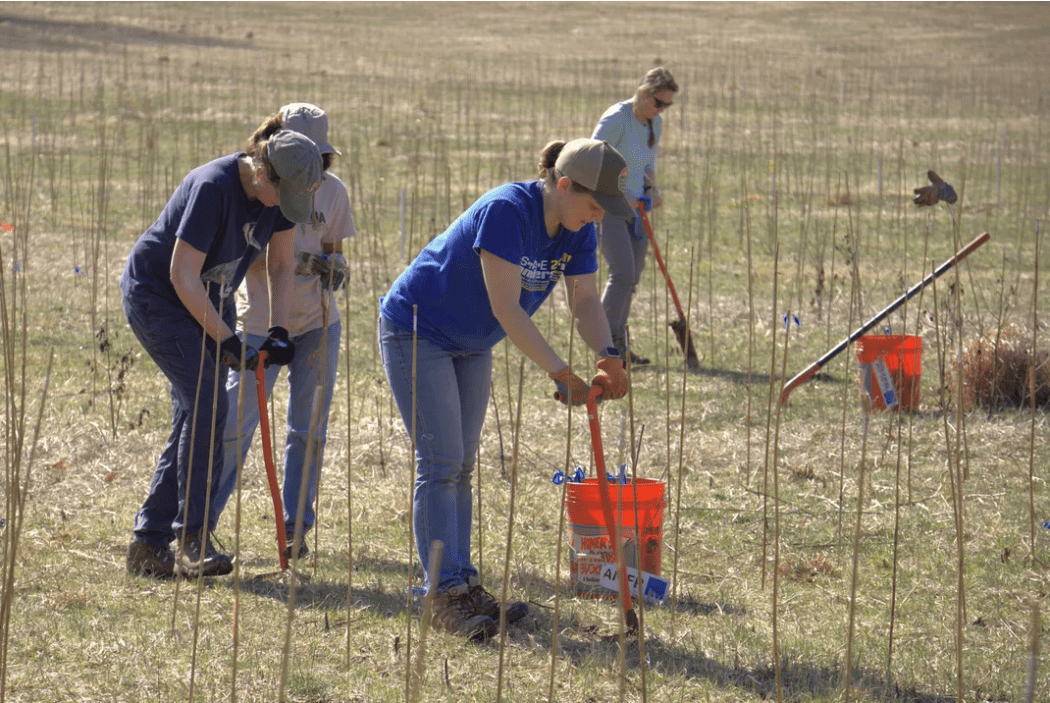
Researchers at the Smithsonian Environmental Research Center (SERC) in Edgewater, MD, are planting 33,518 saplings from 20 species in a 22-acre forest. The intention is to create a carefully planned patchwork of plots with tightly controlled variables, such as certain species combinations, to test how they might affect the trees’ growth and environmental benefits. The planting marks the beginning of what is expected to be a decades-long experiment called the Functional Forests project. SERC scientists aim to explore how tree biodiversity merges multiple reforestation goals, such as building fire-resistant and climate resilient forests; recruiting new animals, like vital pollinators; producing food and increasing timber. Read more about this new forest here.
Maryland Forest Service Launches “Maryland 250” White Oak Contest
The Maryland Forest Service and the Maryland Forestry Foundation have launched the "Maryland 250" White Oak Contest in celebration of America's 250th anniversary. The contest, which runs through December 31, 2026, invites residents and visitors to search Maryland's state forests for the largest white oak trees. The challenge is administered by the Maryland Big Tree Program committee. According to the DNR, white oaks are among Maryland's most ecologically significant tree species, “providing wildlife habitat, supporting water quality, and contributing to the structural character of the state's forests.” However, only one white oak has been identified as a “Big Tree” within state forest lands.
Full contest details, including how to measure the candidate trees, are available at this website.
Can Wood-Based Sunscreen be a Sustainable Skincare Innovation?
An article featured in the February 2026 issue of The Boar highlighted research scientists are conducting to develop a novel sunscreen made from wood-derived compounds. The research centers particularly on lignin, a natural polymer found in plant cell walls that can absorb ultraviolet radiation. The study further builds on the work of international researchers and other materials science partners. The scientists hope to replace or reduce synthetic UV filters with biodegradable, plant-based alternatives that maintain effective SPF protection while lowering environmental impacts. The goal of the research is to advance more sustainable and environmentally friendly sunscreen technologies. Read the full article here.
The Untold Story of Black American Forestry
Since professional forestry began in the early 20th century, the cultural narrative about who cares about, works on, and belongs in America’s forests has been dominated by white men. And yet, the first Black professional forester, Ralph Brock, was one of the first men of any race to graduate with a forestry degree in the United States.
According to a recent article from the National Forest Foundation, “Black Americans’ relationship with public lands have long been overlooked in the story of land management. But Black Americans have always contributed to the stewardship of forests and grasslands – as conservationists, foresters, firefighters, and leaders.”
The article documents the contributions of Black men in the nation's forests, including those working for the Civilian Conservation Corps to establish and enhance national forests in California and Illinois, U.S. Army service members during World War II who pioneered the field of smokejumping, and those who have more recently risen to roles of leadership in the U.S. Forest Service. Read more on the National Forest Foundation's website here.
Branching Out, Vol. 34, no. 2 (Spring 2026)
Branching Out is the free, quarterly newsletter of the Woodland Stewardship Education program. For more than 30 years, Branching Out has kept Maryland woodland owners and managers informed about ways to develop and enhance their natural areas, how to identify and control invasive plants and insects, and about news and regional online and in-person events.