
Food Forest Takes Root on Eastern Chickahominy Tribal Land
A recent Bay Journal article looked at s new project — a food forest — with an age-old concept — providing people with traditional and sustainable food. Jess Phillips, environmental director and citizen of the Chickahominy Indian Tribe-Eastern Division, is leading this effort to help her tribe build a better relationship with food at the source. That means not only providing access to ingredients but also providing access to culturally significant foods native to the region, such as persimmons, sumac and hazelnuts. It can also involve growing those plants using knowledge of the natural world passed down from their ancestors.
The Alliance for the Chesapeake Bay awarded the tribe a $20,000 grant in November 2024 to jump-start the food forest, which will span eight acres across a parcel of tribal land and a tribal citizen’s land in New Kent County, VA.
Philips notes, “Realistically, we will all continue to get our groceries from the grocery store, but I would love for people to just have the skills and the appreciation that nature itself is its own self-sustaining grocery store.” Read the full article here.
State Tree Nursery Now Taking Orders for 2026 Planting
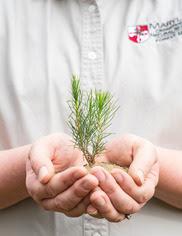
The online tree seedling catalog for the John S. Ayton State Nursery is now open and accepting orders for spring 2026 planting at nursery.dnr.maryland.gov. This year’s catalog features more than 51 species, with a few different choices from last year. The seedling crop is growing very well and more than 3 million seedlings available. If you are not sure which species are right for your needs, please call your local forestry office.
NSF Funding Fuels Wildland Fire AI Research at UMD
The approximate doubling of wildfire activity across the United States over two decades has been easy enough to track, but forecasting where and when the blazes will spread to threaten communities, wildlife, and natural resources is far less straightforward.
University of Maryland computer science Professor Heng Huang is leading a project to close that gap using the power of artificial intelligence. Huang was recently awarded $1.86 million from the National Science Foundation to advance AI-driven methods for detecting and predicting wildland fires.
The study, conducted in collaboration with American University researchers, aims to address the extreme complexity of fire dynamics, which has limited the ability of traditional computer modeling approaches to forecast events.
Backpacker Writer Explores American Chestnuts in Virginia
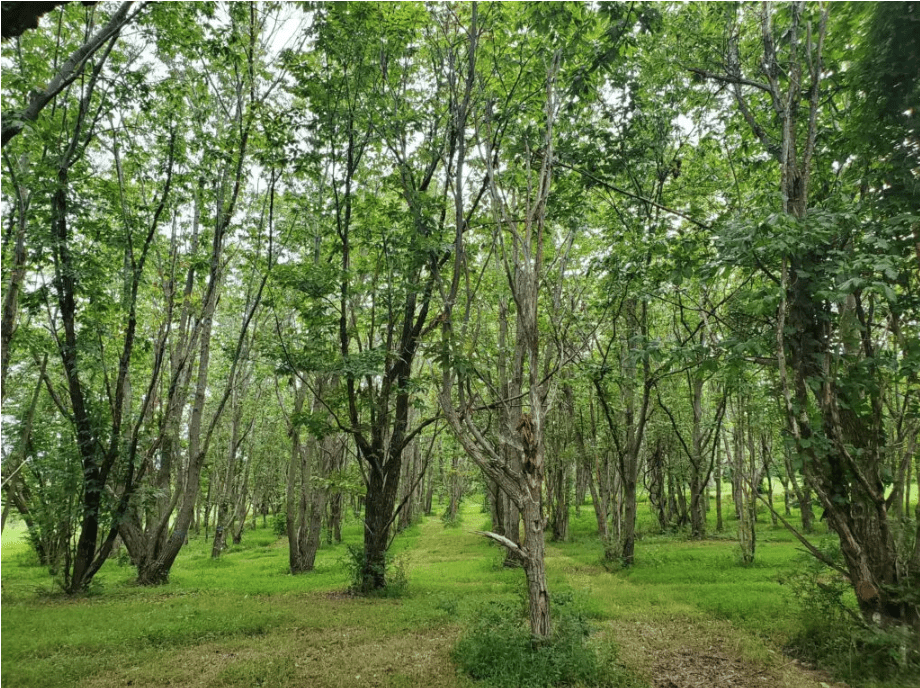
Backpacker writer Eric J. Wallace visited the grove of American chestnuts in Lesesne State Forest and talked to experts and researchers about the species’ past, present, and future. One envisions a future around the year 2130 where hikers on the Appalachian Trail and more will pass through groves of monstrous American chestnut trees as the smell of roasting nuts mixes with campfire smoke in the autumn air. In the meantime, trekkers can visit locations like Lesesne for a taste of what’s to come. Read the article here.
Branching Out, Vol. 33, no. 4 (Fall 2025)
Branching Out is the free, quarterly newsletter of the Woodland Stewardship Education program. For more than 30 years, Branching Out has kept Maryland woodland owners and managers informed about ways to develop and enhance their natural areas, how to identify and control invasive plants and insects, and about news and regional online and in-person events.