

FS-2025-0791 | March 2026
Am I Losing a Refrigerator Full of Food After a Power Outage?
By Jena Pinkard, UME Intern, Hood College Dietetics Student; Catherine “Carrie” Sorenson, UME Family &
Consumer Sciences Agent; Dr. Shauna C. Henley, UME Family & Consumer Sciences Senior Agent, Affiliate
Agent in the Department of Nutrition & Food Science (NFSC)
Introduction
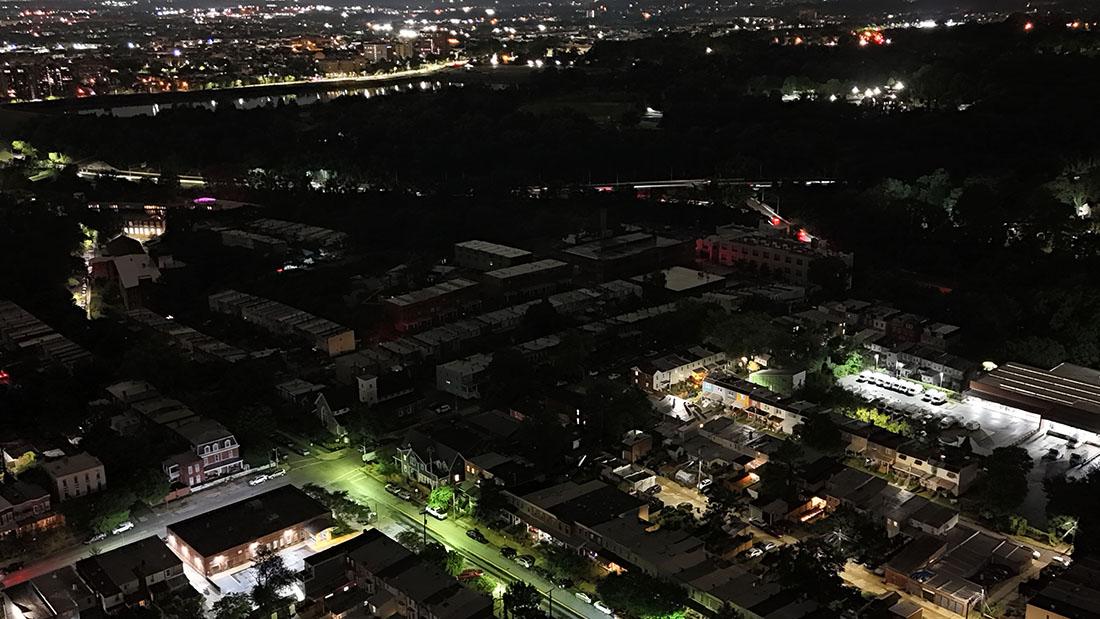
You just stocked your refrigerator with a week’s worth of groceries for your home. Suddenly, a strong storm knocks out power to your home. You’re left wondering: How long will the power be out, and will all my food go to waste? The tips below will help you deal with the aftermath of a power outage.
Goals
- Understand when refrigerated or frozen food cannot be saved after a power outage because it can cause foodborne illness
- Identify the steps to take to be reimbursed by your homeowner’s or renter’s insurance policy
Goal 1:
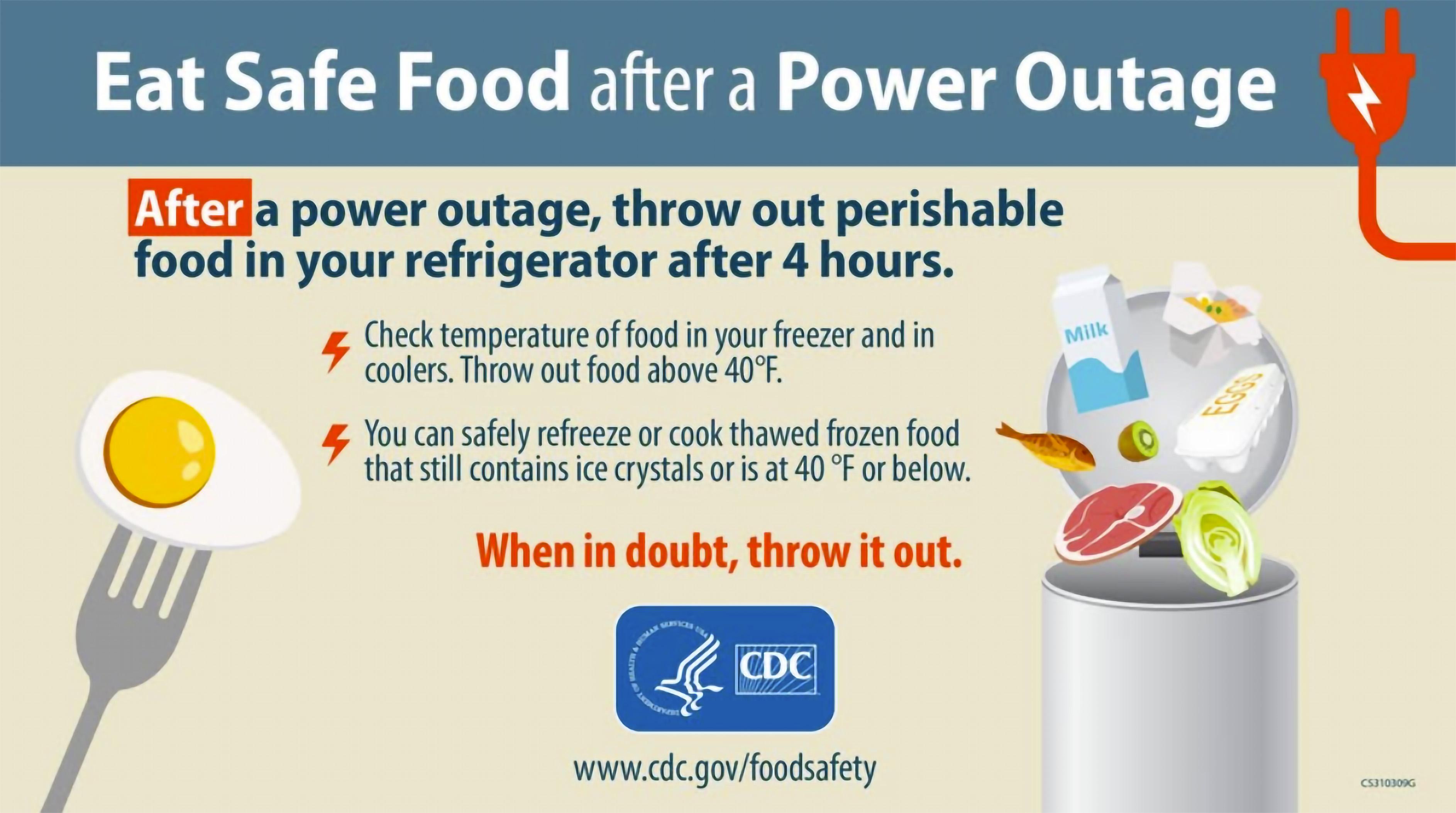
According to food safety experts, food that has been refrigerated or frozen that then reaches above 40°F cannot be saved because it can cause foodborne illness
How Long Food Will Stay Safe
- Refrigerator: up to 4 hours
- Full Freezer: up to 48 hours
- Half Full Freezer: up to 24 hours
It is important to note that these times are based on a closed refrigerator or freezer! It can be tempting to open the refrigerator or freezer to check any thermometers or try to feel whether the inside has remained cold. Each time the door is opened, however, that cold air escapes. Do your best not to open the door while the power is out. If you need to eat while the power is out, consider eating nonperishable items that don’t require you to open the refrigerator or freezer.
What about damage to non-perishable items?
Non-perishable items do not require refrigeration and have long shelf lives. Examples include canned goods, dry goods, snack items, and condiments. In general, a power outage will not affect these items. However, some strong storms can also cause flooding, which can affect these items. Any food that comes into direct contact with flood water should be thrown away, even non-perishable items. If flooding occurs and there is damage to a storage area with non-perishable items, take pictures of items that will be thrown away. Be prepared to provide a list, photos, and receipts for insurance claims.
Goal 2:
Take steps to be reimbursed by your homeowner’s or renter’s insurance policy
Before a power outage, review your homeowner’s or renter’s insurance policy to determine if food spoilage is covered. Some insurance plans offer reimbursement for spoiled food, which is food that has become unsafe to eat. Your coverage may depend on the cause of the outage (e.g., storms vs. utility failure), and you may need to submit photos of the spoiled food and purchase receipts as part of your claim. You may also need to meet a deductible before reimbursement applies. Remember that a deductible is what you pay out of pocket before insurance coverage kicks in.
Where can I find information on what my homeowner’s insurance covers?
Most homeowners’ insurers will provide food spoilage coverage details on their website. It is best to check your policy and know what is covered prior to any unforeseen events. You might be able to purchase this coverage as an add-on in your standard homeowner’s insurance policy.
There is usually a limit to the reimbursement amount for spoiled food, and it will vary based on the insurance provider. When speaking to a claims agent, make sure to ask about how and when reimbursements are provided so you know when you can expect to receive payment.
Where can I find information on what my renter’s insurance covers?
If you rent, check what is covered in your renter’s insurance policy. Most policies cover food loss due to storms and natural disasters. Confirm the details of your policy and check to see if a deductible must be met. Similar to homeowners’ insurance, take photos of items before you throw them away and be prepared if receipts are required for the reimbursement process. Speak with your building management to confirm whether they offer compensation or support in situations like this.
Remember to follow these steps:
- Keep refrigerator and freezer doors closed as much as possible to preserve perishable food
- Record duration of power outage
- Photograph all spoiled food (dry goods and cold foods) prior to throwing away
- Contact your insurance provider to file a claim, be prepared with cost of items lost and receipts
- Confirm reimbursement timeline and method
- Submit claim with documentation
Knowing how to protect your food—and your wallet—is essential.
Special thanks to Steve Adams, local homeowner, for sharing his experience going through this process and assisting the authors in the creation of this fact sheet.
For more information visit:
Yavelak, M. (2025). Power Outages: Preparedness and Recovery. NC State University Cooperative Extension. https://foodsafety.ces.ncsu.edu/power-outages/. Scan the QR code to the right to visit the above website.
Centers for Disease Control. (2025). Keep Food Safe After a Disaster or Emergency. https://www.cdc.gov/food-safety/foods/keep-food-safe-after-emergency.html. Scan the QR code to the right to visit the above website.
JENA PINKARD
CATHERINE SORENSON
cjrsoren@umd.edu
SHAUNA C.HENLEY, PH.D.
shenley@umd.edu
This publication, Am I losing a refrigerator full of food after a power outage? (FS-2025-0791), is a part of a collection produced by the University of Maryland Extension within the College of Agriculture and Natural Resources.
The information presented has met UME peer-review standards, including internal and external technical review. For help accessing this or any UME publication contact: itaccessibility@umd.edu
For more information on this and other topics, visit the University of Maryland Extension website at extension.umd.edu
University programs, activities, and facilities are available to all without regard to race, color, sex, gender identity or expression, sexual orientation, marital status, age, national origin, political affiliation, physical or mental disability, religion, protected veteran status, genetic information, personal appearance, or any other legally protected class.
When citing this publication, please use the suggested format:
Pinkard, J., Sorenson, C., & Henley, S. (2026). Am I losing a refrigerator full of food after a power outage? (FS-2025-0791). University of Maryland Extension. go.umd.edu/FS-2025-0791.