
Planning Your Extension Program & Preparing for Your IEP
Video Length: 39:07 | Date: September 18, 2026
Speakers: Teresa McCoy, MPA, DPA and Dee Dee Allen
Description: This session provides the process for completing your Individual Extension Plan (IEP). The IEP is the faculty’s individual response to the UME Programmatic Plan which will be used to guide the year's programming efforts.
University of Maryland Extension 2027-2031 Program Planning Guide
State Program Leaders
| Dr. Jeff Howard, 4-H Youth Development (Interim) | 301-314-7820 | jwhoward@umd.edu |
| Dr. Darren Jarboe, AgFS | 301-405-6935 | jarboe@umd.edu |
| Dr. Sung-Jin Lee, FCS | 301-405-2465 | sjlee1@umd.edu |
| Dr. Andrew Ristvey, ENRSG (Interim) | 301- 226-7835 | aristvey@umd.edu |
For Operational and Evaluation Guidance
| Ms. Dee Dee Allen | 301-432-4490 | dallen3@umd.edu |
Evaluation and Reporting Director
| Dr. Nicole Walker (Interim) | 301-822-1244 | nicole4@umd.edu |
This document was originally prepared by Teresa McCoy, Assistant Director, University of Maryland Extension Evaluation https://extension.umd.edu/media/36051on & Assessment, and Dee Dee Allen, Coordinator. Program-related questions should be directed to the respective Program Leaders; technical questions related to Watermark Faculty Success should be directed to Dee Dee at dallen3@umd.edu.
INTRODUCTION
Each year, all UME faculty, along with campus-based faculty with Extension appointments, are required to participate in the UME program planning, evaluation, and reporting process. This is a federal requirement.
Annual Individual Extension Plans (IEPs) are based on the four UME program areas as identified in the 2025-2030 UME Strategic Programmatic Plan developed by the organization.
- Agriculture & Food Systems: The University of Maryland Agriculture and Food Systems (AgFS) Extension Program serves as the state's leading private industry. The USDA's 2022 Census of Agriculture stated that the market of Maryland's crops and livestock sold exceeded $3.3 billion and contributed over $8 billion to the Maryland economy. The AgFS Team conducts applied research and provides educational programs in production and marketing of grains, oilseeds, horticulture, floriculture, poultry, dairy and beef cattle, sheep and goats, equine, and other livestock, helping farmers, agribusinesses, and communities adopt new technologies and practices to improve profitability. The Agricultural Nutrient Management Program provides nutrient management planning services and training for Maryland. Maryland agriculture has worked to conserve resources and improve water quality through new management practices such as cover crops and nutrient management planning. This is possible through collaborations between the College of Agriculture and Natural Resources at the University of Maryland, the U.S. Department of Agriculture, and Maryland state and local governments.
Print the Agriculture and Food Systems program narrative summary here.
- Environment, Natural Resources and Sea Grant: The University of Maryland Environment, Natural Resources, and Sea Grant (ENRSG) Extension Program helps sustain Maryland’s diverse natural resources. Educators work to inform and equip individuals and communities to implement research-based conservational use, protection, and, where appropriate, preservation of natural resources. This program focuses on aquatic resource management, energy conservation, coastal and inland resiliency, forest and wildlife management, home/community horticulture and IPM, water and watershed management, green infrastructure and sustainable living, and environmental and natural resources literacy.
Print the Environment, and Natural Resources, and Sea Grant program narrative summary here.
- Family & Consumer Sciences: Family & Consumer Sciences (FCS) is a people-centered discipline that supports individuals, families, and communities in navigating the challenges of a complex world. As part of the University of Maryland Extension, the FCS program advances human health, well-being, and economic stability for Maryland residents across the lifespan through evidence-based education, research, outreach and technology. FCS programming addresses the prevention and reduction of the burden of chronic disease by providing education on nutrition, healthy food choices, safe food handling, and mental and behavioral health. The program also promotes economic and workforce development by strengthening essential life skills, including budgeting, goal-oriented saving, and understanding health insurance. FCS engages adults, youth, farmers, schools, businesses, and community organizations in both rural and urban settings. Through these coordinated efforts, FCS helps people build the knowledge, skills, and confidence to make informed decisions, reduce health and financial risks, and improve quality of life statewide.
Print the Family and Consumer Sciences program narrative summary here.
- 4-H Youth Development: 4-H Youth Development is the University of Maryland Extension System's positive youth development program. 4-H youth learn life skills through community-focused, researched-based experimental education programs. Clubs, after-school programs, camps, fairs, and other community partners deliver high-quality science, civic engagement, and health living programs. Youth development professionals and volunteers support youth thriving through nurturing sparks, promoting high quality experiences, and cultivating positive relationships within their communities.
Print the 4-H Youth Development program narrative summary here.
Faculty are to plan 70 to 80% of their programming in alignment with UME’s priority programming areas as outlined in the strategic plan.
PROGRAM PLANNING CALENDAR
2026 | |
| October 9 |
|
| October 23 |
|
| October 26-November 12 |
|
| November 13 |
|
| December 1 |
|
| December 4 |
|
| December 31 |
|
2027 | |
| January 15 |
|
| February 12 |
|
| March-April |
|
PURPOSES FOR PLANNING AND REPORTING
Sound planning and reporting identify how Extension programs are directed and what accomplishments and impacts results from these efforts.
Detailed planning and reporting can help maximize limited human and fiscal resources allocated to developing, delivering, and evaluating Extension educational and teaching efforts.
We need impacts and successes of UME programs as we communicate with the general public and public officials on important budgetary issues discussed in the U.S. Congress, the Maryland General Assembly, and by county/city councils and commissions.
We also share accountability and program impact information with our Extension partners across the state and country.
UME receives funds from federal and state appropriations and is accountable for both the fiscal expenditures and what has been achieved with the resources. UME must provide an accountability system that documents program outcomes annually.
Systematic program planning, evaluation, and reporting are required of all UME Faculty to meet Federal program guidelines including, but not limited to, the Smith-Lever Act, the Agricultural Research, Extension and Education Reform Act of 1998 (AREERA), and the Government Performance and Results Act of 1993 (GPRA). This includes Extension specialists on and off campus. Anyone with an Extension appointment must follow established program planning, evaluation, and reporting guidelines.
A Program Planning site has been established for your use, which has all the resources needed for completion of the IEP on the UME POD Website: https://go.umd.edu/umeprogramplanning
At this site, you will find the:
- Guide to 2027-2031 UME Program Planning documents
- Links to IEP Instructional Videos
- PowerPoints from Professional Development sessions
| Please note that the IEP process is iterative and adjustments can be made during the year to account for new responsibilities as they arise. It is your responsibility as a faculty member to notify your Program Leader of program changes. For minor changes, an email will suffice for changes in program focus/emphasis. |
PROGRAM DEVELOPMENT & EVALUATION TERMS & DEFINITIONS
To provide a common understanding of terms for this programming cycle, the following definitions are provided:
- UME faculty are all tenured/tenure-track (TTK)/professional track (PTK) faculty members in academic departments, special units, or field offices plus all Extension associate agents with specific educational program duties on federal, state, county, or grant funds.
- Major programs are a comprehensive set of activities that includes an educational component that is intended to bring about a sequence of outcomes among targeted clients.
- Program Area Outcomes are UME group responses to specific programming needs and will be used to guide group actions toward meeting specifically identified needs across location and discipline. Individuals should participate in one or more Program Area and respective Action Teams.
- The Individual Extension Plan (IEP) is the individual’s response to the UME Programmatic Plan and will guide the individual’s programming efforts during the year. It will serve as your roadmap for programming throughout "2027-31" and should provide a detailed timeline of your planned work in the Outputs section.
- Program inputs are the resources, contributions, and investments that you need to develop and implement a program. There are many typical inputs that go into Extension programs, such as time, expertise, and funding.
- Program outputs are activities, services, events, and products that you will produce for your program. For example, workshops and classes are outputs.
- Programs outcomes and impacts are the results your program will achieve for individuals, groups, organizations, and communities.
- Short term outcomes: New knowledge, aspirations, skills, and attitudes (KASAs).
- Medium term outcomes: Action, Behavior, Practice, Decision-making, Policies, and Social Action
- Long term outcomes: Social, Economic, Environmental, and Civic (SEEC) conditions provide evidence that our program outcomes have been achieved.
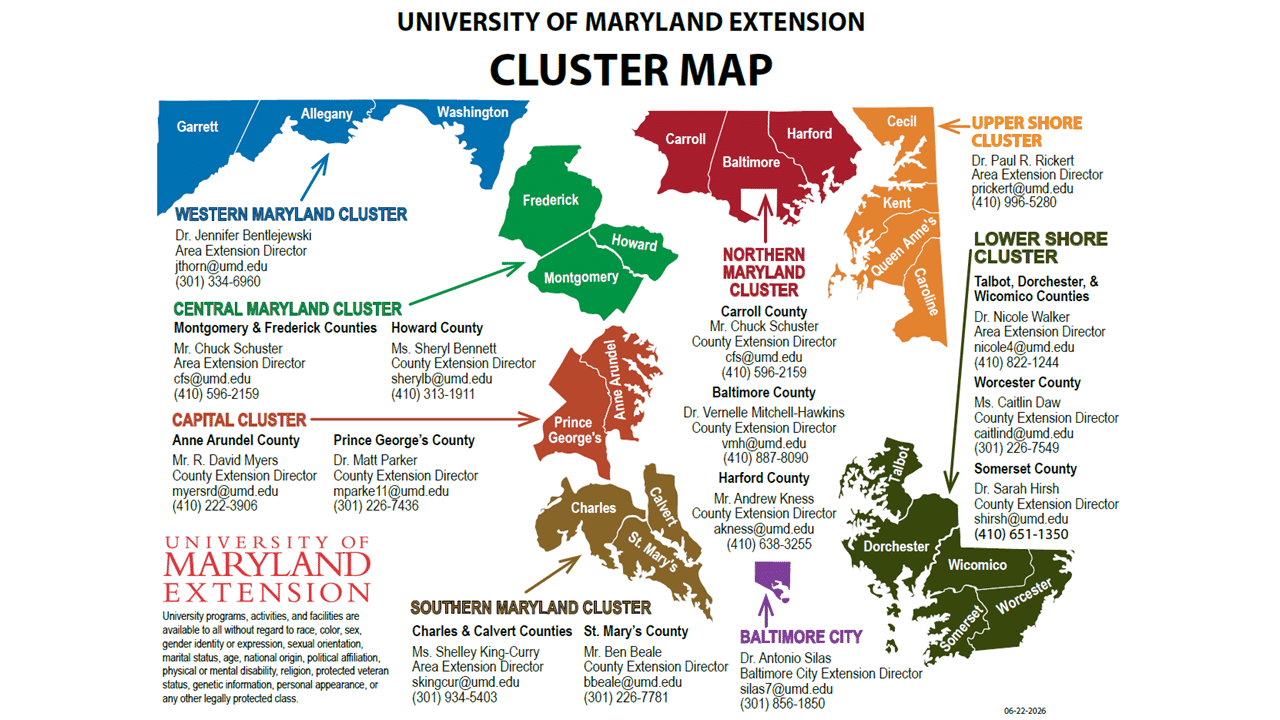
- Clusters are the eight geographically-defined areas that UME uses for both programmatic and administrative purposes. In the “Inputs” section of the IEP, Educators are expected to provide details of program work to facilitate and leverage programming efforts within their clusters. The map of Maryland with UME clusters is below.
HOW TO DEVELOP YOUR IEP
The form to generate your IEP is available in the same software platform as UMERS and your annual Faculty Activity Report – Watermark Faculty Success. The IEP form has been customized across the four UME program area to support a tailored approach to communicating your program plans to program leaders. Instructional videos are available for users that offer detailed guidance on entering IEP data.
You may access the IEP in Watermark Faculty Success by logging into this web address:
https://go.umd.edu/facultysuccess
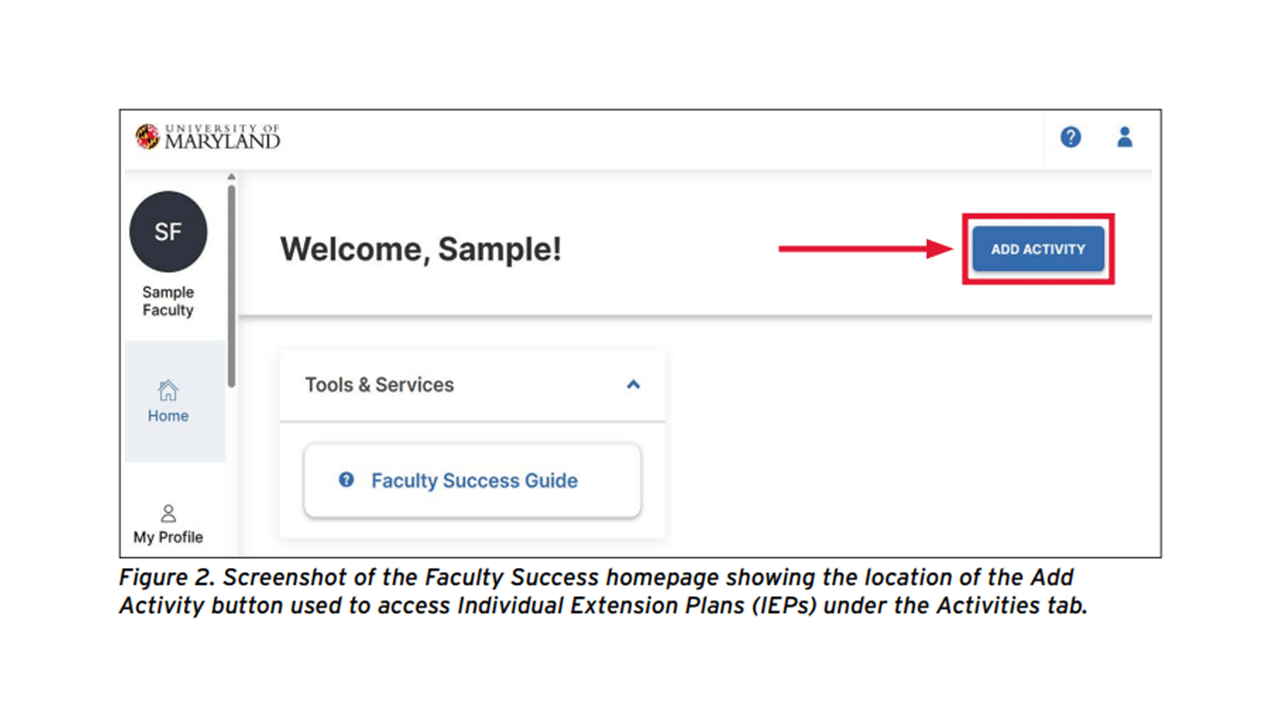
Use your University ID (UID) and Password to log into the system. Faculty Success has updated the user interface. See Figure 2.
To access the IEP, click on the "Add Activity" (see Figure 2) button on the far right. The IEPs can be found on the "Activities" tab in the section "University of Maryland Extension Program Planning." Separate IEPs are available for Agriculture and Food Systems, Environment and Natural Resources, Family and Consumer Sciences, and 4-H Youth Development.
After you click on "Add Activity," you will see all the elements listed that make up your CV. Scroll to the bottom of that page, and you will find the UME menu item, "University of Maryland Extension Program Planning." Once there, choose the IEP that you want to complete.
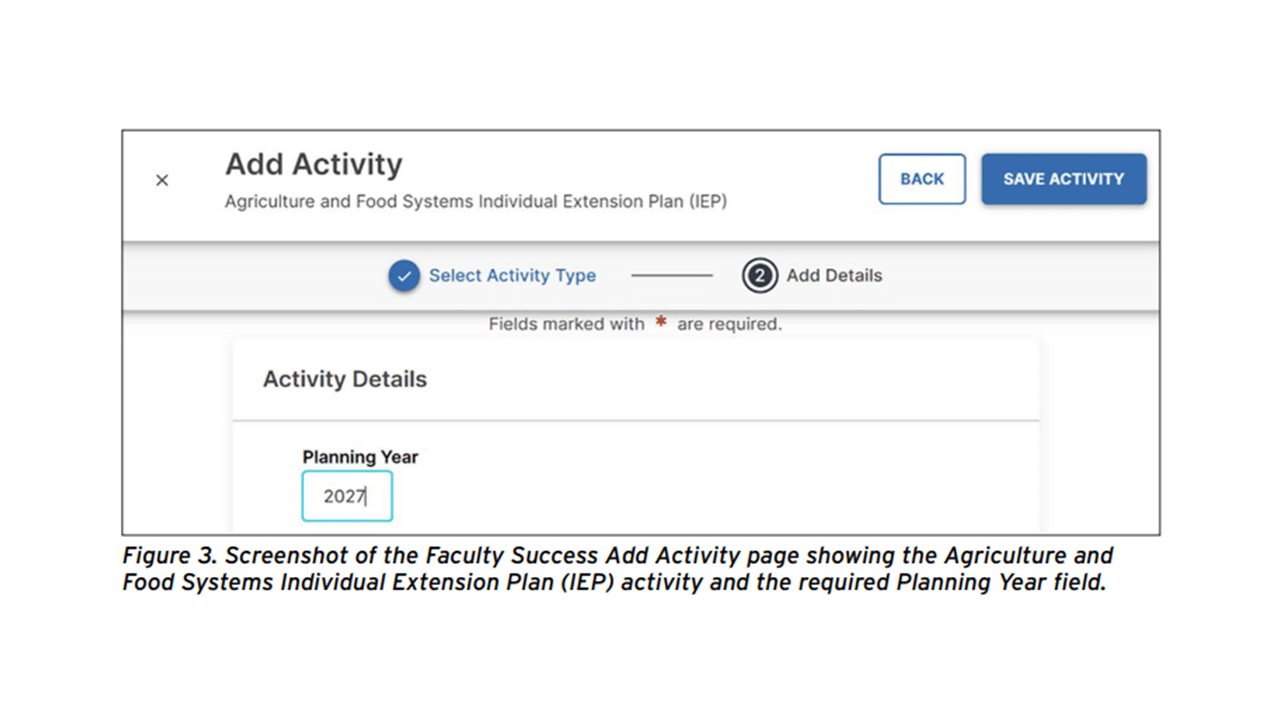
You will now be on the "Add Activity" screen (see Figure 3). Enter the current planning year. In this example, the planning year is 2027. You can continue to enter your information in the next five sections of the IEP.
Basic IEP Format
The UME IEP follows the logic model format. To learn about the basic components of a logic model, please attend the "Planning Your Extension Program and Preparing for Your IEP" session and review the supporting documentation.
All IEPs have the same basic format with five major sections. The major sections can vary somewhat between program areas. Review each section carefully for your program area. This guide discusses the five major sections and notes specific points for each program area.
Read the instructions carefully and contact your Program Leader for any program area-specific instructions.
GETTING STARTED
The first step is to choose the correct IEP for your Program Area. After selecting the IEP, you will be greeted by this screen. Choose “Add New”.

SECTION I FIVE-YEAR PLANNED STATEMENT OF WORK
The IEP begins with Section I and the five year planned statement of work. Be sure to type in the current planning year in this box.

All faculty must write a five-year (2027-2031) planned statement of work. This is a broad overview of your planned work and should be no more than 200 words. The statement of work should outline the major goals and objectives you plan to accomplish. Each statement of work should align with the overall program plan for your area.
All faculty should estimate the percentage of program time that they will allocate to support each of the five AGNR strategic initiatives in your statement of work. You can find more information about the AGNR strategic initiatives at https://agnr.umd.edu/about/strategic-initiatives.
The total percentage of time across all initiatives should not exceed 100%. Also, the total percentage of time across these initiatives may not equal 100% depending on your current program plan. Not all your time may fit into these five strategic areas.
Each program area has specific information to be completed in Section I. Faculty in AgFS must address their long-term strategic professional development goals and the service and outreach plan for the program year. Faculty members in 4-H must enter club, in-school, after-school, camping, and volunteer projected enrollment numbers from the last program year, for the planned year, for the projected next year, and the overall enrollment number for 2031.
SECTION II: MAJOR PROGRAM AREA OPERATING PLANS
All program areas require faculty to enter plans (inputs, outputs, outcomes, measures) for each major program that they will work on in the planning year. Major programs are a comprehensive set of activities/events designed to produce short-, medium-, or long-term outcomes/impacts and measured through a formal evaluation process. Major programs evaluate short- and medium-term changes in knowledge, attitudes, skills, and aspirations (KASA) and/or behavior change. Long-term changes (impacts) occur in social, economic, and environmental conditions (SEEC). New faculty within their first year of work may have one major program; faculty with several years of experience may have three to four major programs.
Concept of a Major Program
Major programs are those that require a substantial investment of resources (e.g., expertise, time, money) to conduct, that have the potential for substantial impact, and that reflect a comprehensive set of educational activities (Summerhill, 1994). The main idea behind a major program is that a bigger, more focused effort will lead to large-scale, significant impacts. As a rule of thumb, a major program involves a minimum of 40 days of planned time during each year of a multi-year program. Major programs often involve collaboration with county faculty members who have similar programs in other counties or with those in the same county who have complementary subject-matter expertise. Major programs also are likely to have strong linkages with state-level teams, which provide support with educational resources and related expertise.
The development of major programs by Extension faculty is consistent with expectations of clients and external stakeholders. That is, people expect Extension to do big things, and major programs are the mechanism for creating significant change. In addition, each faculty member is expected to develop one or more major programs and report on their outcomes in annual reports of accomplishment. More importantly, being able to document the scope and impact of major programs is critical for achieving permanent status (or tenure) and promotion at the university. To read this in entirety, see the fact sheet: “What Is an Extension Program?”
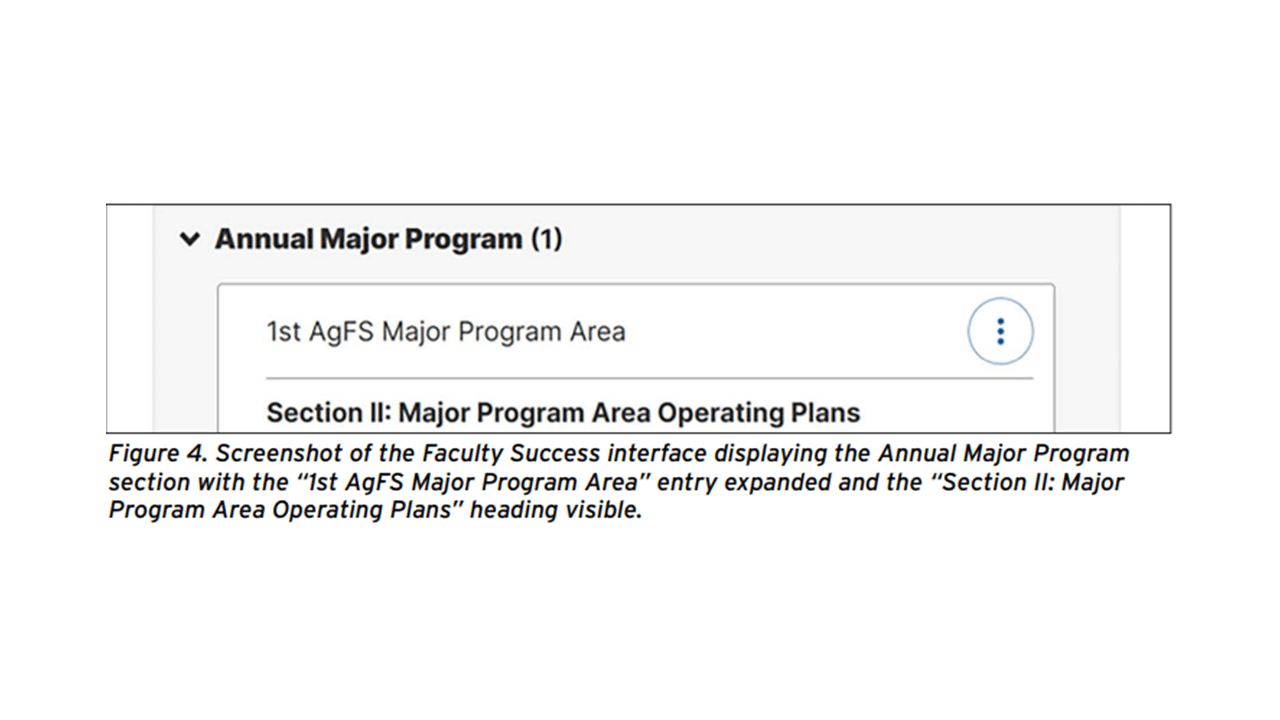
In this section, you will create an operating plan for each major program area in which you plan to work in the current planning year. To allocate your time to major programs, also account for local program issues that may or may not be planned. In this example screen, using AgFS as the program area, you can see that one major program plan (so far) is being entered (see Figure 4 below).
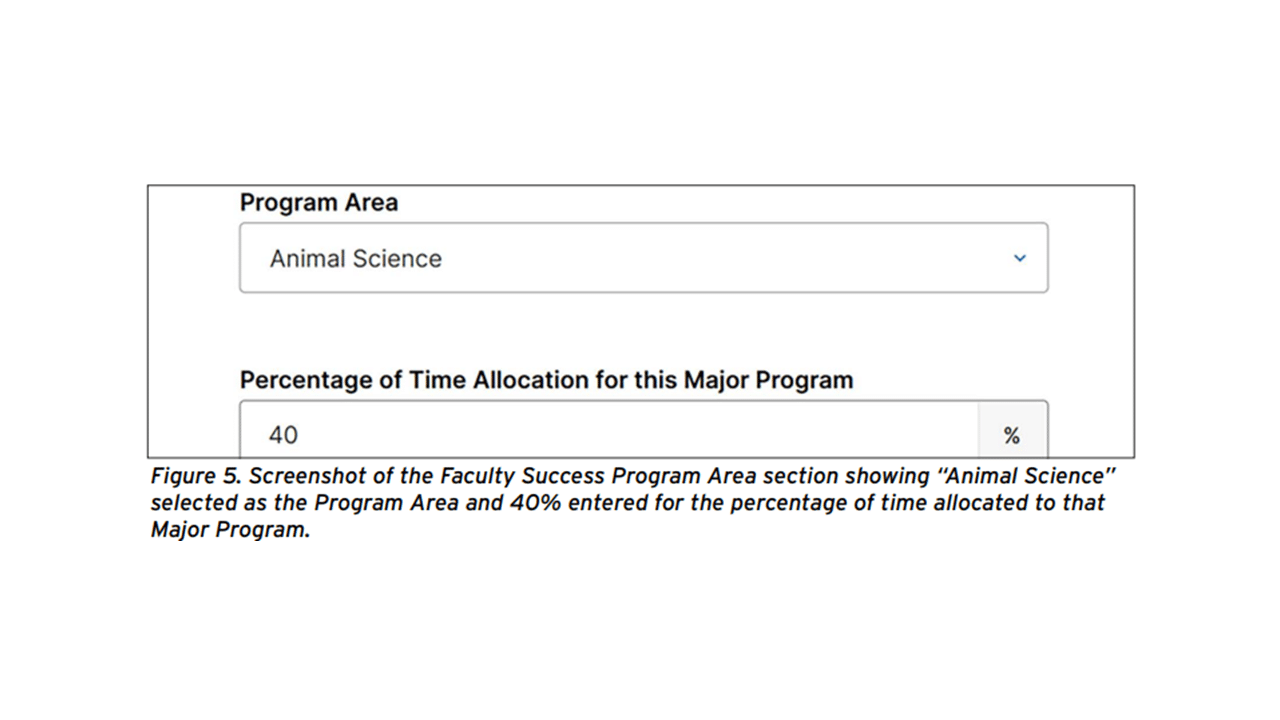
Each of the four program areas will list the current major program areas within that area. There are drop-down lists to choose from one of these and a place to enter the percentage of time allocated to this area. For example in Figure 5 below, this Educator has designated 40% of time devoted to the program area of animal science.
Program Inputs
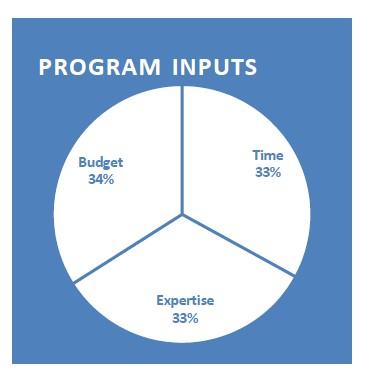
Inputs are the resources, contributions, and investments that you need to develop and implement a program. Extension programs typically require many inputs (time, expertise, budgets). For example, a critical input to your program may be a particular type of funding. Or, you may need to partner with another organization to achieve your program plan.
In this section, give a brief description of the most critical inputs for your program work. Inputs expected for each of the four program areas include:
| 4-H | AgFS | ENRSG | FCS |
|---|---|---|---|
|
|
|
|
Program Outputs
Outputs are activities, services, events, and products that you will produce for your programs. For
example, workshops and classes are outputs.
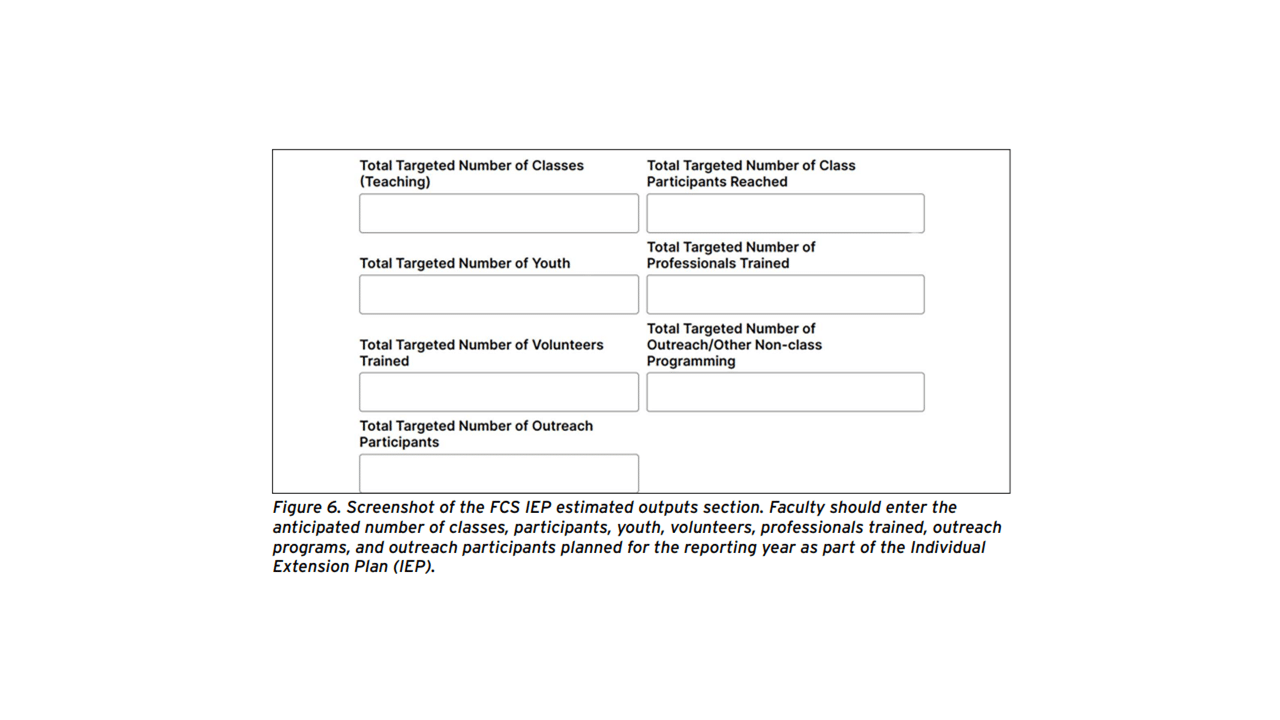
All faculty are being asked to provide target numbers for specific categories. For example, FCS faculty
are asked to estimate for the number of classes to be taught and the total number of
class participants (among other items).
Figure 6 and 7 shows an example of a portion of the FCS estimated outputs. Figure 8 shows an example of a portion of the AgFS estimated outputs.
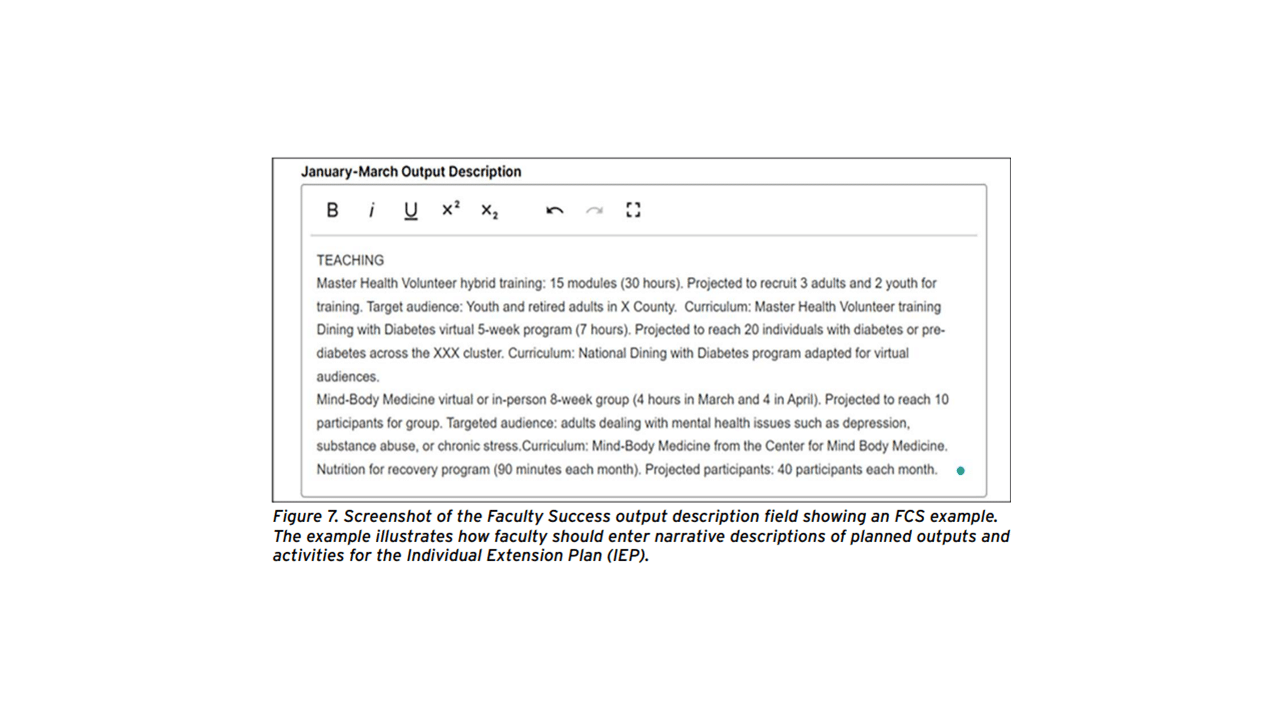
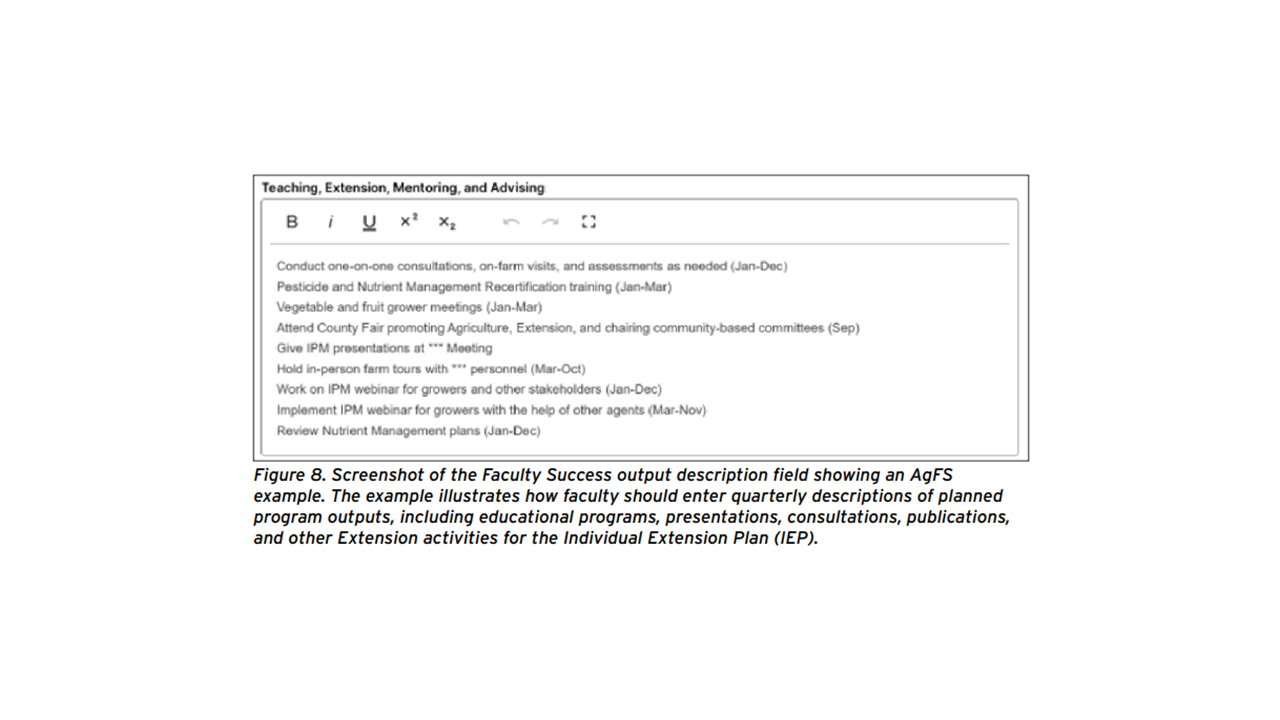
FCS and 4-H faculty must provide a quarterly description of the program outputs. For example, if you plan to teach workshops, provide the workshop name, number of workshops you will teach, and the target audience. If you plan to present at a conference, provide the conference name and the presentation title or topic. If you plan to write a journal article or Extension publication, give the draft title and the Journal that you plan to submit to.
AgFS requires quarterly or time-frame output estimates within the three categories of:
- Research, Scholarly, Creative, and/or Professional Activities
- Teaching, Extension, Mentoring, and Advising
- Other
ENR also requires time estimates in these categories, as well as:
- Service and Outreach
All Educators will update outputs annually in the five-year planning cycle.
Program Outcomes & Measures
Outcomes are the results your program will achieve for individuals, groups, organizations, and communities. New knowledge, aspirations, skills or attitudes (KASA’s for short-term), behavior changes (medium-term), and impact (long-term) are common outcomes of Extension programming. Impacts are the actual social, economic, or environmental changes (SEEC) resulting from the outcomes achieved.
In Extension, the terms indicators and measures are often used interchangeable. The bottom line is that indicators/measures provide the evidence that program outcomes have been obtained. As with outcomes, indicators/measures vary by program area.
In 2026, each program area developed revised sets of outcomes and measures. Each outcome has an associated measure within the specific program area.
As an example, ENR has the four major program areas of:
- Aquaculture & Seafood Technology
- Forestry & Natural Resources
- Home Horticulture
- Water & Climate
Within each of the four major program areas within ENR, there is associated set of outcomes and an associated set of measures. Outcomes for all major program areas are listed in each major program plan to acknowledge the cross-disciplinary nature of the ENR program development work. Examples of ENR outcomes and associated measures are shown in Figures 9 and 10.
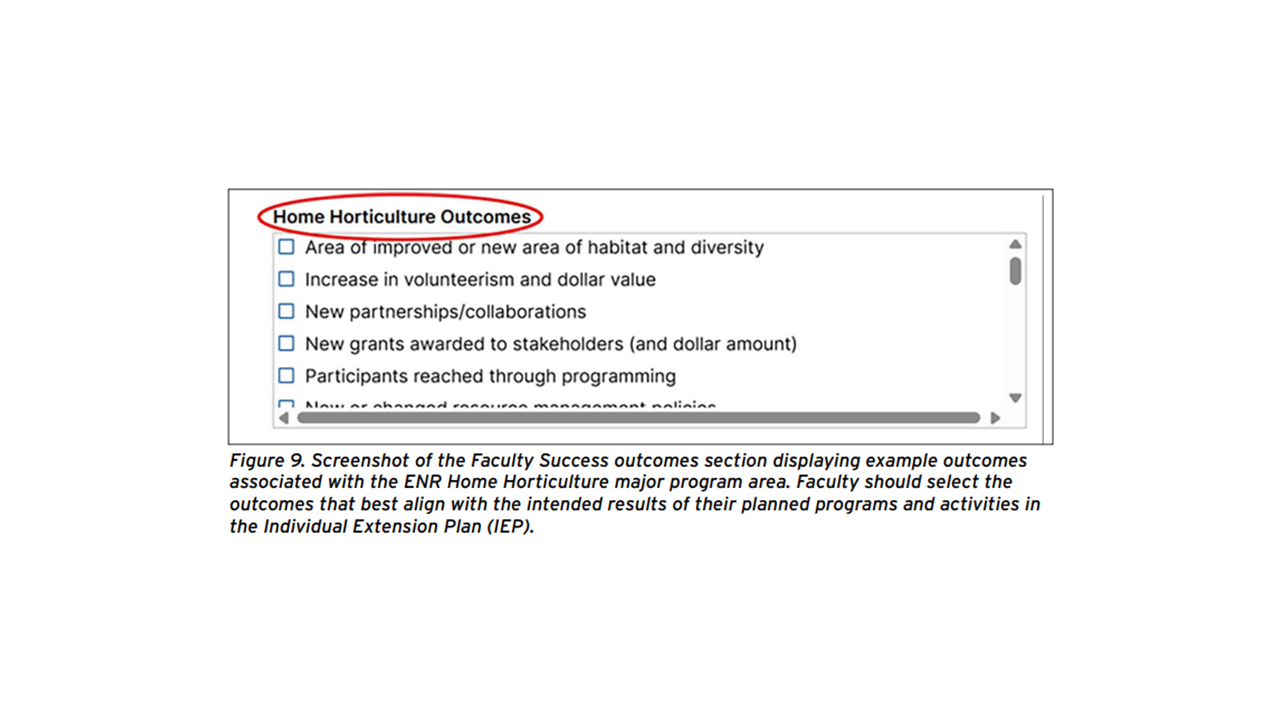
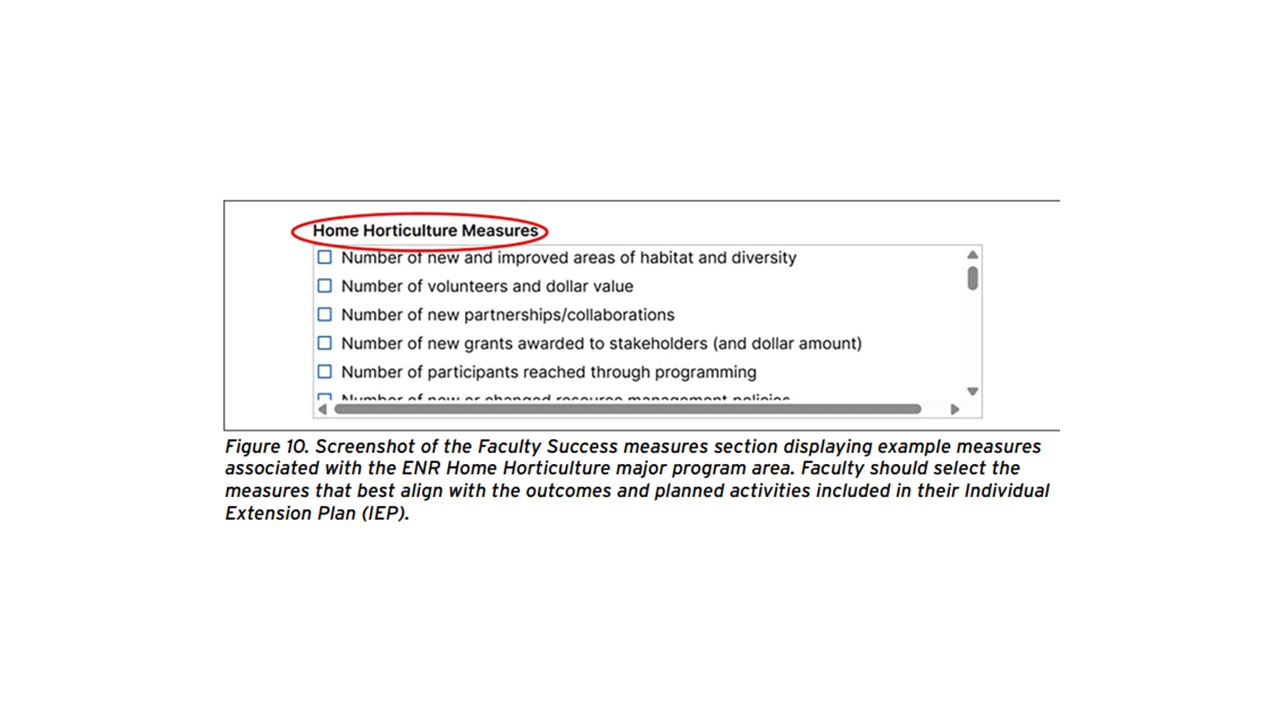
In some cases, a standard set of common outcomes and measures applies to any program taught in ENR. Those outcomes and measures are cross-listed in each of the four major program areas, as you see in Figures 11, 12, and 13 (below).
More details about the program outcomes and measures are available in the current UME Programmatic Plans at https://go.umd.edu/UME-Programmatic-Plans.
If you have more than one major program area in which you work, then you will add a second major program by selecting the "Add" option at the end of Section II.
A new Section II will open to add your second major program plan.
Measures
In Extension
PROFESSIONAL DEVELOPMENT
Employees are UME’s most valuable asset. To enhance the effectiveness of Extension employees and to increase the professional value of Extension, opportunities for development and training are essential. Training in both subject matter and process skills is important to ensure increased capacity of educators to better educate Maryland residents. It will also be important to identify how your professional development plan will enhance the work on action teams you may be associated with during the program cycle.
Faculty professional development plans should include specific plans for enhancing both technical/subject matter knowledge and process skills such as needs assessment, program planning, teaching techniques, and evaluation methods. All professional development shall relate to the work of UME program areas. By increasing skills and knowledge, faculty will be better able to meet goals identified in the programs planned for the year. It is recommended that faculty plan 10–12 days for professional development each year, keeping in mind that various venues can be utilized for professional development including webinars, conferences, self-directed reading and study, eXtension and other training sessions, virtual conferences, and other methods.
| Program Leaders do not expect that you will be able to articulate every professional development opportunity that may arise. You should give an overall plan and consult with your Program Leader as plans change. |
COMMENTS
This section should be used to give your Program Leader any information or explanations to help understand your plan.
AFFIRMATIVE ACTION & DIVERSITY
Extension educational programs and activities must contain program assurances in all solicitations and advertisements notifying beneficiaries of UME’s commitment to provide equal access. Full consideration should be extended to all individuals – potential and eligible participants regarding the distribution of public information and public education and recorded appropriately. If you have any questions regarding the collection of demographic information or the public notification process, contact Dr. Latoya Hicks, lhicks12@umd.edu or 301-405-0088.
Forms, detailed instructions, and procedures can be found on the UME Compliance page at https://agnr.umd.edu/about/information/faculty-staff/administrative-services/ume-compliance
RUNNING AN IEP REPORT
To run a Rapid Report for your IEP, there are six easy steps:
- Click “Activities”, and then choose “Rapid Reports” at the top right corner.
- Choose your program area report:
- 4-H - "4-H Individual Extension Plan (IEP)
- AG - "AFS Individual Extension Plan (IEP)"
- ENRSG - "ENRSG Individual Extension Plan (IEP)"
- FCS – “FCS Individual Extension Plan (IEP)”
- Choose Jan 1, 2023 as the start date and Dec 31, 2023 as the end date.
- Choose the file format you want (doc or pdf).
- Click on "Run Report"
- Open the file once it is downloaded.
Save the report with a recognizable file name, i.e. DAllen-2023-IEP.docx and then share it with your AED/BCED.
To run a report from the Reports menu for your IEP, there are six easy steps:
- Choose the "Reports" menu item from the main menu across the top of the screen.
- Choose your program area report:
- 4-H - "4-H Individual Extension Plan (IEP)
- AG - "AFS Individual Extension Plan (IEP)"
- ENRSG - "ENRSG Individual Extension Plan (IEP)"
- FCS - "FCS Individual Extension Plan (IEP)"
- Choose Jan 1, 2023 as the start date and Dec 31, 2023 as the end date.
- Change the selection to your name on "Whom to Include"
- Choose the file format you want (doc or pdf).
- Click on "Run Report"
Save the report with a recognizable file name, i.e. DAllen-2023-IEP.docx and then share it with your AED.