Skip to main content
Menu
Get Involved
Give
Contact
Ask Extension
About
Leadership
UMD Extension Impact
Careers
Directory
Civil Rights Compliance
Extension Advisory Council and Committees
Program and Organizational Development
Resources
Animal Agriculture
Plant Agriculture
Yard & Garden
Pests
Natural Resources
Environment & Energy
Agribusiness Management
Food & Nutrition
Health & Well-Being
4-H & Youth Education
Programs
4-H Youth Development
Family & Consumer Sciences
Agriculture & Food Systems
Environment & Natural Resources
Home & Garden Information Center
Locations
Publications
News & Events
All News
Events
Plant Diseases Management
Home
Resources
Plant Diseases Management
For full functionality of this site it is necessary to enable JavaScript. Here are
instructions for how to enable JavaScript in your web browser
.
Sort by:
Date
Title
Updated: May 8, 2025
Timely Viticulture Updates
Timely Viticulture Updates
Updated: May 7, 2025
Checking Bulletin Live! Two
To monitor Pesticide Use Limitation Areas (PULAs) for your farms, use the Check Bulletin Live! Two (BLT) platform.
Updated: May 6, 2025
Pesticide Updates, Bulletins Live! Two and Inspect Your PPE
Pesticide Updates, Bulletins Live! Two and Inspect Your PPE.
Updated: October 23, 2024
Grape Fruit Set and Shatter (Coulure)
Grape flowers and fruit set is a very complicated process, which can be influenced by cultivar, environment, vine status and history, biotic and abiotic factors. Optimum conditions for fruit set include high light intensity, warm temperature, and adequate soil moisture and nutrients at bloom. Good fruit set is important for proper cluster formation, development, and ultimate desired maturation and harvest of fruit. The following is some basics on fruit set and some potential causes of poor fruit set.
Updated: October 23, 2024
Fungicide Efficacy Tables for Control of Corn and Soybean Diseases
The Crop Protection Network (cropprotectionnetwork.com) is a national working group comprised of Extension agents and specialists from across North America that provide data through publications regarding pest management in agronomic crops. The website and publications can be a great resource for your operation. The following are the most recent fungicide efficacy tables for foliar diseases of corn and soybean.
Updated: October 23, 2024
Transmission of the Yeast Eremothecium Coryli to Fruits and Vegetables by the Brown Marmorated Stink Bug
The Brown marmorated stink bug (BMSB) Halyomorpha halys (Figs. 1 and 1a) was accidentally introduced into the United States in shipping containers arriving from Asia. The first confirmed specimen was collected in Allentown, PA in October 2001, although there is evidence that it was collected from black light traps in New Jersey as early as 2000.
Updated: October 23, 2024
Reminders for Monitoring and Managing Spotted-Wing Drosophila
Spotted-wing drosophila (SWD, Drosophila suzukii) is a small fly that lays its eggs into ripening and ripe soft-skinned fruit, causing direct damage and wounds that other pests and pathogens can use. Although they prefer fully colored ripe fruit, they are capable of infesting fruit that is just starting to turn color and will do so when populations are high.
Updated: October 23, 2024
Timely Viticulture
Timely Viticulture is an electronic newsletter designed to remind grape producers of seasonal vineyard needs and considerations throughout the year.
Updated: October 23, 2024
Spotted Lanternfly (SLF) II - Scouting and Management
The Spotted Lanternfly (SLF) is now confirmed in Cecil and Harford Counties in Maryland, and has the potential to be a very significant pest in vineyards. For background information, please see the TimelyVit Spotted Lanternfly (SLF) I—Background, for basic information. This Timely Viticulture was created to give growers information of how to scout for the pest and some management options and strategies.
Updated: October 23, 2024
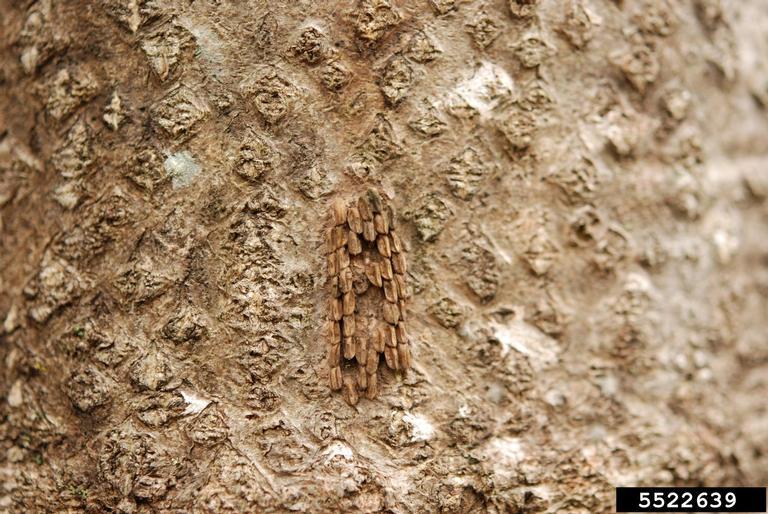
Removal of Spotted Lanternfly Egg Masses
Now is the time to remove the egg masses that the adult spotted lantern fly (SLF) laid last year. To do this you will need some hand sanitizer, a plastic bag, and a firm card for scraping.
First
Previous
Page
1
Current page
2
Page
3
Page
4
Page
5
Page
6
Page
7
Page
8
Page
9
Next
Last