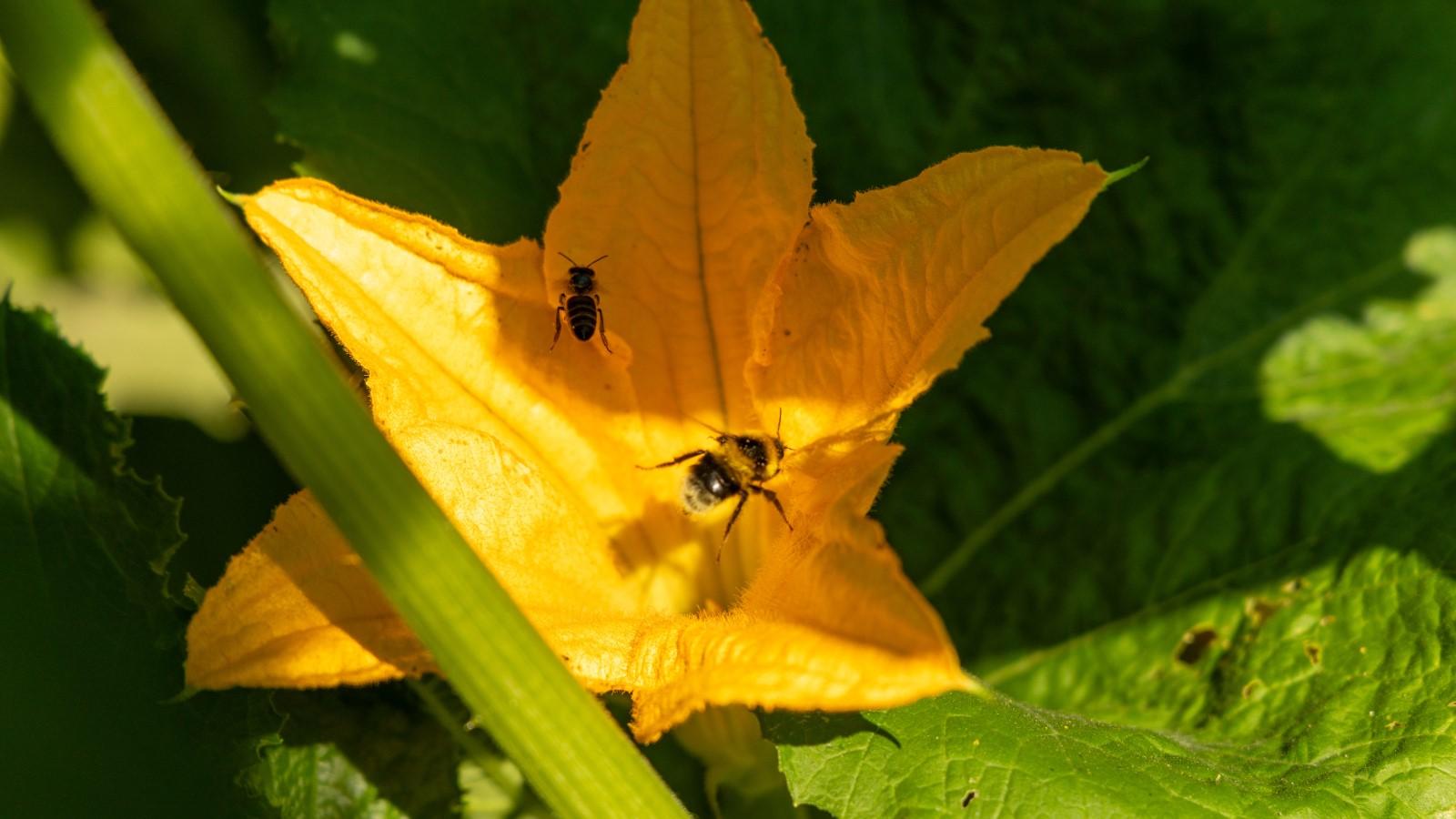
Bees visiting a squash blossom. Photo via Adobe Stock.
Updated: July 21, 2026
Why is pollination important?
Flowering plants primarily reproduce via seed, and seeds are formed from fertilized flowers. Flowers can be entirely male (only producing pollen), female (only receiving pollen and forming seeds), or contain parts of both sexes. Only some flowers with both male and female parts can pollinate themselves; otherwise, they must receive pollen from another plant or flower.
Pollination is the movement of pollen from male to female flower parts of sexually reproducing plants. It is usually accomplished in nature by wind and insects (and in human-assisted pollination, with a paintbrush or vibrations from sonicator devices). Successful pollination results in the development of a fruit (such as a bean pod, tomato, or beet seed ball) containing seeds of the next generation. Fruits are the desired edible part of many vegetable crops; for other crops, it may be leaves, stems, flower buds, tubers, bulbs, or roots. (Note: in culinary terms, a cucumber, ear of corn, green bean, tomato, zucchini, etc., is a vegetable; in botanical terms, they are fruits because they house the plant’s seeds.)
Understanding how a particular vegetable plant’s flowers are pollinated will help you make gardening decisions and troubleshoot problems. For example, beans are self-fertile (capable of self-pollination) and don’t require insect pollination. Self-pollinating plants can be covered to exclude wildlife and pest insects without interfering with pollination and fruiting. Summer squash flowers require insect pollination and are only open in the morning. The limited window of time makes this species more prone to flower and fruit drop from a lack of pollination. Poor pollination is sometimes due to minimal bee activity during bad weather or as a consequence of insecticide use and habitat loss (not having nesting sites or enough sources of food).
Farmers and home gardeners in the mid-Atlantic are finding that high daytime and overnight temperatures, occurring more frequently now due to climate change, can cause vegetable plants to drop flowers and produce deformed or undersized fruits. This problem has been observed in mostly self-fertile crops like bean, tomato, and pepper, and in crops that need cross-pollination, like squash and pumpkin.
How do high temperatures affect pollination?
As generalized in the following diagram, the reproductive parts of a flower include the ovary (which will turn into a fruit with seeds upon pollination), the stigma (where pollen is deposited, on the receptive end of a stalk connected to the ovary), and anthers (which produce pollen) atop stalked filaments.
The basic structure of the reproductive parts of a flower having both male and female parts. Diagram used with permission from Seed Savers Exchange.
All fruiting plants have an optimal temperature range for the pollination/fertilization process. High temperatures can reduce pollen production, prevent anthers from releasing pollen, kill pollen outright, and interfere with the pollen tubes that serve as conduits for uniting sperm cells and eggs (fertilization) inside undeveloped seeds (ovules). High temperatures can also injure flowers before they open. Night temperatures are increasing at a faster rate than day temperatures as a result of climate change, and seem to be the factor most responsible for pollination problems.
How will I know if I have a heat stress pollination problem?
During periods of very high day and evening temperatures, flowers and immature fruits may drop off of plants. Fruits may also be small, malformed, and have few seeds. A few hours of very high temperatures during the pollination/fertilization process is enough to cause problems in sensitive crops and cultivars. If high heat is short-lived, you may not see much overall reduction in flowering, fruit production, or fruit quality.
Generally, day temperatures above 95°F and night temperatures above 75°F can cause problems. For specific crops:
Pumpkins: Temperatures over 85°F in the third to sixth week of growth can reduce pollination.
Snap beans: University of Delaware research found that night temperatures above 68°F caused pollination problems. This is especially important for gardeners who plant successive crops for a continuous bean harvest through frost. Seeds planted between early June and mid-July will flower during the warmest weeks of the year, and are most vulnerable to heat stress.
Peppers: Gardeners and farmers routinely report midsummer dips in fruit production from high day and evening temperatures. Plants resume flowering and fruiting once slightly cooler weather returns.
Young zucchini fruits that failed to grow normally due to poor pollination from high temperatures and low bee activity. Photo: Jon Traunfeld
Are some gardens more vulnerable to heat stress?
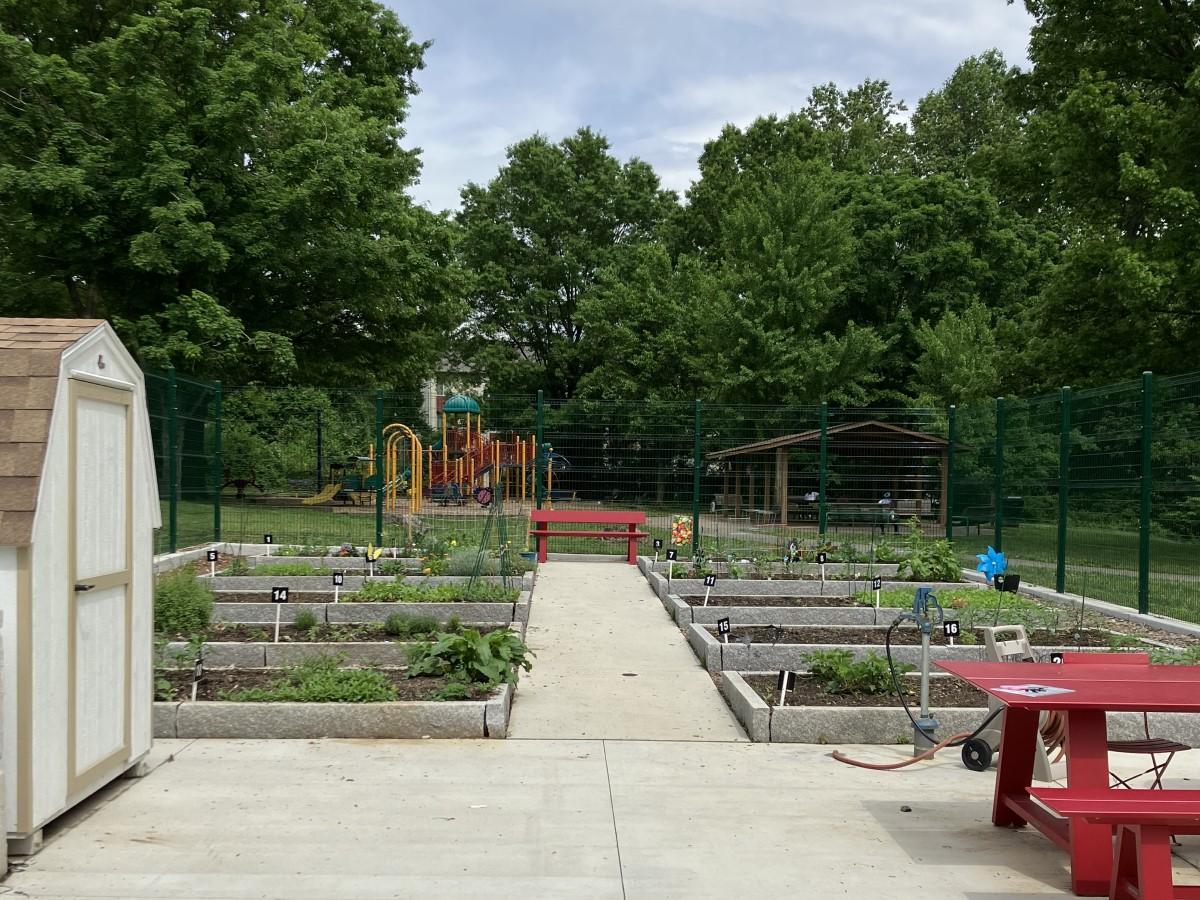
A community garden vulnerable to heat stress from the stone bed edging and expanses of concrete surrounding the planting areas. Photo: Jon Traunfeld
Pollination problems caused by heat stress are more likely in urban gardens due to “heat island” effects: roads, buildings, and other hard surfaces absorb solar energy in daytime and release it at night as heat energy. Plants in full-sun locations near roads and reflective surfaces are also vulnerable. Some reports of reduced tomato flowering and fruiting due to heat stress have come from open farm fields. This does not yet appear to be a widespread issue for home gardeners, perhaps because most garden locations offer some shade.
What can gardeners do about vegetable heat stress?
Heat stress can cause or contribute to other problems, such as sunscald and blossom-end rot. If heat stress is affecting your vegetable plants:
Provide good plant care: water as needed (especially during dry spells), fertilize appropriately, remove competing weeds, and cover bare soil with mulch.
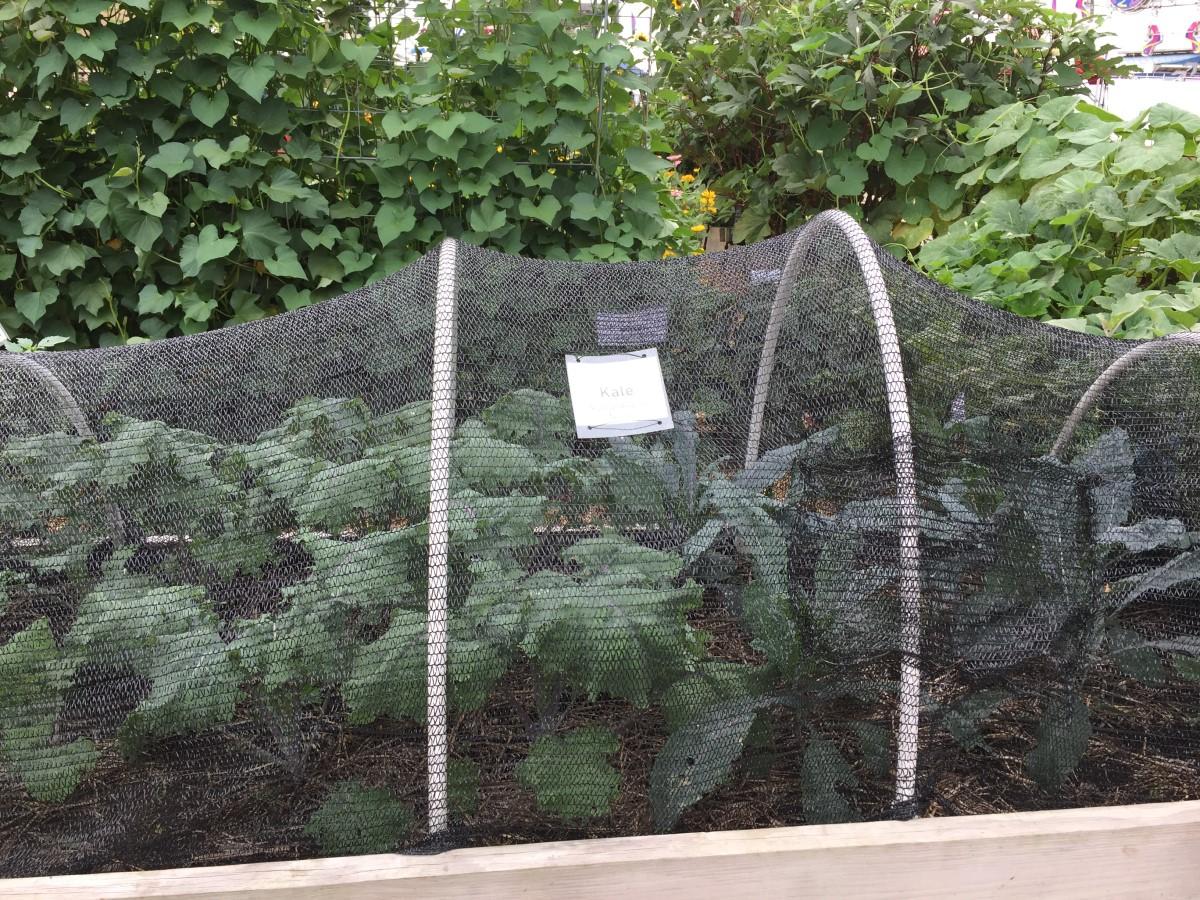
Use shade to reduce heat stress: Plant sensitive crops like tomato, pepper, and squash in spots that receive late afternoon shade from taller plants or structures. Or, use shade cloth to shield the plants by covering their tops of plants with 30% shade cloth (this grade of cloth lets 70% of the sunlight through).
Plant heat-tolerant varieties. Examples:
Try tomato cultivars ‘Heatmaster,’ ‘Florida 91,’ and ‘Celebrity’
Try snap bean cultivars ‘Annihilator’ and ‘Jaguar’ for mid-summer plantings; Delaware researchers found that they produced well in spite of high evening temperatures
Arched pipe sections support shade cloth above a bed of kale. The cloth reduces the intensity of sunlight to keep the plants cooler, while still allowing enough light through for plant growth. Photo: Jon Traunfeld
Some solutions for poor summer squash pollination
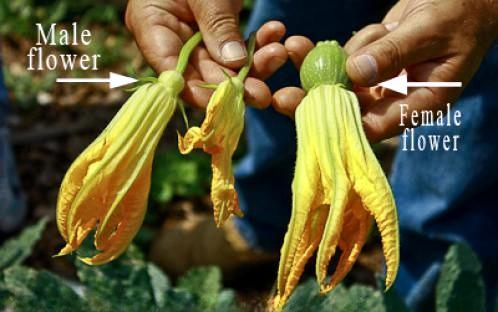
Male squash flower on the left, female flower (with an ovary) on the right.
Photo: UME-HGIC
Poorly-formed zucchini squash due to inadequate pollination of the female flower and/or inadequate fertilization of the undeveloped seeds inside the fruit.
Photo: Jon Traunfeld
Gardeners sometimes report that their summer squash plants produce very few fruits. In addition to heat stress, low squash production can be caused by low pollinator activity, plant crowding, and site conditions like poor soil. To ensure squash success:
Take good care of your plants: give them fertile soil and adequate spacing, water, and sunlight.
Be patient: female and male flowers must be open at the same time for cross-pollination. Many male flowers may emerge before you see the first female flower. Heat stress and low light conditions (not enough sun) can also cause squash and pumpkin plants to produce more male flowers than female flowers.
Plant parthenocarpic cultivars that produce fruit without pollination.
Plant summer squash 2 to 3 times during the growing season so crops mature at different times.
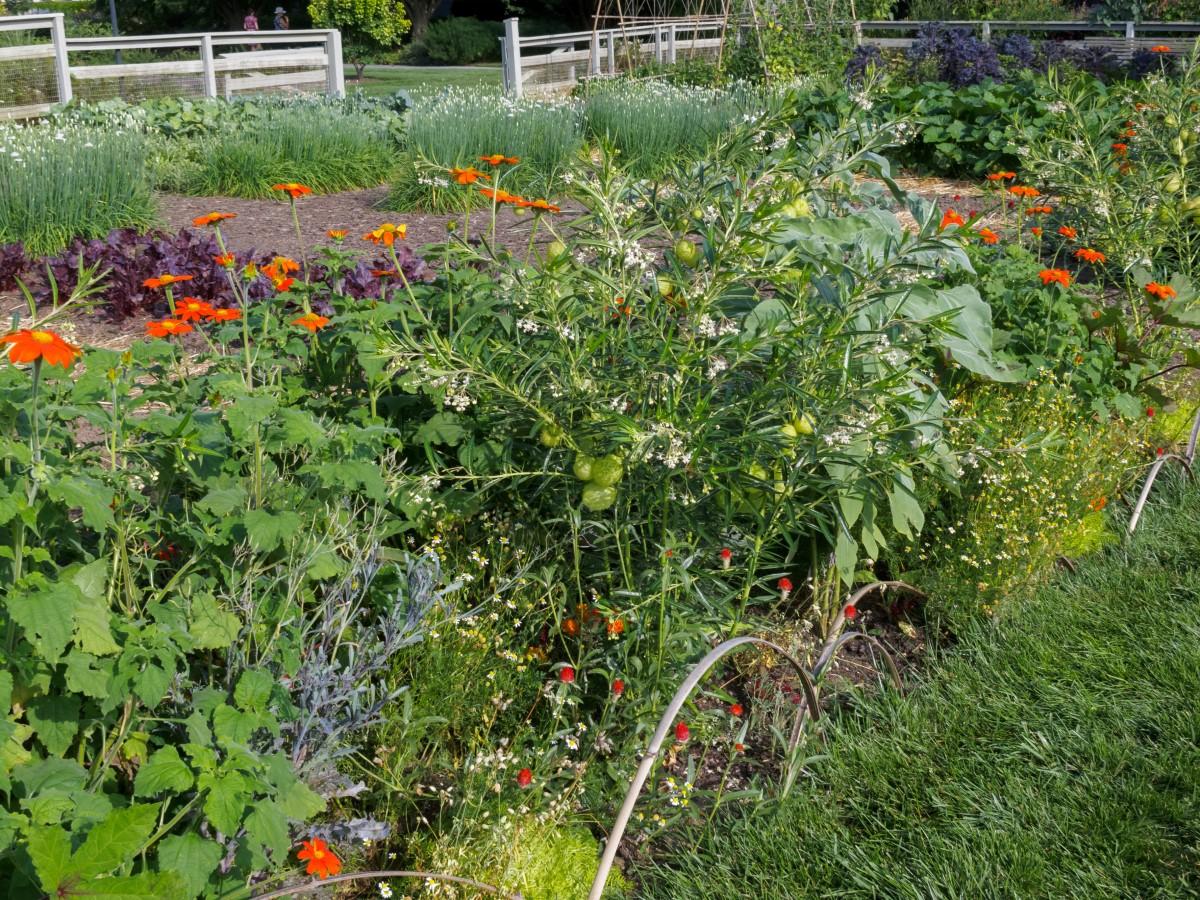
Plant a variety of flowering plants in or around your vegetable garden to attract pollinators.
Reduce or eliminate the use of insecticides. Don’t spray insecticides when squash family plants are in bloom. Some organic insecticides, such as those using the active ingredients pyrethrum or spinosad, can also kill pollinators.
A border of flowering annuals attracts more pollinators to nearby vegetable beds. The beneficial insects they support not only help to pollinate the crops, but also can help prey on pests. Photo: Miri Talabac, University of Maryland ExtensionHand pollination: the anther cones of male squash flowers (pictured with the petals cut away) can be used like a brush to paint pollen grains on the stigma of female flowers. Photo: Jon Traunfeld
Parthenocarpic varieties produce fruit without pollination
Parthenocarpic varieties produce a high percentage of female flowers and can fruit without being pollinated. The fruits contain small, soft seeds (unfertilized ovules). If you plant conventional (seed-producing) cultivars nearby, pollinators will cross-pollinate the plants, causing seeds to mature in the parthenocarpic fruits. (This is not really a problem unless you need seedless fruits.)
Another advantage is that parthenocarpic varieties can be covered with a row cover or insect mesh netting throughout the plants’ lifecycle to exclude pests like squash bug, cucumber beetle, and squash vine borer. For all other cultivars, row covers and netting must be removed when the plants flower to allow for insect pollination.
Author: Jon Traunfeld, Extension Specialist (retired), Home/Community Food Gardening. This content was originally published in our Maryland Grows blog, May 2022. Revised May 2026.
Copy editing by Nancy Klein, Maryland Master Gardener, May 2026.