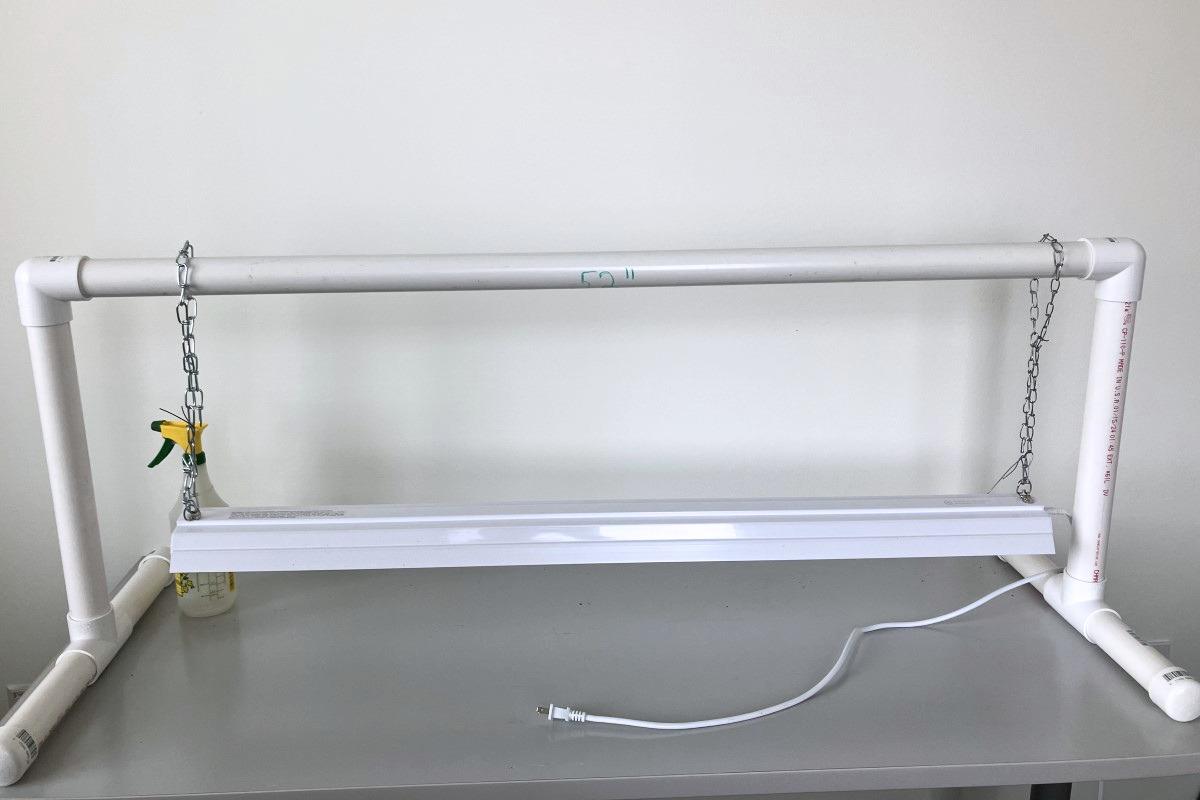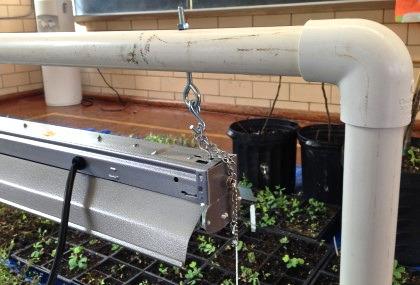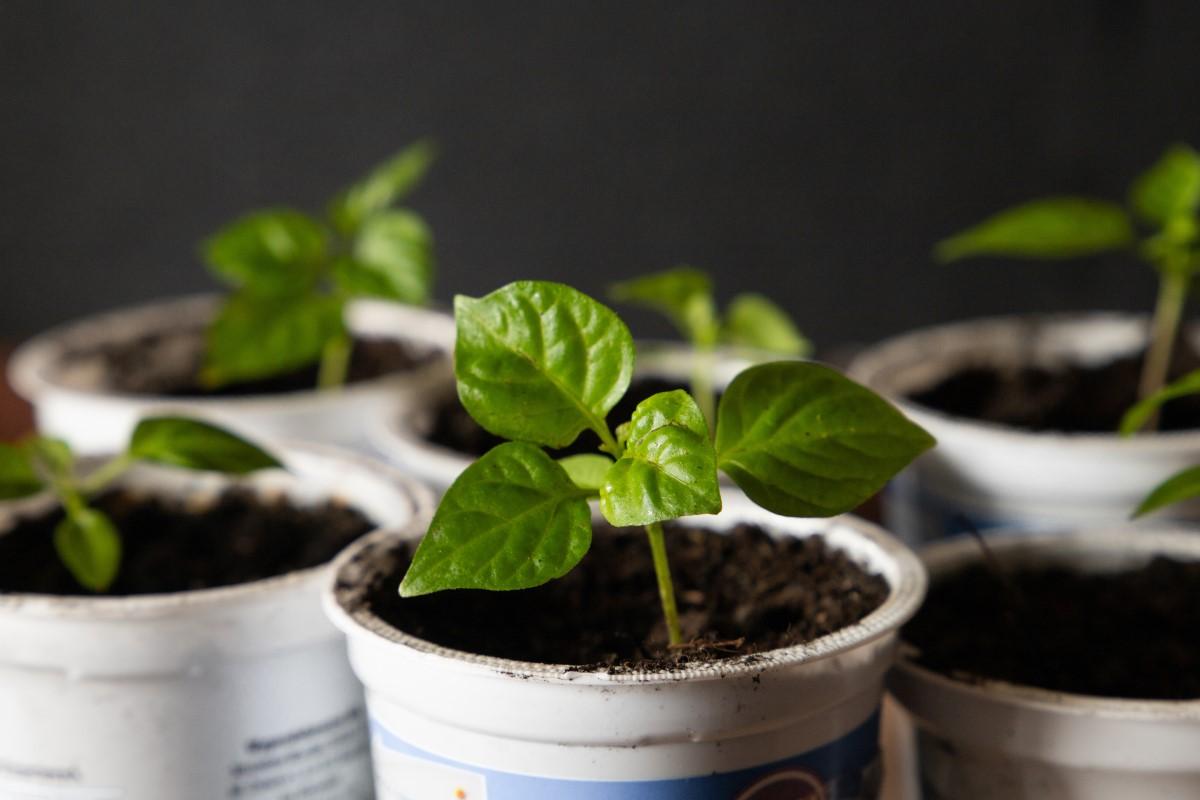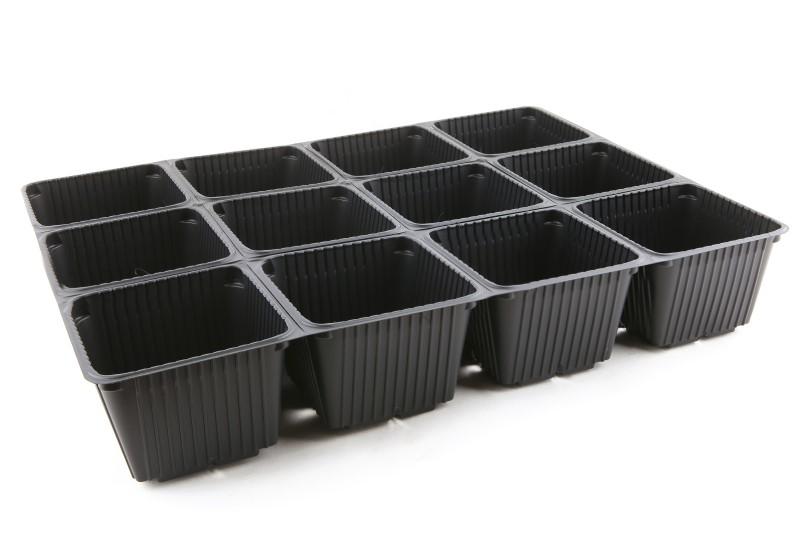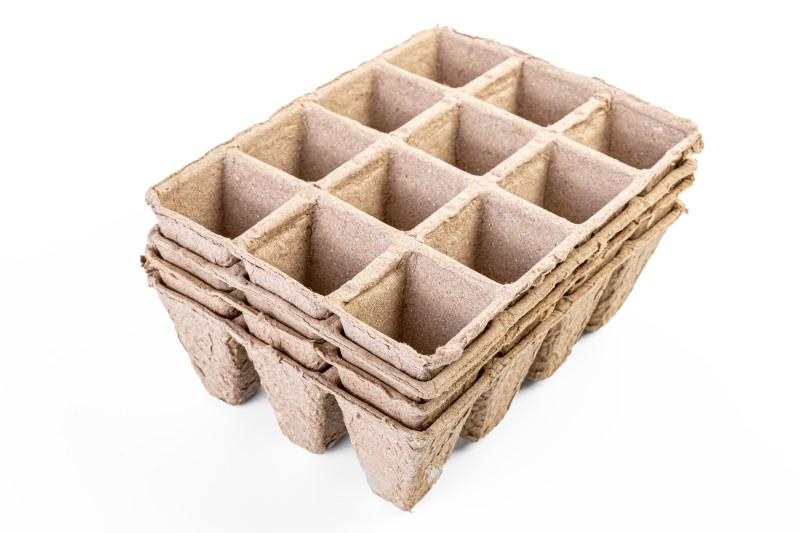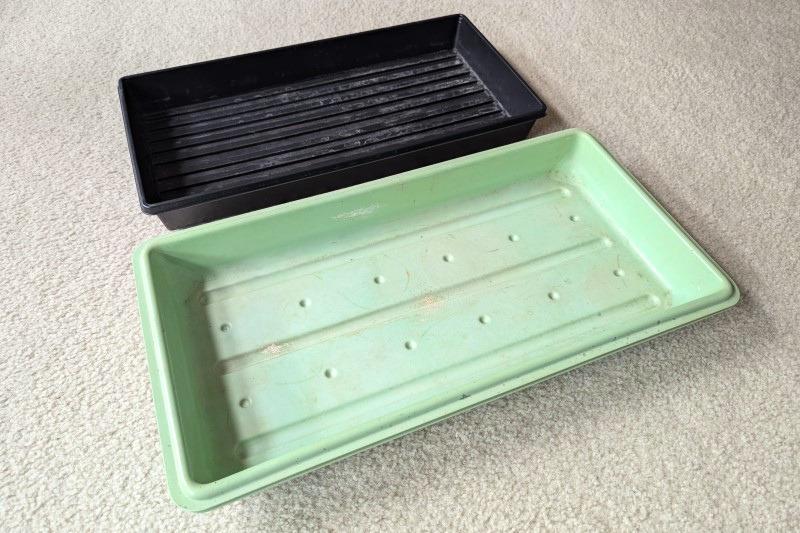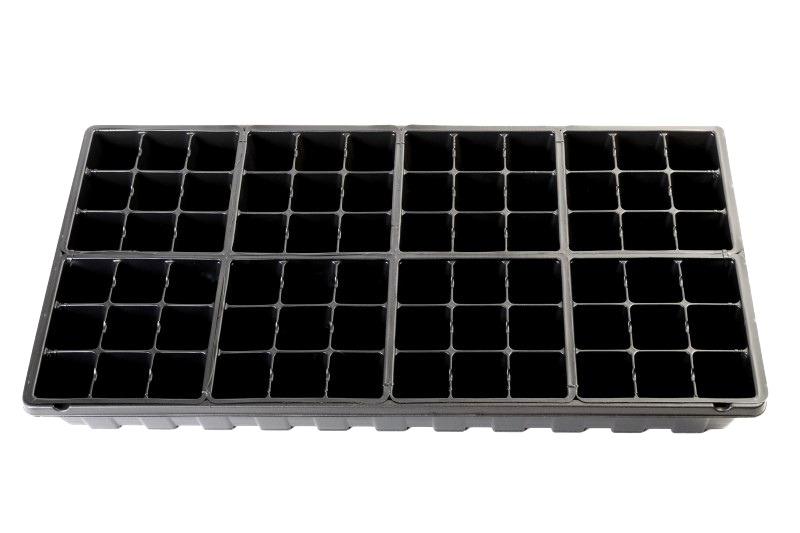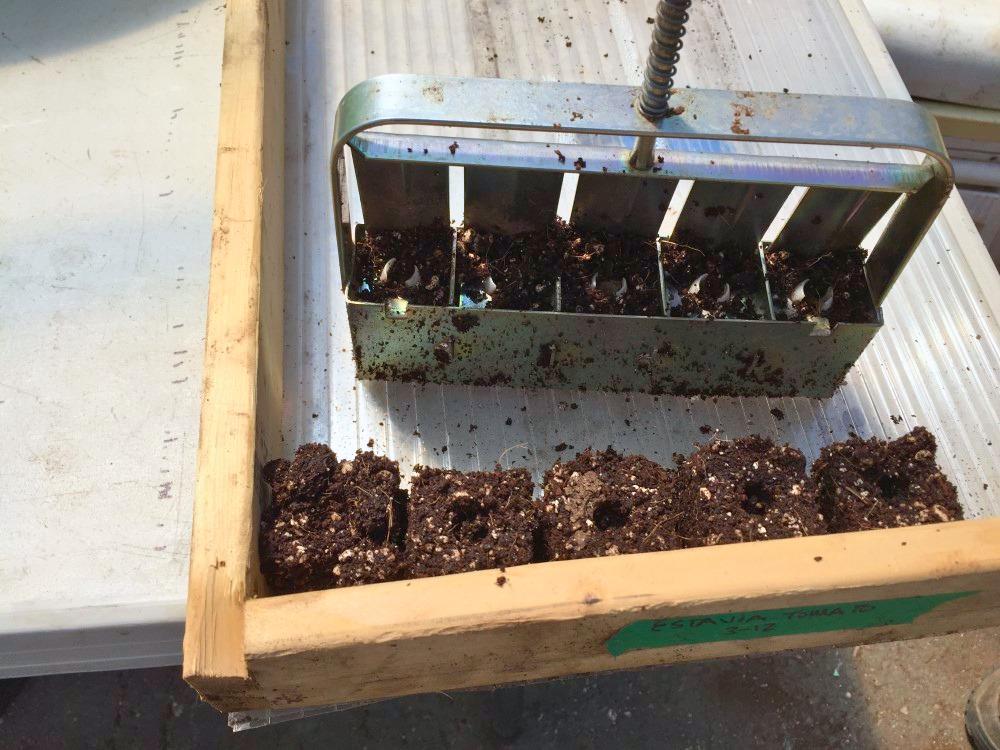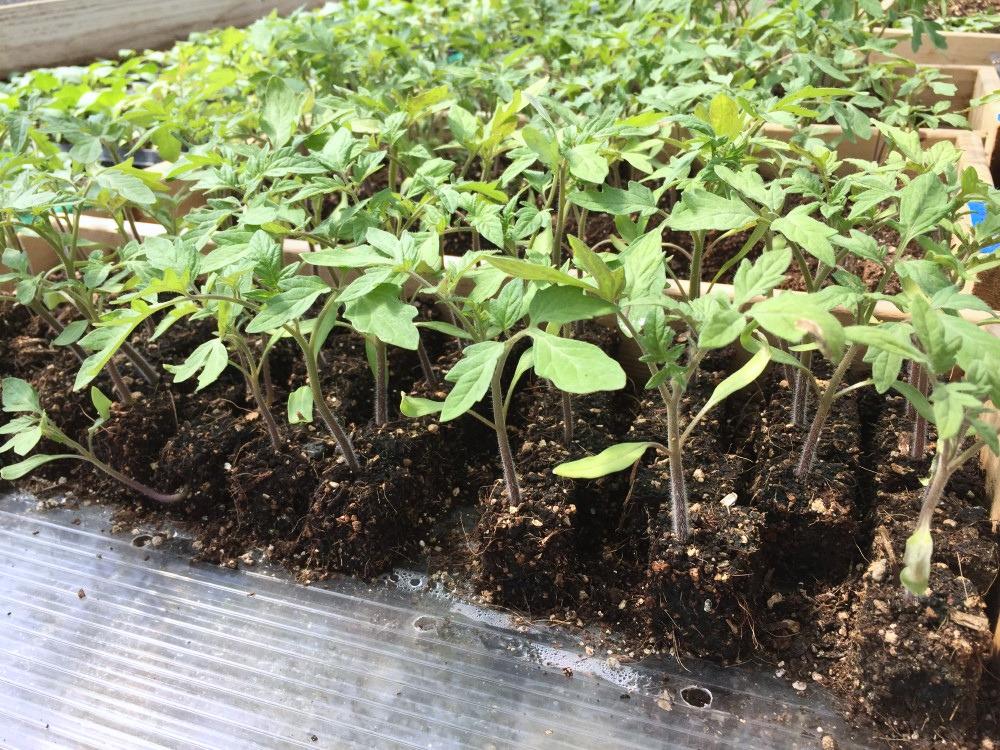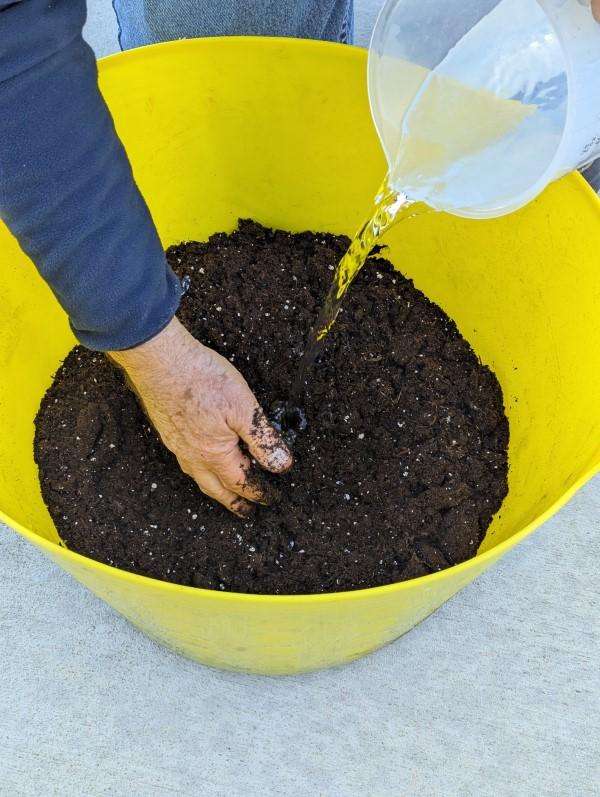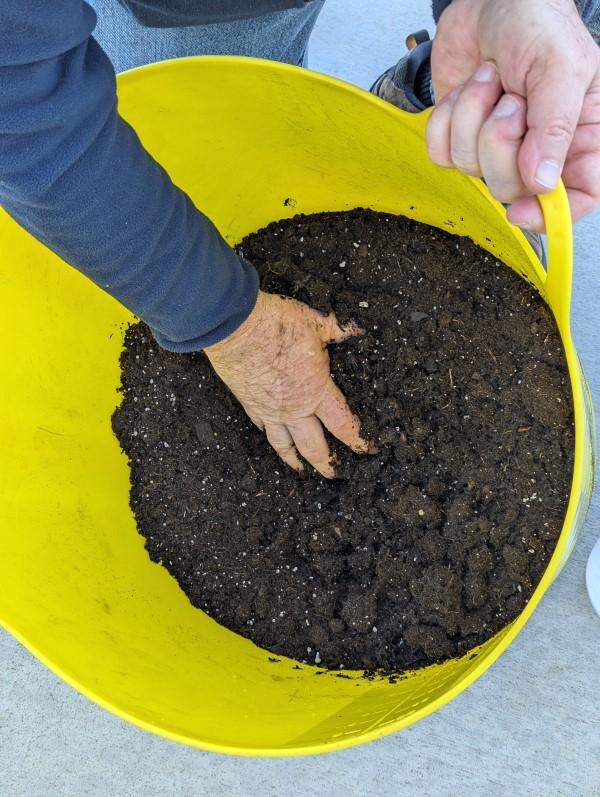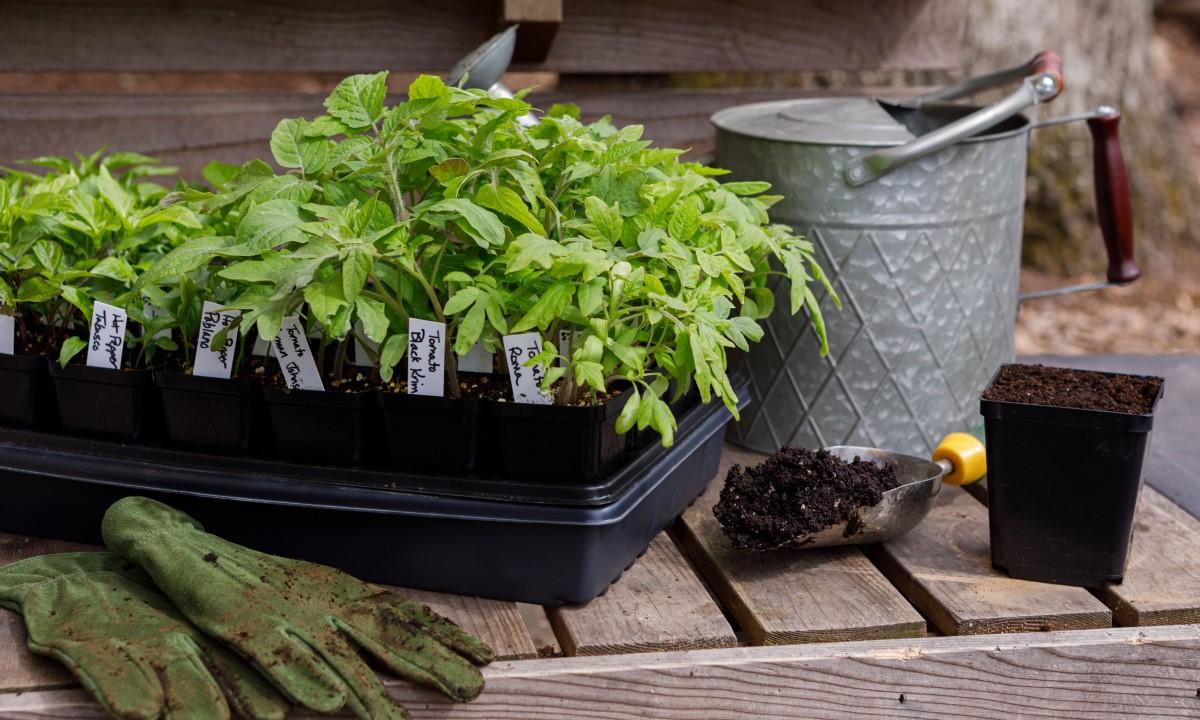
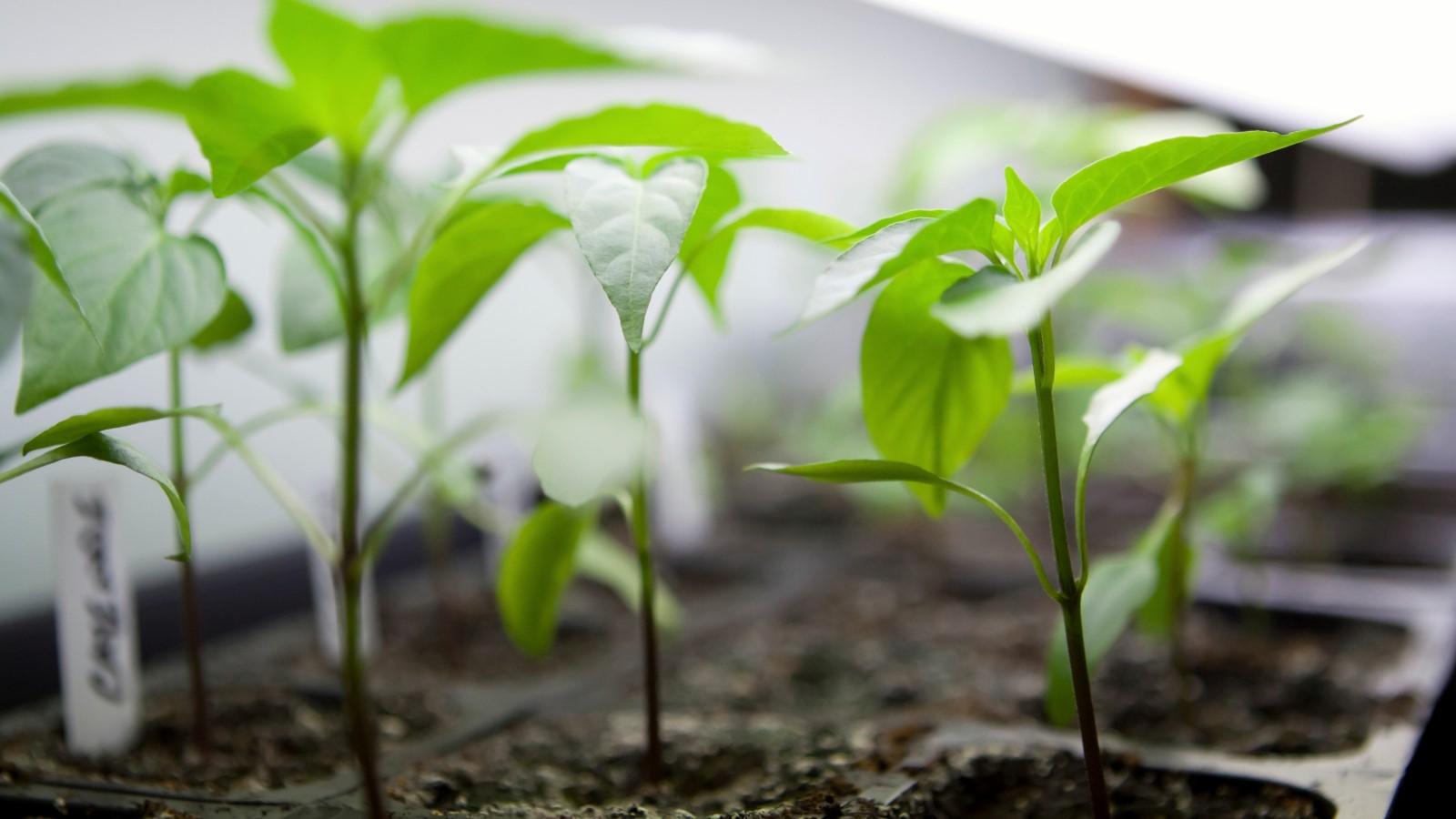
Many gardeners start vegetable crops indoors and later transplant them outside into containers or garden beds. With a small investment in materials and a bit of space, you can grow hundreds of healthy transplants. All of the supplies you need can be found at home (such as reused food containers) or purchased locally. Seeds can be started in a basement, kitchen, dining room, or bedroom with an LED or fluorescent grow light.
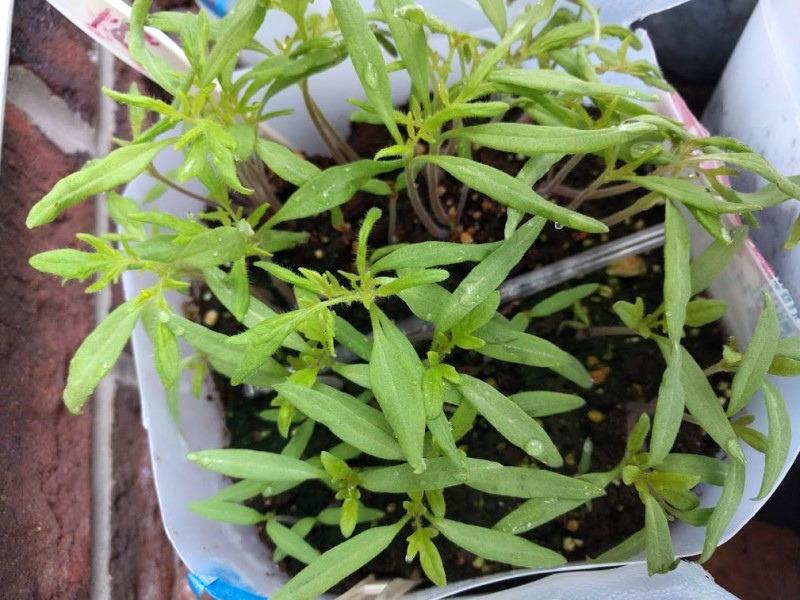
A wide variety of vegetable transplants (also called “starts”) can be grown from seed sown indoors.
- Cool-season crops that need to mature before being stressed by summer heat benefit from the head start of indoor sowing. Examples include cabbage, broccoli, cauliflower, and lettuce.
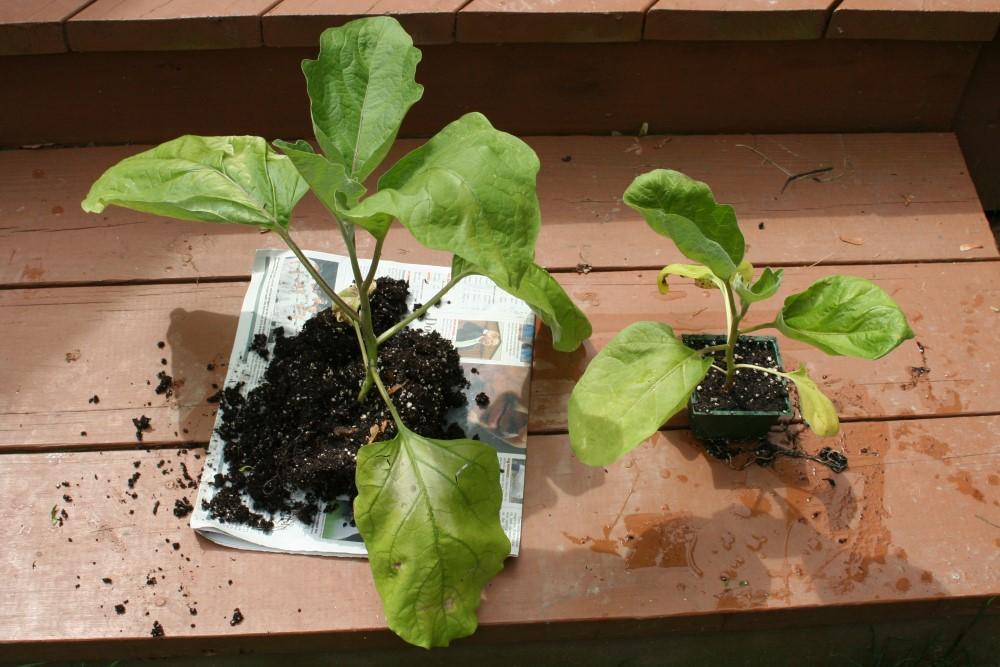
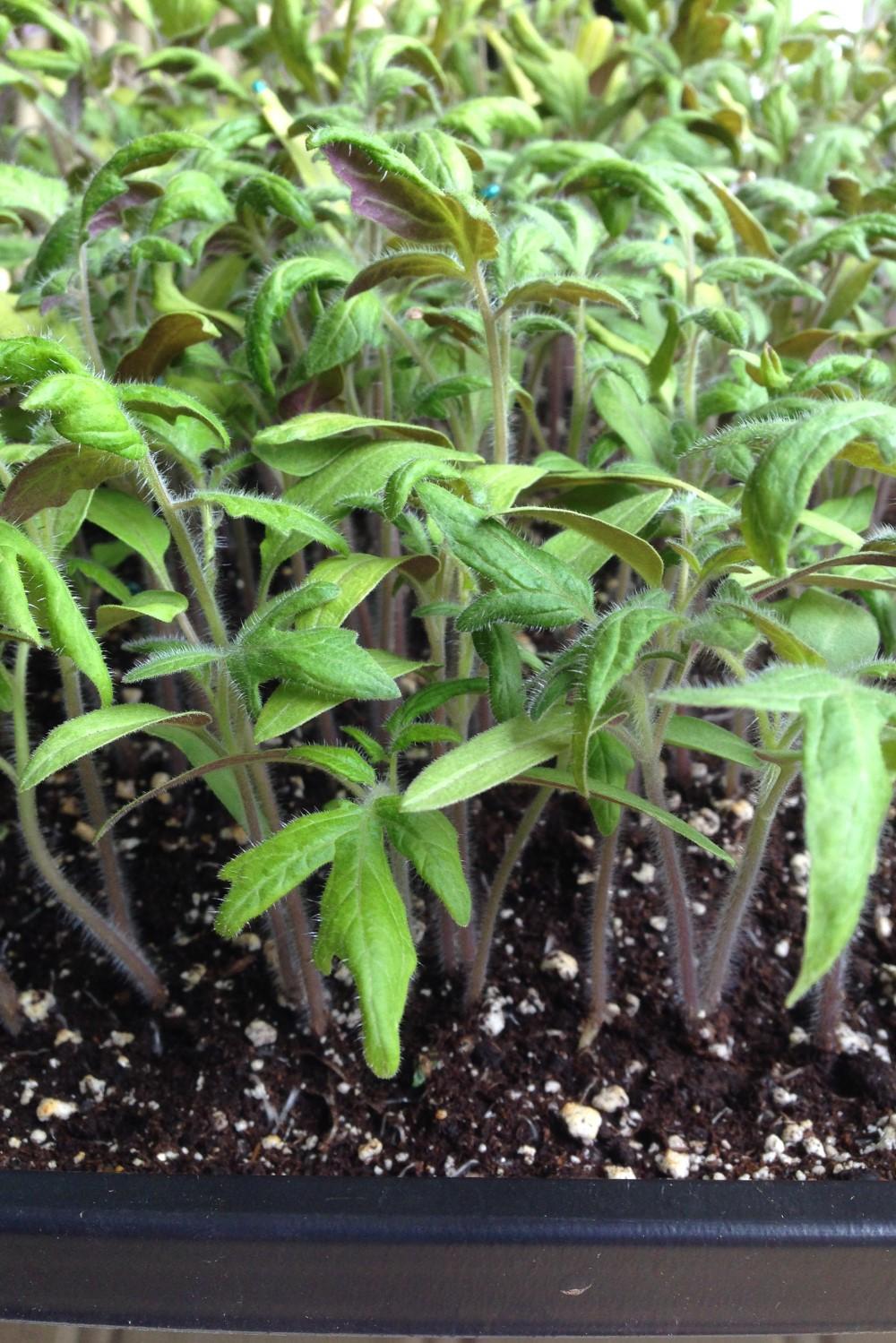
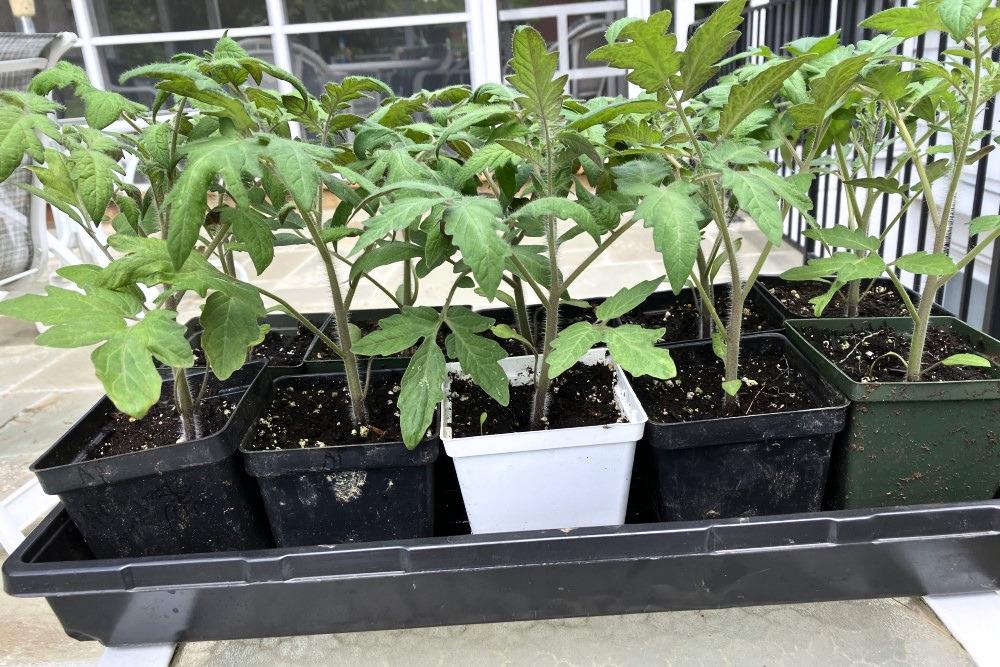
- Warm-season crops may not have time to produce a harvest if planted from seed directly outdoors once temperatures stay warm enough. Examples include tomato, pepper, and eggplant.
- Cucurbit crops like squash, cucumber, and melon can be started indoors or direct-seeded in the garden.
- Leafy greens, such as spinach, Swiss chard, kale, mustard, arugula, mizuna, tatsoi, and bok choy
- Onions, beans, peas, and sweet corn
Transplants, whether started yourself or purchased, provide several benefits for successful vegetable gardening:
- Grow the varieties you want, and have them ready when it’s time to plant
- Get a head start on the growing season
- Increase garden output, with quicker harvests compared to direct-seeding in the garden
- Eliminate the need to thin out extra seedlings
- Reduce pest and disease problems because the plants spend part of their growth cycle sheltered indoors
- Can save you money over time, even with the upfront cost of a grow light