
Ozone Damage to Tomatoes and Potatoes
By Andrew Kness and Veronica Yurchak
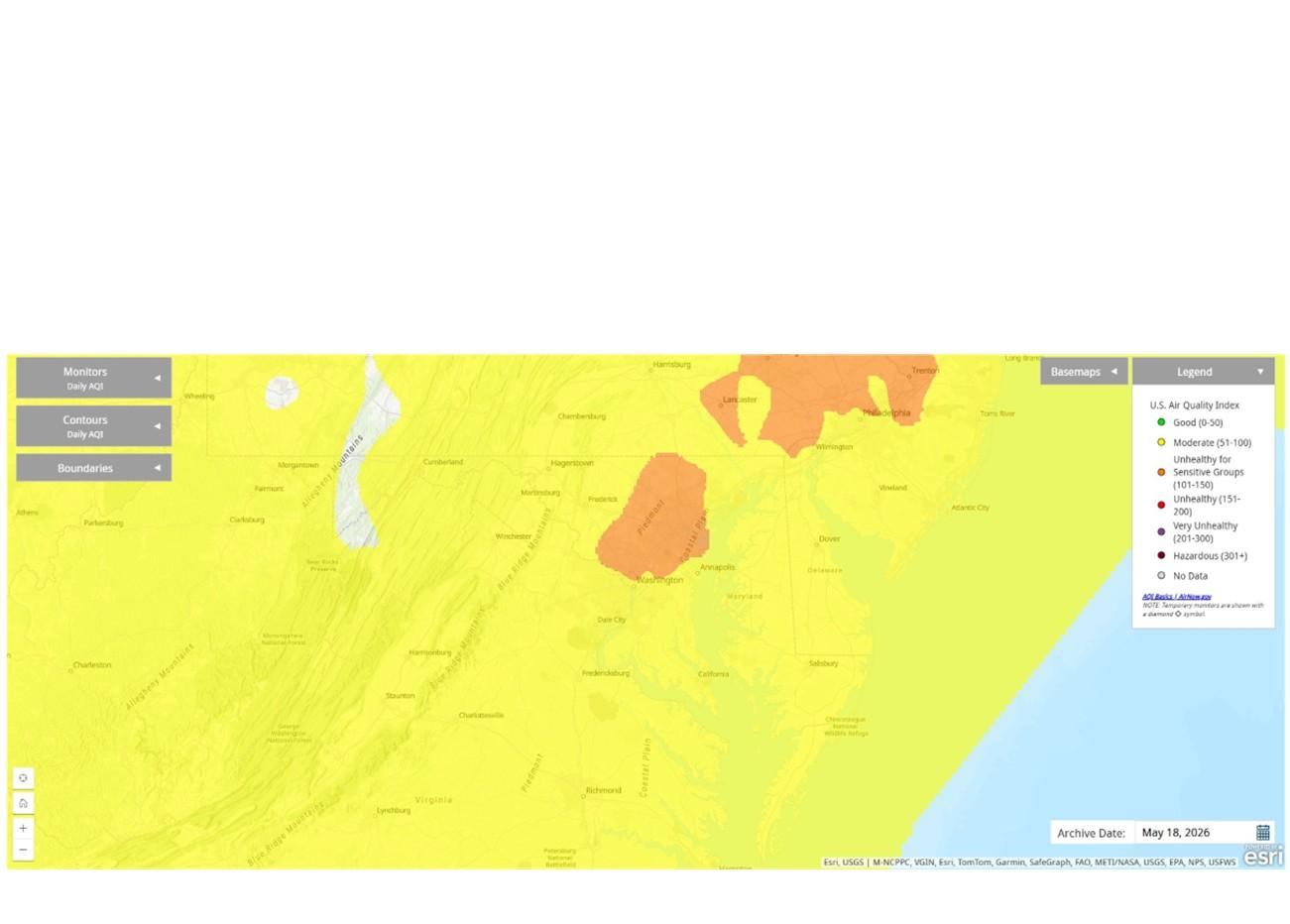
Ground-level ozone is one of the most widespread air pollutants in the United States, and concentrations can fluctuate considerably from day to day. The hot, hazy conditions often associated with poor air quality frequently coincide with elevated ozone levels. Between May 16 and 20, 2026, ozone concentrations reported by Maryland Department of the Environment air quality monitoring stations reached concentrations as high as 76 parts per billion (ppb) (Figure 1).
Ground-level ozone is not emitted directly into the atmosphere. Instead, it forms when nitrogen oxides (NOx) and volatile organic compounds (VOCs) released from vehicles, electricity generation, industrial activities, and other sources react in the presence of sunlight. Hot, sunny weather promotes these reactions, which is why elevated ozone levels are commonly associated with conditions like those experienced during the recent high-ozone event.
Ozone is a highly reactive gas that enters plants through leaf stomata and disrupts normal cellular processes. Research has shown that ozone concentrations between 40 and 60 ppb can cause crop injury and reduce yields in sensitive species.
Plant sensitivity to ozone varies by crop, with tomatoes, potatoes, and cucurbits among the most susceptible vegetable crops. Symptoms of ozone injury may include interveinal chlorosis and necrosis, bleaching, stippling (small, darkly pigmented spots approximately 2-4 mm in diameter), flecking (tiny, light-tan spots less than 1 mm in diameter), bronzing, and reddening (Figure 2). Symptoms typically appear first on older leaves. In most crops, injury is most evident on the upper leaf surface; however, symptoms may occasionally be restricted to the abaxial (lower) leaf surface, as shown in the potato leaf in Figure 2.

Because ozone injury can resemble symptoms associated with diseases, nutrient deficiencies, or pesticide phytotoxicity, diagnosis should consider recent air quality conditions and symptom patterns across multiple varieties or fields.
Estimating yield losses resulting from ozone exposure can be challenging. Jerry Brust, retired University of Maryland Extension Vegetable Specialist, previously cited studies showing that “when average daily ozone concentrations are moderate to high, yields of vegetables can be reduced by 5–15%.” Additional research examining tomato pollen viability found that ozone exposure reduced pollen germination and pollen tube development, ultimately affecting pollination and fruit set.
Fortunately, this recent ozone event occurred early in the growing season, before flowering and fruit development in most vegetable crops. As a result, significant yield losses are unlikely, provided ozone concentrations return to normal levels and do not remain elevated for extended periods. There is no treatment for ozone injury once it occurs; however, new growth produced after ozone levels subside should develop normally. Similarly, few preventative measures to avoid ozone damage can be taken. To the extent possible, however, avoid additional stresses on the plants. Do not apply pesticides or nutrients during high ozone periods if possible. Additionally, noting which varieties show fewer symptoms may be helpful for choosing less susceptible varieties in the future.
This article appears in June 2026, Volume 17, Issue 5 of the Vegetable and Fruit News