
Orange Rust in Blackberries
By Haley Sater
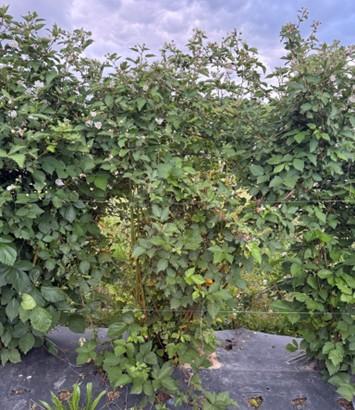
This spring we observed orange rust in our blackberry cultivar trial at the Wye Research and Education Center (WyeREC) for the first time in this planting. Orange rust is a serious fungal disease of blackberries and black raspberries caused by Gymnoconia nitens or Arthuriomyces peckianus. Unlike common blackberry leaf rust diseases that mainly affect foliage, orange rust is systemic, meaning the fungus infects the entire plant, including the roots and crown. Once infected, plants remain infected for life and cannot be cured.
Growers should scout plantings now for symptoms. Infected plants often appear weak or stunted and may produce thin, upright shoots with small, distorted, or cupped leaves. One of the most distinctive symptoms is the bright orange, powdery pustules that develop on the underside and edges of leaves during spring and early summer. These pustules release large numbers of spores that can spread the disease to nearby plants by wind. Environmental conditions this year were likely favorable for disease development. Orange rust is favored by cool, wet, and humid weather, especially during periods of prolonged leaf wetness in spring. The prolonged dry conditions earlier this season may also have stressed plants and made symptoms more noticeable once humid weather returned. Spores can spread into commercial plantings from infected wild blackberries or black raspberries growing nearby in woods edges, hedgerows, or unmanaged areas. Orange rust can spread rapidly within a planting if infected plants are left in the field.
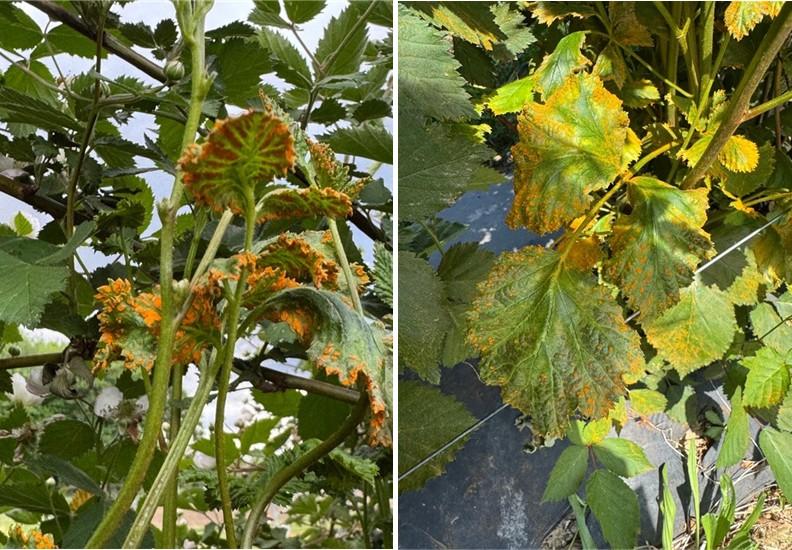
Because the disease is systemic, fungicides will not eliminate infected plants once symptoms are visible. The best management strategy is prompt removal and destruction of infected plants, including the crown and roots if possible, to reduce spread to healthy plants. Infected plants should be removed from the site and not composted.
This article appears in June 2026, Volume 17, Issue 5 of the Vegetable and Fruit News