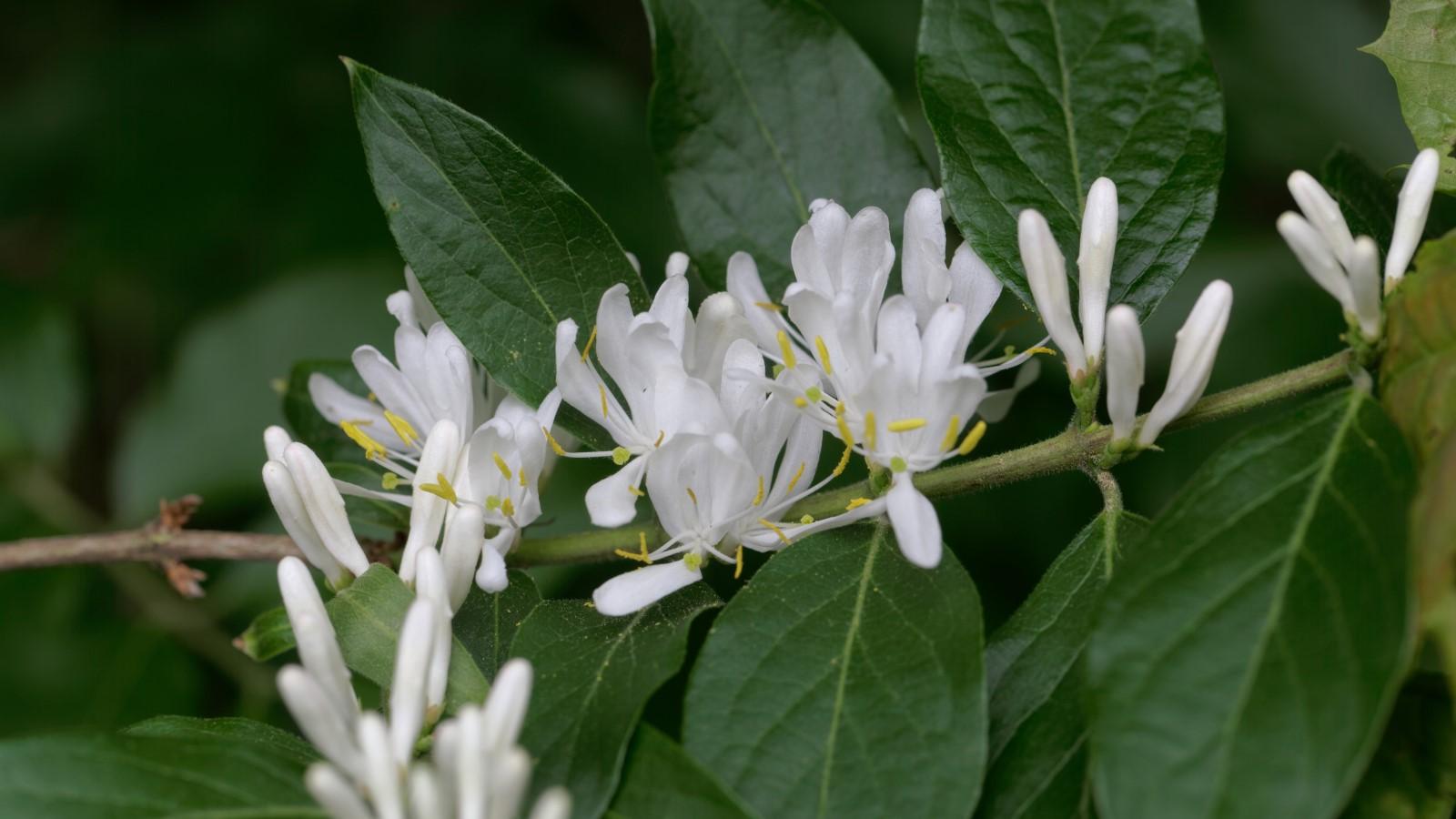
White flowers on an Amur honeysuckle (Lonicera maackii) branch. Photo licensed by Adobe Stock.
Updated: April 28, 2026
There are 10 species of honeysuckle (genus Lonicera) that occur in Maryland, most of which are non-native and invasive. Japanese honeysuckle is a vine; the rest are deciduous shrubs primarily native to Eastern Asia. They were introduced to the U.S. in the 1800s for ornamental use, wildlife cover, and erosion control.
The most widespread of the non-native honeysuckle shrubs in Maryland are:
Amur honeysuckle (Lonicera maackii)
Morrow's honeysuckle (Lonicera morrowii)
Tatarian honeysuckle (Lonicera tatarica)
Winter honeysuckle (Lonicera fragrantissima)
Physical features of invasive honeysuckles
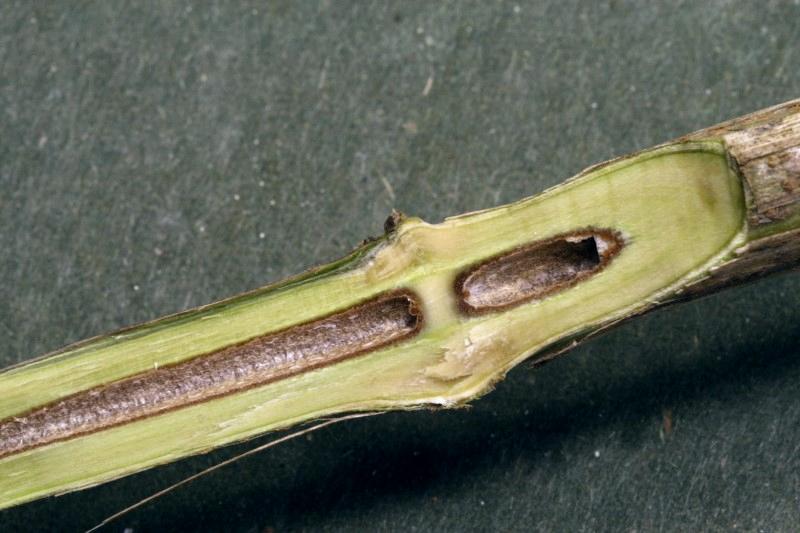
Amur, Morrow's, tatarian, and winter honeysuckles are medium- to large-sized shrubs that shed their leaves in autumn. The stem pith (the spongy tissue at the core of the branch) is hollow in non-native Lonicera shrubs, compared to the solid pith of native Lonicera.
Amur honeysuckle
Growth rate and habit: moderate to rapid growth rate (one or more feet per year); rounded shrub with arching branches
Typical mature size: 10 to 20 feet tall and wide
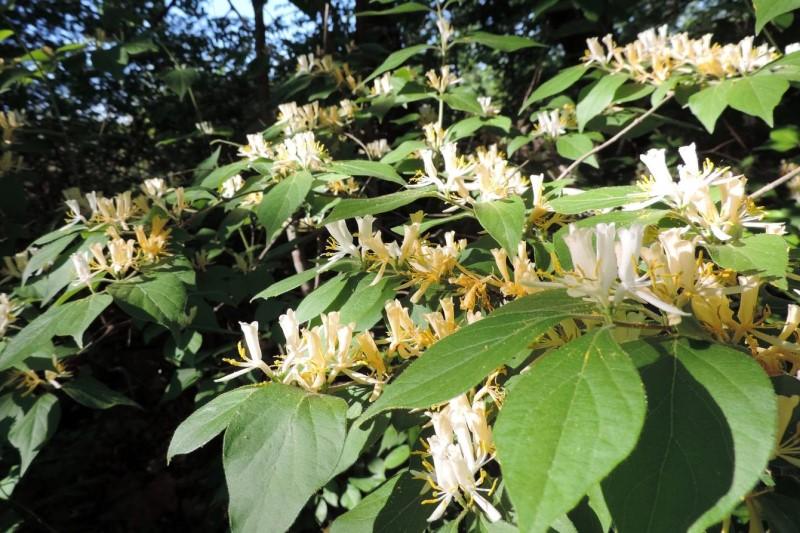
Blooms: tubular white (occasionally pink) flowers that turn yellow as they fade; 5 petals, but appears to have 2 due to the upper petals being fused together; flowers occur in upright pairs at the nodes (where leaves join the stem); flowers mid-spring
Leaves: simple (not divided into leaflets) with smooth margins; oblong in shape and tapering to a point; opposite arrangement on the stems; slightly fuzzy/felted in texture
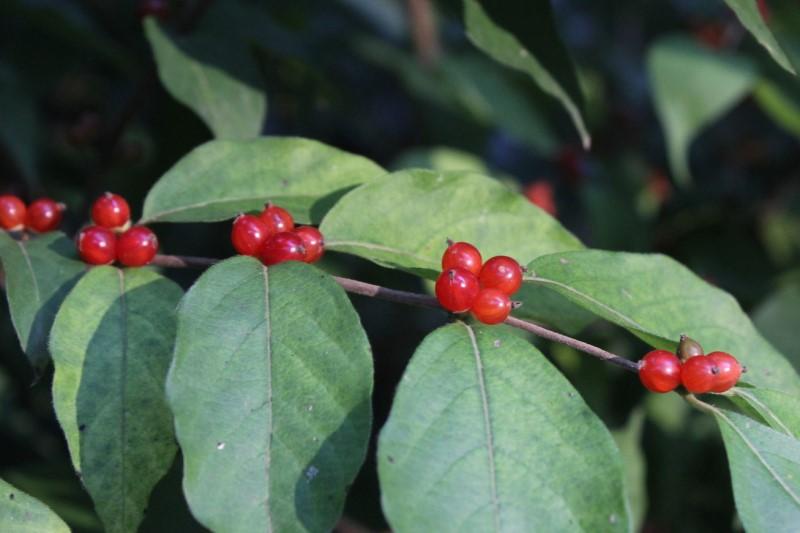
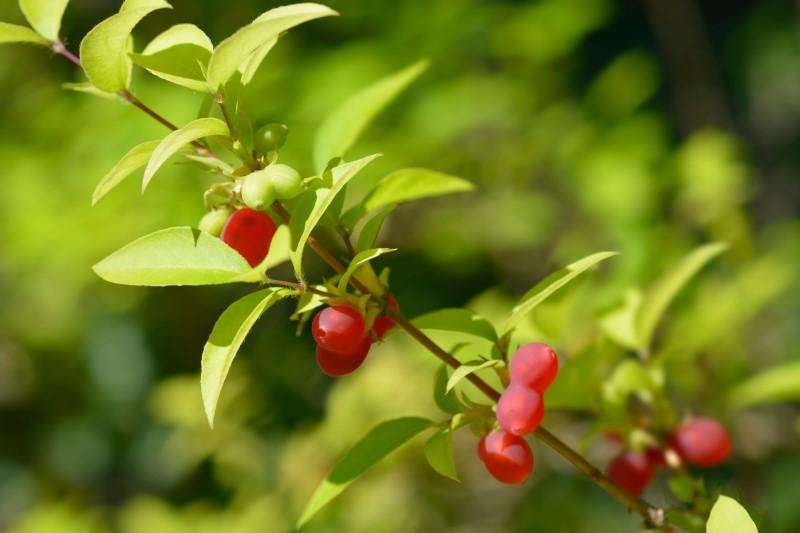
Fruit: red berries in paired clusters; ripen in autumn
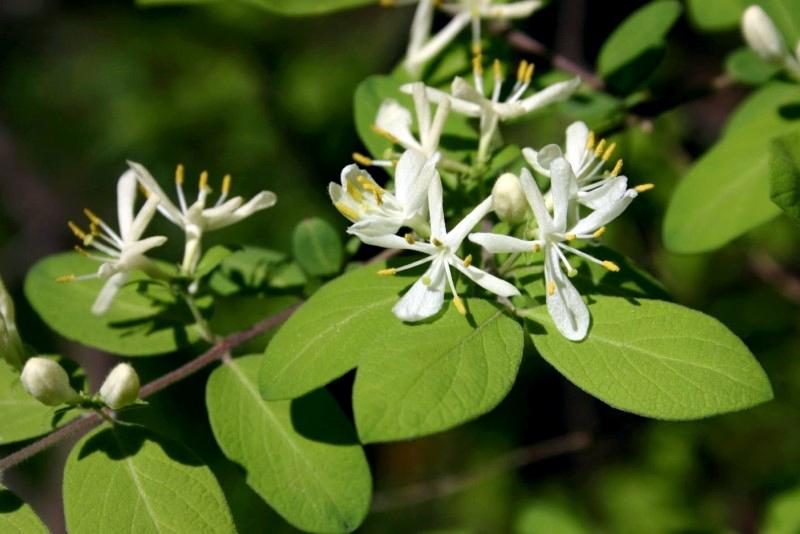
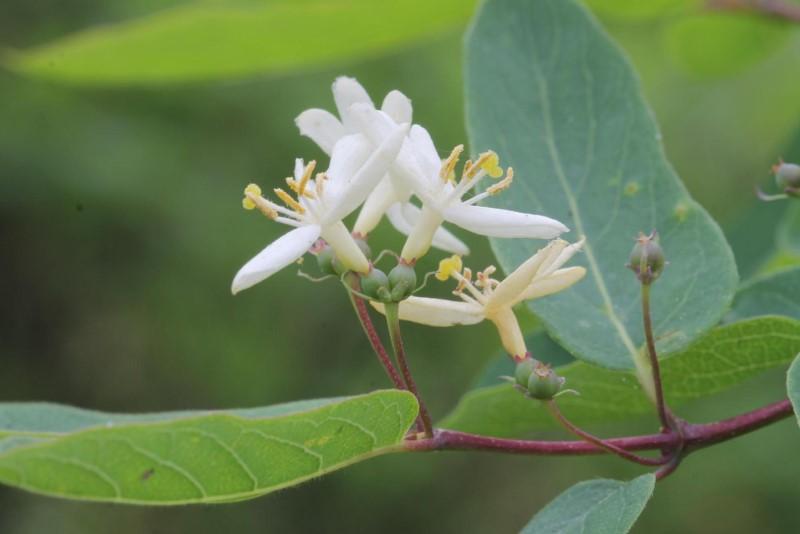
White (fresh) and yellow (aging) flowers held above the leaves on amur honeysuckle branches. Photo: Richard Gardner, Bugwood.org
Red berries arranged in clusters of four at each node of an amur honeysuckle stem. Photo: Chris Evans, University of Illinois, Bugwood.org
The pith is hollow in amur honeysuckle stems. Photo: Chris Evans, University of Illinois, Bugwood.org
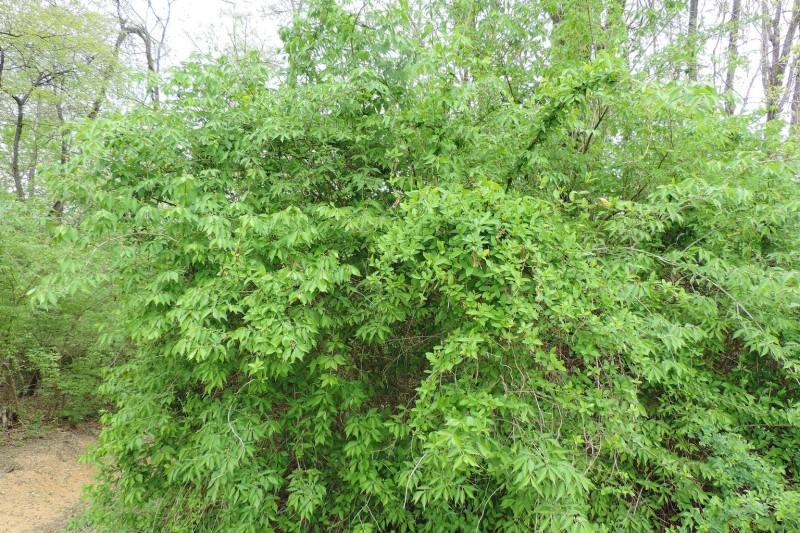
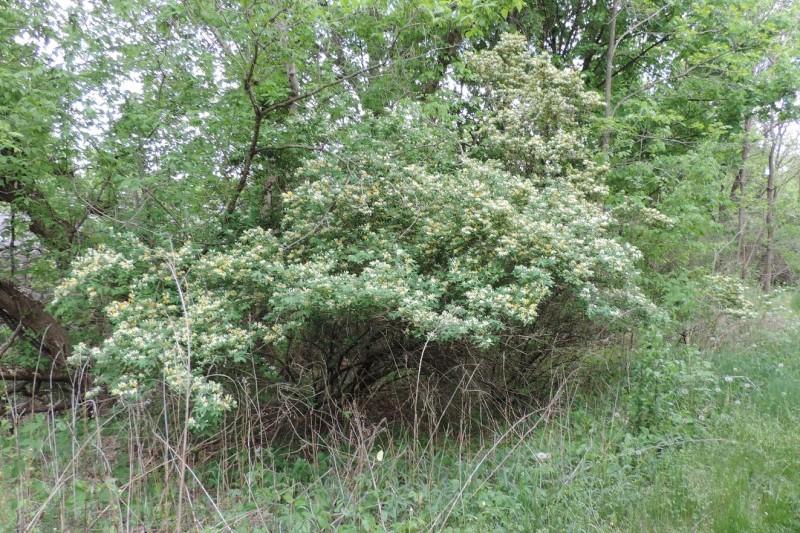
Mature amur honeysuckle shrub with a rounded growth habit and arching branches. Photo: Richard Gardner, Bugwood.org
Morrow's honeysuckle
Growth rate and habit: moderate growth rate (about 1 foot per year); rounded habit
Typical mature size: 6 to 10 feet tall and wide
Blooms: tubular white (occasionally pink) flowers that turn yellow as they fade; five separate petals; flowers occur in upright pairs at the nodes (where leaves join the stem); flowers mid-spring
Leaves: simple (not divided into leaflets) with smooth margins; oblong in shape, with a blunt tip; opposite arrangement on the stems; soft felted texture on the underside
Fruit: red to orange berries in paired clusters; ripen midsummer and may last into winter
Flared white flowers in clusters along a Morrow's honeysuckle branch. Photo: Leslie J. Mehrhoff, University of Connecticut, Bugwood.org
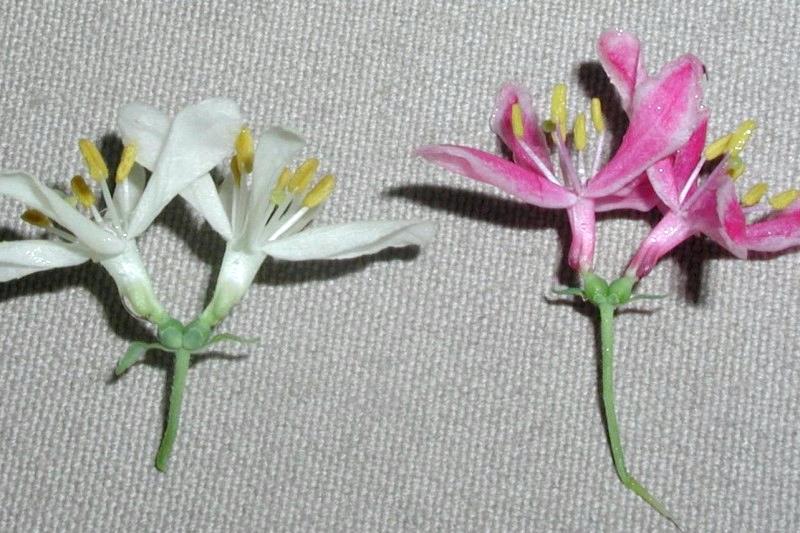
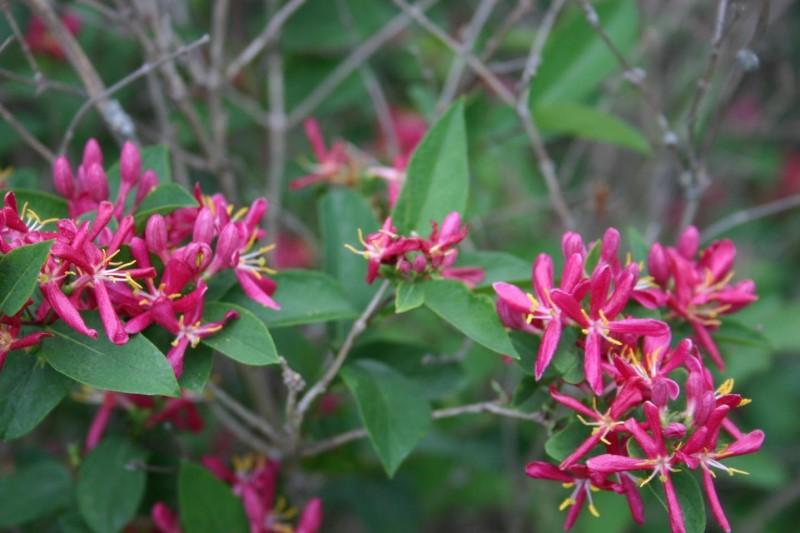
Morrow's honeysuckle flowers can be white or pink. Photo: Leslie J. Mehrhoff, University of Connecticut, Bugwood.org
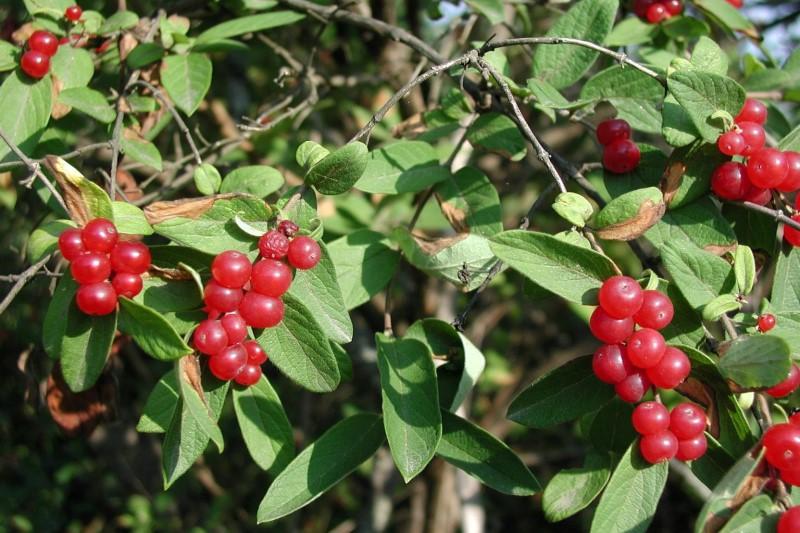
Clusters of red berries at the ends of the branches of Morrow's honeysuckle. Photo: Leslie J. Mehrhoff, University of Connecticut, Bugwood.org
Irregular, arching growth habit of Morrow's honeysuckle growing in the partial shade of a larger tree. Photo: Richard Gardner, Bugwood.org
Blooms: tubular pink (occasionally white) flowers (only fading to yellow in hybrids with Morrow's honeysuckle); 5 petals, but appears to have 4 due to the upper petals being fused together; flowers occur in upright pairs at the nodes (where leaves join the stem); flowers mid-spring
Leaves: simple (not divided into leaflets) with smooth margins; oblong in shape; opposite arrangement on the stems; smooth and largely hairless in texture
Fruit: red to orange berries in paired clusters; ripen early to midsummer and may last into winter
Deep pink flowers on tatarian honeysuckle branch tips. Photo: Leslie J. Mehrhoff, University of Connecticut, Bugwood.org
Tatarian honeysuckle flowers have comparatively long stalks. This is a white-flowered form. The swellings beneath the flowers are future berries. Photo: Rob Routledge, Sault College, Bugwood.org
Winter honeysuckle
Growth habit: moderate growth rate (about 1 foot per year); rounded habit with arching branches
Typical mature size: 6 to 10 feet tall and wide
Blooms: small white flowers; flowers occur in pairs; late winter to mid-spring
Leaves: simple (not divided into leaflets) with very subtly scalloped margins; oblong in shape; opposite arrangement on the stems; bristly-textured midrib (central leaf vein)
Fruit: small, dark red berries in clusters; ripen in late spring to early summer
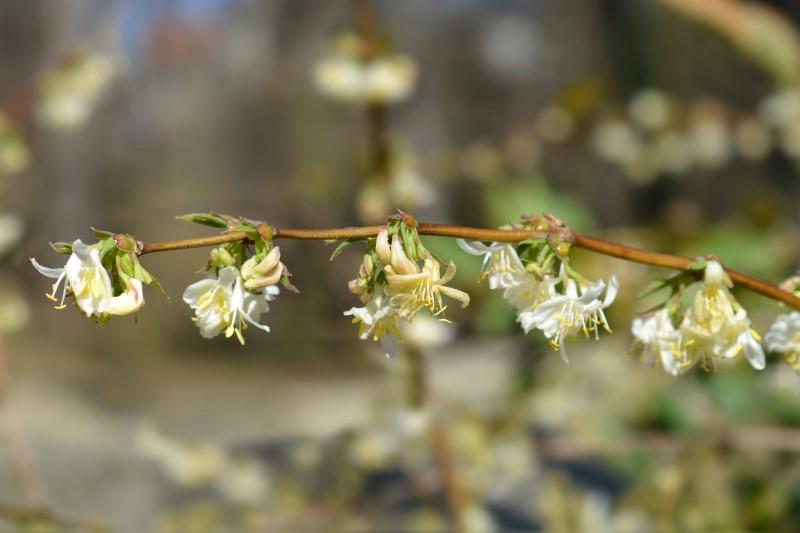
Downward-facing flowers on a winter honeysuckle stem opening before leaves emerge. Photo licensed by Adobe Stock.
Pinkish-red berries ripening on a winter honeysuckle branch after leaves have expanded. Photo licensed by Adobe Stock.
Native bush honeysuckles
Species in the genus Diervilla have the common name of "bush honeysuckle." Although they belong to the same plant family, they should not be confused for species in the genus Lonicera. Northern bush honeysuckle (Diervilla lonicera) is native to Maryland; Southern bush honeysuckle (Diervilla sessilifolia) is native to the southeastern U.S. but does not grow wild in Maryland. Both species of Diervilla look very similar to each other.
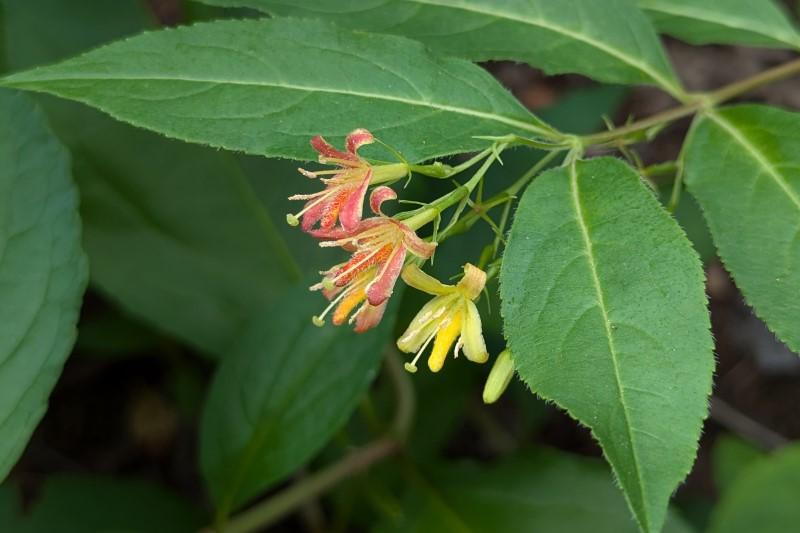
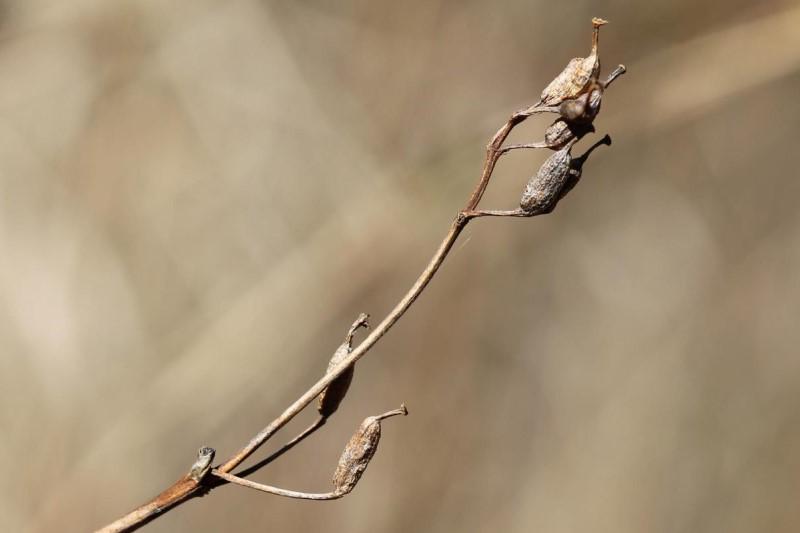
Three main traits distinguish Diervilla from Lonicera. In Diervilla: the flowers change color as they age from yellow to orange-red; the leaf margins are serrated; and dry seed capsules are produced instead of juicy red berries. The newest leaves on Diervilla are also often colorful (bronze-orange or purplish-red), a trait accentuated in cultivars.
Greenish-yellow (fresh) and red-orange (aging) flared flowers at the end of a bush honeysuckle branch. Photo: Miri Talabac, University of Maryland Extension
Bush honeysuckle produces dry seed capsules that may remain on the branch tips in winter. Photo: Rob Routledge, Sault College, Bugwood.org
Environmental impacts of invasive honeysuckles
Non-native honeysuckle shrubs grow in dense, sprawling thickets that out-compete native plants for soil moisture, light, and nutrients. Pollinators that favor the flowers of these honeysuckles aren't able to fertilize native plant flowers, resulting in less native plant seed set. The fruit (berries) of non-native honeysuckles lack the high-fat content migratory birds need for long flights. Seeds are dispersed long distances by birds and deer.
Amur honeysuckle taking over a forest understory and leafing-out earlier in the spring than the canopy trees. Photo: Chris Evans, University of Illinois, Bugwood.org
Higher populations of lone star ticks have been found in association with Amur honeysuckle, andallelopathic chemicals in its tissues inhibit the growth of other plants.
Conditions that favor growth
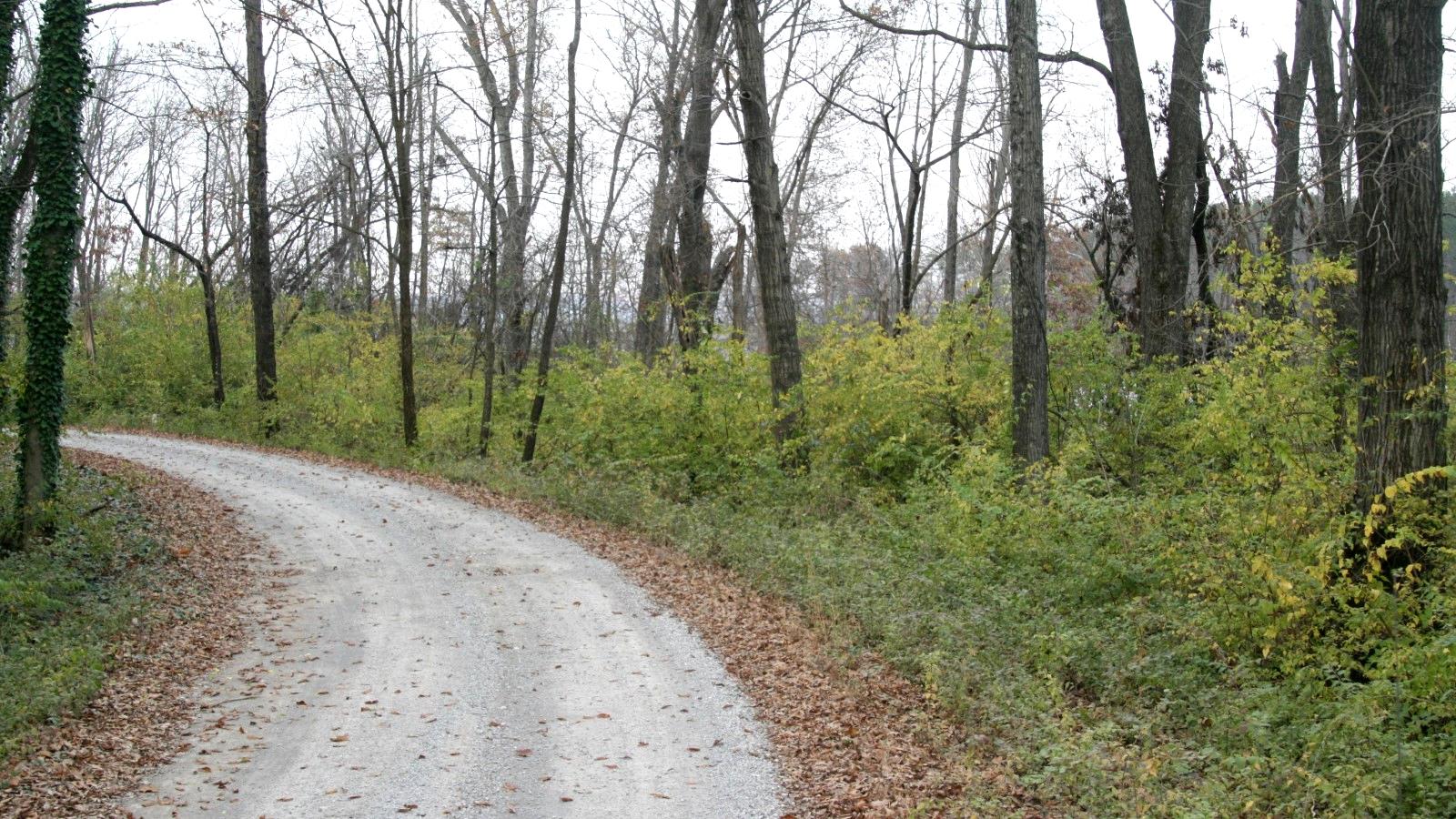
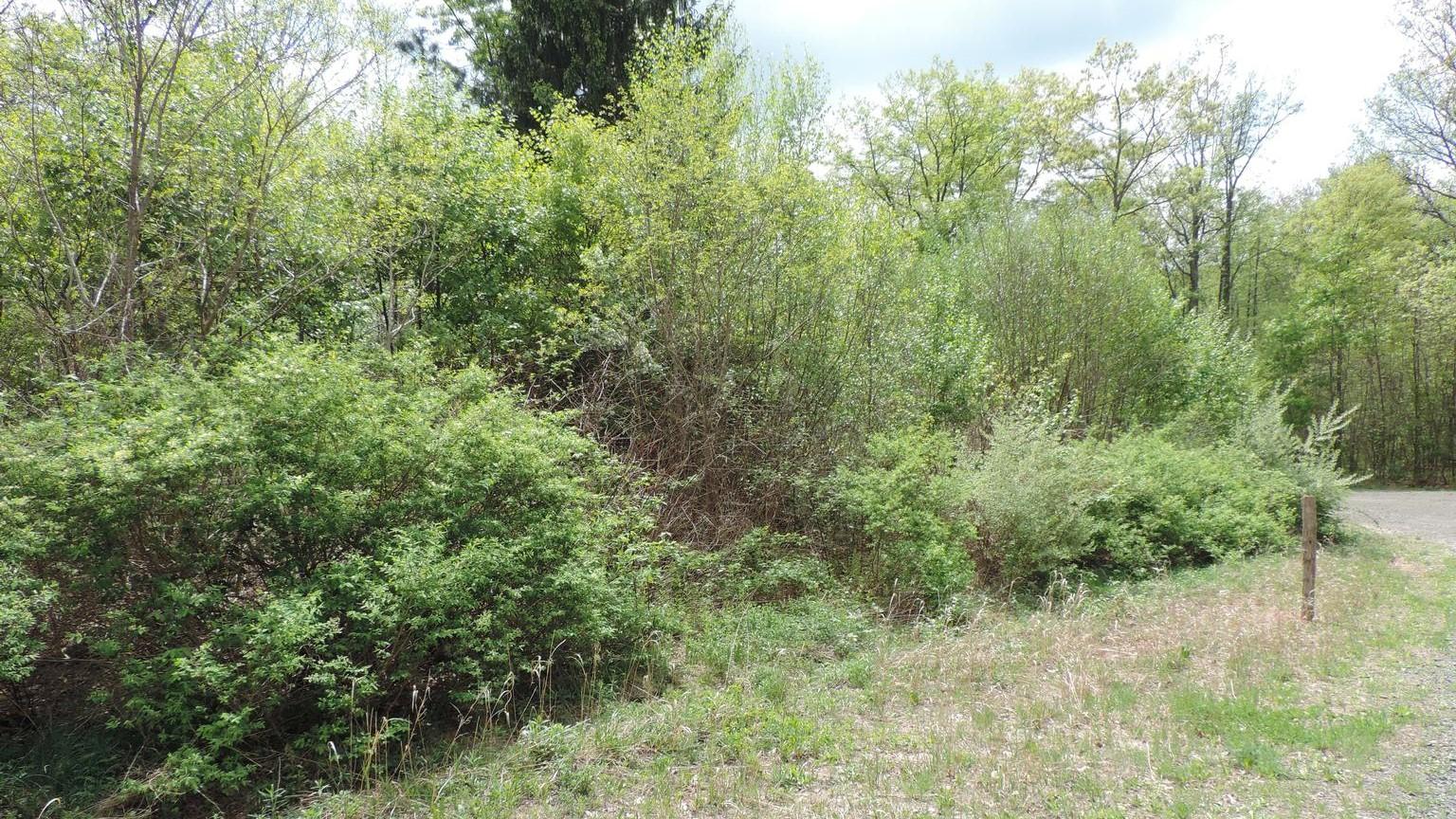
Honeysuckles prefer sunny sites such as clearings (pastures, fields, meadows), forest edges and roadsides, and open woodlands.
Morrow's honeysuckle displacing native vegetation along the sunny edge of a forest. Photo: Richard Gardner, Bugwood.org
Alternatives to invasive honeysuckles
Do not plant invasive honeysuckles, and replace existing specimens when possible. The Maryland Department of Agriculture (MDA) regulates the sale of invasive plants, and Amur honeysuckle (Lonicera maackii) is a prohibited species under Maryland law. Refer to the MDA's Maryland Prohibited Invasive Plant Law and Regulations resource page for more information and a list of all other regulated species.
Several native or non-invasive shrub species have fragrant flowers or berries that attract birds. Candidates include summersweet (Clethra alnifolia), swamp azalea (Rhododendron viscosum), witchhazel (Hamamelis vernalis or H. virginiana), mockorange (Philadelphus), spicebush (Lindera benzoin), winterberry (Ilex verticillata), and several species of native viburnum.
Sarver, M. J., A. Treher, L. Wilson, R. Naczi, and F.B. Kuehn. 2008. Mistaken identity? Invasive Plants and Their Native Look-alikes: an Identification Guide for the Mid-Atlantic. Dover, DE: Delaware Department of Agriculture and USDA Natural Resources Conservation Service.
Swearingen J., K. Reshetiloff, B. Slattery, and S. Zwicker. 2002. Plant Invaders of Mid-Atlantic Natural Areas. National Park Service and U.S. Fish & Wildlife Service, Washington, DC.