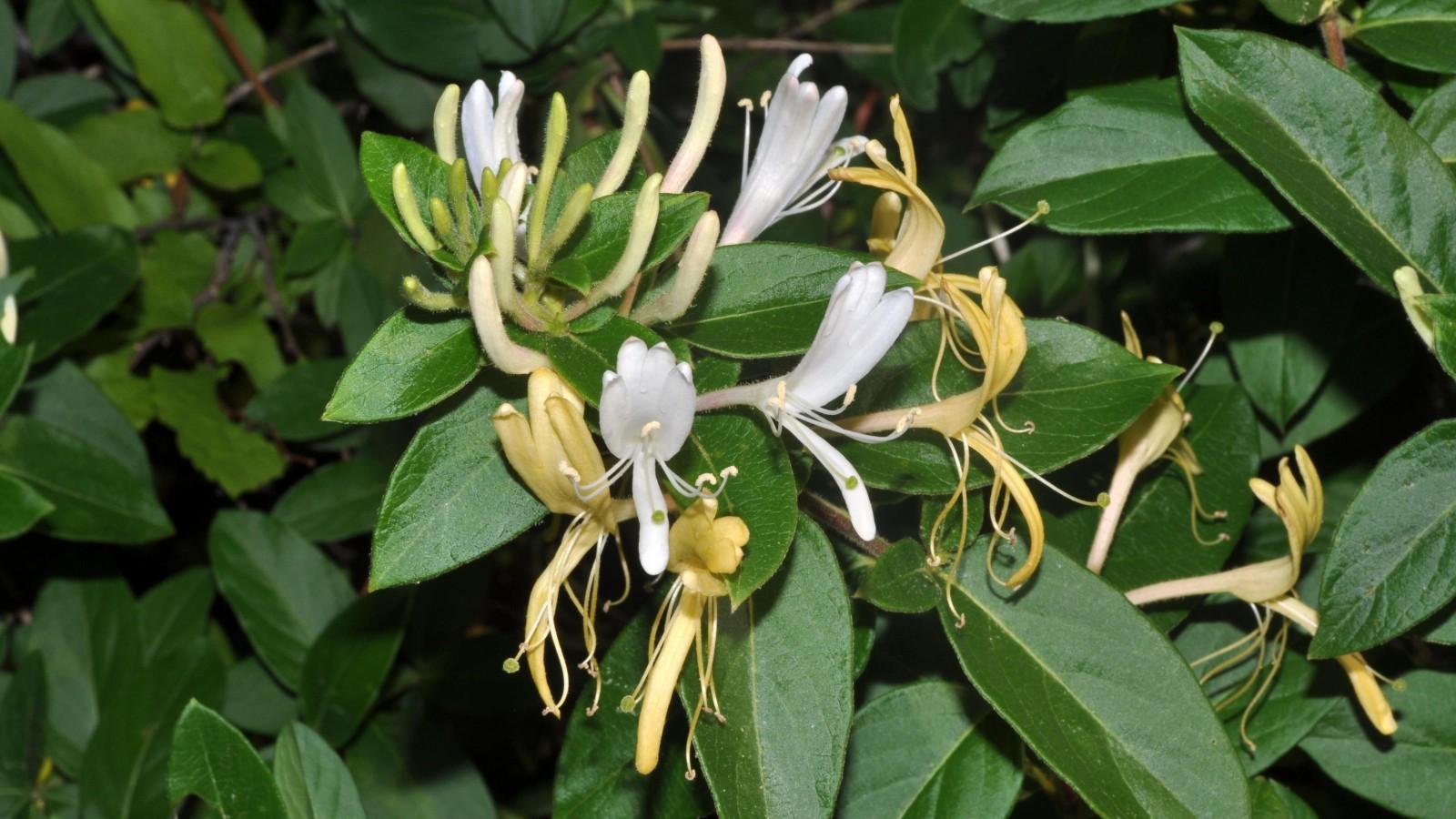
Fresh (white) and yellow (aging) flowers of Japanese honeysuckle (Lonicera japonica).
Photo: William M. Ciesla, Forest Health Management International, Bugwood.org
Updated: April 29, 2026
Japanese honeysuckle (Lonicera japonica) is a deciduous or semi-evergreen woody vine native to Eastern Asia. It was introduced to the U.S. in the 1800s for ornamental use and erosion control.
Several species of honeysuckle occur in Maryland. Only three of them are native; one is widespread while the other two are rare. Although our predominant native species is also a vine (trumpet honeysuckle, Lonicera sempervirens), its flowers, fruits, and foliage look different than those of Japanese honeysuckle. All other honeysuckles (genus Lonicera) that occur in Maryland are non-native invasive species.
Physical features of Japanese honeysuckle
The primary ornamental feature of Japanese honeysuckle is its sweetly fragrant flowers. The long bloom period begins around late spring or early summer and lasts into autumn. Berries ripen by autumn. In Maryland, the vine may retain some leaves into the winter instead of becoming completely leafless.
Growth rate and habit: rapid growth rate (several feet per year); twining vine that wraps around other plants or structures as the stems grow upwards; grows as a groundcover when it has nothing to climb
Typical mature size: greatly dependent on the height and width of its support, though vining stems can easily reach 30 feet or more in length
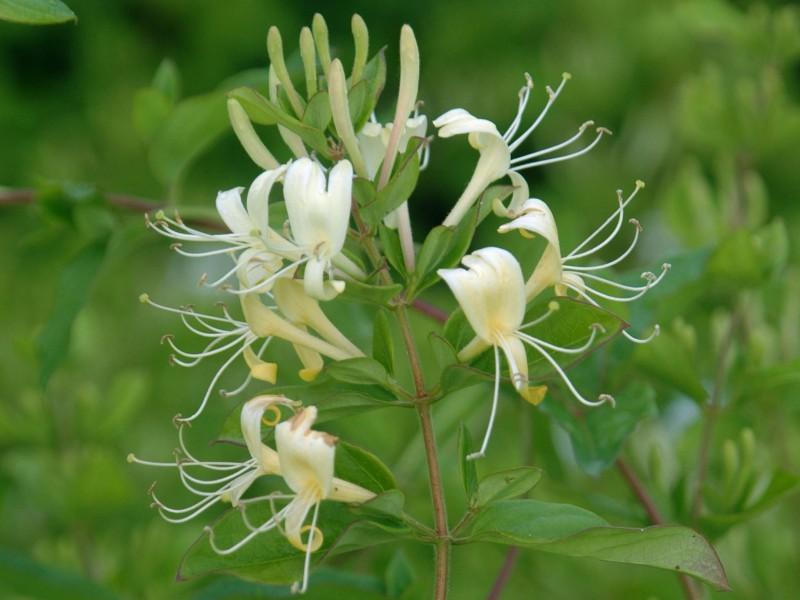
Blooms: tubular flowers with widely flared petals; white when they first open, aging to yellow as they fade
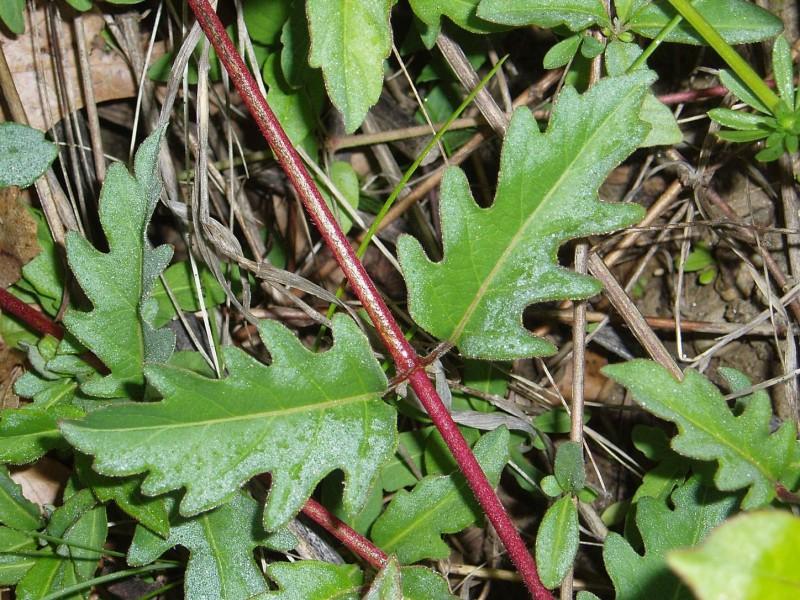
Leaves: simple (not divided into leaflets) with a smooth margin; early-season leaves may have distinct oak-like lobes, although most leaves tend to be unlobed and oval in shape; opposite arrangement on the stem
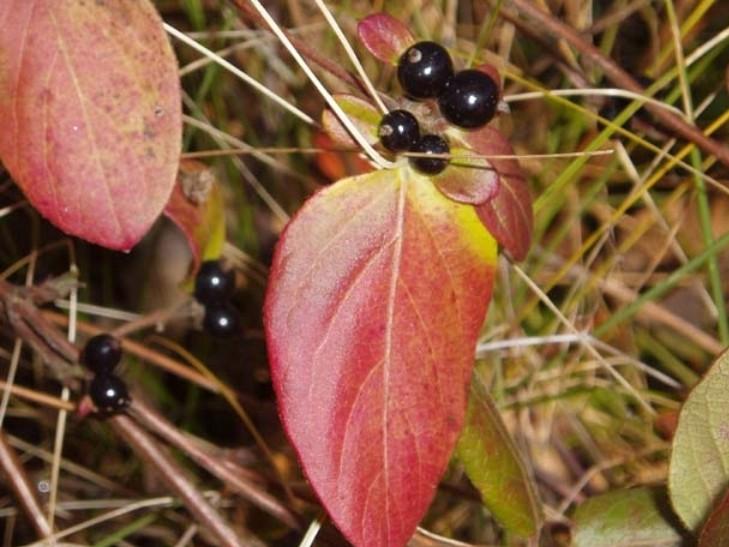
Fruit: pairs of glossy, round black berries held close to the stem
White and pale yellow blooms with flared petals and long stamens on the tip of a Japanese honeysuckle stem. Photo: Chris Evans, University of Illinois, Bugwood.org
Pairs of shiny black berries on a Japanese honeysuckle stem. The leaves are turning red and yellow in autumn. Photo: Leslie J. Mehrhoff, University of Connecticut, Bugwood.org
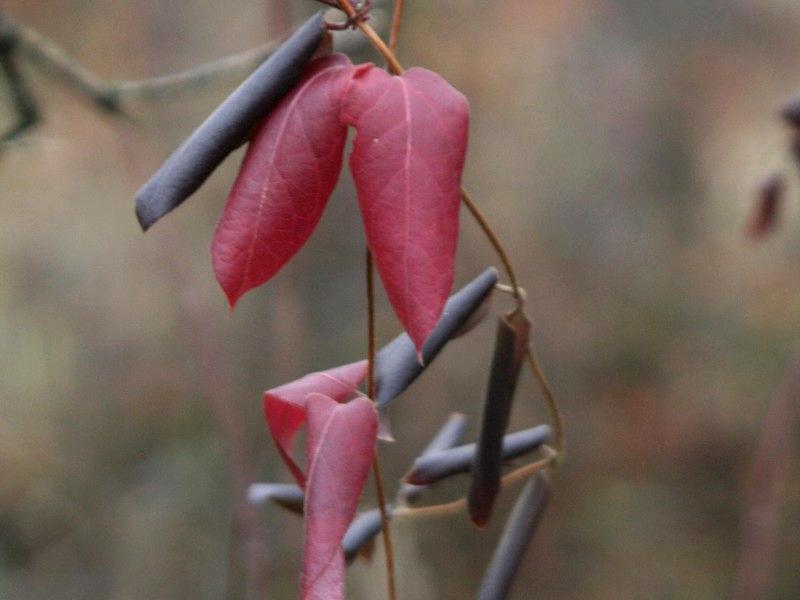
Leaves that don't fall off for the winter may retain their red or purplish autumn color. Photo: Chris Evans, University of Illinois, Bugwood.org
The leaves on young Japanese honeysuckle stems can have prominent lobes. Photo: Leslie J. Mehrhoff, University of Connecticut, Bugwood.org
Environmental impacts of Japanese honeysuckle
Japanese honeysuckle is an invasive species and spreads into natural areas by seed and vegetative runners (stems creeping over the ground). Birds eat the berries produced by mature plants and disperse the seeds.
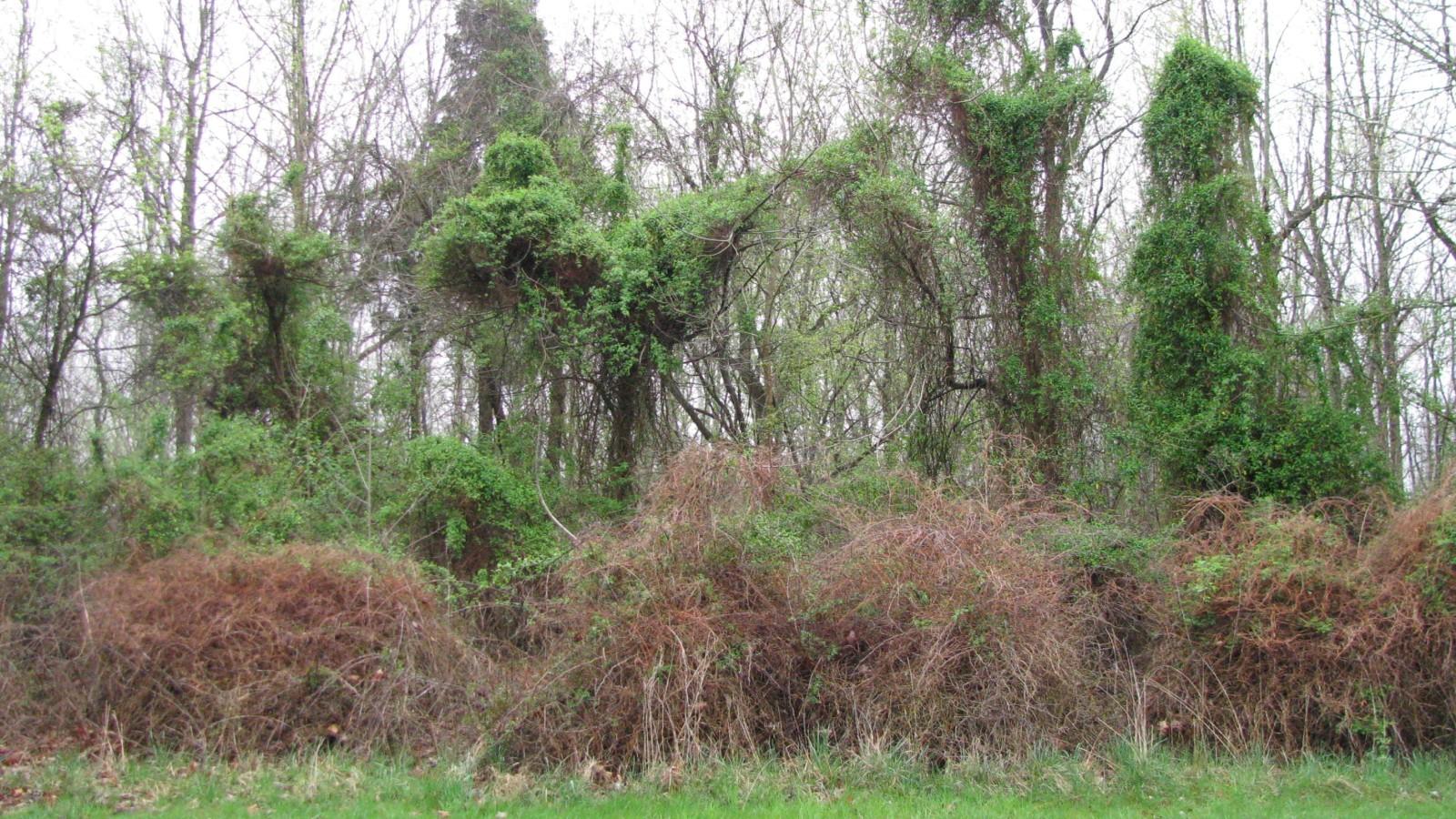
Japanese honeysuckle climbs into trees and drapes the canopy with dense growth that leafs-out early in spring and competes for light. Photo: Leslie J. Mehrhoff, University of Connecticut, Bugwood.org
Dense growth over the ground smothers native wildflowers and in trees shades the canopy and companion plants below. Climbing vines can strangle young trees by wrapping around the trunk and developing thick stems as they grow.
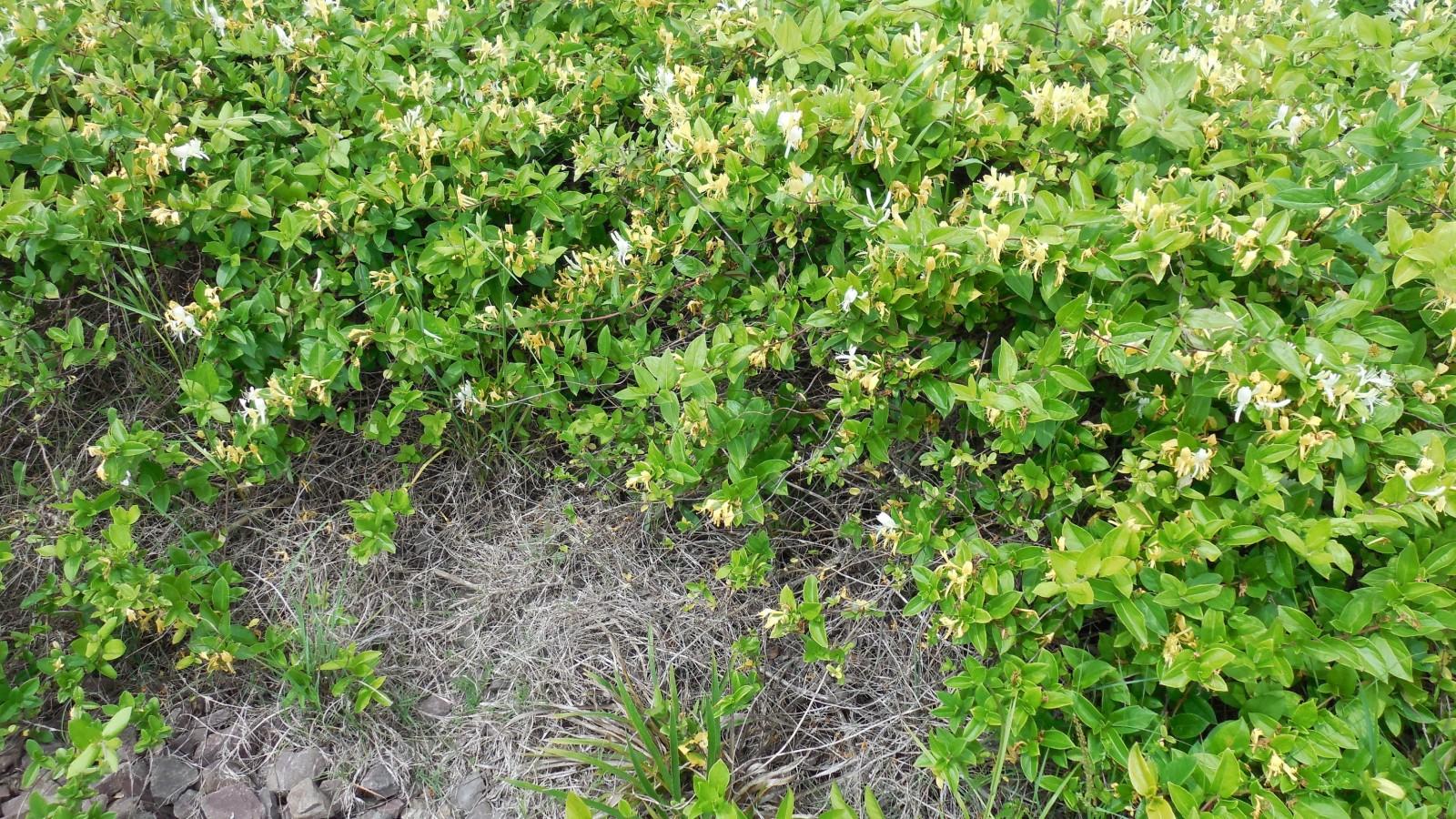
Without a support to climb, Japanese honeysuckle grows as a groundcover, smothering other species. Photo: Juan Campá, MGAP, Bugwood.org
Conditions that favor growth
This vine is a common weed in commercial nursery operations as well as gardens, particularly when natural areas overrun with Japanese honeysuckle are nearby. As with many invasive species, it thrives in disturbed areas, such as roadsides, along power line cuts, and in fields and forest clearings.
Alternatives to Japanese honeysuckle
Do not plant Japanese honeysuckle, and replace existing specimens when possible. The Maryland Department of Agriculture (MDA) regulates the sale of invasive plants and conducts invasive plant species status assessments. Japanese honeysuckle is on a list of species prioritized for assessment. Refer to the MDA's Maryland Prohibited Invasive Plant Law and Regulations resource page for more information and a list of regulated species.
Several native or non-invasive shrubs, small trees, and vines have fragrant flowers. Candidates include summersweet (Clethra alnifolia), sweetbay magnolia (Magnolia virginiana), and Virgin's-bower Clematis (Clematis virginiana).
Removing Japanese honeysuckle
Identify and remove young vines early before they strangle desirable plants and take over native habitat.