Updated: October 14, 2025
By Drew Schiavone
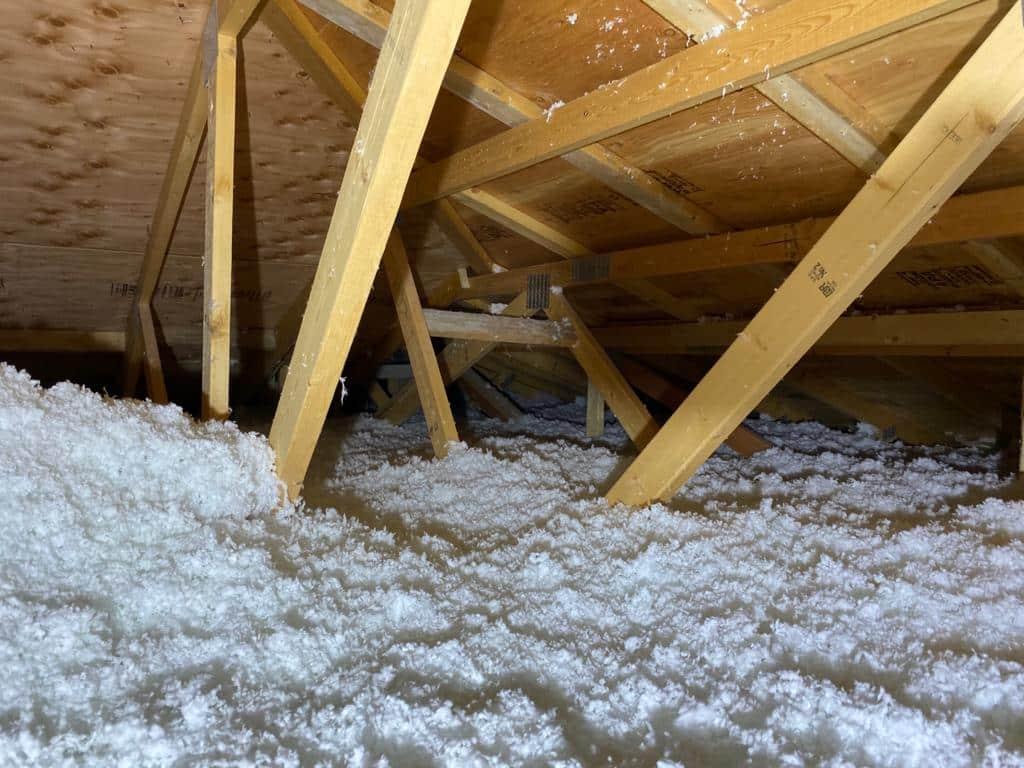
Blown-in insulation in attic

In homes with inadequate insulation, heating and cooling costs can soar. That’s because heat naturally moves toward cooler areas, escaping through walls, floors, and roofs in winter, and infiltrating your home during summer. This process, known as heat transfer, forces your HVAC system to work harder, increasing energy bills.

Properly installed insulation slows this heat flow, helping to maintain comfortable indoor temperatures year-round. In Maryland’s climate, where winters can be chilly and summers hot and humid, effective insulation is essential for both comfort and energy efficiency.

Insulation Choices

Understanding R-Value

Insulation effectiveness is measured by its R-value, which indicates resistance to heat flow. The higher the R-value, the better the insulation.

For Maryland homes, the U.S. Department of Energy recommends the following minimum R-values for existing homes:

  • Attics: R-49 to R-60
  • Floors: R-25 to R-30
  • Exterior Walls: R-13 to R-21 (depending on wall construction)

These values can vary based on your home's age, construction type, and whether you're upgrading or building new.

Insulation Types

1. Batts, Blankets, and Rolls

These are pre-cut or roll-form insulation products made from fiberglass or mineral wool. They’re ideal for open framing in attics, basements, and crawl spaces. R-values range from 2.2 to 3.2 per inch for fiberglass and around 3.1 per inch for mineral wool.

  • Available with or without vapor barriers (kraft paper or foil)
  • Must be installed without compression to maintain effectiveness
  • Require fire-resistant covering if vapor barrier is present

2. Loose-Fill (Blown-In)

Made from cellulose, fiberglass, or mineral wool, loose-fill insulation is blown into attics or wall cavities using special equipment. It’s especially useful for retrofitting older homes.

  • Cellulose: ~3.7 R-value per inch
  • Fiberglass: ~2.2 R-value per inch
  • Must be installed to proper density to prevent settling

3. Rigid Foam Board

These boards are made from materials like expanded or extruded polystyrene, polyurethane, or polyisocyanurate. They offer high R-values—up to 7.5 per inch—and are commonly used in basements, crawl spaces, and under siding.

  • Must be covered with a fire-resistant barrier indoors
  • Extruded polystyrene is preferred for below-grade applications

4. Spray Foam (Foamed-in-Place)

Spray foam insulation, typically polyurethane, is applied by professionals and expands to fill cavities. It provides excellent air sealing and moisture resistance.

  • R-value: ~6 per inch
  • Acts as both insulation and air barrier
  • Ideal for hard-to-reach areas or irregular spaces

Best Practices

Best Practices for Maryland Homes

  • Seal Before You Insulate: Air leaks around windows, doors, and framing can undermine insulation. Use caulk or spray foam to seal gaps before adding insulation.
  • Use Vapor Barriers Wisely: In Maryland’s humid climate, vapor barriers help prevent moisture buildup that can damage insulation and structures.
  • Ensure Proper Ventilation: Especially in attics and crawl spaces, ventilation is key to preventing moisture problems and maintaining indoor air quality.

Quick Reference: R-Values by Material

Insulation TypeR-Value per Inch
Fiberglass (Loose-Fill)2.2
Fiberglass (Batts/Rolls)3.2
Cellulose (Loose-Fill)3.7
Mineral Wool3.1
Expanded Polystyrene Board4.0 – 4.5
Extruded Polystyrene Board5.0 – 5.5
Polyurethane (Board/Spray)6.0 – 7.5

Attic/Ceiling Insulation

Because warm air rises, your attic or roof area is one of the most critical places to insulate. Without proper insulation, heat escapes upward during the winter, forcing your heating system to work harder and increasing your energy bills. In summer, a poorly insulated attic allows heat to radiate downward, making your home harder to cool. Adding or upgrading attic insulation helps maintain indoor comfort year-round and reduces energy costs. For Maryland’s climate, the U.S. Department of Energy recommends insulating existing attics to at least R-49, with R-60 being ideal for maximum efficiency.

Reviewing R-Values

R-value measures how well insulation resists heat flow—the higher the number, the better the performance. Common attic insulation materials include:

  • Fiberglass batts or blankets: ~3.2 R-value per inch
  • Loose-fill cellulose: ~3.7 R-value per inch

To reach R-49:

  • You’d need about 15 inches of fiberglass batts
  • Or approximately 13 inches of loose-fill cellulose

Attic/Roof Types

Unfinished Attic

This is the most common and easiest type to insulate. The attic is not part of the living space and is typically accessed through a hatch in a hallway or closet. Insulation is installed between the floor joists (which also serve as the ceiling of the living space below). Homeowners with basic DIY skills can often handle this project, especially with guidance from a professional or local Extension office.

Finished Attic

In homes where the attic includes living space, insulation must be added to:

  • Kneewalls (short vertical walls)
  • Ceilings under the roof
  • Floors of unconditioned spaces adjacent to the finished area

This type of project often requires multiple insulation materials and specialized equipment, so it’s best handled by a professional.


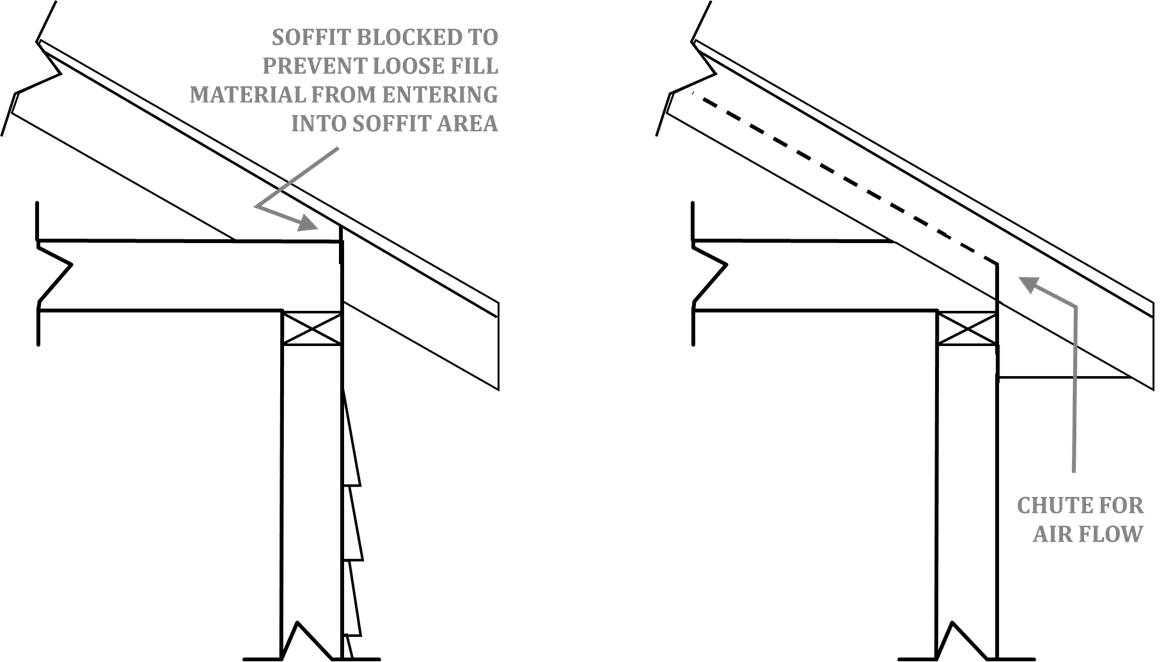
Attic Ventilation Setup with Air Chutes
Proper installation of air chutes in attic rafter spaces to maintain ventilation when applying loose-fill cellulose insulation. For individual soffit vents, chutes should be installed in the rafter spaces directly adjacent to each vent, with all other spaces blocked. For continuous soffit vents, chutes are recommended every third rafter space, with the remaining spaces blocked to ensure effective airflow and insulation coverage.

Flat, Vaulted, or Cathedral Ceilings

These ceiling types typically have little or no attic space above them, making insulation more challenging. If space allows, insulation can be blown or placed between the ceiling and roof. Proper ventilation and air sealing are essential to prevent moisture buildup. These projects also usually require professional installation.

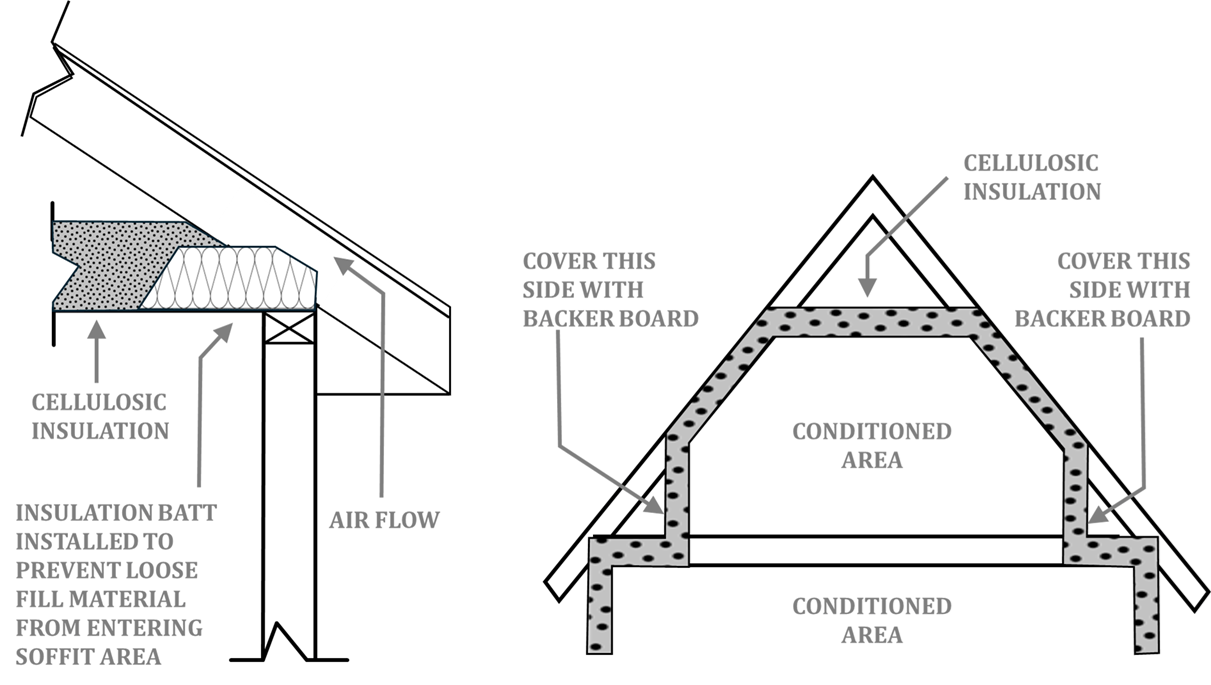
Blocking and Backer Board for Attic Insulation
Example of batt insulation blocking soffit ventilation in an existing attic (left). To maintain airflow, a 1-inch gap should be left between the insulation and the roof sheathing, or a ventilation chute should be installed to allow proper air movement from the soffit area. Proper use of blocking and backer board to contain loose-fill insulation in attic spaces (right). Blocking is shown around recessed lighting, chimneys, and attic access points to maintain safe clearances. Backer board is used to enclose open wall cavities and bulkheads, preventing insulation from spilling into unconditioned areas.
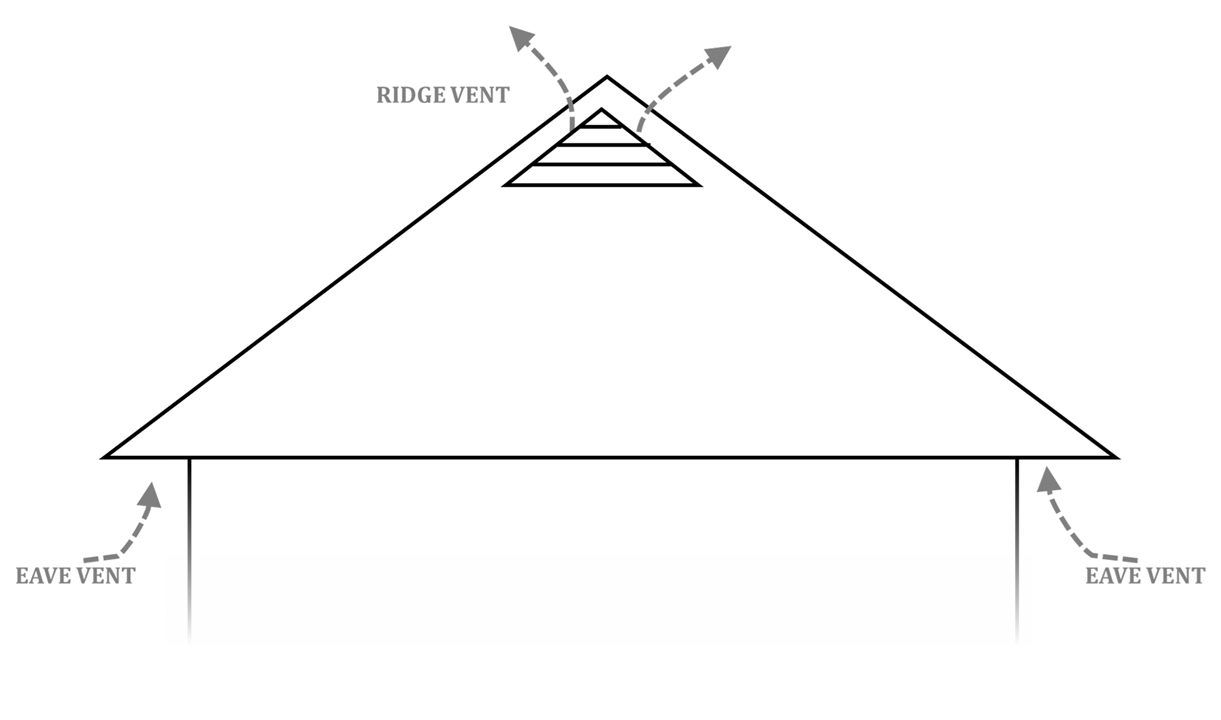
Ridge and Soffit Ventilation for Attic Airflow
Proper attic ventilation using a combination of ridge and soffit (eave) vents. This setup promotes natural convection, allowing warm, moist air to escape while drawing in cooler, drier air—helping to regulate attic temperature and prevent moisture buildup year-round.

Unfinished Attics

Properly insulating your unfinished attic is one of the most cost-effective ways to improve your home’s energy efficiency. Here’s how to do it safely and effectively:

1. Investigate Your Attic

Before you begin, inspect your attic to assess its current condition:

  • Access the attic using a ladder through a ceiling hatch (usually in a hallway or closet).
  • Wear protective gear: a dust mask or respirator, gloves, and long sleeves.
  • Lay boards across joists to create a safe walkway—never step between joists, as the ceiling below may not support your weight.
  • Check existing insulation: Measure its depth and identify the type (fiberglass, cellulose, mineral wool, etc.). If it’s dry and evenly spread, you can add more on top.
  • Watch for vermiculite insulation: If present, stop and have it tested for asbestos by a certified professional. (More info: EPA Vermiculite Guide)

2. Inspect Electrical Wiring

  • Look for exposed wires or open junction boxes. These must be corrected before adding insulation.
  • Knob-and-tube wiring (common in older homes) should never be covered with insulation. If present, consult a licensed electrician for an upgrade.

3. Seal Air Leaks

Insulation alone won’t stop heat loss if air is leaking into the attic. Seal gaps and cracks first:

  • Common leak points: around plumbing stacks, recessed lights, wiring holes, ductwork, and wall tops.
  • Use caulk or spray foam to seal small gaps.
  • Install weatherstripping around the attic hatch to prevent drafts.

4. Install a Vapor Barrier (If Needed)

Moisture from inside your home can rise into the attic and condense, reducing insulation effectiveness and causing mold or rot.

  • For first-time insulation: Lay a vapor barrier (like polyethylene plastic) on the attic floor before adding insulation, or use kraft-faced batts with the vapor barrier facing the living space.
  • If insulation already exists: Do not add a second vapor barrier. Use unfaced insulation or remove/slash any vapor barrier on new batts to prevent moisture trapping.
  • Alternative: Use vapor-retardant paint on ceilings in high-moisture rooms (kitchens, bathrooms, laundry areas).

5. Ensure Proper Ventilation

Ventilation prevents moisture buildup and helps regulate attic temperature.

  • With a vapor barrier: Provide 1 square foot of vent area per 300 square feet of attic floor.
  • Without a vapor barrier: Double the vent area (1 square foot per 150 square feet).
  • Use a mix of vents: Soffit (low) and ridge or gable (high) vents allow for effective cross-ventilation.
  • Install baffles or chutes to keep insulation from blocking soffit vents.

6. Install the Insulation

Now you’re ready to insulate:

  • Batts or rolls: Fit snugly between joists. Lay a second layer perpendicular to the first for added R-value.
  • Loose-fill: Pour or blow in evenly. Use a rake or board to level. Add depth markers if going above joist height.
  • Combination approach: Use batts in open areas and loose-fill in tight or irregular spaces.

Important safety tips:

  • Keep insulation 3 inches away from recessed lights, chimneys, flues, and fan motors.
  • Use sheet metal barriers around heat sources, extending 4 inches above the insulation.
  • Consult a professional if your attic contains a furnace, water heater, or knob-and-tube wiring.

Insulating your attic may be dusty and time-consuming, but it’s one of the most effective ways to improve comfort and reduce energy costs in Maryland homes. Whether you DIY or hire a contractor, following these steps ensures a safe, efficient, and long-lasting result.

Insulating Walls

In Maryland’s climate—characterized by cold winters and hot, humid summers—uninsulated exterior walls can significantly impact your home’s energy efficiency. In winter, heat escapes through walls to the colder outdoors, while in summer, walls absorb solar heat, making your cooling system work harder. Proper insulation slows this heat transfer, helping to maintain indoor comfort and reduce utility bills.

Common Materials

For Maryland homes, the U.S. Department of Energy recommends insulating exterior walls to at least R-13 to R-21, depending on the wall construction and whether you're retrofitting or building new. Common materials for wall insulation include, 

  • Fiberglass batts or blankets: R-value ~3.2 per inch
  • Loose-fill cellulose: R-value ~3.7 per inch
  • Rigid foam board (e.g., polystyrene): R-value ~4.5 to 5.5 per inch

The best insulation type depends on your wall structure and whether you're insulating from the inside, outside, or within existing cavities.

Check Your Walls

To determine if your walls can be insulated:

  • Remove a light switch or outlet cover (after turning off power) and inspect the cavity.
  • In the attic, look for exposed wall tops—wood framing indicates cavity walls, while solid masonry suggests no cavity.

If your walls already contain insulation, adding more may not be cost-effective. But if they’re empty, your home is a strong candidate for wall insulation.

Existing Walls

There are three main approaches to insulating exterior walls in existing Maryland homes:

  1. Blow insulation into existing wall cavities
    This is the most cost-effective and least disruptive method, especially if your home has framed walls with empty cavities. A contractor drills small holes in the siding or sheathing and uses a blower to fill the cavities with loose-fill insulation.
  2. Add insulation to the exterior before re-siding
    If you're planning to replace your siding, this is a great opportunity to add rigid foam board insulation beneath the new exterior finish.
  3. Insulate from the interior
    Typically used in unfinished basements, this involves adding insulation between new framing and finishing with drywall.
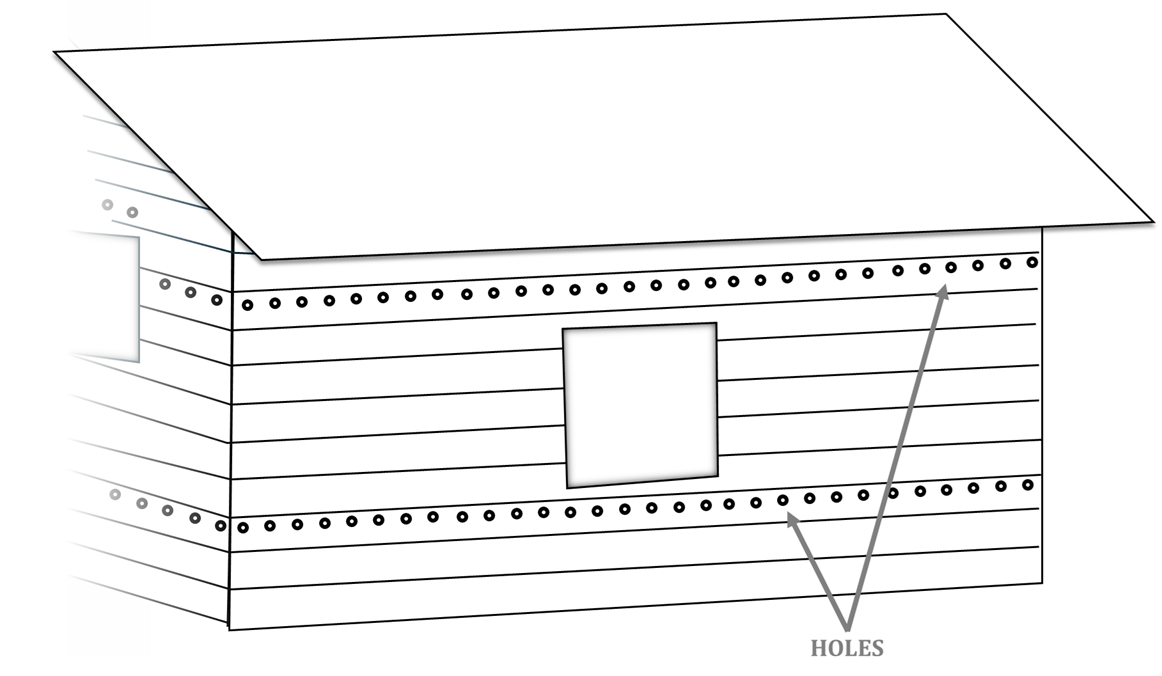
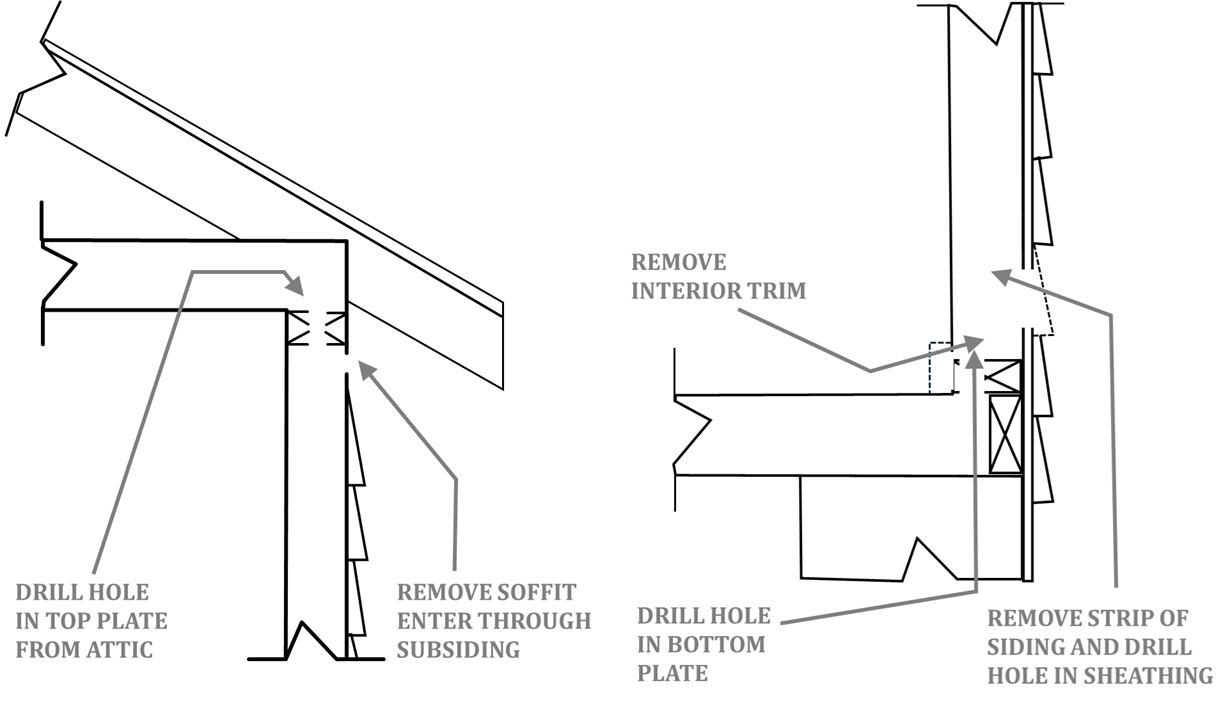
Drilling and Plugging Fill Holes for Wall Insulation
Proper placement and sealing of fill holes for dense-pack cellulose insulation in existing sidewalls. Holes are drilled through siding or mortar joints and sealed with appropriate plugs after installation to maintain the building envelope.

Wall insulation is best handled by professionals to ensure proper density and full cavity coverage. In Maryland, income-qualified households may be eligible for free weatherization services, including wall insulation. Contact your local utility or community action agency for details.

Fill Tube Entry Methods for Dense-Pack Wall Insulation
Sidewall insulation using a fill tube inserted from the exterior (left). The tube reaches within 18 inches of the far plate to ensure complete cavity fill with minimal settling. Alternate fill tube entry point from the interior side of the wall (right). This method also ensures full cavity coverage while minimizing the number of access holes required.

Other Considerations

What to Expect During Installation

  • Contractors inspect walls for moisture issues and structural integrity.
  • Holes are drilled through siding or sheathing to access wall cavities.
  • Insulation (typically cellulose, fiberglass, or mineral wool) is blown in and packed to the correct density.
  • Holes are sealed and siding is restored. If siding removal isn’t feasible, holes may be drilled directly into the siding and plugged afterward.

Special Wall Types

  • Brick or stone veneer with cavities: May be insulatable from the attic or other access points.
  • Solid masonry or concrete walls: Require insulation to be added to the interior or exterior surface using rigid foam or framed batts.

Important considerations:

  • Always place insulation on the cold side of plumbing to prevent freezing.
  • Avoid vapor barriers on below-grade walls to prevent moisture trapping.
  • Rigid foam must be covered with a fire-resistant material like drywall.

Explore other HOME ENERGY topics:

  • Sustainable home graphic with green electrical plug

    Understand Home Energy

    Understand Home Energy

    Explore the whole-house (or systems) approach to energy efficiency.

  • Solar energy PV cells and panel held with mounting bracket

    Simplifying Solar

    Simplifying Solar

    Basic understanding of residential solar installation.

  • Blown-in insulation in attic

    -- Home Insulation --

    Explore insulation options and strategies for your home.

  • window film application

    Storm Windows

    Storm Windows

    Explore storm window options for your home.