
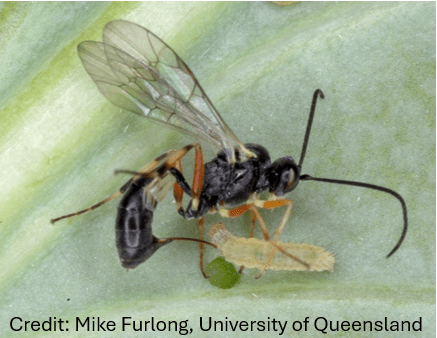
Figure 1. D. insulare wasp parasitizing a small BDM caterpillar.
BENEFICIAL BUG SPOTLIGHT
D. Insulare wasp
The goal of this series is to increase awareness and knowledge of beneficial insects in cropping systems to help differentiate them from pests of concern. This week’s feature beneficial is Diadegma insulare, the most important parasitoid of the diamondback moth (DBM) in North America. This wasp has been known to parasitize up to 70% of DBM larvae in many areas of the US and is commonly found in brassica fields in the Delmarva region. In 2022, DBM parasitism rates of over 75% were found in multiple locations in Virginia.
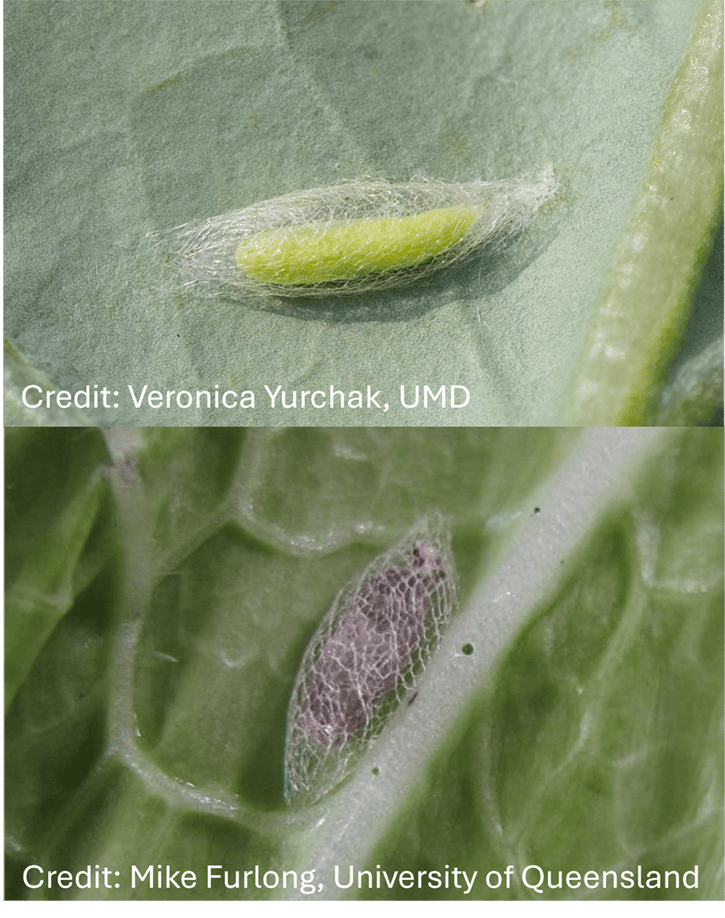
The wasp itself is small (~6mm), rarely seen, and not easily differentiated in the field from other parasitoid wasps. D. insulare presence is more easily detected by looking for the tell-tale sign of DBM parasitism – parasitized BDM pupae. Upon finding a host, the female wasp will insert a single egg into a mid-size DBM caterpillar (Figure 1). A single wasp can lay up to 800 eggs in her lifetime! The egg then hatches and the wasp larva feeds and develops inside the DBM caterpillar, which survives just long enough to spin its cocoon. Shortly afterwards, the BDM caterpillar dies and the wasp builds its own pupal case inside the DBM cocoon. Over time, this changes the appearance of the cocoon from the light greenish color of a healthy BDM pupa to a darker color (Figure 2), at times with a distinctive white band across the middle. After about one week, a new adult wasp emerges. There are typically 4 to 6 generations of parasitoid wasps per year, coinciding with the number if DBM generations, and the parasitoid overwinters in the pupa stage in crop debris within the DBM cocoon.
Adult D. insulare wasps are very sensitive to insecticides, and larvae will similarly die inside the DBM if the caterpillar is killed by an insecticide. Severe DBM outbreaks are often associated with intensive insecticide use, which quickly reduces populations of parasitoid wasps but is oftentimes less effective on the DBM itself, which easily develops resistance to many insecticides. Thus, more selective, IPM friendly products (e.g., Bt) are often recommended early in the season to protect natural enemies like D. insulare and allow their populations to build. Larger parasitoid populations can also be supported by providing areas near cole crop fields containing flowering plants such as sweet alyssum, wild mustard, and buckwheat, which serve as preferred nectar sources for adult wasps.
This article is featured in the Vegetable and Fruit News, Vol. 16, Issue 3.
Vegetable & Fruit News is a research-based publication for the commercial vegetable and fruit industry available electronically from April through October. Published by the University of Maryland Extension Agriculture and Food Systems team.
Subscribe