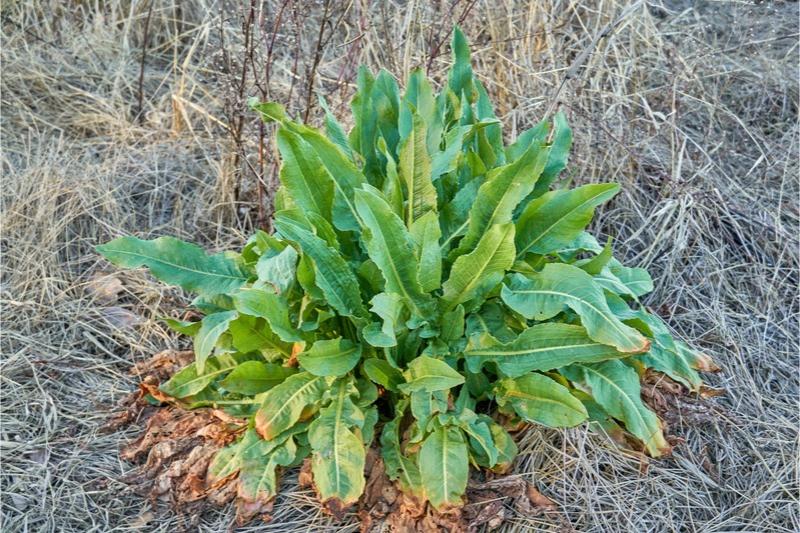
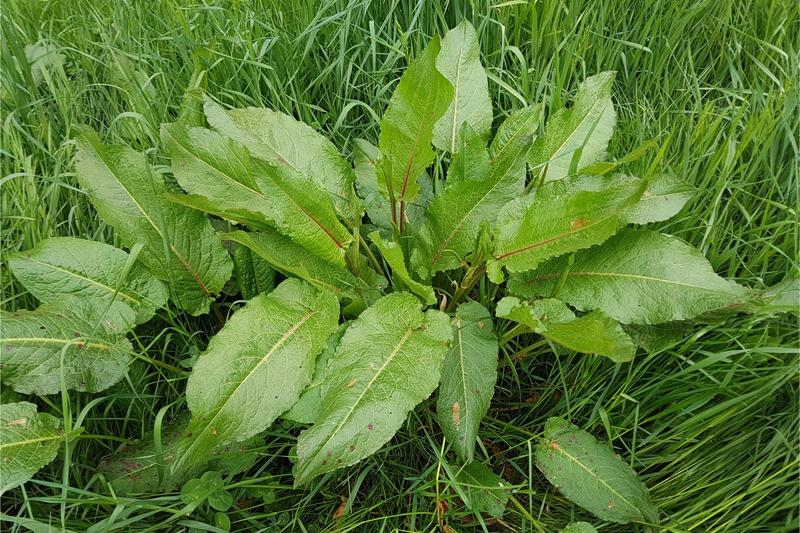
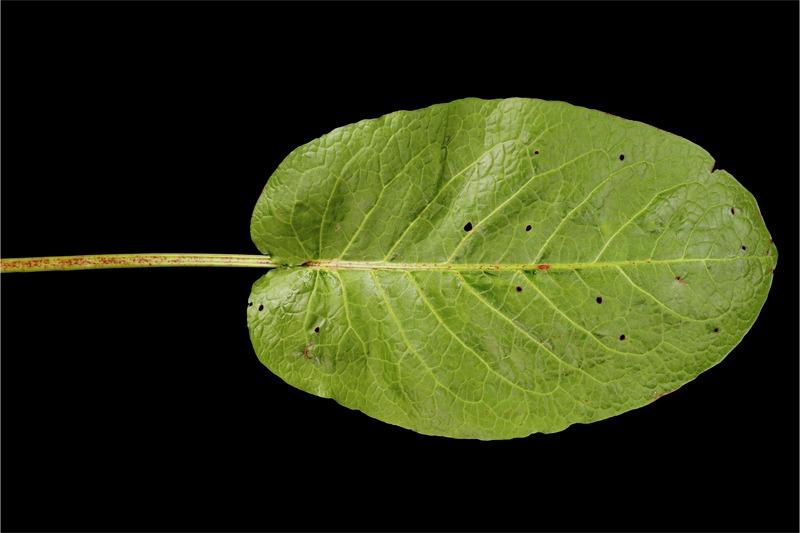
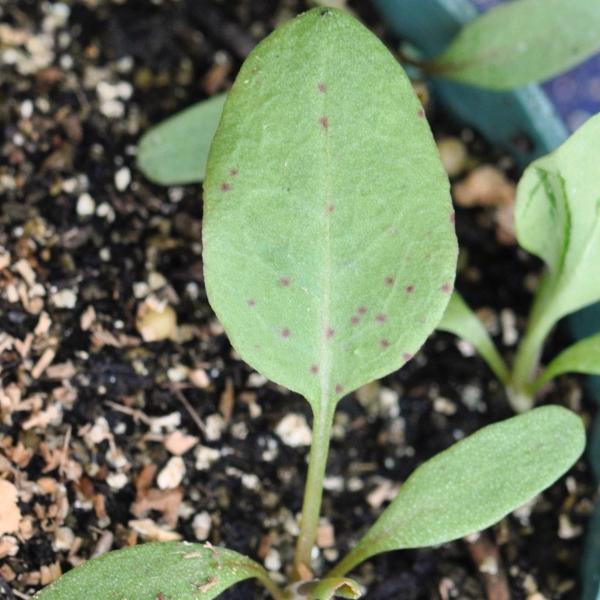
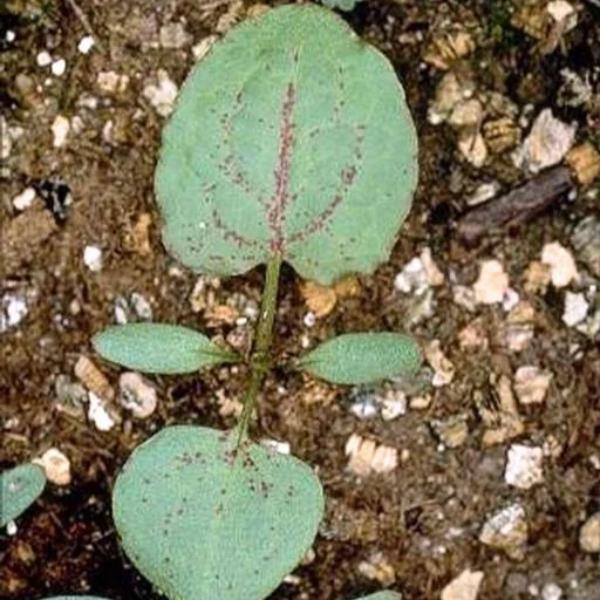
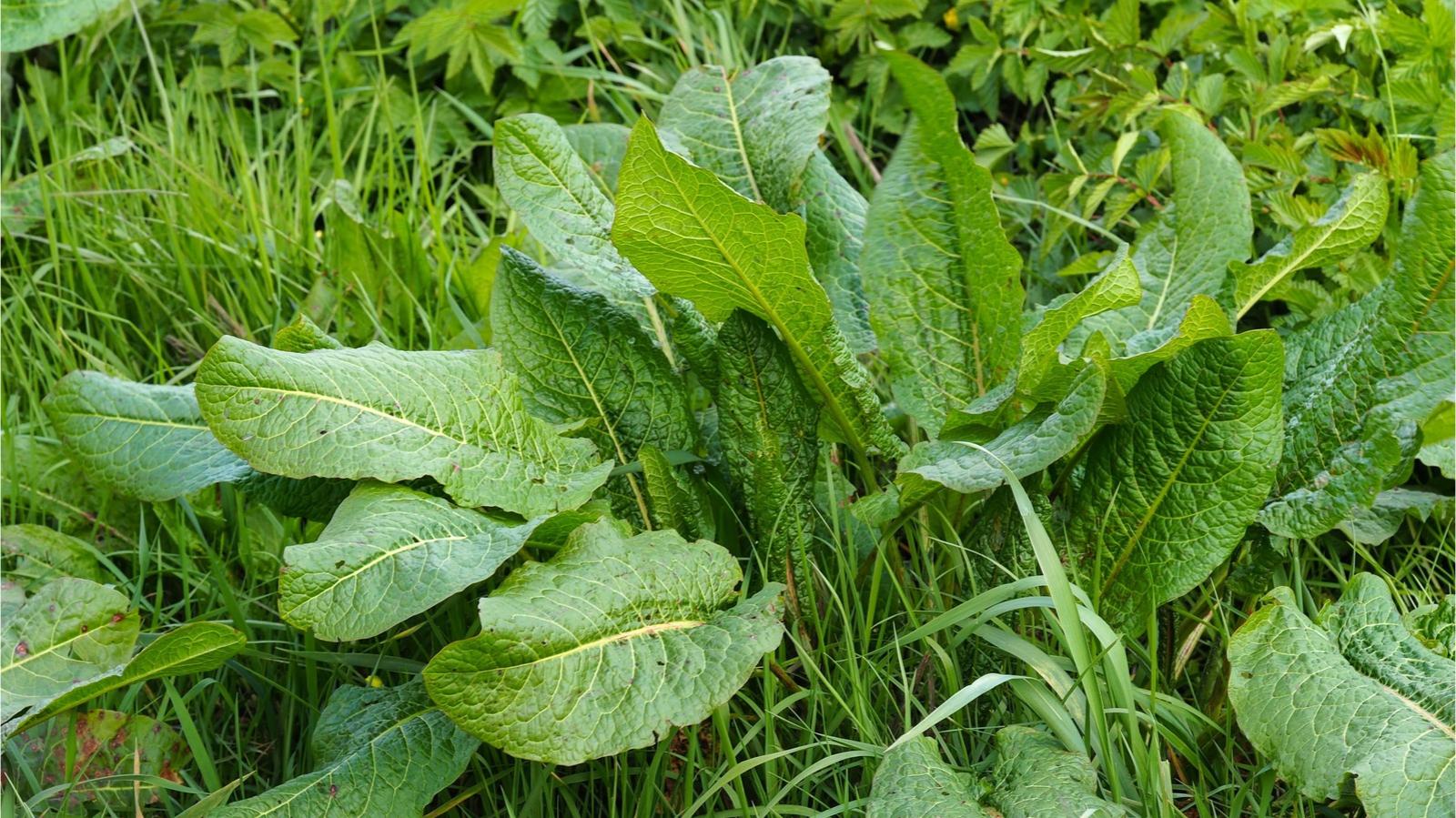
A large-leaved plant with long, broad, wrinkly-textured foliage growing among green grasses.

Broadleaf dock is a large-leaved weed that stands out in a grassy area, meadow, or garden bed. Photo via Adobe Stock.

Updated: November 19, 2026

Curly dock (Rumex crispus) and broadleaf dock (Rumex obtusifolius), both of which share the alternate common name of bitter dock, are non-native weeds that are widespread across Maryland. They are members of the buckwheat family (Polygonaceae).

There are about a half-dozen species of sorrel and dock (genus Rumex) in Maryland, nearly all of them non-native. One of the locally native Rumex species is very rare in the state, and the other is limited to habitats with wet soil; neither is likely to appear in a yard as a lawn or garden weed.

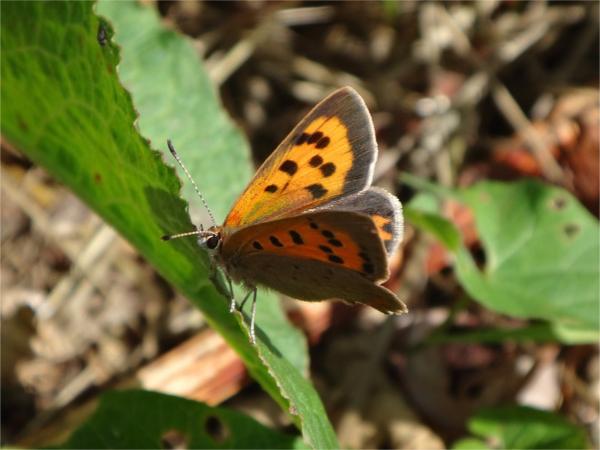
A small butterfly with orange wings marked with gray-brown borders and black spots rests close to the ground on a leaf with its wings partially open.
American copper butterfly. Photo via Adobe Stock.

The American Copper butterfly, a species of sunny, dry habitats across Maryland, uses docks and sorrels as caterpillar host plants, including curly dock. The Bronze Copper butterfly, a sunny wetland habitat species that is in decline in Maryland — and primarily found on the Coastal Plain — also uses curly dock and native swamp dock (Rumex verticillatus) as caterpillar host plants.

Identification

Curly dock

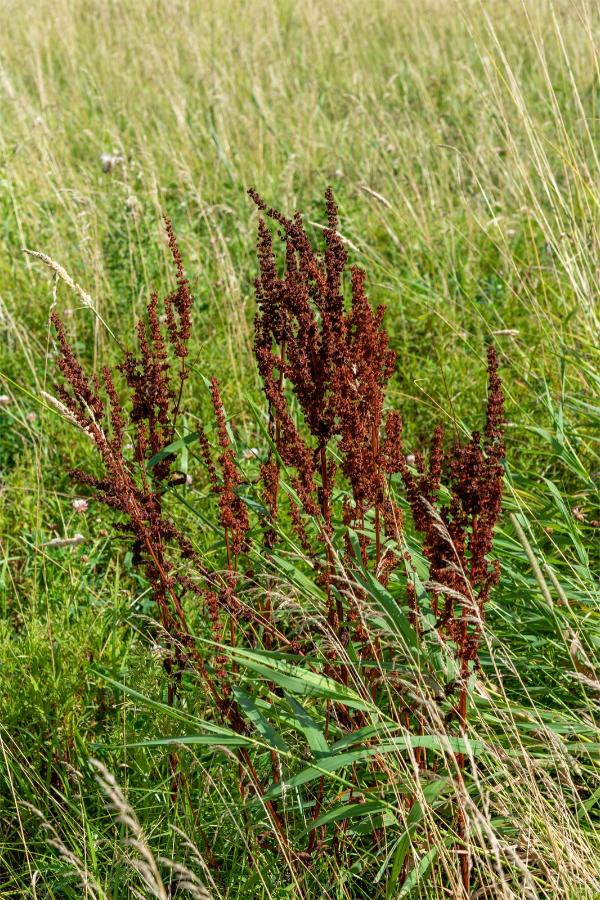
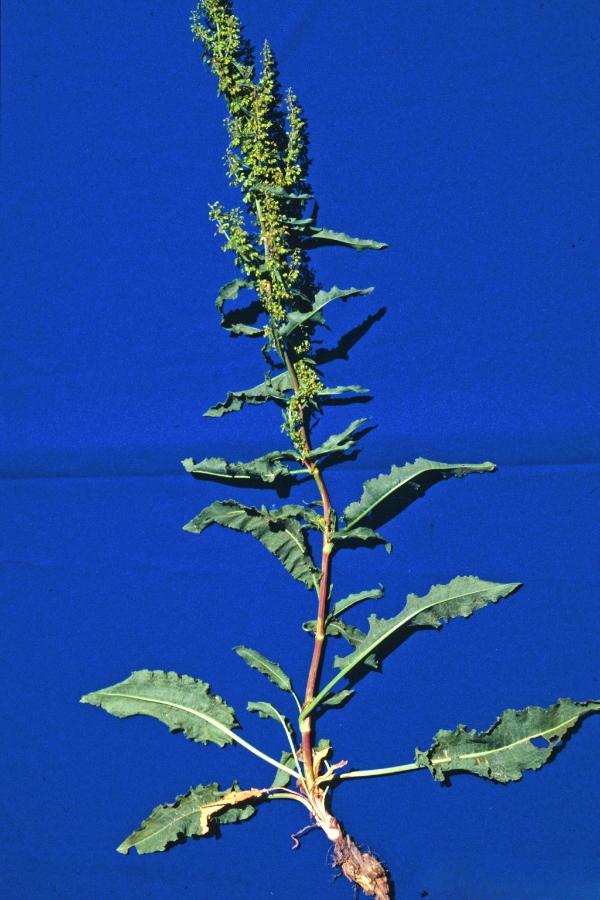
  • Growth habit: clumping with a basal rosette (most leaves emerge from and radiate around a central point at the base of the plant); can reach 3 to 5 feet tall when blooming or going to seed
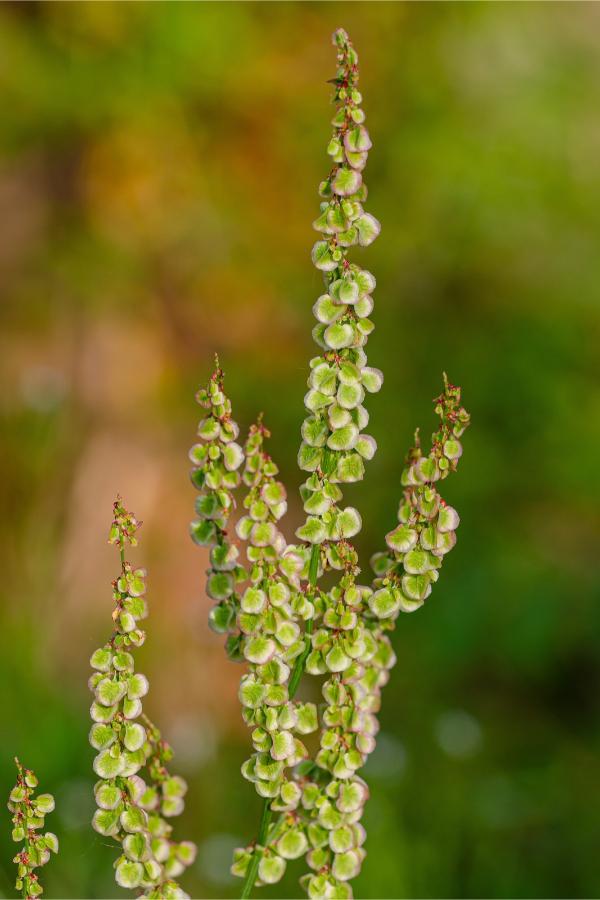
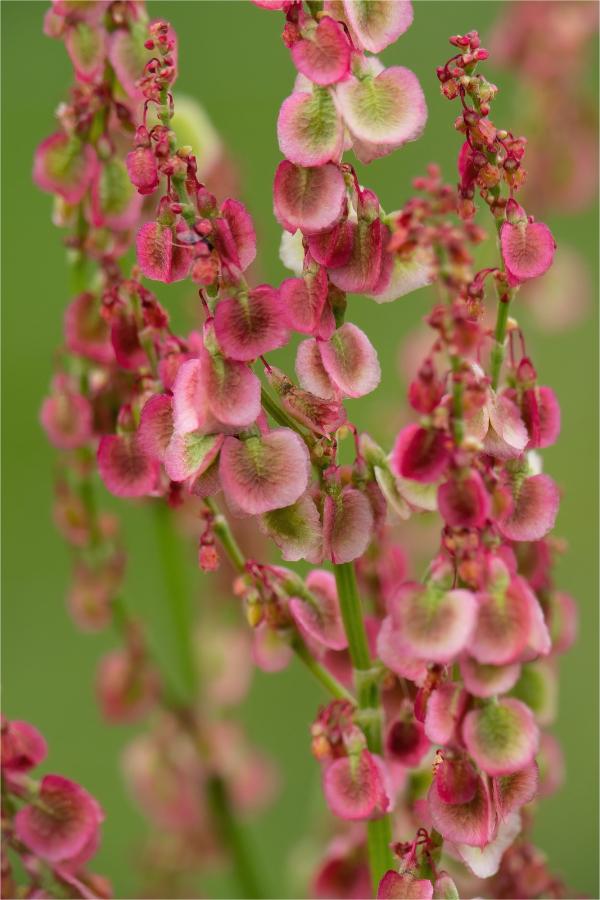
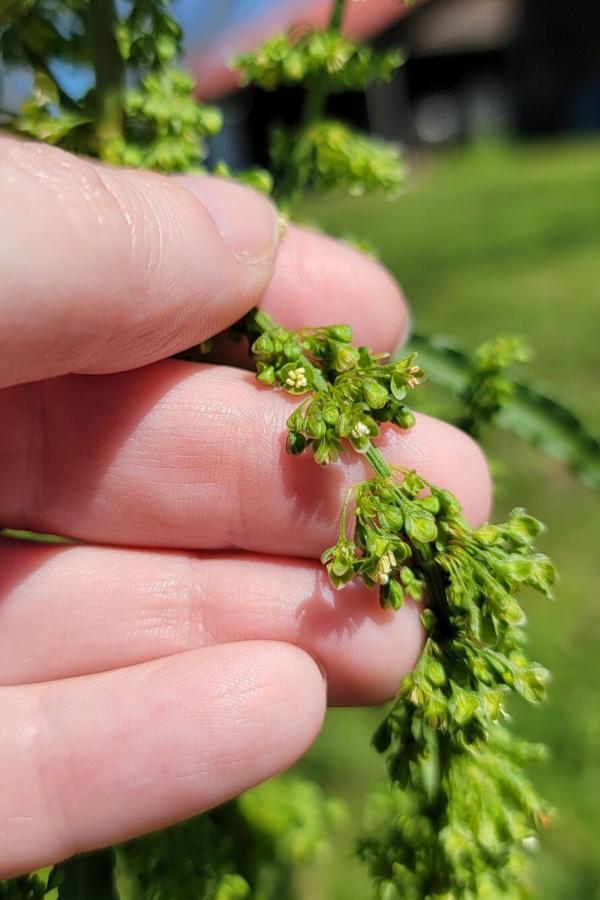
  • Flowers: dense clusters of small, individually-inconspicuous blooms that start greenish and mature to reddish-brown
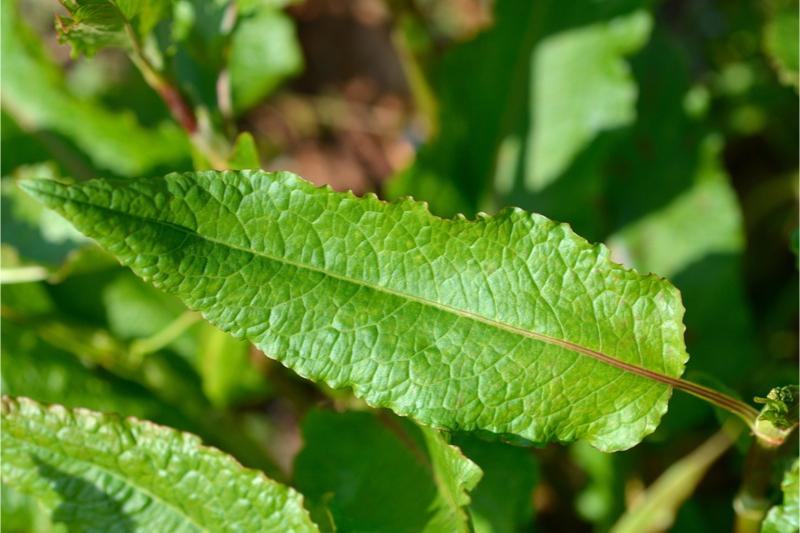
  • Leaves: elongate or lance-shaped and tapering towards the tip; the largest leaves may grow nearly 1 foot long
    • young plants have red-spotted, egg-shaped, smooth-textured leaves
    • older plants have slightly wavy, crumpled, or puckered leaf margins (edges), and the leaf texture is shiny
    • the base of the petiole is covered with an ocrea, a membranous or papery sheath that wraps around the stem at the node (where leaves attach to the stem)
    • the margin of emerging new leaves is rolled-under
    • leaves may turn reddish late in the growing season
    • what few leaves grow on the flowering stem are smaller than the basal leaves and have a more elongate shape
    • alternate leaf arrangement
  • Stems: smooth and ridged in texture; reddish-brown when the plant is flowering or producing seed; enlarged nodes
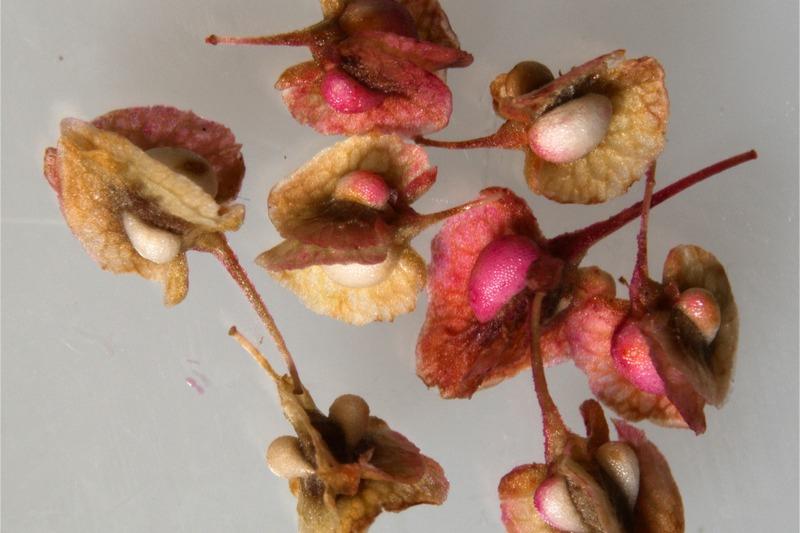
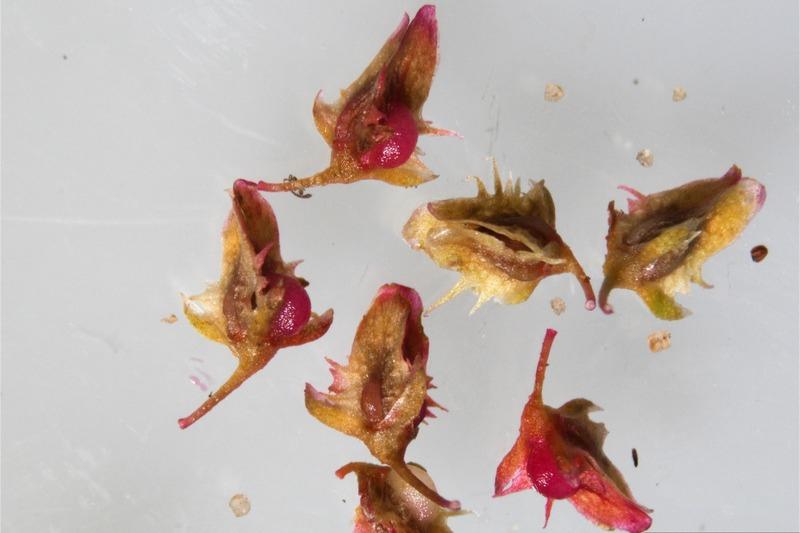
  • Seeds: ripening seeds become reddish-brown as they mature; each pod is triangular and has a papery, 3-winged covering
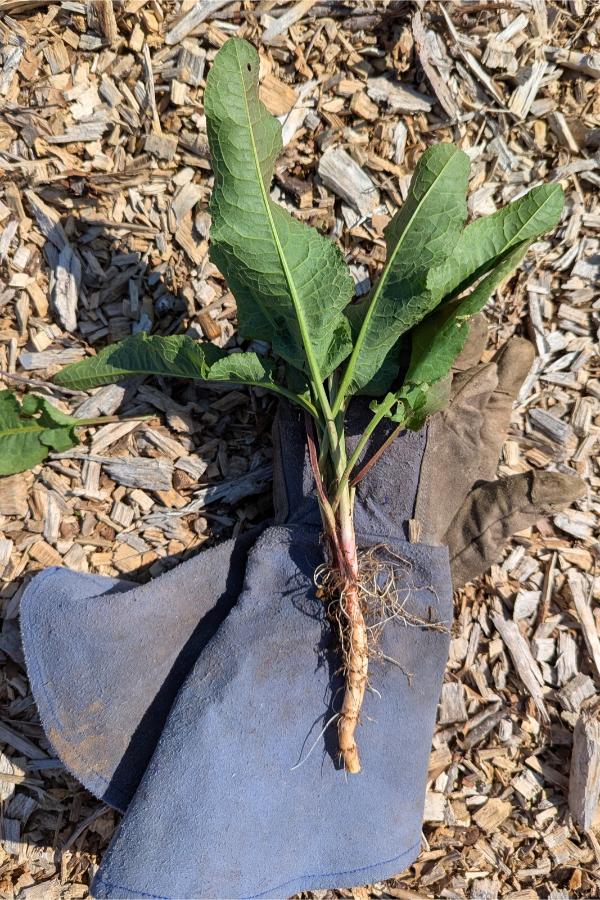
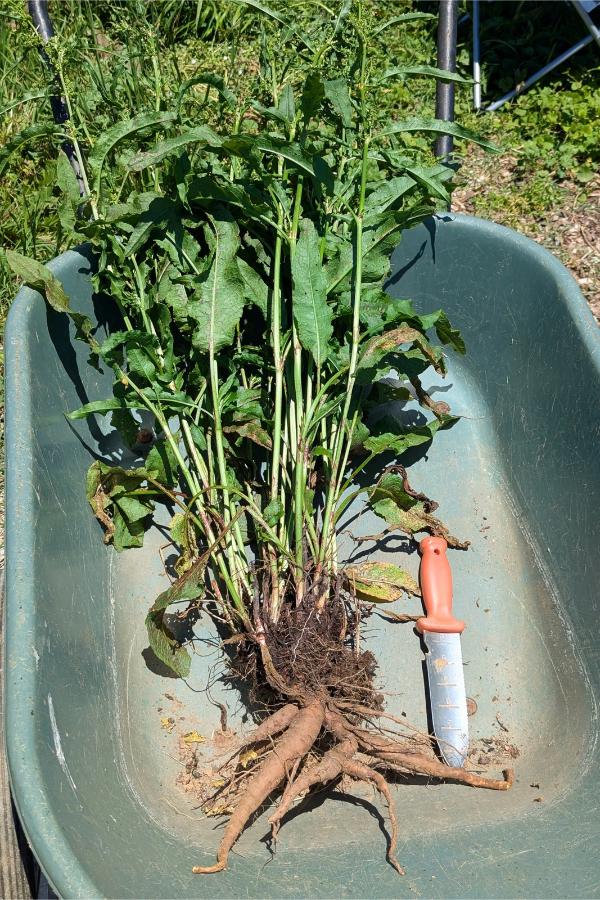
  • Roots: thick taproot with a yellow center, which may reach 5 feet deep

Broadleaf dock

This species shares many features with curly dock. Differences include:

  • Growth habit: the mature size of the two species overlaps, but overall, broadleaf dock tends to be a bit shorter when mature
  • Leaves: generally flatter and wider than curly dock leaves; there is an overlap with curly dock in leaf length, but overall, broadleaf dock leaves tend to be shorter than curly dock leaves
    • veins often tinged with red
    • smooth margins (not puckered or wavy)
    • smooth upper surface, with rough-textured petiole and midrib plus the main veins on the leaf underside (there are tiny hairs on the veins)
    • heart-shaped base of the leaf (the base of curly dock leaves tapers to the petiole)
  • Seeds: the husk-like covering of the seed has spiny-toothed margins
  • Stems: a bit rough-textured and grooved/ridged; dark green

Similar species

The combination of the large, long leaves and upright, densely-packed seed stalk bearing tiny disc-faced seeds helps to distinguish dock from other large-leaved weeds. When a dock plant is not blooming, use traits like leaf shape and texture to separate it from look-alike species. Additionally, buckwheat family plants like dock have the ocrea (the membrane wrapped around the stem at the base of the leaf petiole), while few species outside of that family would.

Red sorrel is closely related to dock and has similar-looking flower stalks and seed heads, but the plants are much smaller in stature and leaf size than curly dock and broadleaf dock. Red sorrel foliage also has a different shape than dock, with basal leaves having a pair of prominent, outward-facing lobes at their base just above the petiole. Red sorrel spreads via rhizomes into a larger patch over time, while dock remains a single clump with a thick taproot.

Lesser Burdock (Arctium minus), an invasive perennial in the aster family (Asteraceae), has similarly large basal foliage. However, those lower burdock leaves have a surface that is more matte (not as shiny as dock leaves), and the edges of its leaves are more drastically ruffled. Burdock leaf veins feel pressed into the leaf's upper surface, and the basal leaf's overall shape is more triangular, with a broad base and narrower tip. When burdock blooms, the flowers resemble those of thistle.

Two large-leaved plants with a basal rosette growing next to each other. The plant on the left has more linear-shaped, glossier leaves. The plant on the right has more triangular leaves with a coarsely ruffled edge and more matte surface with depressed leaf veins.
Curly dock (left) and burdock (right), before either plant has flowered. Both have large leaves, but their shape and texture differ. Photo: HGIC

Life cycle and reproduction

Curly dock and broadleaf dock are both perennials: they live for several years. Curly dock blooms in late spring or early summer, primarily in May and June in Maryland. Broadleaf dock blooms slightly later, primarily in June or July.

The upright seed stalks persist through the winter, and seeds remain viable in the soil for decades; some curly dock seeds may survive for up to 80 years. Each plant can produce tens of thousands of seeds, which can be dispersed by wind and water (seeds float). Seeds can germinate if they are within about an inch of the soil surface.

Conditions that favor growth

Curly dock and broadleaf dock favor sunny sites in nutrient-rich, damp soils, although they are adaptable to dry, nutrient-poor soils.

Curly and broadleaf dock management

General lawn care practices that discourage weeds

Maintain healthy, dense turf that can compete with weeds and prevent weed germination and establishment. Fertilize the lawn as recommended (based on season and turf type), mow high, and overseed cool-season lawns each autumn to keep the lawn dense and better able to crowd-out seedling weeds. Core-aerate to reduce soil compaction, which not only improves drainage but also helps drying soils absorb moisture. Learn about fertilizing, mowing, overseeding, and aeration in the resource: Maintaining an Established Lawn.

Lawn care and maintenance

Mechanical management

Remove dock plants (including the substantial taproot) by hand or with a manual weeding tool that can dig deep enough so that the entire root system is removed. Doing this when the soil is moist makes the task easier. Pulling up or digging out individual plants is a viable option at the beginning of an infestation (when the plants are not yet abundant and when they are young enough that the roots are smaller and easier to remove intact).

Manage Weeds Without Chemicals

Chemical management

Herbicide use should always be a last resort when managing weeds. Check for any local pesticide restrictions before buying and applying a product. For example, the Montgomery County pesticide law does not allow most synthetic pesticides (which includes herbicides) to be used on lawns. The active ingredient glyphosate is also prohibited on lawns in Baltimore City.

Learn about herbicide classifications and terminology:

Herbicide Options for Managing Common Lawn Weeds

Post-emergent herbicide

Spot-treat individual dock plants or infested areas with a liquid broadleaf herbicide applied in autumn. Look for a product with one or more of the following active ingredients: 2,4-D, MCPP (mecoprop), dicamba, or triclopyr. An application of non-selective herbicide may work, but would also damage any turfgrass exposed to the herbicide.

CAUTION: Do not spray herbicides containing dicamba over the root zone of desirable trees and shrubs. Roots or leaves may absorb this ingredient and be substantially damaged. Refer to the product label for other precautions.

References

Del Tredici, P. (2010). Wild Urban Plants of the Northeast: A Field Guide. Comstock Publishing Associates.

Neal, J.C., Uva, R.H., et. al. (2023). Weeds of the Northeast. (Second edition.) Comstock Publishing Associates.

Phillips, C.E., Fisher, V.J. (1970). Weeds of the Northeast: Aids to Their Identification by Basal-Leaf Characteristics. University of Delaware Agricultural Experiment Station.

Royer, F., and Dickinson, R. (1999). Weeds of the Northern U.S. and Canada. The University of Alberta Press.

Still have a question? Contact us at Ask Extension.