
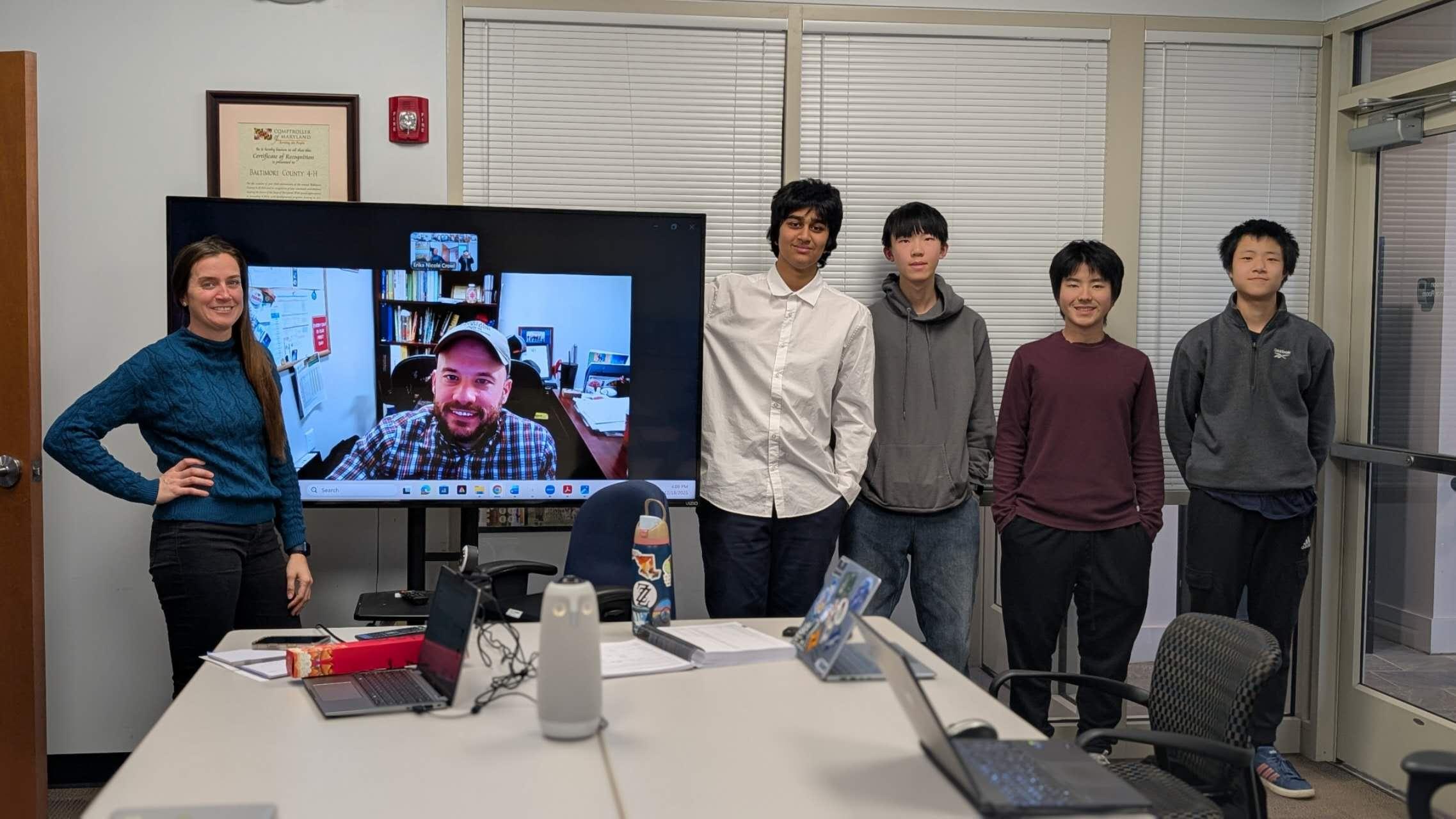
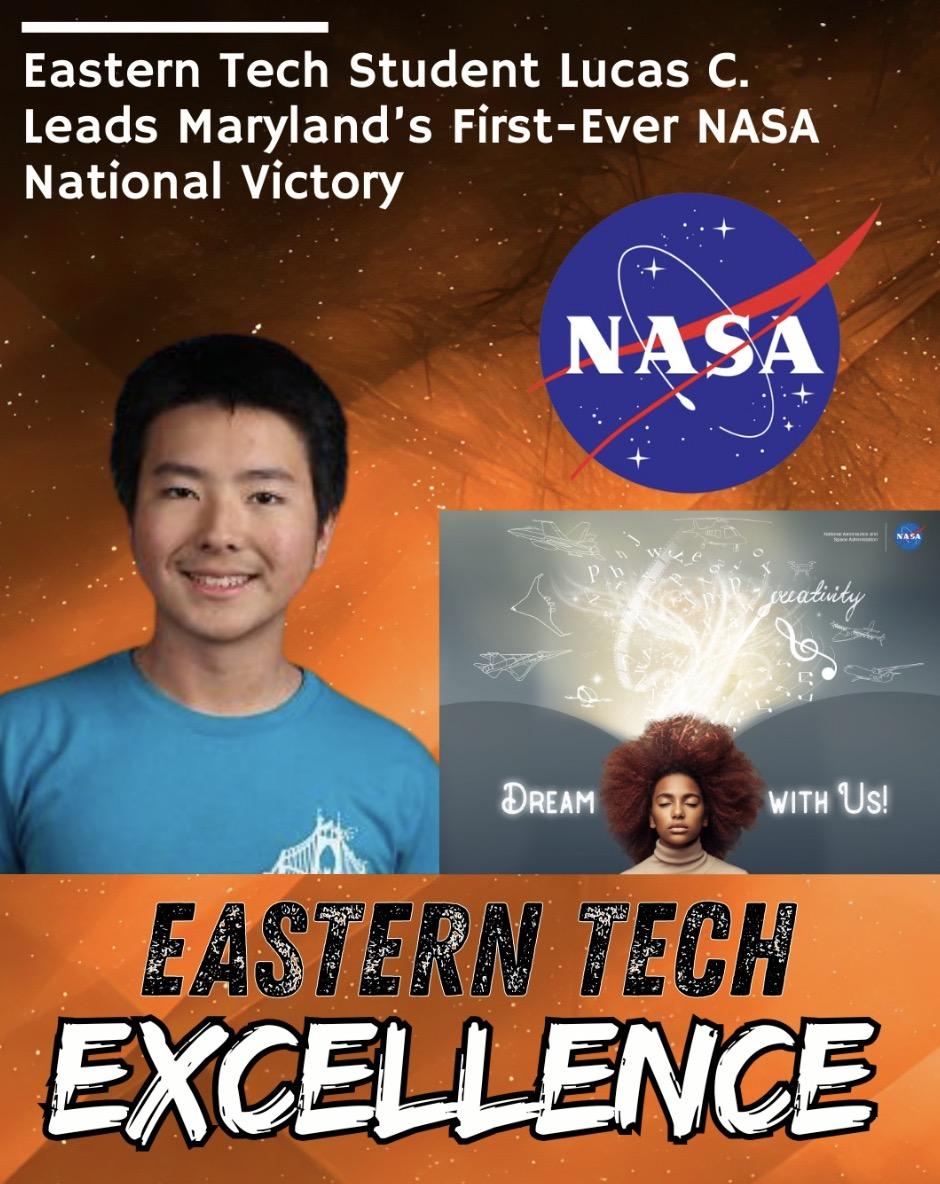
A team of Maryland high school students has earned national recognition in the 2025-2026 NASA Aeronautics "Dream with Us" Design Challenge, taking third place overall and becoming the first team from Maryland ever to place in the competition. Team Galaxy was also the only East Coast team recognized in the high school division this year, and University of Maryland Extension experts, including Dr. Hemendra Kumar, Director of the Digital and Precision Agriculture Lab (D-PAL), Andy Kness, an IPM Expert, and Erika Crowl, Agronomy Expert, played a key role in helping the students bring their vision to life.
A Drone Built to See Beneath the Canopy
Team Galaxy's project tackled a persistent problem in agriculture: early detection of pest damage in soybean crops, an industry worth more than $115.8 billion annually. The damage to soybean crops is especially critical, and the reason, the students found, is largely biological: insect pests damage pods beneath the plant canopy, where traditional overhead drone surveys and manual field scouting struggle to reach. The stakes are especially high in Maryland, where farmers planted about 495,000 acres of soybeans last year, a crop worth nearly $200 million to the state's economy. Even modest reductions in yield caused by pests can translate into serious economic losses for growers.
To address the gap, the team designed the TG-1, a Vertical Take-off and Landing (VTOL) uncrewed aircraft system equipped with a "Reverse Periscope" RGB-D sensor built to navigate the tight 15- to 30-inch canopy geometry, paired with a 6-degree-of-freedom robotic arm for targeted sample collection. The team projects the system could cut field sampling time by 80% and reduce chemical usage by up to 60% by replacing blanket spraying with targeted applications, a shift that could save Maryland farmers millions of dollars each year.
A Cross-County Student Collaboration
The TG-1 was engineered by students from four Maryland public high schools: Lucas Chen (team lead) of Eastern Tech High School; Samarth Gomatam, Andy Yan, and Skyler Zeng of Dulaney High School; Aric Deng of Damascus High School; and Ruichen Feng of Thomas Wootton High School. The team was coached by Dr. Frank Chen of the Johns Hopkins University Carey Business School and drew additional academic guidance from faculty at Simon Fraser University and Towson University to refine their computer vision models and business case.
UMD Extension's Role in Bridging Hardware and Agronomy
Turning a hardware concept into an agriculturally sound tool required expertise the students didn't have in-house, which is where UMD Extension came in.
Dr. Hemendra Kumar, whose D-PAL lab focuses on AI, remote sensing, and precision crop management, advised the team on Engineering smart drone technology with precision agriculture frameworks. UMD Extension agents Erika Crowl and Andrew Kness contributed agronomic and entomological expertise on stink bug behavior, insight that led the students to redesign their AI model, pivoting from single-species detection to a multi-pest complex model that significantly improved the system's real-world viability and economic impact.
"The success of the TG-1 system relied heavily on bridging hardware design with real-world biological and agricultural constraints," the team noted, crediting UMD Extension's mentorship as foundational to that process.