Skip to main content
Menu
Get Involved
Give
Contact
Ask Extension
About
Leadership
UMD Extension Impact
Careers
Directory
Civil Rights Compliance
Extension Advisory Council and Committees
Program and Organizational Development
Resources
Animal Agriculture
Plant Agriculture
Yard & Garden
Pests
Natural Resources
Environment & Energy
Agribusiness Management
Food & Nutrition
Health & Well-Being
4-H & Youth Education
Programs
4-H Youth Development
Family & Consumer Sciences
Agriculture & Food Systems
Environment & Natural Resources
Home & Garden Information Center
Locations
Publications
News & Events
All News
Events
Weed Management
Home
Resources
Weed Management
For full functionality of this site it is necessary to enable JavaScript. Here are
instructions for how to enable JavaScript in your web browser
.
Sort by:
Date
Title
Updated: October 30, 2024
Suggestions for Dealing With Herbicide Shortages for 2022
The shortage of glyphosate (Roundup, Gly Star, etc.) and glufosinate (Liberty, Interline, etc.) herbicides are forcing farmers to seek other options for burndown and postemergence spray. No one anticipated this shortage and very little research has been done to address this issue. Many of us had to dust off our notes from the early 1990’s, the time before cheap glyphosate was available. One thing is certain, alternative weed control options will require more targeted management. The key is to plan ahead, select herbicides based on the weeds in the field, and make timely applications. Your mindset needs to be that you are not substituting a herbicide for glyphosate, rather you are using a different herbicide that has its own set of recommendations and limitations. Author: Kurt Vollmer, Univeristy of Maryland Extension Weed Management Specialist, and Mark Van Gessel, University of Delaware Weed Management Specialist; Title: Suggestions for Dealing With Herbicide Shortages for 2022
Updated: October 24, 2024
Iron-based Herbicides
An examination of the efficacy of iron-based herbicides. These selective, broadleaf herbicides contain the active ingredient chelated iron.
Updated: October 24, 2024
Japanese Stiltgrass Identification and Management
Now is the time to scout pasture and hay fields for Japanese stiltgrass and take note of its locations. This invasive grass is typically seen in wooded areas, but unfortunately has been creeping into fields. Once the seed heads start to form in another month or two, you’ll want to have the mower ready.
Updated: October 24, 2024
Assessing Herbicide Options for Preplant Weed Control in Soybean
Starting clean, or weed-free, is a critical component of any weed management program. In 2022, growers experienced either a lack of or higher cost of glyphosate-based herbicides that are typically used to control weeds prior to planting soybean. In a study sponsored by the Maryland Soybean board and conducted at the University of Maryland’s Central Maryland and Wye Research and Education Centers, different glyphosate-based and non-glyphosate based herbicide treatments were evaluated for their ability to provide effective preplant weed control (Table 1). These treatments included both single and sequential herbicide applications.
Updated: October 24, 2024
Evaluating Late Season Burndown Options for Palmer Amaranth
A common question asked by farmers dealing with herbicide resistant Palmer amaranth is, “What are the most effective burndown options in situations where Palmer amaranth is larger then the ideal 3-4 inch control range?”
Updated: October 24, 2024
Assessing Options for Italian Ryegrass Control Prior to Soybean Planting
Italian ryegrass is a winter annual weed that often needs to be managed prior to soybean planting. In Maryland, populations of Italian ryegrass have been confirmed to be resistant to group 1 (Axial, Select) and group 2 (Harmony, PowerFlex) herbicides, but recent populations have appeared to develop resistance to glyphosate (Figure 1). With limited herbicide options, preplant control of Italian ryegrass will be challenging for growers.
Updated: October 24, 2024
Considerations for Burndown Programs in 2023
It’s that time of year when growers are considering which herbicides to include in their burndown programs. Utilizing effective herbicides will help to ensure less weed competition at planting. However, growers should consider not only what herbicides they plan to use in their burndown programs, but also the weed species present in the field.
Updated: October 24, 2024
Invasives in Your Woodland: Canada Thistle
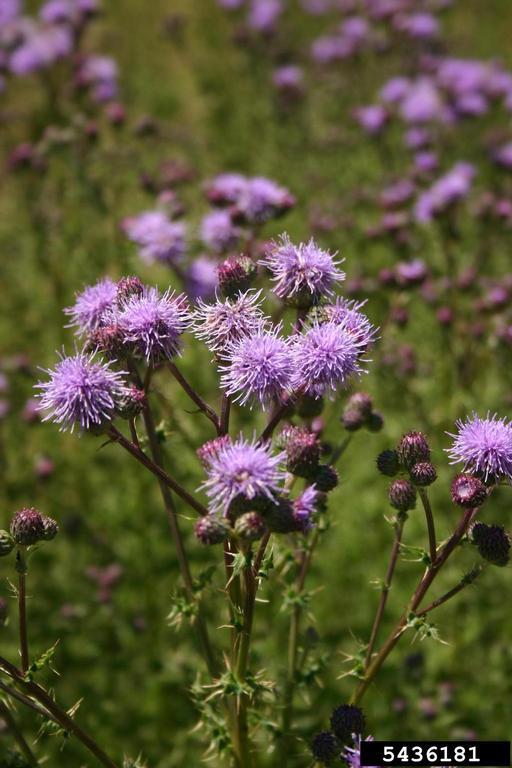
Canada Thistle is also known as creeping thistle, as well as green or perennial thistle, depending on the source. Others express their opinion about it by calling it hard thistle and cursed thistle. Canada thistle is an aggressive and colonial perennial, with both male and female plants. It is considered a noxious weed in Maryland and many other areas across the U.S.
Updated: October 24, 2024
New Ecological Mitigation Menus to Reduce Pesticide Runoff
New Ecological Mitigation Menus to Reduce Pesticide Runoff
Updated: October 23, 2024
Avoiding Injury to Grapes From Off Target Herbicide Exposure
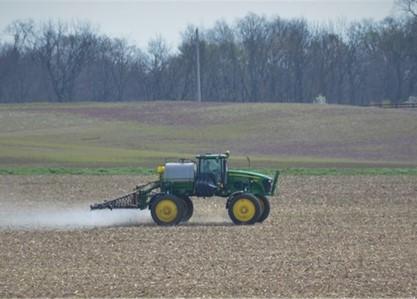
Over the past few years there have been quite few cases in Maryland of injury to grapevines from herbicides that were sprayed to control weeds before planting crops on adjacent or nearby fields. Damage has ranged from some minimal leaf distortion through severe damage, crop loss, and vine death.
First
Previous
…
Page
3
Page
4
Page
5
Page
6
Page
7
Page
8
Current page
9
Page
10
Page
11
Next
Last