
A new program developed by University of Maryland Extension (UME) is taking a comprehensive approach to healthy aging—one that recognizes wellness as more than just physical health. The initiative, Building a Better You: Wellness for 50+, is designed specifically for adults aged 50 and older to improve both longevity and quality of life through a multi-dimensional model of wellness.
The program, developed by Mona Habibi, Family & Consumer Sciences educator and principal investigator on the project and Shauna Henley, food safety educator, is rooted in understanding the eight dimensions of wellness – physical, emotional, social, intellectual, spiritual, occupational, environmental, and financial – and addressing these areas together is key to helping individuals not only live longer, but live better.
“We know that for good wellness, you need all parts of the puzzle,” said Henley. “In the past, we were limited in what we could teach. Now, we’re bringing everything together.”
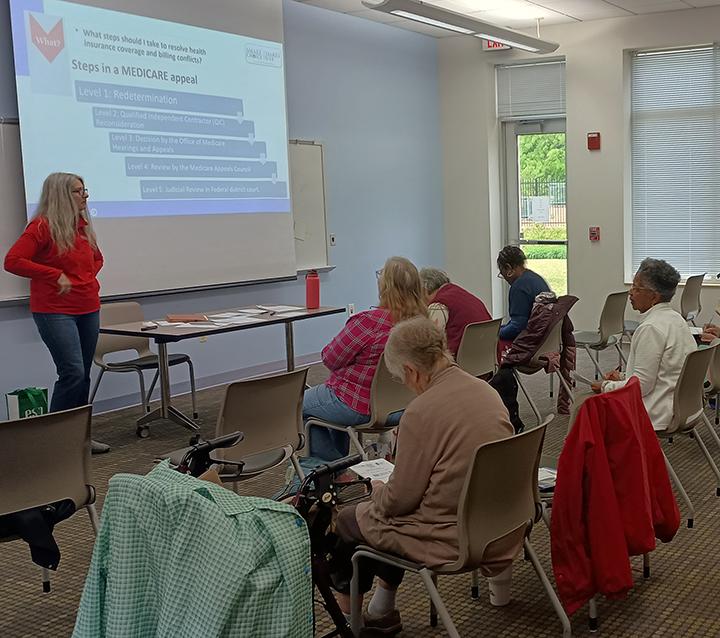
Initially funded by a Maryland Agriculture Experiment Station grant, the launch of Building a Better You comes at a critical time. By 2030, the population of older adults in the United States is expected to increase dramatically, with Maryland reflecting similar trends. Collaborating with co-PI Dorothy Nuckols, financial wellness educator, as well as other UME Family & Consumer Sciences colleagues across specialties including mental health, nutrition, food safety, health insurance literacy, and personal finance, this interdisciplinary approach addresses myriad wellness concerns for older adults.
“As we get older, there are more challenges—chronic disease management, food safety risks, financial vulnerability, and unique emotional challenges,” Habibi said. “We want to equip Marylanders with tools to navigate these.”
The programming itself was developed based on a needs assessment survey of Maryland’s older adult population and key stakeholders, ensuring classes reflect real needs and can be realistically implemented. “We wanted the older adult community to guide what we created,” Henley said. “This program is truly shaped by their input.”
The result is a four-session series that can be delivered weekly, in person or online. Each session includes a 60-minute interactive presentation, discussion opportunities, and take-home materials. The program also emphasizes social connection, giving participants time to share experiences and learn from one another—an often-overlooked aspect of wellness.
Building a Better You: Wellness for 50+ is offered in partnership with the Maryland Department of Aging, Area Agencies on Aging, senior centers, and community organizations. Organizers are also prioritizing accessibility, offering both in-person and virtual options to reach homebound individuals and those still in the workforce.
“We want to be able to return to the same communities with new content,” Habibi said. “That way, participants can continue building their knowledge and skills year after year.”
“This is just the beginning,” Henley said. “We’re building something that reflects what Family and Consumer Sciences is all about—bringing together expertise to support people in meaningful, practical ways.”