
Xanthomonas Leaf Spot on Pumpkin
Veronica Yurchak, Vegetable Specialist, UMD
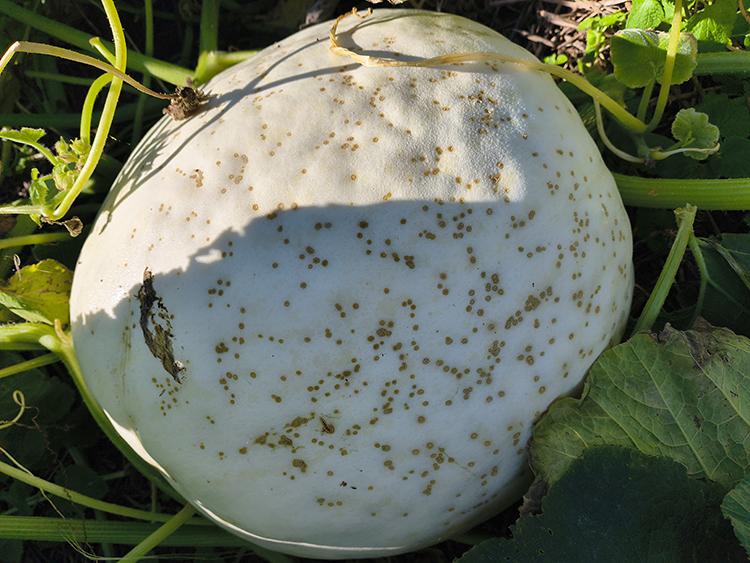
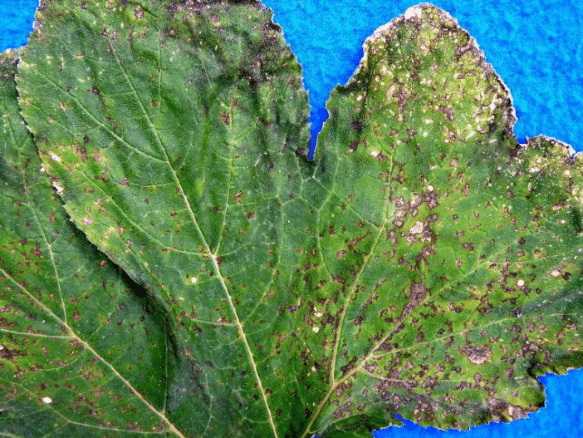
Last week I visited a field with pumpkins experiencing the symptoms visible in Figures 1 and 2. These pumpkins have Xanthomonas leaf spot (XLS), a bacterial disease that causes lesions on both the leaves and the fruit of cucurbits. While XLS has been sporadic and generally quite uncommon in Maryland, reports indicate it is becoming an increasing problem for pumpkin growers across the Northeast and Midwest.
Recognizing symptoms early is key to understanding and limiting its spread. On leaves, the disease appears as small, angular, water-soaked lesions under a quarter-inch in size (Figure 1). These foliage symptoms are easily overlooked and do not cause economic damage, but they signal the presence of the pathogen. Fruit lesions begin as tiny, sunken tan spots with small dark borders. As these fruit spots enlarge, they can crack open, creating an entry point for secondary soft-rot bacteria that can eventually lead to fruit collapse.
The XLS pathogen thrives in warm, wet weather and long-distance transmission is most often thought to be seed borne. While XLS has rarely been found in commercial seed lots, low levels of contamination can be difficult to detect. Once introduced into a field, the bacteria can spread rapidly through overhead irrigation, splashing rain, or wind-driven rain. Equipment and workers brushing against wet, infected foliage can also easily vector the bacteria to healthy plants, so it is important to stay out of fields while leaves are wet.
Because there are no resistant pumpkin varieties available, management relies on routine scouting, strict sanitation, and cultural controls. Rogueing out individual affected plants when detected early can help slow field spread. To manage long-term risk, avoid overhead irrigation, never save seed from affected fruit, and destroy plant debris immediately after harvest before rotating out of the field for at least three years. Subsequent weed management in previously infected fields in important, as the XLS pathogen can survive on several species including velvetleaf and weedy cucurbits (ex. burcucumber).
Preventive weekly sprays of copper fungicides applied early in the season can reduce plant-to-plant spread, but growers should note that copper applications will not control or cure the disease once lesions are already visible.
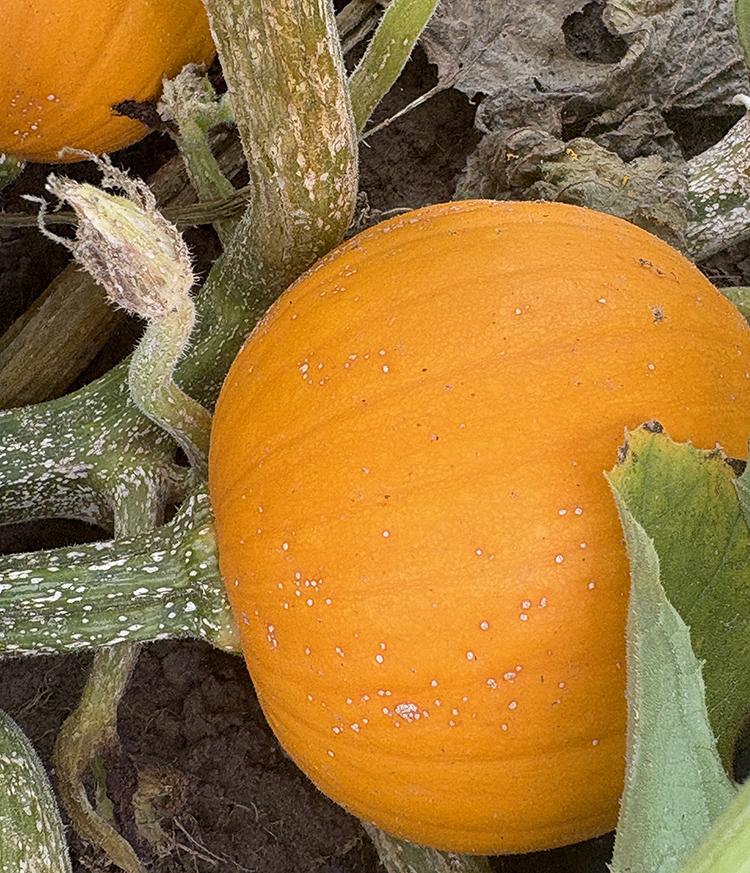
XLS can appear similar to other pumpkin diseases more commonly found in Maryland – including Plectosporium blight and angular leaf spot. Visually, XLS can often be differentiated from Plectosporium blight by examining stems and handles. In addition to fruit scabbing, Plecosporium blight typically causes diamond-shaped lesions on stems and handles (Figure 3), and eventually leads to a frosted appearance on these plant regions. XLS usually only appears on the leaves and fruit. Angular leaf spot is another, much more common, bacterial disease that can appear similar to XLS. Diagnostic testing can be performed to conclusively differentiate ALS from XLS, although management actions will be similar. If you suspect XLS in your cucurbits, please reach out to me at vjohnso4@umd.edu, or your county extension agent. I would be happy to collect a sample to help determine if XLS is becoming a more common problem in Maryland.
This article appears in October 2026, Volume 17, Issue 9 of the Vegetable and Fruit News