
Over the past few months, I have received several phone calls from residents across the state who share a similar problem: they have large trees in their yards that need to be trimmed or removed, yet they do not want the wood to go to waste. Is there any productive use for the woody material that will come from their trees?

In many ways, these calls reflect important aspects of relationships between trees and people in Maryland; estimates project that nearly 3.1 million acres across Maryland (about 50% of the state’s lands) are covered by tree canopy, and that a majority of the 2.2 million unique parcels across the state feature some amount of tree cover [1; 2]. However, sawmills generally purchase timber from harvests carried out on multiple-acre forested properties, which means that many residential trees are destined to become woodchips or firewood.
A diverse ecosystem of researchers, industries, and unique partnerships across the country work to identify productive uses for woody material that might otherwise be considered waste. Woody biochar represents one such material, produced from a relatively simple process, and that has varied applications and potential markets.
What is biochar? How is it produced in forests? What is it used for?
Biochar is a type of charcoal made from organic material (e.g., plant residue, manure) through a process called pyrolysis, which is when materials are broken down into constituent parts under “thermal decomposition,” or high temperature burning [3]. So, in forestry applications, woody biochar is created by igniting dried branches and woody material, then extinguishing the material before it turns into ash.
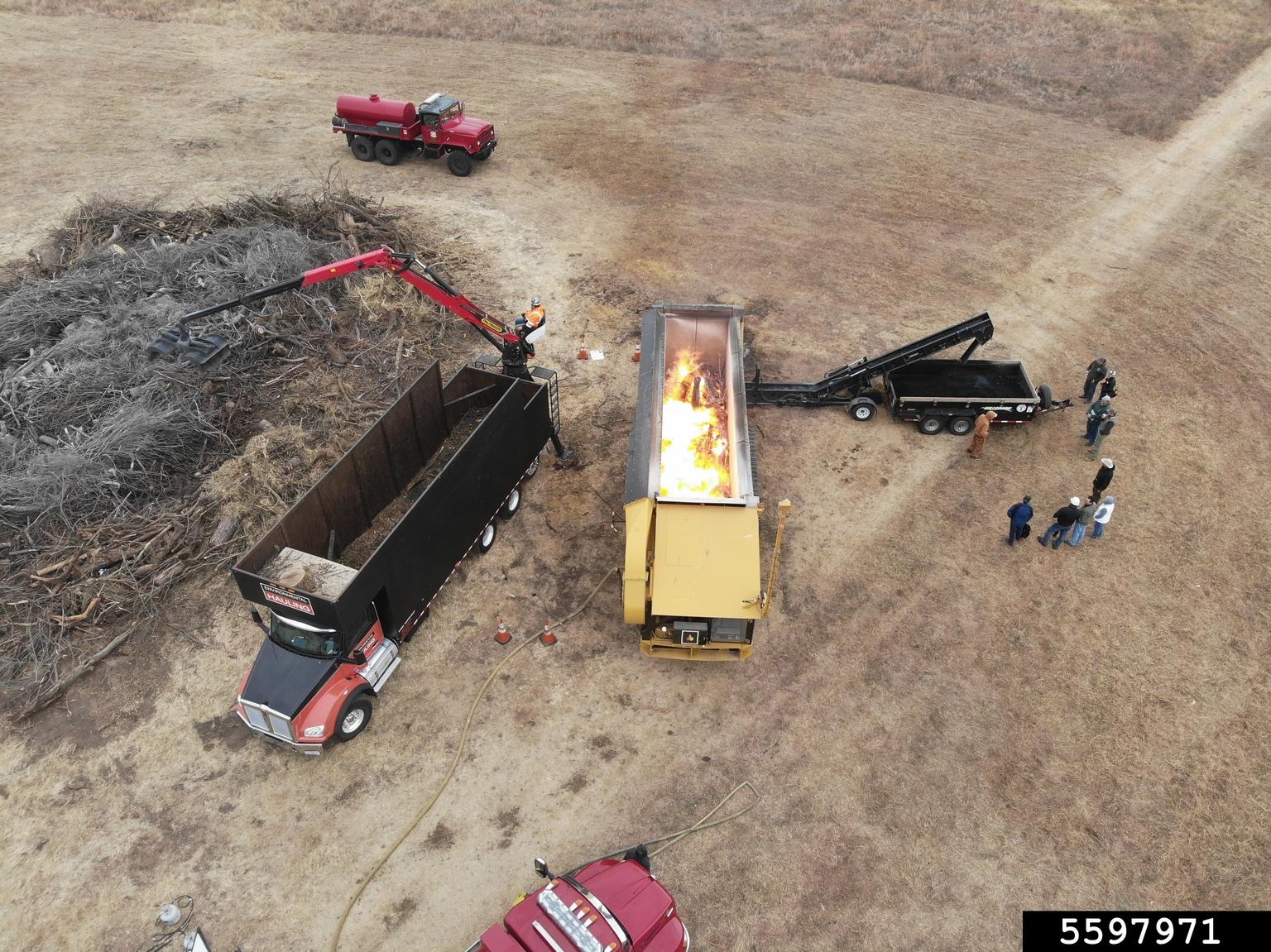
Woody biochar production in forestry applications decreases the amount of flammable woody material in forests, cutting down on wildfire risks and facilitating future management. Biochar is often produced in industrial facilities, but recent research has ground-truthed on-site production in forests using mobile kilns or air-curtain burners [3].
After it is produced, biochar can be applied to directly forest soils; the unique molecular structure of biochar helps to trap heavy metals and retain moisture, so woody biochar has been utilized to amend soils in abandoned mine sites and manage stormwater runoff [3].
USDA’s National Resources Conservation Service has recognized woody biochar production as a conservation practice eligible for cost-sharing, and there are plans to establish an industrial biochar processing plant in Allegany County, Maryland [4; 5]. Biochar is sought after by agricultural producers, nursery operators, and specialty gardeners to improve soil conditions.
Given the large amount of woody biomass destined for woodchip piles or landfills across Maryland, a unique opportunity exists to research the potential markets for biochar applications and the financial accessibility of mobile woody biochar production methods for private landowners, especially those with small acreage parcels. Woody biochar may ultimately play an important role in forest stewardship and management across the state.