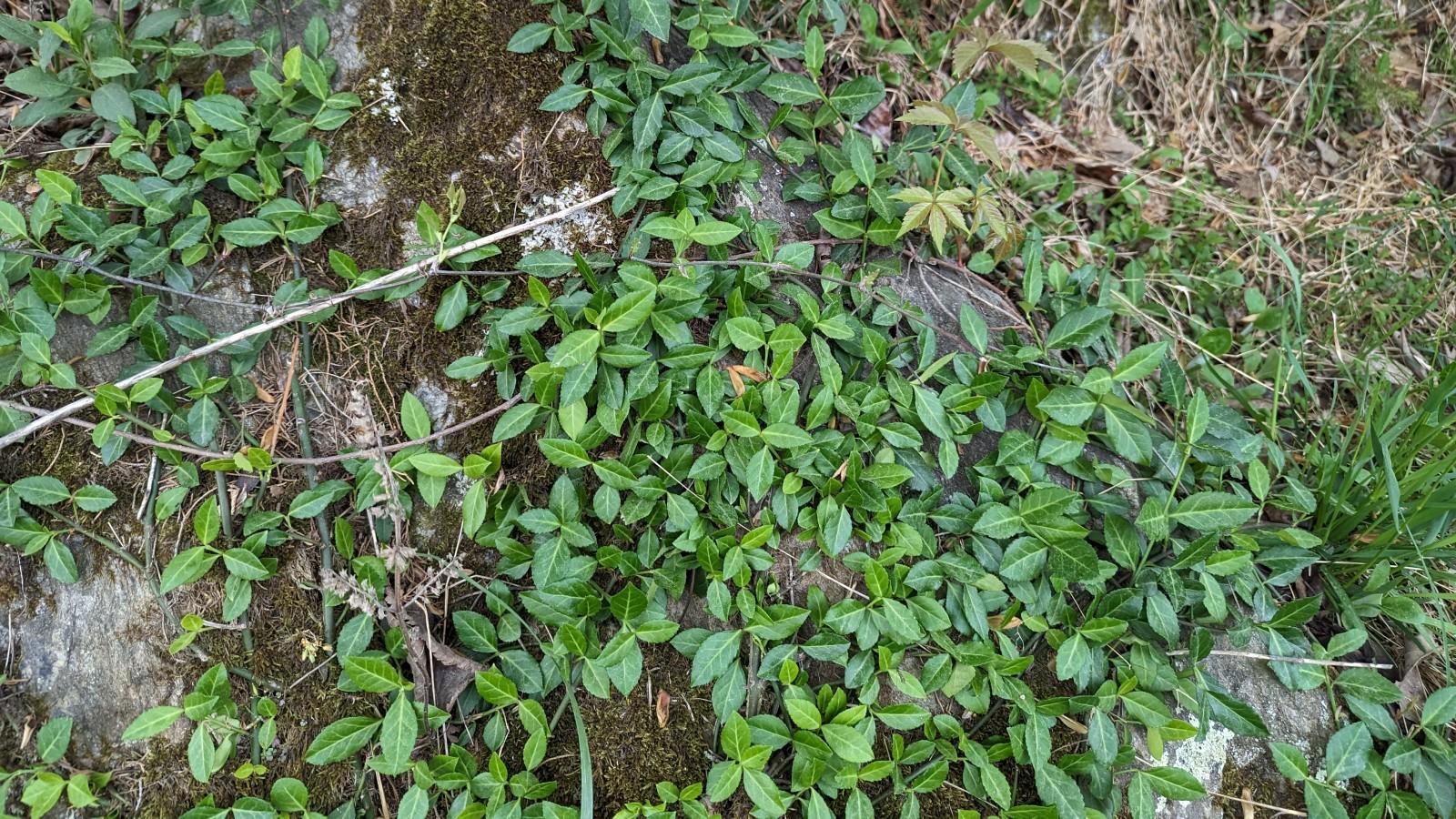
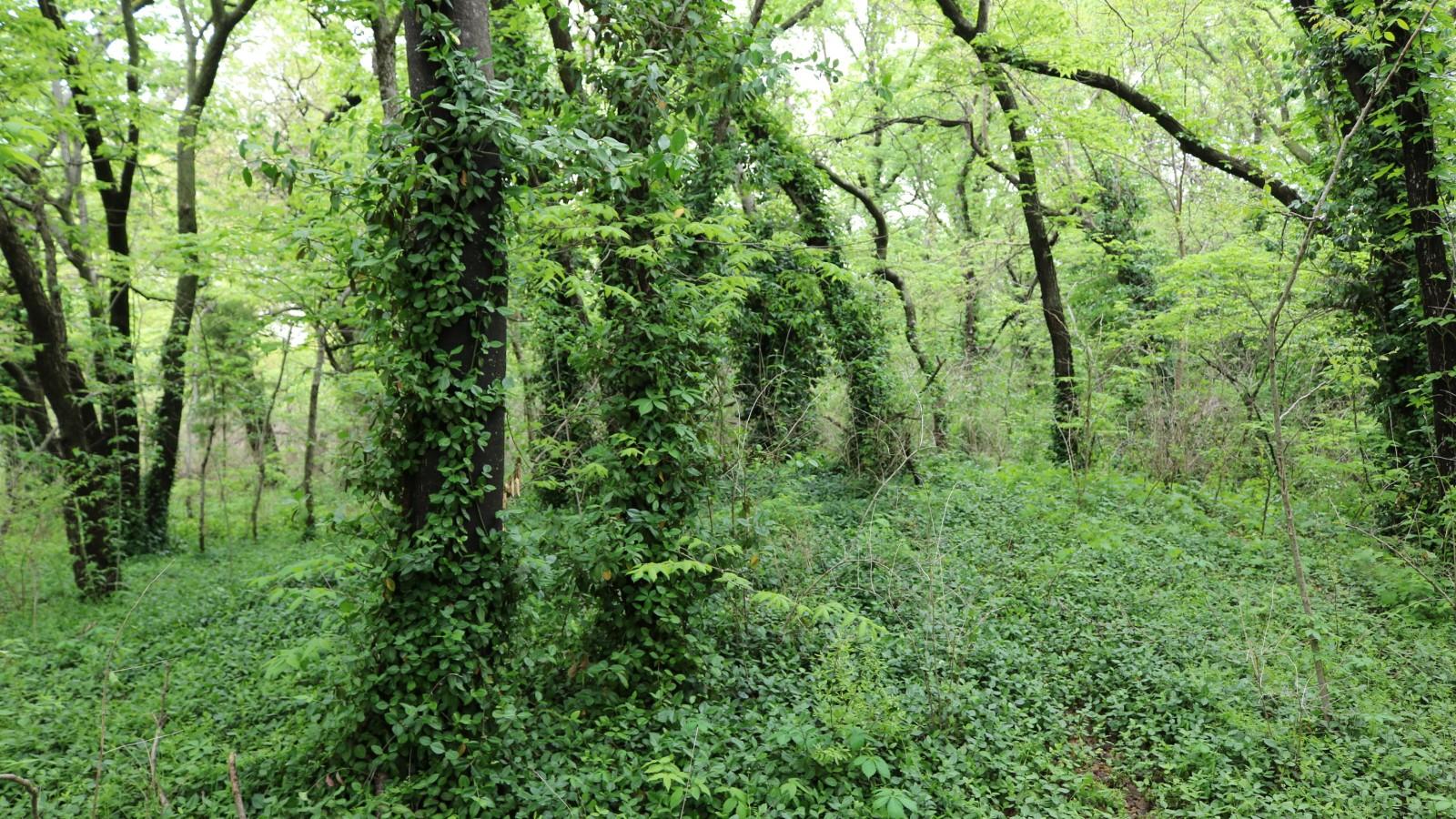
Winter creeper (Euonymus fortunei) growing as a groundcover on the forest floor.
Photo: Miri Talabac, University of Maryland Extension
Updated: April 28, 2026
Winter creeper euonymus, also called wintercreeper (Euonymus fortunei), is an evergreen shrub or vine native to Eastern Asia. It was introduced to the U.S. in the early 1900s for use as an ornamental groundcover. Several cultivars exist with a range of leaf forms, including miniature, lance-shaped, and variegated. Variegated cultivars can have yellow or creamy-white leaf margins, leaf centers, or a marbled color pattern most prominent on young leaves. In winter, the leaves may blush plum-red on some varieties.
Physical features of winter creeper
Winter creeper is a clinging vine; when it doesn't have a support to climb, it grows as a groundcover or small shrub. Instead of wrapping stems or tendrils around a support, the plant adheres to its support with root-like holdfasts (aerial rootlets) on the stems, similar to English ivy. Winter creeper can cling to tree bark, brick, stone, and other textured surfaces.
As stems start to climb, they cling tightly to the support, but as the vine matures, additional growth branches outwards several feet from the support. This gives trees covered in mature winter creeper a bushy appearance. At this point, the vine is mature enough to flower and fruit, features not observed when immature stems are creeping over the ground. Flowers open mid- to late summer, and fruits ripen mid- to late autumn.
When growing as a shrub and not climbing, winter creeper might be confused for other widely-planted non-native euonymus: Japanese euonymus (Euonymus japonicus) and spreading euonymus (Euonymus kiautschovicus, particularly the ubiquitous cultivar 'Manhattan,' which is neither a vine or groundcover). Japanese and Manhattan euonymus have more upright stems, and grow to a taller size without needing a support (since they do not climb).
Growth rate and habit: moderate to rapid growth rate (one or more feet per year); clinging vine, sprawling shrub, or low groundcover
Typical mature size: greatly dependent on the height and width of its support, though climbing stems can easily reach 40 to 70 feet if scaling a tall tree; while growing as a groundcover, under 1 foot tall; while growing as a shrub, often 2 to 4 feet tall and 3 to 5 feet wide
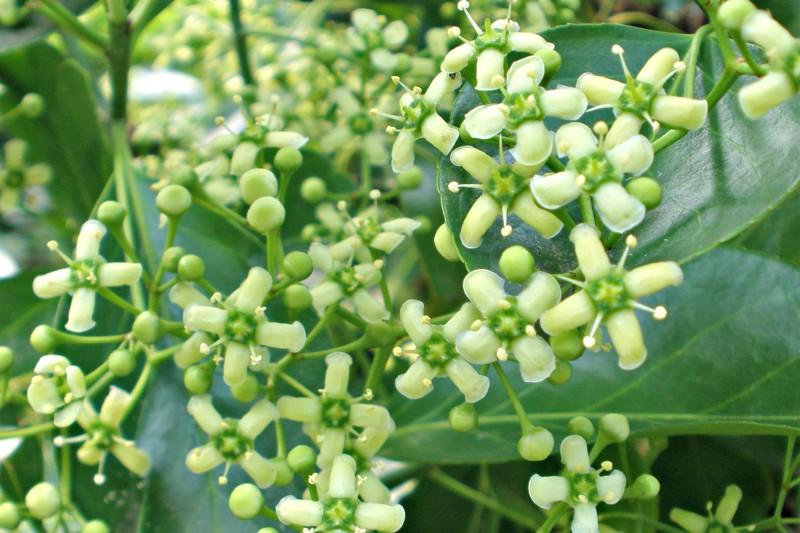
Blooms: clusters of small, light green, 4-petaled flowers
Leaves: simple (not divided into leaflets) with small subtle or rounded serrations along the margins; oval in shape; main veins usually paler green; opposite arrangement on the stems; glossy/waxy and leathery-textured
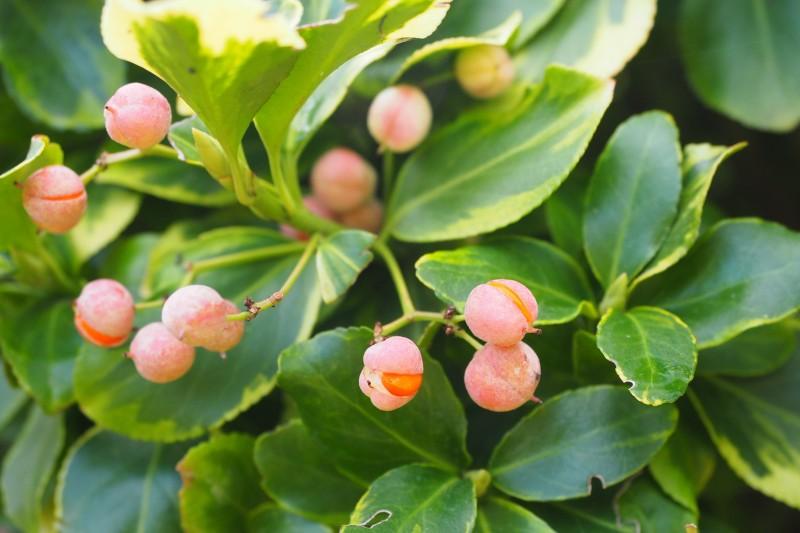
Fruit: stalked pinkish capsules that split open to expose reddish-orange berries
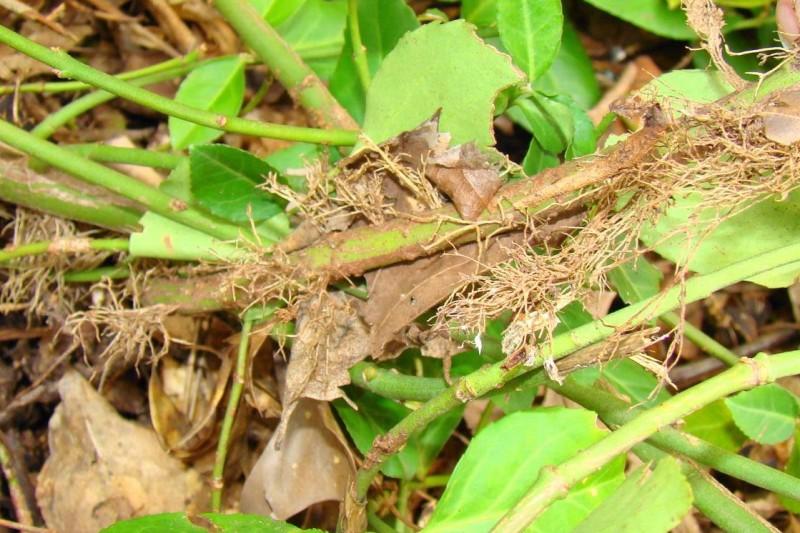
Stems: aerial rootlet growth can give thicker, mature stems a shaggy appearance
Clusters of pale green, 4-petaled flowers on mature winter creeper branches. Photo: Ansel Oommen, Bugwood.org
Pale pink seed capsules split open to reveal orange berries on a yellow-variegated winter creeper cultivar. Photo licensed by Adobe Stock
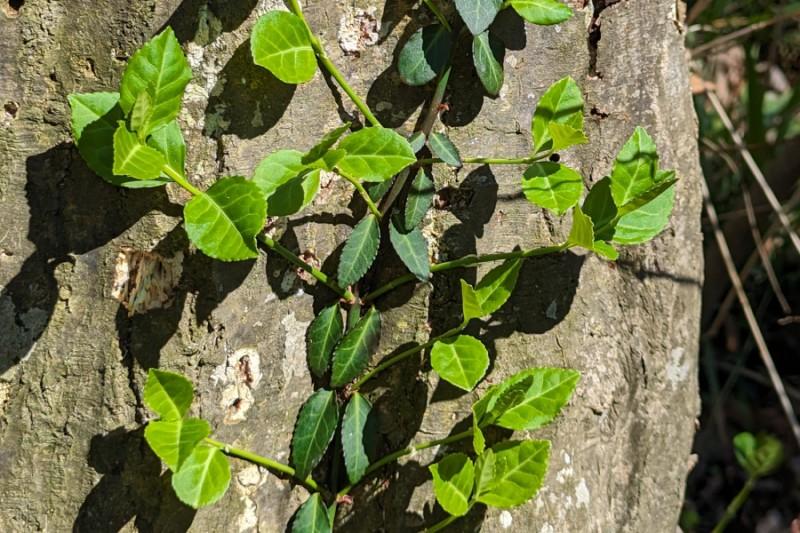
Bright green new growth on a climbing winter creeper stem. Photo: Miri Talabac, University of Maryland Extension
Aerial (adventitious) rootlets growing along a winter creeper stem, which adhere it to surfaces like tree trunks. Photo: Rebekah D. Wallace, University of Georgia, Bugwood.org
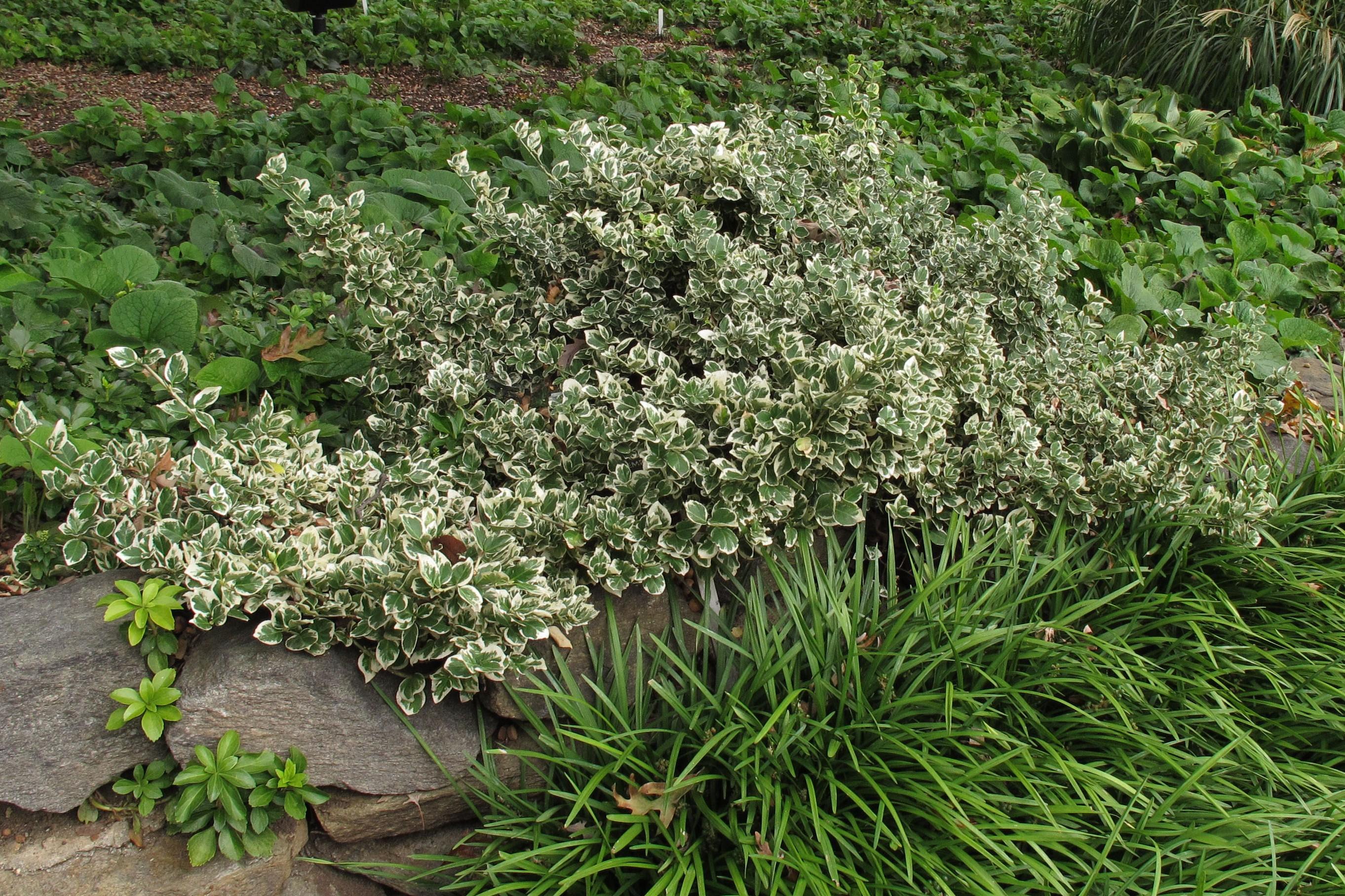
Cultivated winter creeper, like this 'Ivory Jade' variety, often grows like a sprawling shrub. Primarily horizontal branching gives the plant a wider than tall growth habit. Photo: Miri Talabac, University of Maryland Extension
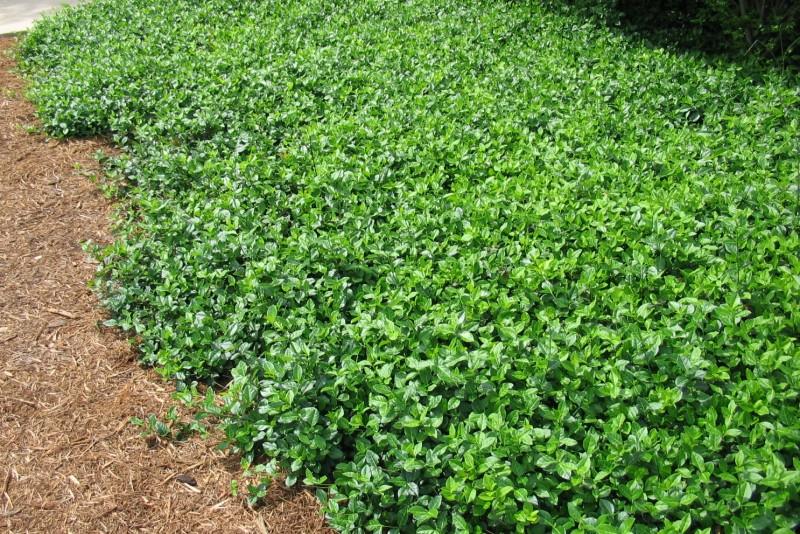
Dense carpet of growth on winter creeper cultivar 'Coloratus' being grown in a sunny site. Photo: Miri Talabac, University of Maryland Extension
Environmental impacts of winter creeper
Winter creeper is an invasive species and spreads into natural areas by seed and vegetative runners (stems creeping over the ground). Birds and mammals eat the berries produced by mature plants and disperse the seeds.
Rampant winter creeper growth in woodlands covers tree trunks and smothers forest floor wildflowers. Photo: Ryan Armbrust, Kansas Forest Service, Bugwood.org
Dense foliage blocks sunlight and restricts the growth of other plants when winter creeper grows as a groundcover. Vine weight can make trees more vulnerable to falling or breakage due to wind, snow, and ice accumulation.
Conditions that favor growth
Winter creeper is very adaptable and can grow in a variety of habitats, particularly forest clearings, fields, and the forest floor. In cultivation, winter creeper grows best in full sun or part shade, but it is also very tolerant of heavy shade. Poor soils in a range of pH levels are well-tolerated, though moist soil is preferred.
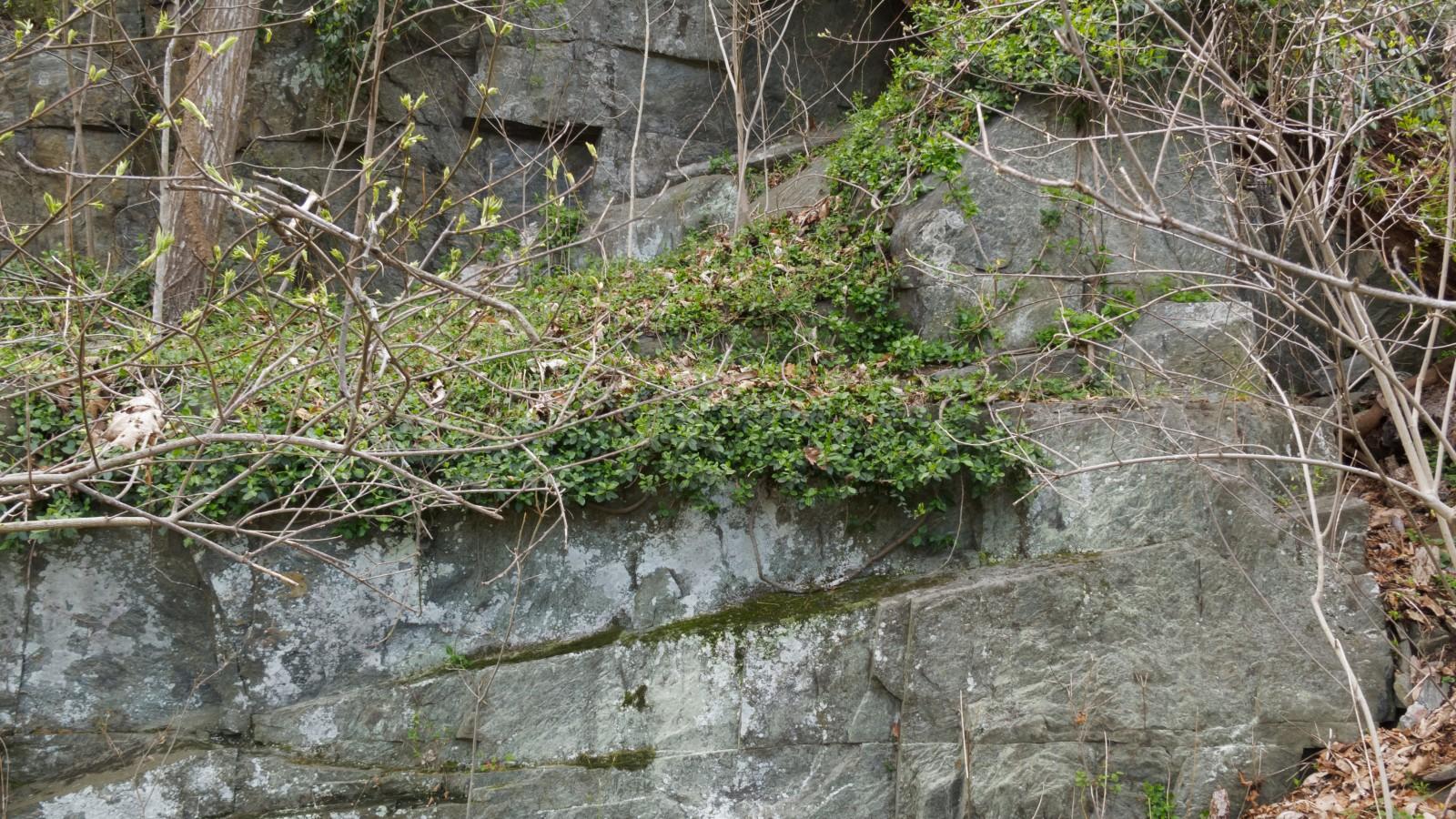
Dense winter creeper growth smothers rock ledges in open forest habitat. Native plants favoring such sites, like wild columbine, moss phlox, and alumroot, cannot compete. Photo: Miri Talabac, University of Maryland Extension
Native plant look-alike
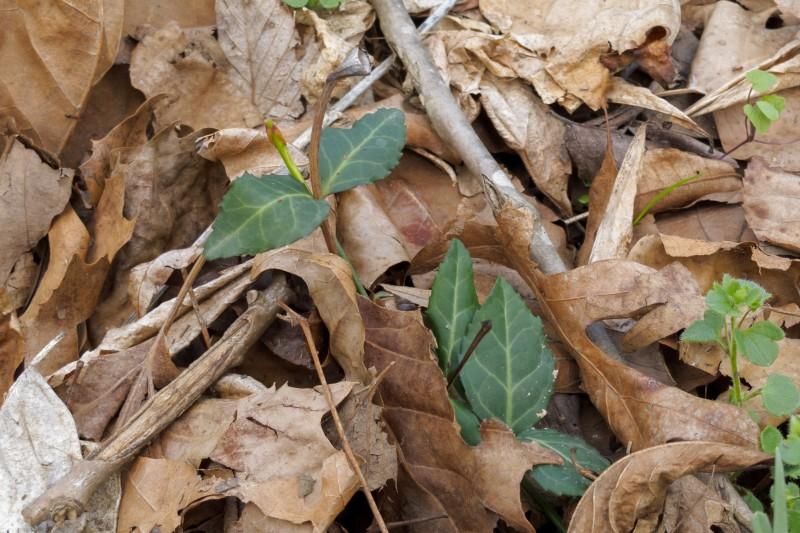
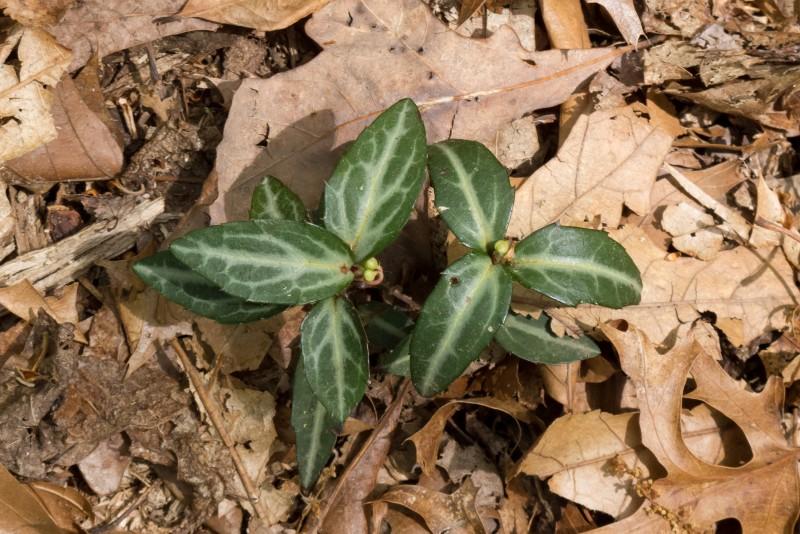
Spotted wintergreen (Chimaphila maculata) is a native evergreen perennial in the blueberry family that grows on the forest floor, especially in acidic soils favored by its relatives like mountain-laurel (Kalmia latifolia) and huckleberry (Gaylussacia species). Winter creeper growth emerging from underneath a leaf litter layer as it spreads can look similar to spotted wintergreen. Close examination of their features will distinguish the two species.
Leaf veins: While the leaf veins on both species are prominent, the main central leaf vein of spotted wintergreen is more silvery in color, creating a starker contrast with the darker matte green color of the rest of the leaf.
Leaf shape: Spotted wintergreen leaves are usually more lance-shaped than winter creeper leaves, with a more pronounced taper to the tip of the leaf. (Due to its strongly tapered leaf, winter creeper cultivar 'Wolong Ghost' bears the closest resemblance to spotted wintergreen leaves in shape. However, this cultivar is relatively rare, and the following two features will still distinguish them.)
Flowers/seeds: Spotted wintergreen grows only a few inches tall, and when the plant is mature, will produce nodding white flowers in spring that develop into seed capsules. These flower/seed stalks will be present (at various stages of development) for much of the year. Winter creeper does not flower or produce seeds on the juvenile stems spreading across the forest floor.
Growth habit: Spotted wintergreen is a small plant, emerging from the leaf litter as a single stem or cluster of stems along a very slowly spreading rhizome. Winter creeper is an aggressively spreading groundcover, whose stems run along the soil surface until they find a structure to climb.
Winter creeper stems emerging above a forest floor leaf litter layer. Photo: Miri Talabac, University of Maryland Extension
Spotted wintergreen growing just above the forest floor leaf litter layer. Photo: Miri Talabac, University of Maryland Extension
Alternatives to winter creeper
Do not plant winter creeper, and replace existing specimens when possible. The Maryland Department of Agriculture (MDA) regulates the sale of invasive plants, and burning bush is a prohibited species under Maryland law. Refer to the MDA's Maryland Prohibited Invasive Plant Law and Regulations resource page for more information and a list of all other regulated species.
Burrell, C. Colston. 2007. Native Alternatives to Invasive Plants. Brooklyn Botanic Garden.
Kaufman, Sylvan Ramsey & Wallace Kaufman. 2007. Invasive Plants: Guide to Identification and the Impacts and Control of Common North American Species.
Swearingen J., K. Reshetiloff, B. Slattery, and S. Zwicker. 2002. Plant Invaders of Mid-Atlantic Natural Areas. National Park Service and U.S. Fish & Wildlife Service, Washington, DC.