

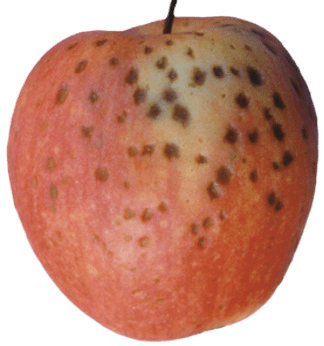
Figure 1. Honeycrisp apple affected by lenticel breakdown on the skin. Photo: Dr. Randy Beaudry, Good Fruit Grower.
Understanding and Preventing Lenticel Breakdown in Apples: from Tree to Storage
By Isabella Lora B.S. Student in Physiology & Neurobiology & Macarena Farcuh, Ph.D. Assistant Professor and Extension Specialist University of Maryland, College Park Email: mfarcuh@umd.edu
What is lenticel breakdown in Apple Fruits and what causes it?
Physiological disorders in apples are abnormalities that occur in the tissue during the pre-harvest and post-harvest periods, not caused by pests or pathogens. These physiological abnormalities drastically lower growth profitability because they make the fruit unmarketable.
Lenticel breakdown is a physiological disorder affecting apple skin around the lenticels (small lens-shaped natural openings in the cuticle of apples). It is the result of microcracks and abrasions that develop on the skin layer of apples preharvest. Lenticels appear as slightly sunken blotches that result in underlying tissue drying out and becoming brown and spongy (Fig. 1). Symptoms of lenticel breakdown appear as dark brown/black pits concentrated in multiple areas on the skin (Fig 1 and Fig. 2) that may increase in depth and diameter during postharvest storage and might even combine. Lenticel breakdown is mainly seen on the side of the apple that is exposed to sunlight rather than the shaded side. Direct exposure to sunlight weakens the lenticels and increases their susceptibility to injury and breakdown. Generally, this disorder will develop after a few days of storage, as limited reports are indicating its incidence before packing.
What factors cause or contribute to apple lenticel breakdown development?
Genetics – Cultivar susceptibility: Because of the sensitivity and structure of their lenticels, some apple cultivars are genetically susceptible to lenticel breakdown, which makes them more vulnerable to the incidence of the disorder. Lenticel breakdown is typically seen in Honeycrisp (Fig. 1), Gala (Fig. 2), Golden Delicious, Fuji, Braeburn, and Ambrosia. For example, in the case of Honeycrisp, its large lenticels and thin skin, make it more prone to lenticel breakdown, while Gala apples are known to have delicate skin and sensitivity to environmental factors, increasing their risk of developing the disorder.
Fruit Maturity at Harvest: Delaying apple harvests can be tempting, especially to help improve fruit color and size for increased market appeal. However, this approach can negatively impact fruit quality and increase physiological disorder development. Because the natural ripening hormone ethylene will increase as fruit ripens on the tree, the fruit will become softer and more vulnerable to lenticel breakdown while being stored. This softness will increase the likelihood of breakdown by making the skin more susceptible to microcracks around the lenticels in environments with varying humidity. Delaying harvesting may cause the apple's cell walls to lose some of its structural integrity, leaving the skin more vulnerable to bruising and abrasions during handling and transportation.
Pre-harvest management factors: Regarding nutrition, it is important to consider that calcium plays a crucial role in stabilizing the cell wall of apples, which directly affects the integrity of the fruit's tissue. Microcracks and abrasions caused by irregular water supply, high humidity, and low wind (poor air circulation) can increase the incidence of lenticel breakdown. Furthermore, unbalanced nutrition with high potassium and magnesium to calcium (K+Mg):Ca ratios and high nitrogen to calcium (N:Ca) ratios can also increase susceptibility. Regarding fruit size, it has been reported that smaller fruits are generally at a lower risk and larger fruits are more susceptible. It is important to consider that excessive pruning can result in uneven fruit exposure and variations in the moisture content of the apple's surface. These variations may cause stress to the fruit, harming the lenticels and increasing the risk of lenticel breakdown in apples. Inadequate pruning can potentially worsen the problem by reducing ventilation and raising the humidity level around the fruit.
Environmental Factors: Rapid temperature changes can have a big effect on apple growth and can raise the possibility of lenticel breakdown, especially in hot weather. Temperature increases above 77°F (25°C) can put physiological stress on apple trees. This can cause apples to mature too quickly and reduce the quality of the fruit increasing the possibility of microcracks and thus of the occurrence of the disorder. Uneven water retention in apples can result from variations in water supply, which can be caused by irregular irrigation techniques or sudden downpours, as it generally occurs during the hot and humid summers of the Mid-Atlantic. On the exterior of the fruit, these quick shifts in water supply cause internal pressure that results in microcracks. Additionally, low wind conditions combined with high humidity levels might make this problem worse as water will tend to build up on the skin of the apple due to improper evaporation caused by a lack of air circulation. The possibility of tissue stress and abrasion development is increased by this extra moisture in conjunction with an inconsistent water supply.
Post-Harvest Management Factors: Fruit ripening can be accelerated, and fruit quality may eventually be compromised by delaying cold storage, thus increasing the development of lenticel breakdown. Additionally, apples can become stressed during postharvest with sudden temperature changes. Thermal shock can occur when cold apples are packed alongside warm ones or if they’re submerged in hot water. This can weaken the skin and increase the possibility of microcracking and lenticel breakdown. Furthermore, fluctuations in humidity during storage can also increase the development of the disorder, thus these should be monitored constantly. Ideally, a humidity of 90-95% should be maintained. Adequate ventilation is of uttermost importance to avoid ethylene build-up during storage and maintain adequate carbon dioxide and oxygen levels. Research suggests that carbon dioxide levels should be kept below 1% to reduce lenticel damage, and oxygen should be maintained around 2-3% to promote normal respiration and avoid anaerobic (limited oxygen) conditions that may increase susceptibility to this disorder. By keeping these gasses within ideal ranges, adequate ventilation will lower physiological stress and maintain fruit integrity. Poor handling, temperature changes, or months of storage can worsen this problem and cause more obvious abnormalities and more breakdown of tissue.
What are the practices that can be implemented to reduce apple lenticel breakdown development?
Ensuring balanced tree vigor through pruning and thinning will minimize the stress on the fruit and help in reducing lenticel damage. Balancing nutrition and maintaining an adequate crop load as well as a regular water supply will also decrease disorder development. Avoiding delayed harvests as well as avoiding delaying cooling in storage, can help guarantee that the fruit maintains its quality, increasing its marketability and reducing the likelihood of post-harvest problems. Ethylene management, through the use of SmartFresh (1-methycyclopropene, Agrofresh, US), which blocks ethylene perception, can delay the ripening process, lower ethylene production, and decrease the incidence of lenticel breakdown. Utilizing controlled atmosphere (CA) storage will help minimize respiration and ethylene formation by maintaining high carbon dioxide levels (1-3%) and low oxygen levels (1-2%), to prevent lenticel breakdown. Maintaining consistent temperature and humidity levels in storage is crucial for reducing moisture-related stress, which can worsen lenticel breakdown. Enough ventilation keeps the fruit cold throughout and prevents hotspots, which hastens aging. Finally, be mindful of the genetic background of the cultivar you are working with as they vary in disorder susceptibility.
This article is featured in the Vegetable and Fruit News, Vol. 16, Issue 3.
Vegetable & Fruit News is a research-based publication for the commercial vegetable and fruit industry available electronically from April through October. Published by the University of Maryland Extension Agriculture and Food Systems team.
Subscribe