
A slip-n-slime slug soiree or is it a bean leaf beetle bash? Identifying pest activity in seedling soybeans
Arthur Young and Kelly Hamby, Department of Entomology, University of Maryland
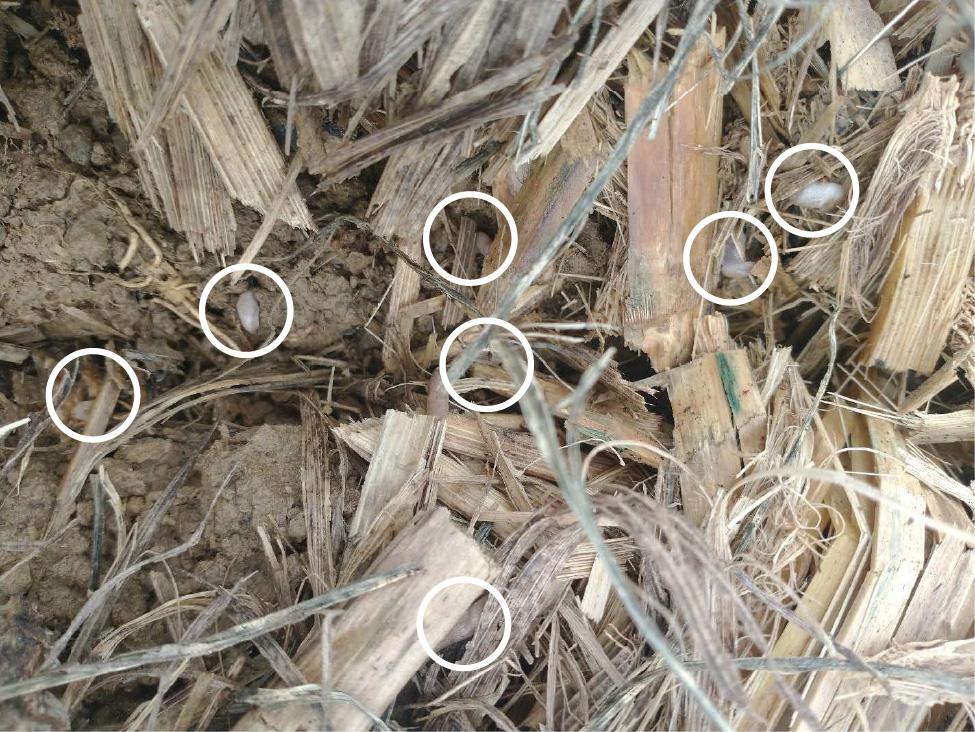
After the recent storms we have seen a drastic uptick in one slimy pest, slugs (Fig 1). The relative dryness of early spring gave some hope that slugs would not make their unwelcome appearance this year, but as the weather would have it, they were out in full force for at least a week in many parts of the state. It is unclear what will happen as the weather dries out again, so it is worth keeping an eye on your fields.
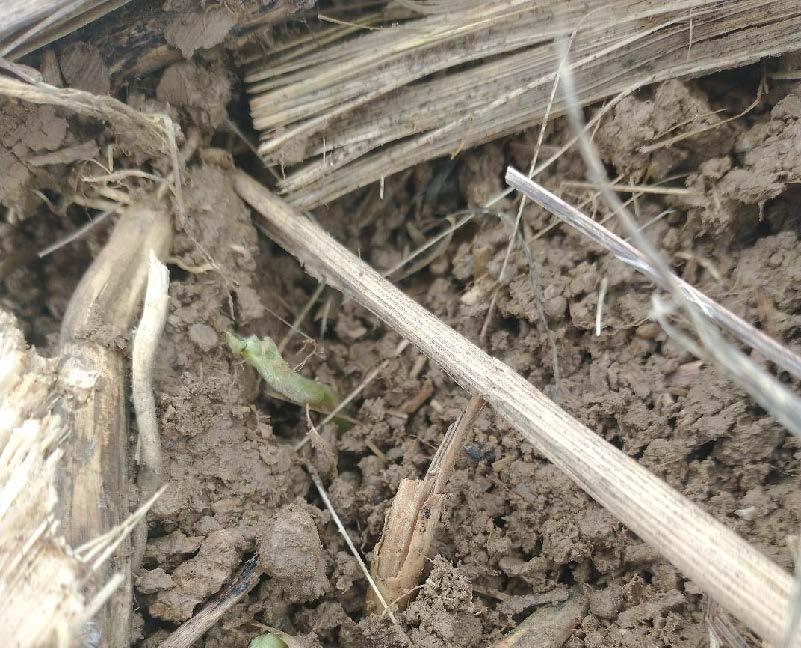
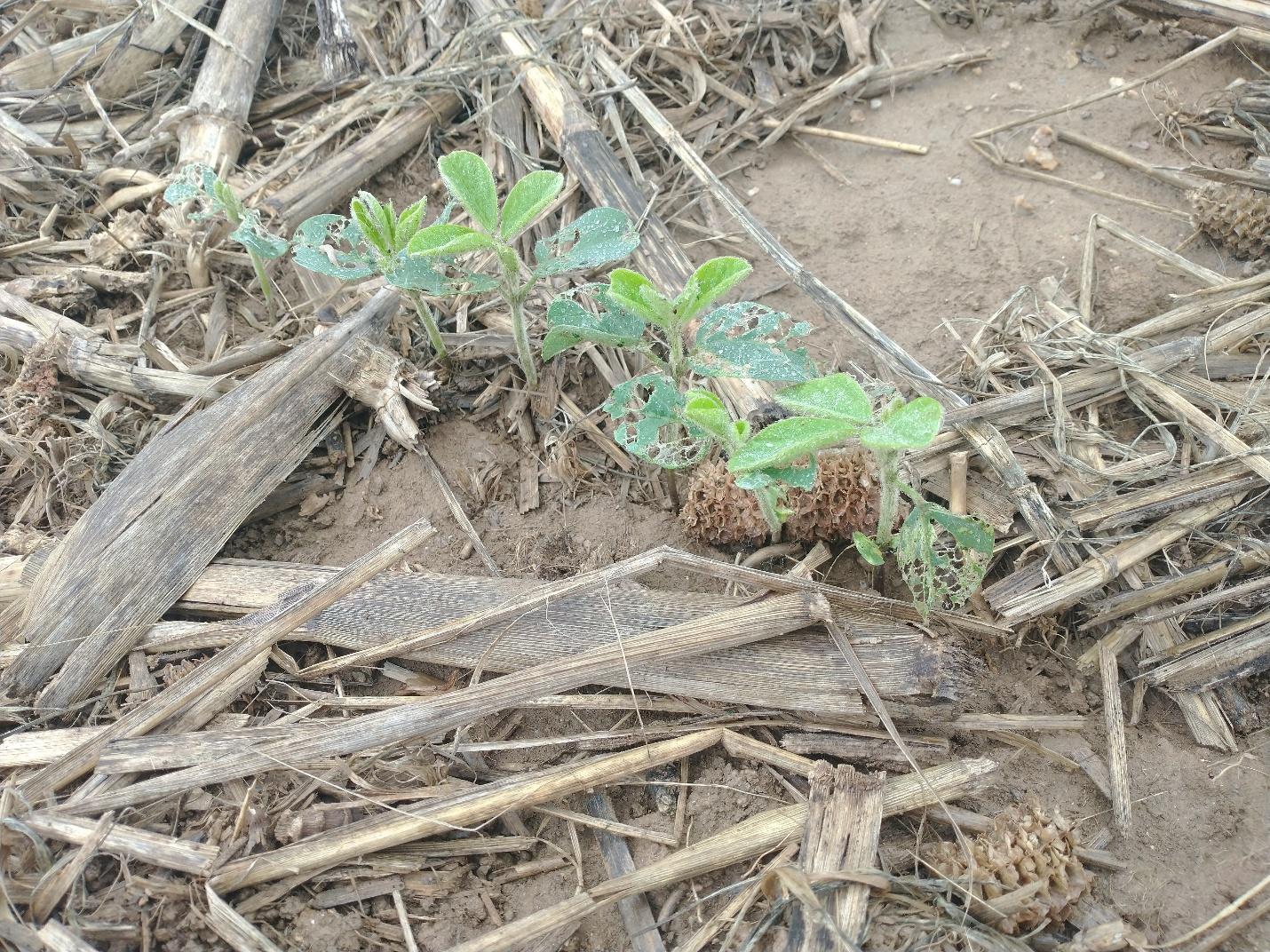
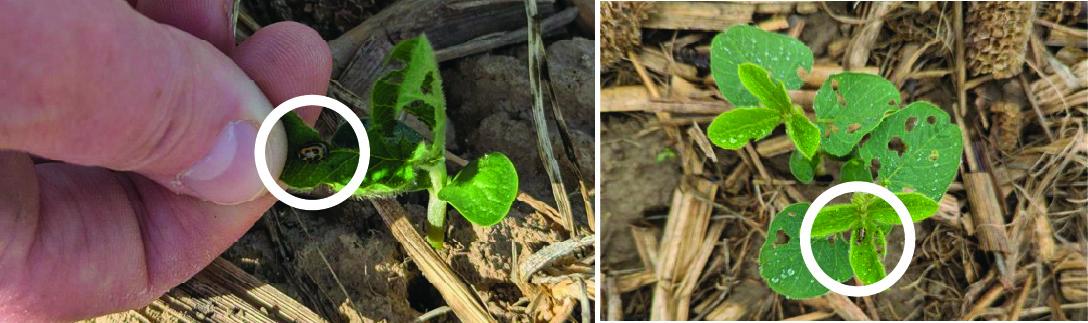
Slugs are a sporadic pest that love no-till fields and rely on periods of rainfall to emerge from the soil and damage grain crops. They are particularly concerning in soybean fields, as their ability to kill emerging seedlings may require replanting large sections or entire fields (see below for information on replant decisions). Plants that had good sized unifoliate leaflets or were further along during the rainfall should grow out of the damage (Fig 3), while smaller plants and ungerminated seedlings with significant slug damage likely will not survive (Fig 2). Slug damage shows a lacy appearance on leaves, occurs randomly on the leaflets, and typically results in more severe cotyledon damage in comparison to bean leaf beetles (Fig 4). Slime trails are characteristic evidence of slug feeding and are best viewed in the early morning. Especially important to the management of slugs is closing of the seed slot, as slugs naturally try to shelter deeper in the soil, and an open seed slot will lead them directly to soybean seeds.
There are no current scouting thresholds for slugs, but the University of Delaware rule of thumb is an average of 1-3 slugs per square foot is a population to watch carefully. Scouting at night, especially after rain will easily reveal these critters hiding under residue if they are present. Shelter traps can also be installed and checked early in the morning (see fact sheet below for more information). Management options are limited, but slug bait pellets can be effective in providing crop protection during establishment if applied when slugs are active. Row cleaners can help combat slug activity, and practices that allow for rapid seed germination will help soybean plants tolerate slug feeding.
For more information on slugs and slug monitoring:
Igwe et al. 2022. Managing Slugs in Field Crops Using IPM Principles. FS-2022-0629, https://extension.umd.edu/resource/managing-slugs-field-crops-using-ipm-principles-fs-2022-0629/
Where slug damage was severe, a replant decision may be needed. For more information on soybean replant decisions:
Glenn, N. 2025. Soybean replant decisions: weighing the economics before turning the planter around, Agronomy News Volume 16, Issue 3: June 2025, https://extension.umd.edu/resource/soybean-replant-decisions-weighing-economics-turning-planter-around/
Bean leaf beetle damage to seedlings can include pitting of the cotyledon but more characteristic signs include rounded holes in the leaves between the veins (Fig 4). Although bean leaf beetles tend to drop off plants when startled, adult beetles can usually be found on the leaves of seedlings while scouting. Seedlings should be visually sampled for beetles and damage in multiple (the more the better, we recommend around 10) locations per field. Bean leaf beetle damage rarely reaches economic threshold in our area, but a seedling treatment should be considered if seedling defoliation reaches 40% of the plant damaged on average with an average of 2-3 beetles per plant present. If your seed was treated with a neonicotinoid seed treatment, additional treatment is unnecessary.
For more information on bean leaf beetles:
Reisig, D. 2020. Bean leaf beetle in soybeans, https://content.ces.ncsu.edu/bean-leaf-beetle-in-soybean
Obermeyer, J. 2019. Early emerged, and isolated soybean, should be checked for bean leaf beetle damage, https://extension.entm.purdue.edu/newsletters/pestandcrop/article/early-emerged-and-isolated-soybean-should-be-checked-for-bean-leaf-beetle-damage/
This article appears in June 2026, Volume 17, Issue 3 of the Agronomy News.