
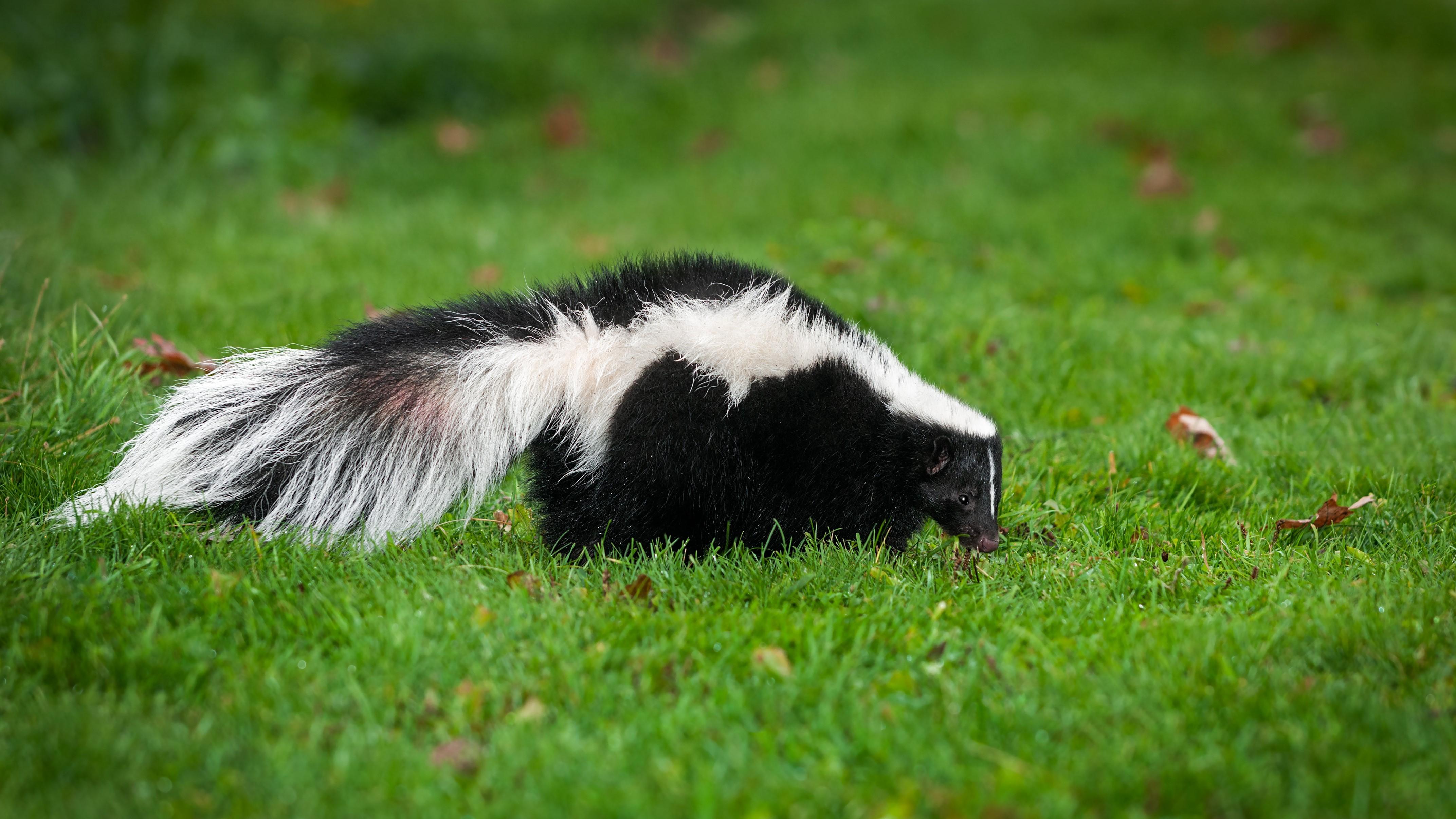
Skunks can grow to be about 30 inches long (tail included) and weigh about 8 pounds. Their natural habitat includes clearings, pastures, and along the edge of forests. They usually den (nest) under a hollow stump or log, but in suburban areas, they often live under porches, low decks, and sheds. A typical skunk home range is ½ to 2 square miles. However, during the breeding season (late February through late March), males are known to travel up to 5 miles per night in search of a mate.
Conflicts with skunks in home landscapes

Photo: Lou Vasvary, Rutgers University
- Skunks will eat almost anything, whether plant or animal, but insects are some of their favorite foods. In their search for grubs in lawns and gardens, they can cause some trouble by tearing up sod. They also dig cone-shaped holes 3 inches across and about 3 inches deep in search of grubs.
- Skunks are not a threat to landscape plants, but may become a nuisance when their digging and nesting activities are too close to houses.
- Skunks may burrow under porches or even live in garages and sheds.
- Garbage left outdoors in plastic bags will also be raided.
- The occasional release of their very strong scent, especially if threatened by cats or dogs, can be bothersome.
- Rabies is always a concern with skunks as they are common carriers of this dangerous disease. Abnormal behavior like aimless wandering, aggressiveness, uncoordinated movements, or exceptional tameness towards people should be treated cautiously as it can indicate a rabid skunk.
Skunk management
- In most cases, the occasional visit of skunks in the landscape can be tolerated and no control measures are needed.
- Permitting a skunk to live under a deck or porch is something most people won't tolerate. Discourage skunks by placing strong-smelling repellents under these places. Rags soaked with household ammonia may work. After the skunk has left, these areas should be permanently sealed.
- All outside food sources should be eliminated, including cat and dog food, bird feeders, exposed garbage cans, and compost piles.
Trapping and professional help
- Skunks may be caught in live traps set close to their den. Use fish-flavored cat food or bread with peanut butter for bait. Cover the trap with a heavy cloth to make the trap more comfortable to the skunk and to reduce the chances of it discharging its scent at you.
- The MD DNR encourages people that are experiencing problems with wildlife like skunks to call the nuisance wildlife hotline, or work with a licensed Wildlife Damage Control Operator when removal is necessary. Visit the DNR’s Wildlife Problems page for more information.
- The DNR can issue landowner permits for trapping wildlife. It also provides an online search tool to find individuals or companies who are licensed to handle wildlife complaints. Note that rabies vector species, which includes skunks, cannot be relocated if trapped. As per Maryland law, these particular animals must be released on-site after capture or euthanized. Refer to the Code of Maryland Regulations for Wildlife Damage Control Permits for more details.