
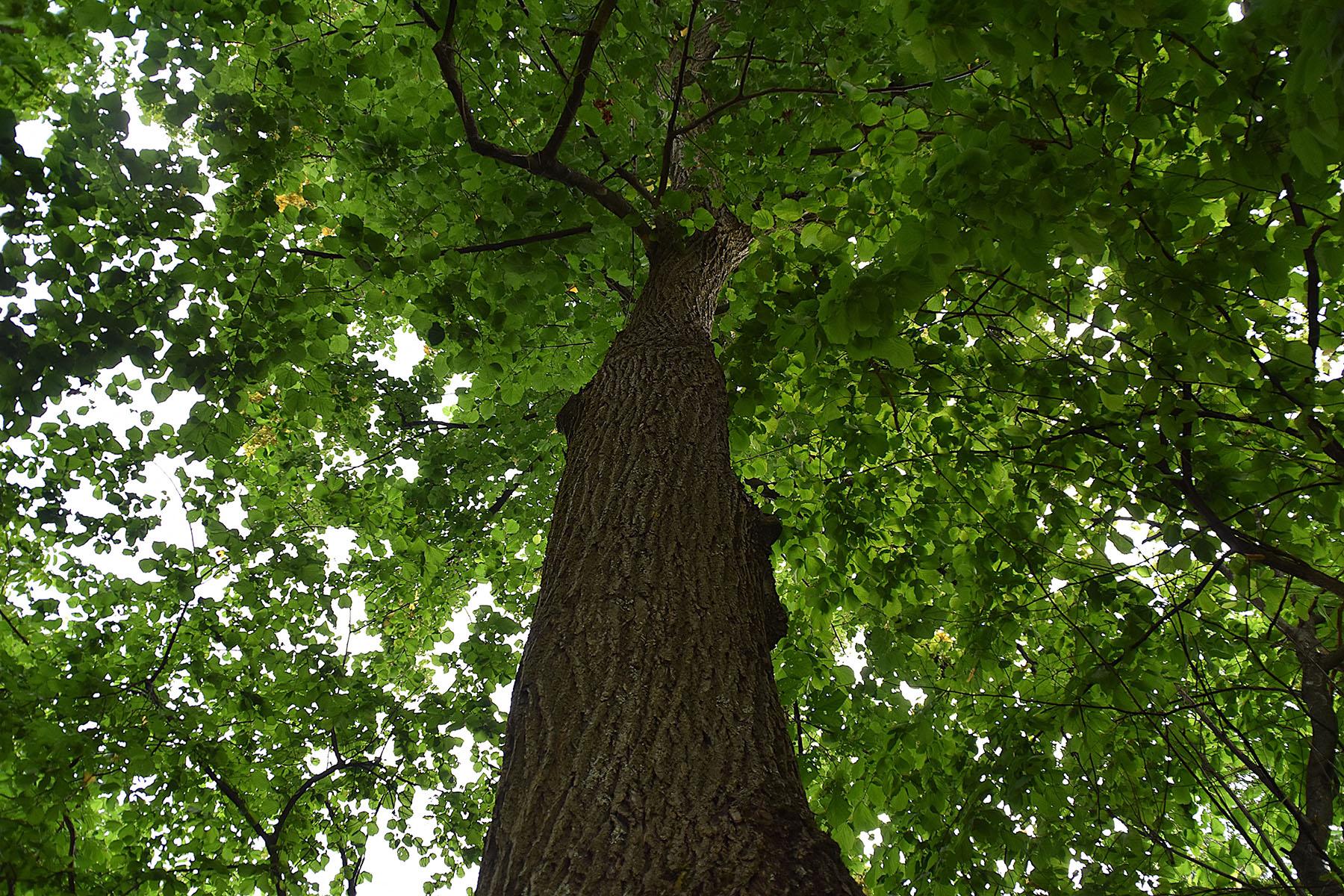
I passed our neighborhood basswood many times without giving it much thought, until the day the tree was undeniably humming. It was awe-inspiring to witness so many insects in one tree, their activity blending into a harmonious sound. Tilia americana, known as American basswood, basswood, or linden, is a versatile tree, making it ideal for many landscape applications.
Growing 60-80’ tall and 30-50’ wide, basswood is often planted as a specimen or shade tree in parks and residential areas. It’s also naturally occurring in Maryland’s mountain and Piedmont ecoregions. There it grows alongside maples, white ash, tulip poplar, and other woodland species that prefer less acidic to slightly basic soils [1].
Growth Requirements
A member of the Malvaceae (mallow) family, basswood is a fast-growing tree that performs best in full sun to partial shade, in average, medium moisture, well-drained loamy soils. However, it can adapt to clay, rocky, dry soils, and occasional drought once established.
Supports Pollinators Around the Clock
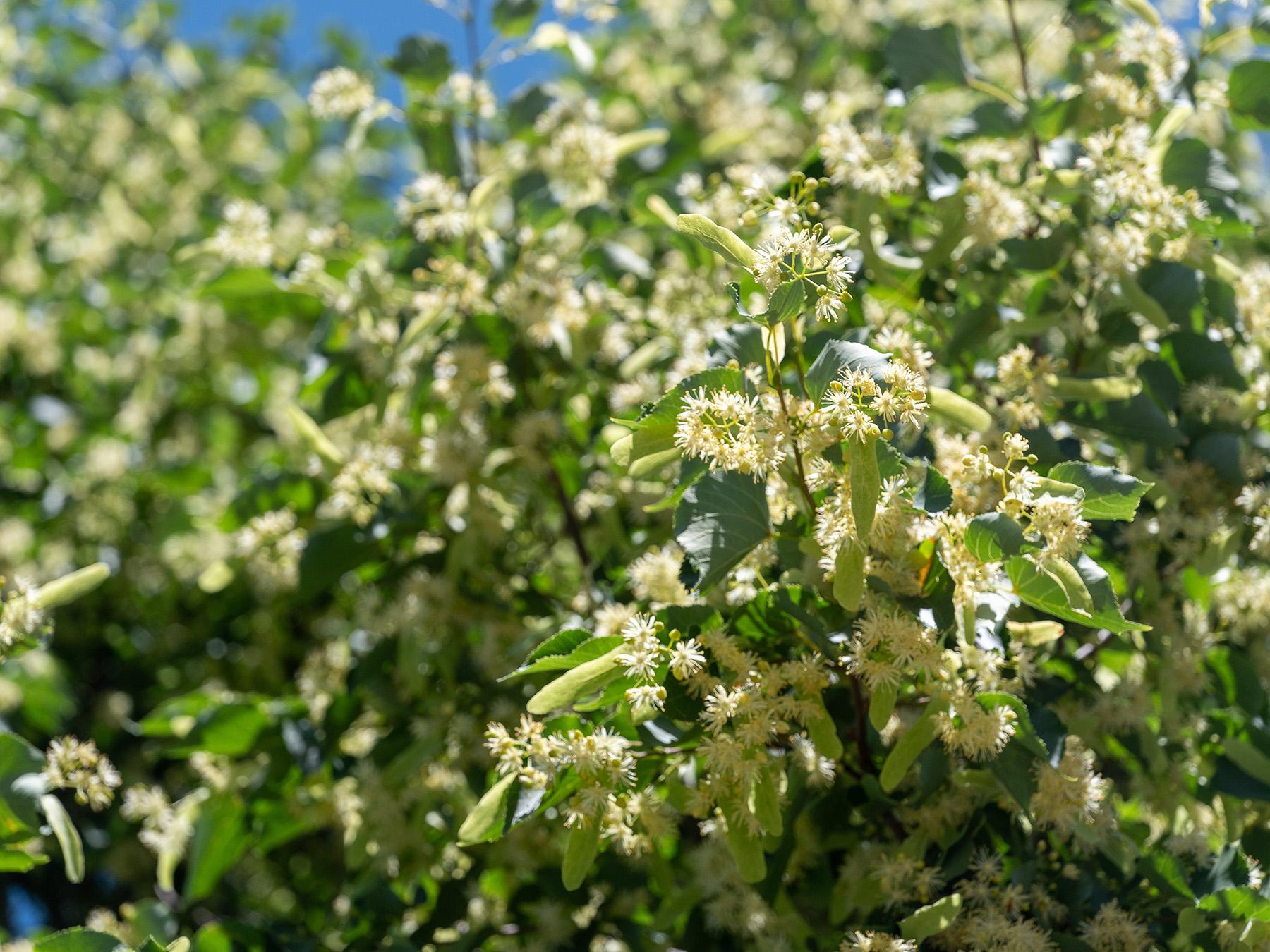
Basswood is known as a “bee tree” because its flowers produce copious nectar and pollen, which honey bees use to make basswood honey. Wild bees and other local insects are also drawn to the flowers' sweet fragrance. As evening approaches, the scent gets even stronger, attracting lightning bugs and a variety of nighttime pollinators. Basswood leaves serve as larval host plants for many butterfly and moth species.
Benefits Beyond Pollinators
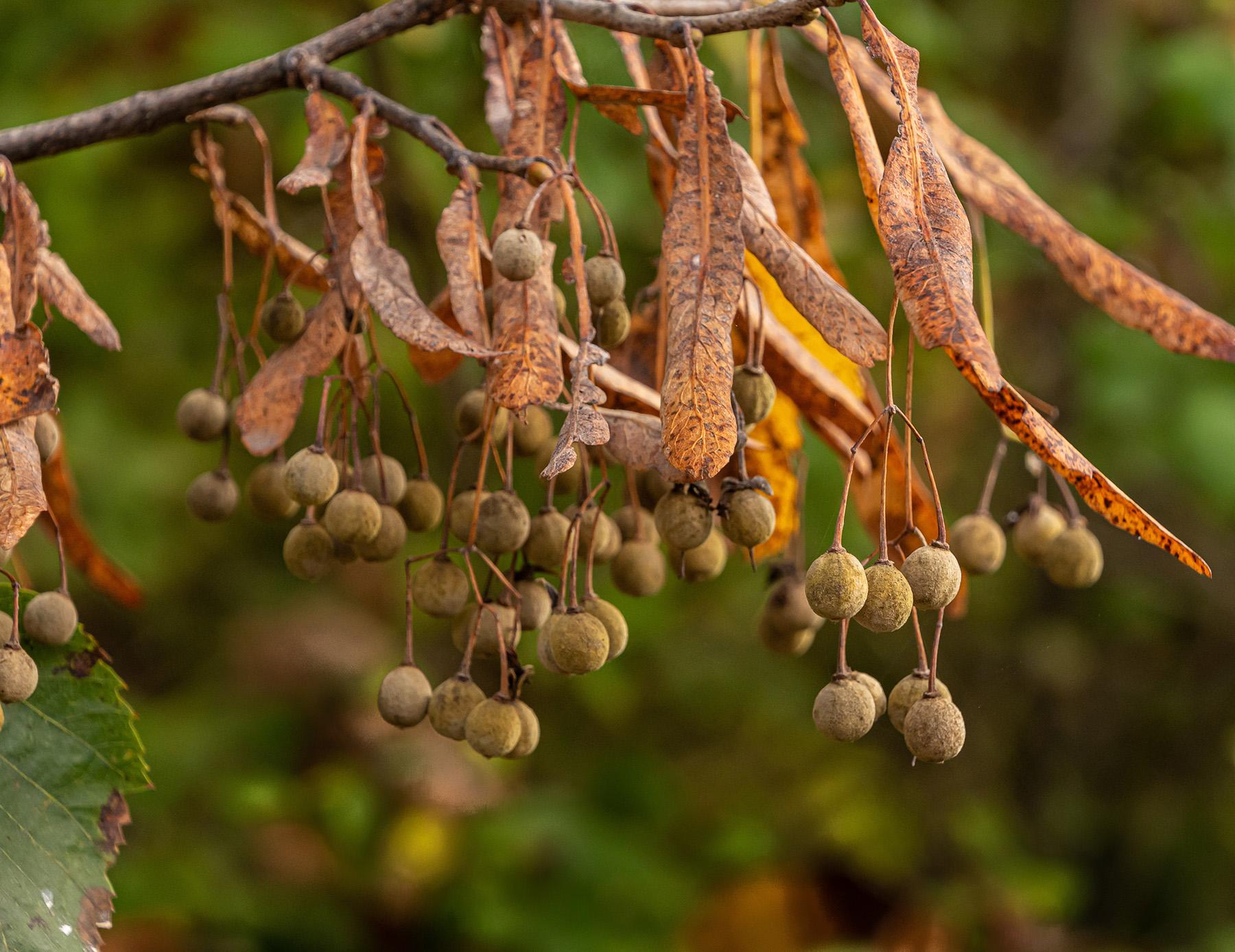
Birds and humans also benefit from basswood. The tree supports caterpillars that parent birds feed their fledglings, and its seeds can help fuel migration. As basswood trunks age, they often develop small cavities, serving as nesting sites for woodpeckers and other animals. And its light, workable wood is used to make crates, cabinets, and parts for musical instruments, while its fibrous inner bark is used for making rope and baskets [2].
Basswood is more than a beautiful shade tree. From supporting pollinators around the clock to providing food and habitat for birds and other wildlife, it plays an important role in healthy Mid-Atlantic landscapes. Tilia americana is a native tree well worth considering.
Resources
[1] Harrison, J. W. (2016). The Natural Communities of Maryland: 2016 Natural Community Classification Framework. Maryland Department of Natural Resources, Wildlife and Heritage Service, Natural Heritage Program, Annapolis, Maryland. Unpublished report, 4.
[2] Native Plant Trust. (n.d.). Tilia americana (American linden). Native Plant Trust GO BOTANY. Retrieved May 2, 2026, from https://gobotany.nativeplanttrust.org/species/tilia/americana/