
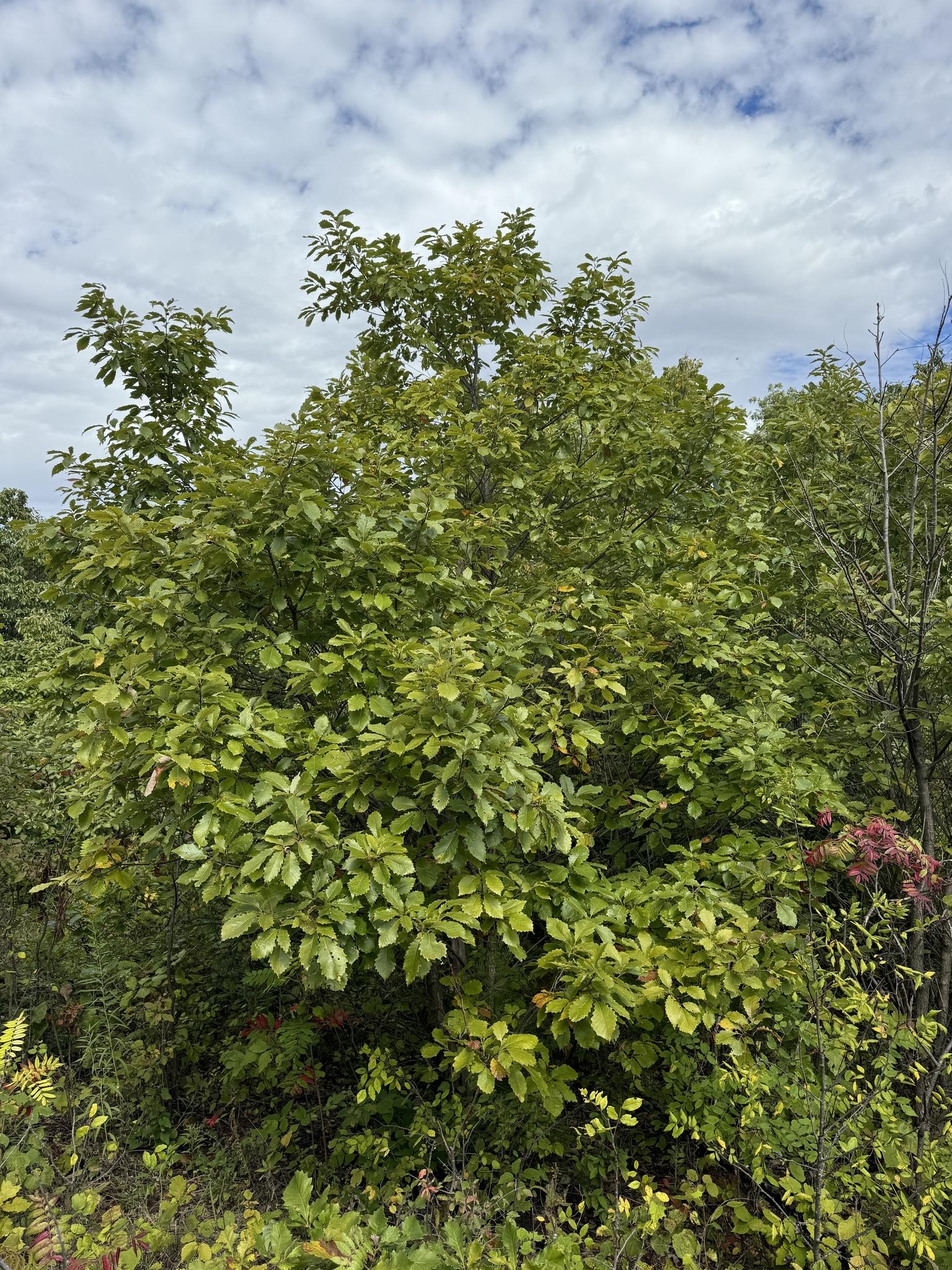
What adjectives come to mind when you think of oak trees? Maybe tall, lofty, or majestic? The dwarf chinquapin oak (Quercus prinoides), unlike its towering relatives, is a mere 3-12 feet tall (rarely up to 20 feet). It’s one of only two shrublike oaks native to Maryland, the other being bear oak (Quercus ilicifolia). Easily grown in a variety of environments, the dwarf chinquapin oak, while small, is ecologically mighty. Explore this small tree’s growing requirements, benefits to wildlife, and potential landscape applications to see if it’s a smart choice for your next gardening project.
Features and Growing Requirements of the Dwarf Chinquapin Oak
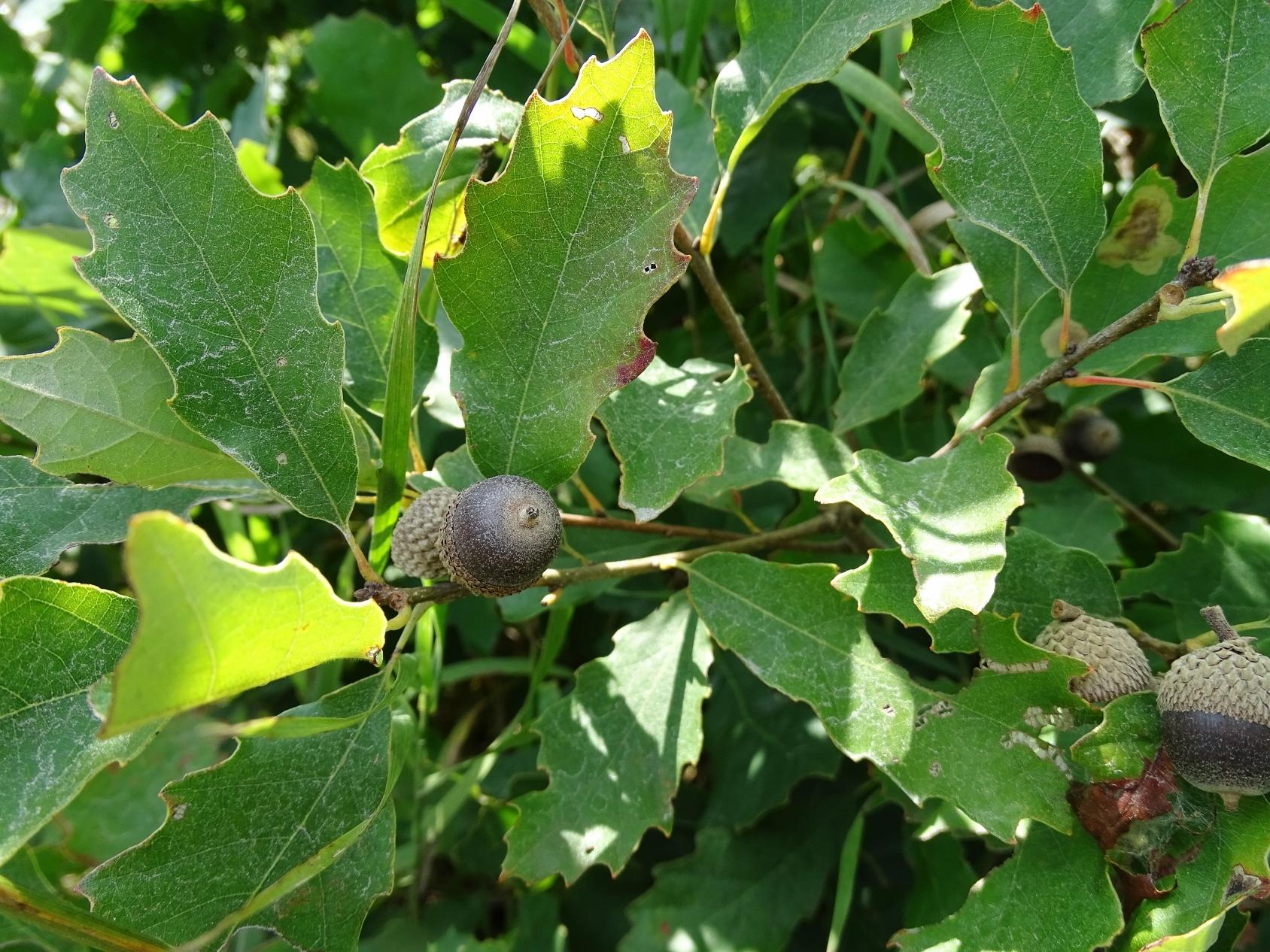
Quercus prinoides is an attractive, deciduous tree from the Beech (Fagaceae) family with an ovoid or irregular crown and a predominantly gray, scaly trunk up to 5 inches in diameter (1). Its leaves resemble those of the chestnut oak (Q. montana formerly Q. prinus), hence its scientific name Q. prinoides, which means resembling Q. prinus. As with all oaks, dwarf chinquapin oaks have both male and female flowers. In spring, yellow-green male flowers–1 to 2.5 inch long drooping catkins–appear alongside single or clusters of subtle greenish-red female flowers at branch tips (1). Come fall, dwarf chinquapin oak leaves turn a warm golden to orangey-brown, and wind-pollinated female flowers mature into sweet, highly sought after acorns.
Native to parts of the central and eastern US, as well as Canada, dwarf chinquapin oak is naturally occurring throughout Maryland’s three main ecoregions: Mountain, Piedmont, and Coastal Plain (2) . In the wild, it’s found growing on upland ridges, rocky bluffs, and woodland edges in full sun, dry conditions, and acidic, nutrient poor soil that contains sand and rock materials. This versatile shrub/tree can easily adapt to average garden soils, although it may grow taller than in the wild (1) .
A Small Tree with Huge Benefits to Wildlife
Oaks are ecological powerhouses. In the Mid-Atlantic they support over 550 faunal interactions, well above any other plant genera (3). They serve as host plants for the larvae of many specialist insect herbivores including butterflies, skippers, moths, and beetles. Oak leaves in the canopy as well as at the base of trees are necessary for many insects to complete their life cycle. As the foundation of food webs, insects–especially caterpillars–are crucial for the nestling success of most terrestrial songbirds. Thus, planting an oak in your yard, even a small one like the dwarf chinquapin oak, is likely to invite and sustain a diversity of pollinators and songbirds.
Dwarf chinquapin oak is also valued by wildlife for its nutritious acorns. And unlike most Quercus species that take a decade or longer to reach sexual maturity, this small oak starts producing fruit within as few as 3-5 years. Its annual crop of acorns are eaten by many songbirds, gamebirds, waterfowl, and mammals both small and large. Also, because of its compact shrubby form it provides refuge and nesting opportunities for prairie warblers and other songbirds (1) .
An Adaptable Tree with Many Landscape Applications
Dwarf chinquapin oaks can serve as a specimen tree for smaller gardens or be planted with other low growing vegetation. It is an excellent candidate for a biohedge, a diverse, densely planted grouping of shrubs and small trees that serves as a privacy screen and wildlife magnet. For a more uniform or formal garden aesthetic, this oak's clonal behavior lends itself well to being planted in a row to form a thicket that functions as a cost-effective wind break and a living fence to hide undesirable views (i.e., trash receptacles or roadway).
This lovely little tree is commercially available in MD. To find a MDA certified native plant nursery near you visit go.umd.edu/NativePlantCertProgram. A few things to keep in mind, there is a closely related chinquapin oak (Q. muhlenbergii) which grows up to 70 feet tall, so make sure to include the word “dwarf” when asking, or better yet, use the scientific name Q. prinoides. Also, its long tap root does not transplant well, so it's best not to relocate them once established. In closing, dwarf chinquapin oak while small can have a big impact making it well-deserving of a place in our plant palettes and landscapes.
References
(1) Dwarf Chinkapin Oak (Quercus prinoides). (n.d.). Illinois Wildflowers. https://www.illinoiswildflowers.info/trees/plants/dwf_chinkapin.html
(2) Quercus prinoides (Dwarf Chinquapin Oak) - FSUS. (2025). Flora of the Southeastern United States. https://fsus.ncbg.unc.edu/main.php?pg=show-taxon-detail.php&taxonid=3366
(3) Shropshire, KJ and DW Tallamy. In press. Lepidoptera of North American north of Mexico: An annotated list containing geographic ranges and host plant records. Zoo Keys.