
Maryland’s Exotic Treat
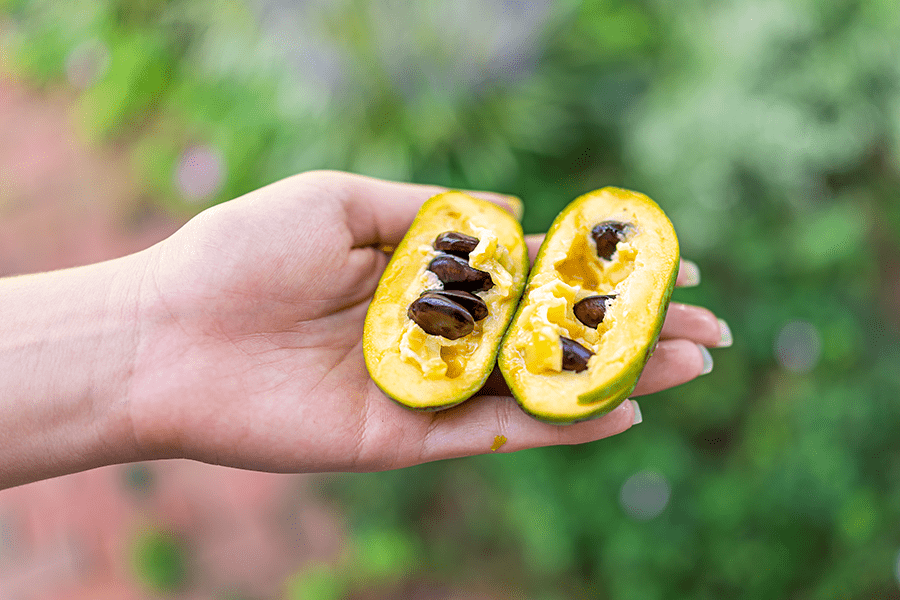
Pawpaws, prized for their tasty fruits, produce the largest native fruit in North America. Their fruits, about the size of an avocado, are described as a fusion of banana, mango, and citrus, with a hint of vanilla. They’re a choice ingredient for ice creams, breads, and cocktails. Not only are they a delectable treat, but they’re also nutritious, containing high levels of essential amino acids. This small understory tree (10-40’ tall), might be a fun and fitting option for your backyard woods.
Growth Requirements & Habitat Value
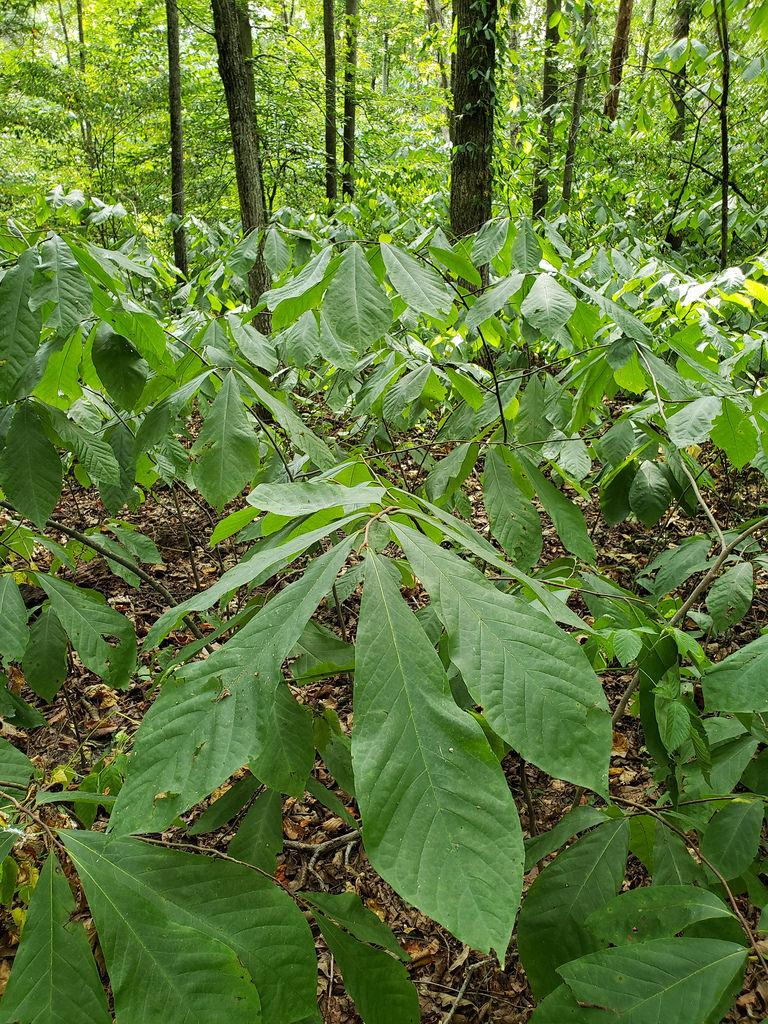
Pawpaws are a member of the family Annonaceae, commonly known as the custard-apple family. Pawpaws have the distinction of being the sole representative of this family in the northeast US and are indigenous throughout the State. They’re well-adapted to humid climates and are typically found in open, bottomland woods, but can also flourish in uplands with rich soil. They spread via underground runners forming a grove of trees that, while expansive, can comprise a single individual. Since pawpaws require cross-pollination and are not self-compatible, at least two individuals are needed to produce fruit. So if purchasing pawpaws for fruit production, make sure to select trees from different populations with different genes.
Pawpaws support a wide range of wildlife. They’re the host plant for larvae of the zebra swallowtail butterfly (Protographium marcellus), and its blooms (March-May) support insect pollinators, primarily beetles and flies. Also, its fruits (August-October) are eaten by foxes, opossums, raccoons, and squirrels. Deer, however, generally leave pawpaws alone. Chemicals in the bark and foliage make them unpalatable to deer. This is thought to be a major factor in the pawpaws habitat and range expansion throughout the State.
Now the Dominant Sapling in Maryland Forests
Monitoring efforts by the National Park Service (NPS) shows that most of the State’s parks are in either “probable failure” or “imminent failure” primarily because there are too many deer. Forests aren’t regenerating because overstory saplings, such as oak, red maple, and black gum, are eaten by deer. This has left an opening for deer resistant plants such as pawpaws to fill the void. In recent years, pawpaws have become the most common sapling in NPS parks throughout the region (nps.gov/articles/pawpaw.htm). Without comprehensive, consistent deer management, the composition of our forests will continue to change dramatically. Groves of pawpaws might someday replace towering oaks or form a patchwork of sorts.
Pawpaws are Becoming Increasingly Pawpular
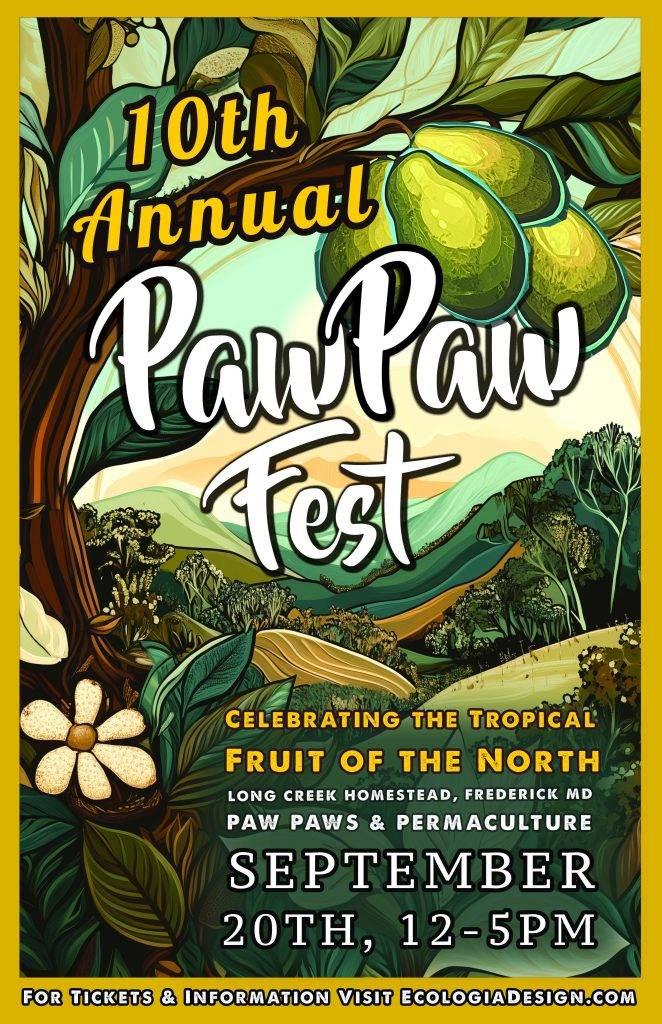
You’re not likely to find pawpaw at your local supermarket, but that might change soon. It’s a burgeoning industry. With a warming planet, some fruit farmers are diversifying their crops. Pawpaws can take the heat, and are frost tolerant. They are not without issue though. For instance, they bruise easily and have a short shelf life. If this article has piqued your interest in this unique Maryland native, check out the 10th annual Frederick Pawpaw Fest, Sept. 20, 2025.
Resources
U.S. National Park Service (2024). Resilient Forests Initiative - Managing Deer Impacts. Retrieved May 10, 2025, from https://www.nps.gov/articles/000/resilient-forests-initiative-deer.htm
USDA NRCS National Plant Data Center, & Justice, W. S., Sr. (2021). PAWPAW: Asimina triloba (L.) Dunal. In National Plant Data Center [Plant Fact Sheet]. https://plants.usda.gov/DocumentLibrary/plantguide/pdf/cs_astr.pdf