

FS-2024-0739 | November 2025
Keep Up with Nutrient Management Plan Requirements in Maryland
By Qianwen Lu, UME Urban Ag Production Specialist; Neith Little, UME Urban Ag Educator; Kayla Griffith, UME Nutrient Management Faculty Specialist; Maxine Da-Som Yoon, Home Horticulture Educator and Master Gardener Coordinator; and Xuan Wei, UME Urban Agribusiness Specialist
Maryland farmers are required to follow nutrient management plans (NMPs) when fertilizing crops and managing animal waste. An NMP specifies the application rates of all intended nutrient sources (e.g., fertilizer, animal manure, compost, etc.) to optimize crop yields and reduce pollution to the Chesapeake Bay and its tributaries.
Maryland farmers are required to have a nutrient management plan if they:
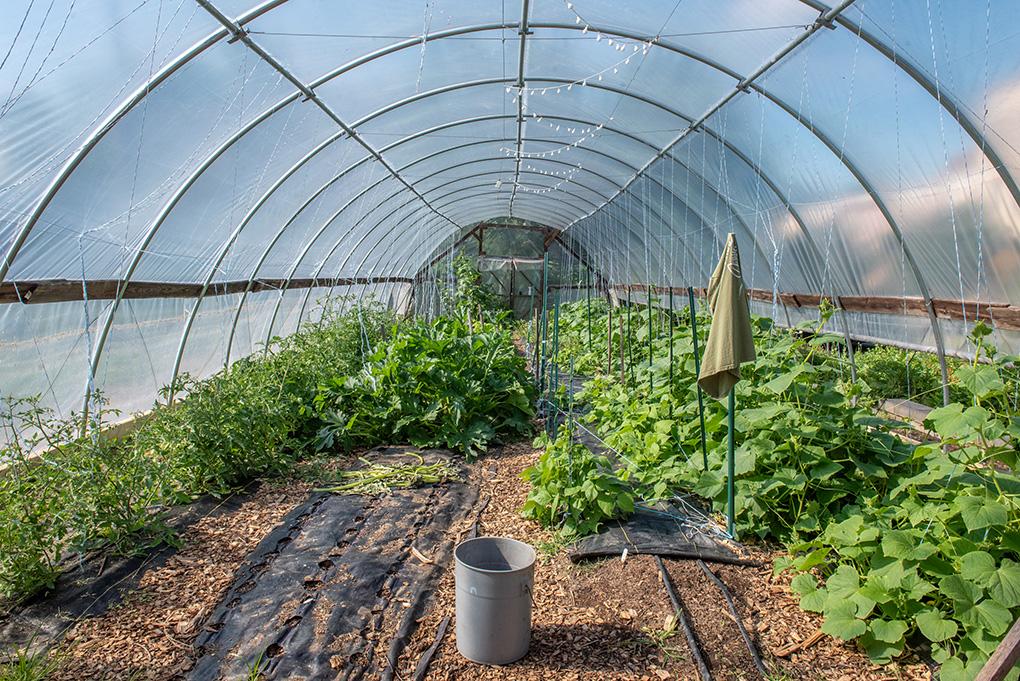
- Till, crop, keep, pasture, or produce an agricultural product, including livestock, poultry, plants, trees, sod, food, feed, or fiber by in-ground, out-of-ground, container, or other culture (Figure 1); AND
- Reach a gross annual income of $2,500 or more; or produce livestock with 8,000 pounds or more of live animal weight (crop donation by non-profits also counts).
How do you get an NMP?

Figure 2. Discuss developing your plan with a Nutrient Management Consultant (Image credit: University of Maryland-AGNR Image Library). Request a plan from University of Maryland Extension (UME) Agricultural Nutrient Management Program (ANMP) advisors (Figure 2). Consult https://go.umd.edu/advisors
- Pay a private certified consultant. The Maryland Department of Agriculture (MDA) offers a directory of private certified consultants at https://mda.maryland.gov/resource_conservation/counties/NM_CONSULTANT_FOR_HIRE_DIRECTORY.pdf
- Attend a Farmer Training & Certification (FTC) workshop to become a Certified Farm Operator Systemsand write a NMP for only your operation. Find out more about FTC at https://go.umd.edu/ANMPFTC
- Pass the Maryland Nutrient Management Certification Exam and then obtain a nutrient management license from MDA. This enables you to write NMPs for yourself and other farmers. Visit the Directory of Agricultural Nutrient Management Training Program to learn more: https://mda.maryland.gov/resource_conservation/Pages/nutrient_management_training_program.aspx
Some points to consider:
- It can be helpful to have a planner write your first plan. This gives you a starting point to work from, and gives you experience working with a nutrient management plan.
- If your operation is considered a nursery, greenhouse, or controlled environment and you would like to write an NMP for your operation, you will have to take an Operator Certification (FTC) workshop for Writing Nursery Nutrient Management Plans for Nurseries, Greenhouses, and Controlled Environments. Learn more at https://extension.umd.edu/resource/agricultural-nutrient-management-meetings/#CTC
- Farmers who apply nutrients to 10 or more acres a year are required to attend a two-hour nutrient applicator course once every three years. Farmers who are certified to prepare their own nutrient management plans are exempt from this requirement. Resources to consult:
What information is included in an NMP?
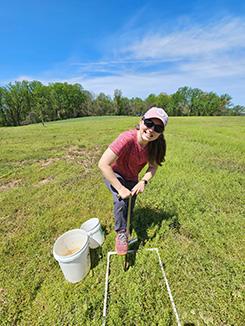
Figure 3. Collect soil samples for testing (Image credit: Emileigh Lucas). The maximum allowable fertilizer application rates of nitrogen, phosphate, and potash for each crop, on a field-by-field basis.
- Allowable application rates for organic nutrient sources, if applicable.
- Livestock information, if applicable. Required information includes animal type(s), numbers, estimates of the amount of manure generated/collected, and estimates of how much of the manure can be utilized on farm or exported off farm.
- Copies of your results of tested soil, compost, manure, plant tissue, etc. (Figure 3).
- Phosphorus loss risk assessments, if needed.
- Plan duration and instructions for updating your plan.
- Recordkeeping requirements.
Steps to get an NMP
Maryland law requires farmers to have a plan in hand prior to any nutrient applications. Your NMP must be updated every year. To achieve that, follow the steps and timeline below.
| Year 1: Fall |
|
| Year 1: Winter | To prepare for your next NMP, if applicable.
|
| Year 2: Spring | You must have an NMP in hand before you apply fertilizer or compost. |
| Year 2: Spring and/or Summer | Conduct plant tissue tests3 (valid for 3 years) if you grow perennial fruit |
| Year 2: Fall |
|
| Year 2: Winter | Annual Implementation Reports (AIRs)5 documenting nutrient applications from the previous year are due to the MDA Nutrient Management Program by March 1st. March 1st is the earliest date allowed by regulation for spring nutrient applications, unless the ground is frozen, saturated, or covered with snow greater than one inch. |
1 If growing in a heavily amended soil/media (more than 50% compost or other organic material by volume) or the soil organic matter content is >20%, you will need a saturated media extract test in lieu of a soil test.
2 If you are going to use the compost, you may use the guaranteed or lab analysis values of the compost for the NMP if the compost comes with the values. Otherwise, you will need to send a compost sample off to a lab for testing. Unless you send a compost sample to a lab that has a compost-specific test, you will need to request a manure test. Livestock producers with fewer than 20 animal units may use “book values” (long-term average nutrient values for a given manure type) in lieu of a manure test.
3 If less than 1 acre of perennial fruits, tissue tests are not required. You can use book values for nitrogen recommendations.
4 Prior to January 1st: Operations that utilize commercial fertilizer only (no manure or organic nutrients) should aim to have their NMP in hand. After February 1st: UME NMP writers may have a long wait list.
5 Completing the AIR is required every year as long as you are farming.
In conclusion
The Maryland Nutrient Management Plan is essential for protecting water quality, promoting sustainable agriculture, and ensuring compliance with state regulations. Farmers must adhere to these requirements to avoid penalties and safeguard Maryland’s natural resources and environment.
For your information
Comparison of Soil Test Labs (University of Maryland Extension):
https://go.umd.edu/ANMP-Soil-Test-Labs
Comparison of Some Labs Testing Manure (University of Maryland Extension): https://go.umd.edu/ANMP-Manure-Testing-Labs
Comparison of Some Labs Testing Plant Tissue (University of Maryland Extension): https://go.umd.edu/ANMP-Plant-Tissue-Labs
Comparison of Labs Testing Growing Media (Soilless Media or Potting Media) (University of Maryland Extension): https://go.umd.edu/ANMP-Growing-Media-Labs
Agricultural Nutrient Management Lab Information (University of Maryland Extension): https://go.umd.edu/ANMP-Lab-Information
Agricultural Operation Record Keeping Requirements (University of Maryland Extension): https://extension.umd.edu/sites/extension.umd.edu/files/2021-04/AGOP_Recordkeeping.pdf
MDA & MDE Agricultural Nutrient Management Record Keeping Requirements (United States Department of Agriculture Natural Resources Conservation Service): https://www.nrcs.usda.gov/sites/default/files/2022-10/MDA_MDE%20Agricultural%20Nutrient%20Management%20Record%20Keeping%20Requirements.pdf
QIANWEN LU
NEITH LITTLE
nglittle@umd.edu
KAYLA GRIFFITH
kmgriffi@umd.edu
MAXINE DA-SOM YOON
maxyoon@umd.edu
XUAN WEI
xuanwei@umd.edu
This publication, Keep Up with Nutrient Management Plan Requirements in Maryland (FS-2024-0739), is a part of a collection produced by the University of Maryland Extension within the College of Agriculture and Natural Resources.
The information presented has met UME peer-review standards, including internal and external technical review. For help accessing this or any UME publication contact: itaccessibility@umd.edu
For more information on this and other topics, visit the University of Maryland Extension website at extension.umd.edu
University programs, activities, and facilities are available to all without regard to race, color, sex, gender identity or expression, sexual orientation, marital status, age, national origin, political affiliation, physical or mental disability, religion, protected veteran status, genetic information, personal appearance, or any other legally protected class.
When citing this publication, please use the suggested format:
Lu, Q., Little, N., Griffith, K., Da-Som Yoon, M., & Wei, X.(2025). Keep Up with Nutrient Management Plan Requirements in Maryland (FS-2024-0739). University of Maryland Extension. go.umd.edu/FS-2024-0739
Download Publication FS-2024-0739 (PDF)
If you have any questions about nutrient management, please email anmp@umd.edu or visit the Agricultural Nutrient Management Program website at go.umd.edu/anmp.