
Fescue Toxicosis
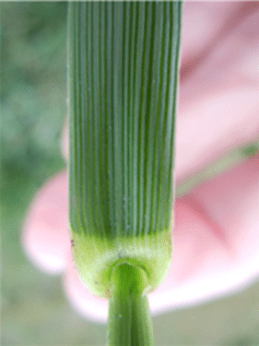
Over the past month, I have had multiple inquiries about tall fescue toxicosis and fescue testing, so a quick overview here might benefit a wider audience. Tall fescue has a natural symbiotic association with a fungus. The plant nourishes the fungus which lives inside the plant in exchange for the fungus providing improved nutrient and water uptake for the plant, drought tolerance, and pest resistance. This is what makes tall fescue such a durable and productive forage grass. However, the fungus naturally produces a toxic compound leading to fescue toxicosis.
Fescue toxicosis is a condition in livestock (primarily affecting cattle and horses) caused by consuming grass infected with the fungus that produces toxic ergot alkaloids, mainly ergovaline, which causes the constriction of blood vessels (vasoconstriction). The condition causes reduced rate of gain in cattle, shortened tails, rough coat, heat stress, gangrene, and reduced fertility. Horses are much more sensitive to ergovaline; pregnant mares can have prolonged gestation or premature birth, reduced or lack of milk production, abortions, or stillborn foals. Foals that survive are often larger than normal with overgrown hooves, poor body coordination/locomotion, low body temperatures, and a reduced immune system due to the lack of colostrum produced by the mare. The impact of fesuce toxicosis is most severe in the last 1-2 months of pregnancy.
If you are concerned about fescue toxicosis, you can test for the presence and/or concentration of ergovaline in the forage or feed. In order to do this you need to be able to identify tall fescue and collect a representative sample to send to a lab. Tall fescue is a very common forage grass—it is essentially everywhere. Kentucky 31 (K-31) is an old forage-type tall fescue that was historically planted extensively for grazing and has spread throughout most of Maryland and the northern and temperate regions of the US. There are also several turf-type tall fescue varieties that have been planted in lawns across the US. In short, tall fescue is everywhere. However, only some varieties (like K-31) host the toxic endopohyte that can cause fescue toxicosis, so a test can tell you if the toxic endophyte is present.
Here are some tall fescue identification tips. Tall fescue has a couple of diagnostic characteristics; the upper leaf surface has a distinct “corduroy” pattern to the leaf veins where the veins are all very prominent and there is generally no main midvein on the underside of the leaf. Most varieties of tall fescue also have a very sharp serrated leaf margin. Other common grasses that can look similar to tall fescue are perennial and annual ryegrass; however, both of these grasses have a very glossy underside to the leaf with a predominant midrib vein and tend to have a finer leaf texture compared to tall fescue.
If you desire to sample for fescue toxicosis, here are links to sampling instructions and a recommended lab to send samples. It is very important to keep the sample cool during collection, storage, and shipment.
If you have toxic endophyte-infected tall fescue, here are a couple of management considerations. For broodmares, especially in the last 1-2 months of pregnancy, pull them off of any pasture that may have toxic tall fescue as you want to limit their intake of ergovaline to less than 200 ppb, preferably under 100 ppb. It would be best to designate a pasture or paddock for broodmares that you have seeded to forage species that you know are not toxic. You can also counteract some of the vasoconstriction effects of ergovaline by incorporating clover, which is a vasodilator, into the forage mix. This can be a particularly effective strategy for cattle and can improve their rate of gain.
Finally, I want to mention that there are varieties of tall fescue that have a “novel” or “friendly” endophyte, and these make great pasture and hay varieties for our region. You get all the benefits of the endophyte without the toxin. There are also “endophyte free” varieties; however, these have significantly reduced persistence and production, therefore novel or friendly endophyte varieties are preferred for new seedings.