

Figure 1. Diamondback larva on cabbage showing "Windowpane" damage. Photo: Tomasz, Adobe Stock
Diamondback Moth in Fall Cole Crops
By Hayden Schug, AGFS Educator, University of Maryland Extension -Charles County Office
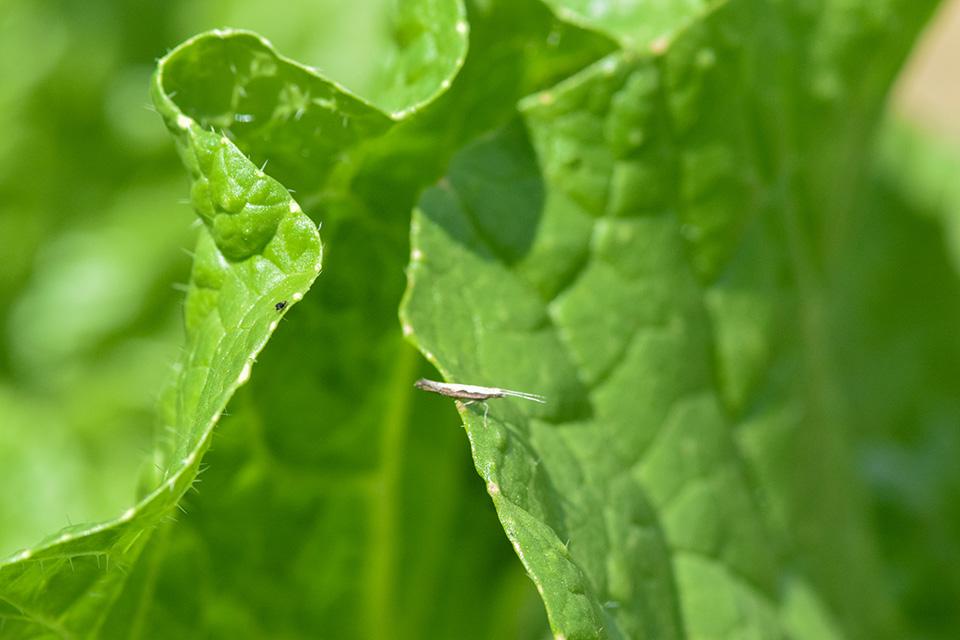
Diamondback moth is one of the most persistent and destructive insect pests in cole crops, especially during fall plantings of broccoli, cabbage, kale, and collards. September weather with cooler nights and heavy dews often favors the buildup of diamondback moth and other caterpillars such as imported cabbageworm and cross-striped cabbageworm. The larvae are small, pale green caterpillars that grow to about a third of an inch long and can be recognized by their habit of wriggling vigorously or dropping from the plant on a silk thread when disturbed. Feeding injury appears as small windowpanes on the undersides of leaves, where only the upper portion remains. This allows light to pass through and gives it its name. On young plants, heavy infestations can stunt growth or kill seedlings, while on heading crops, damage near the developing head or leaves often makes produce unmarketable.
Scouting should begin as soon as transplants are set in the field. Scouting usually lups together Lepidoptera larvae to make counting easier. Examine at least 50 plants throughout the planting, being sure to check the undersides of leaves for larvae. Thresholds vary by crop stage. Generally, in seedlings, treatment is recommended if 10% or more of plants are infested. During the vegetative stage up, the threshold rises to 30% of plants infested and as heads begin to form, tolerance decreases, and treatment should be considered if only 5% of plants are infested.
Diamondback moths are well known for developing resistance to insecticides, including pyrethroids and some Bt products. Effective management depends on rotating modes of action and ensuring thorough spray coverage throughout the canopy, especially on the undersides of leaves where larvae congregate and feed. Bt products are most effective against small larvae, while diamides such as chlorantraniliprole and cyantraniliprole provide good residual control and should be rotated with other chemistries. Spinosyns and spinetoram are also effective but should not be overused in order to preserve their long-term utility. In addition to chemical options, cultural practices can help reduce pest pressure. Using row covers to protect seedlings, managing weedy brassica hosts near the field (that harbor diamondback moths when cole crops aren’t available for feeding), and destroying crop residues after harvest can limit the survival of overwintering populations.
Keeping diamondback moth below damaging levels in the fall is essential to protect marketable yield and maintain crop quality. Growers should remain vigilant with scouting and when thresholds are met, rotate management strategies to reduce the risk of resistance and long-term pest pressure. References available upon request.
This article is featured in the Vegetable and Fruit News, Vol. 16, Issue 6.
Vegetable & Fruit News is a research-based publication for the commercial vegetable and fruit industry available electronically from April through October. Published by the University of Maryland Extension Agriculture and Food Systems team.
Subscribe