Cereal Leaf Beetle in Wheat Fields
Hayden Schug & Ben Beale
Cereal leaf beetle (CLB) activity has picked up in wheat across Southern Maryland, and we have been seeing fields that are at or approaching treatment threshold. What has stood out this year is how variable populations can be. Some fields have very low pressure, while others nearby are at threshold, even when they are right next to each other. This makes it especially important to scout each field individually rather than assuming pressure is consistent across an area or nearby fields.
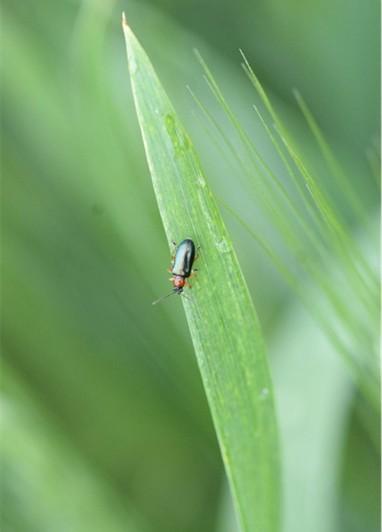
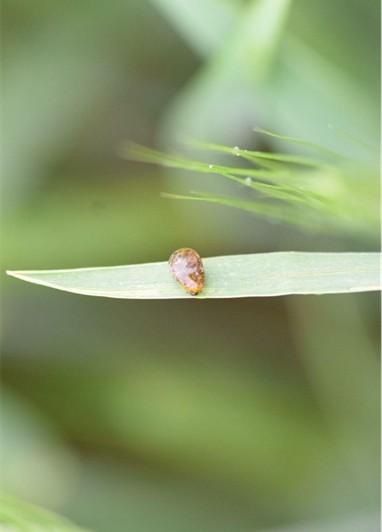
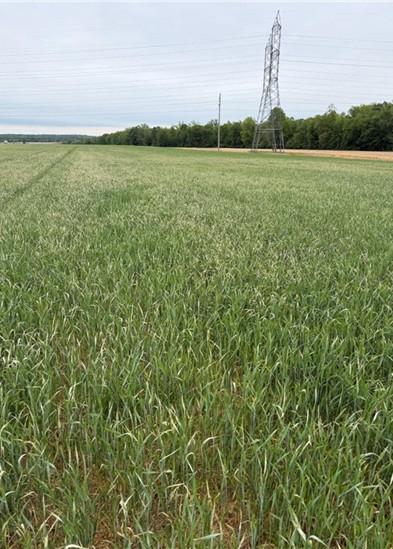
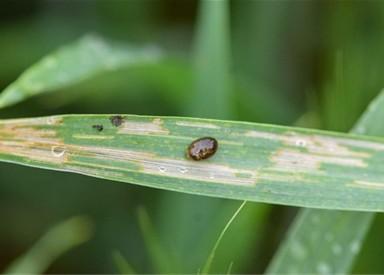
CLB is a common pest in Maryland wheat and is often found while scouting for foliar diseases or checking crop stage ahead of Fusarium head blight (FHB) applications. While both adults (Fig. 1) and larvae may be present, it is the larvae that cause the most damage. Larvae (Fig. 2) are often mistaken for bird droppings due to their dark, slimy appearance, which comes from a coating of fecal material they use to cover themselves. In fields with noticeable pressure, another common sign is the presence of black streaking on clothing after walking through the canopy, caused by the larval fecal material. Another sign is their feeding damage, larvae remove leaf tissue between the veins, creating a characteristic “windowpane” (Fig. 3) effect that can reduce photosynthetic capacity if feeding is severe and can be noticeable from the side of the field (Fig. 4) if populations are high enough.
In many of the fields we have been scouting, populations remain below threshold, but some have reached levels where treatment would be justified. Because of the variability this year, it is important to rely on field-specific scouting rather than calendar-based decisions. Growers should pay close attention to larval counts and leaf injury when making management decisions, especially as wheat continues to develop.
Scouting should ideally begin in late March or early April, especially in no-till fields, those near wooded areas, or where there is a history of CLB infestation. However, if you are going to spray for FHB, then scouting to determine if you need to add an insecticide to the tank as well is advisable.
When scouting, check 10 tillers at 10 random locations per field and look for larvae. Treatment is recommended when there are 25 larvae per 100 tillers, or 25% infestation. If treatment is necessary, insecticides containing pyrethroids such as lambda-cyhalothrin (Warrior) or zeta-cypermethrin (Mustang Max) are effective. Be mindful of insecticide rotation to avoid resistance, and always check pre-harvest intervals.
Scouting and timely management are key to minimizing the impact of CLB. Keep an eye on your fields while out scouting to determine if you need to add an insecticide to your fungicide treatments.