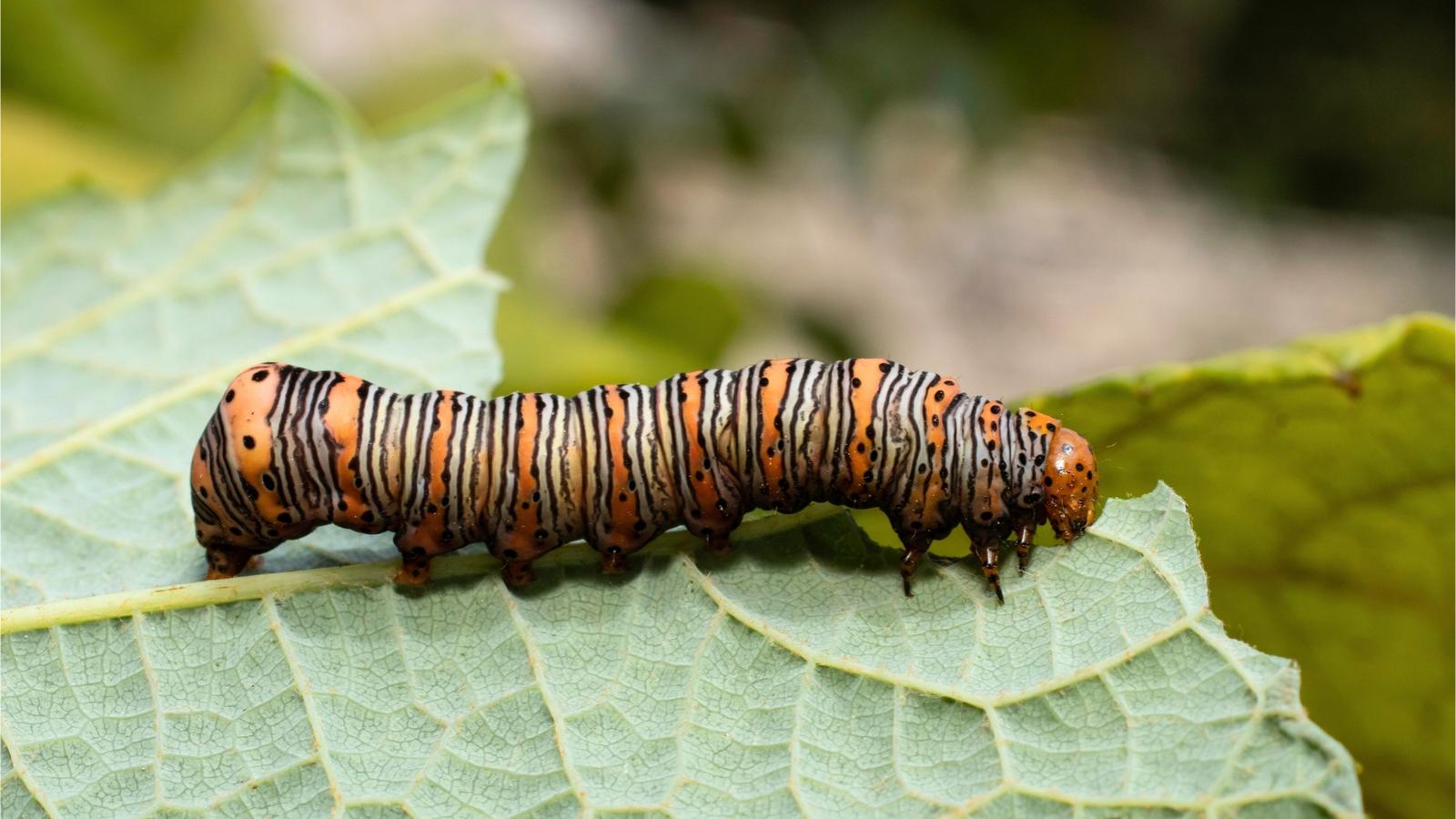
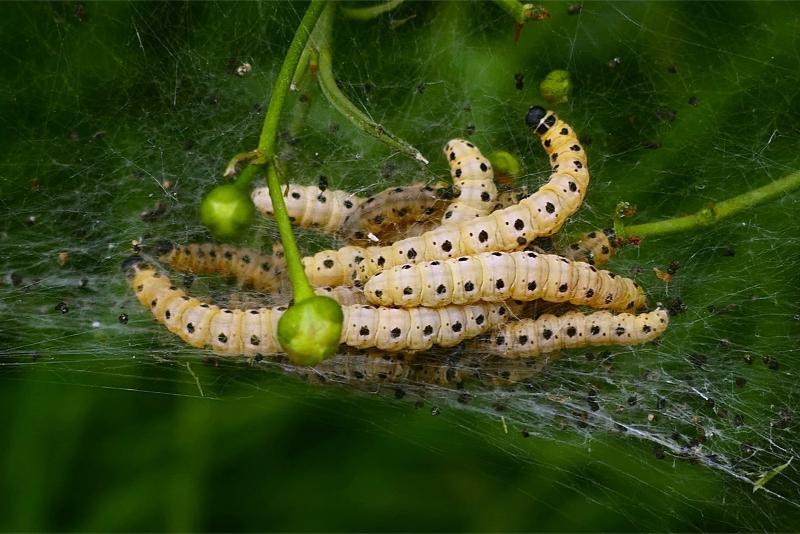
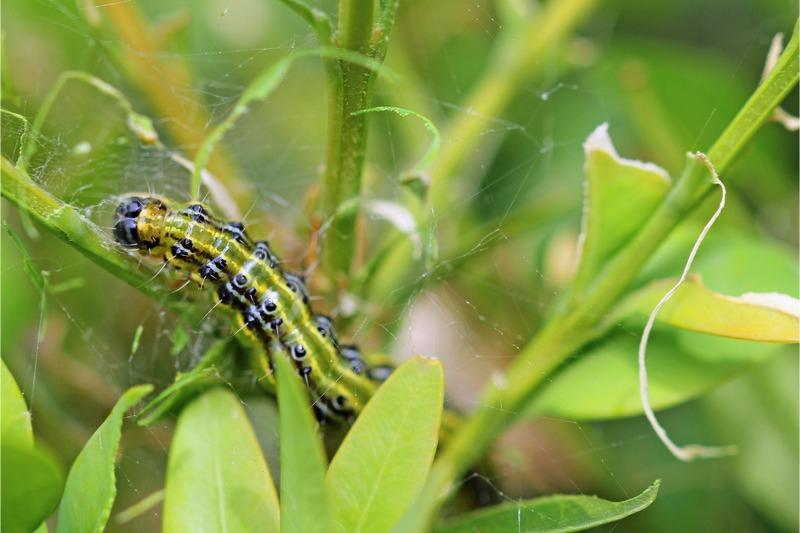
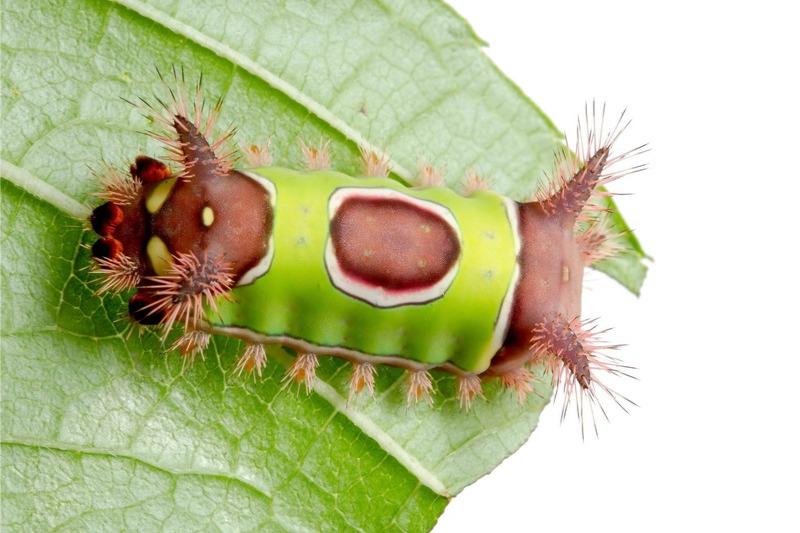
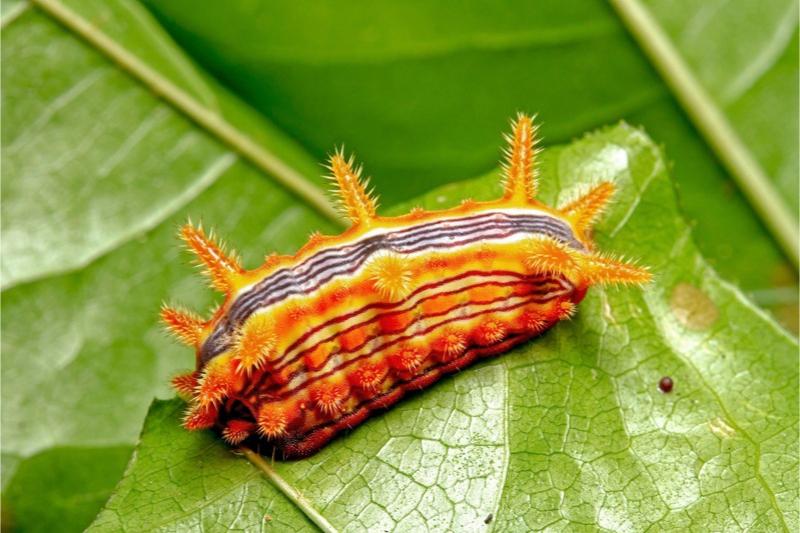
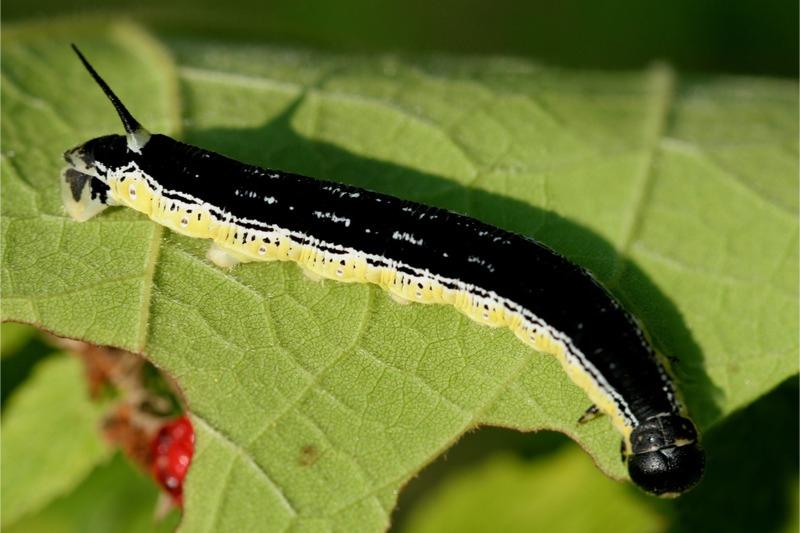
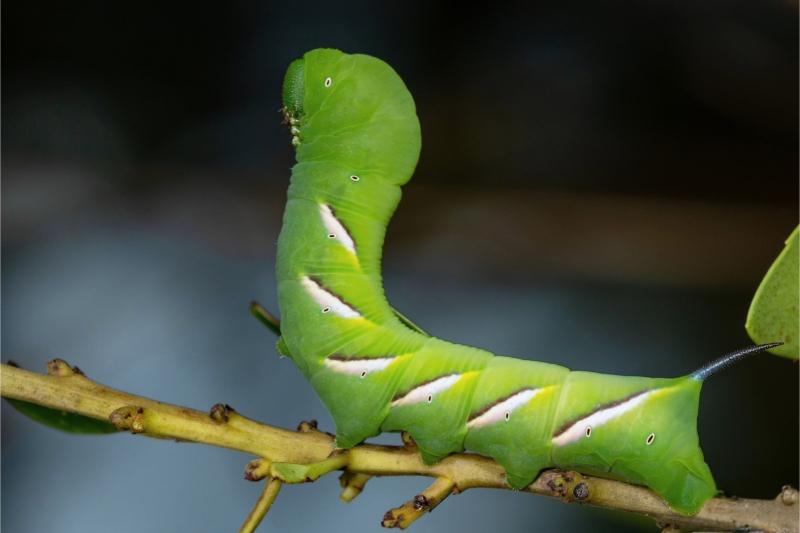
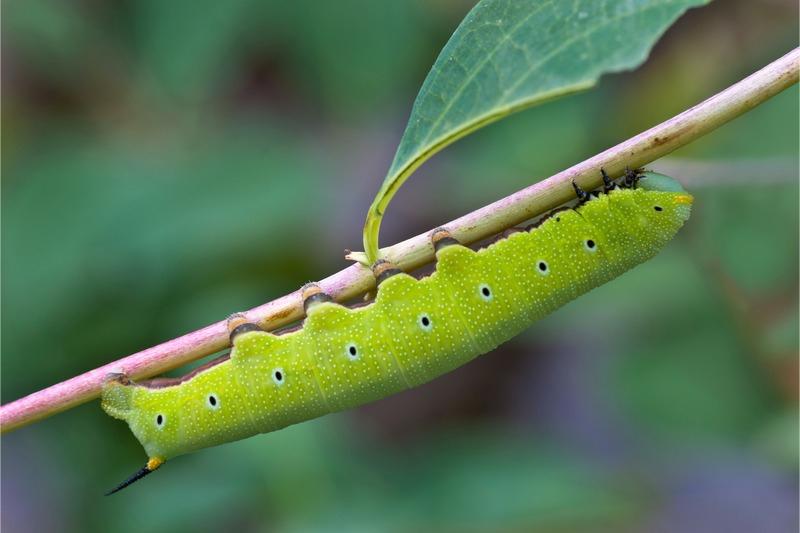
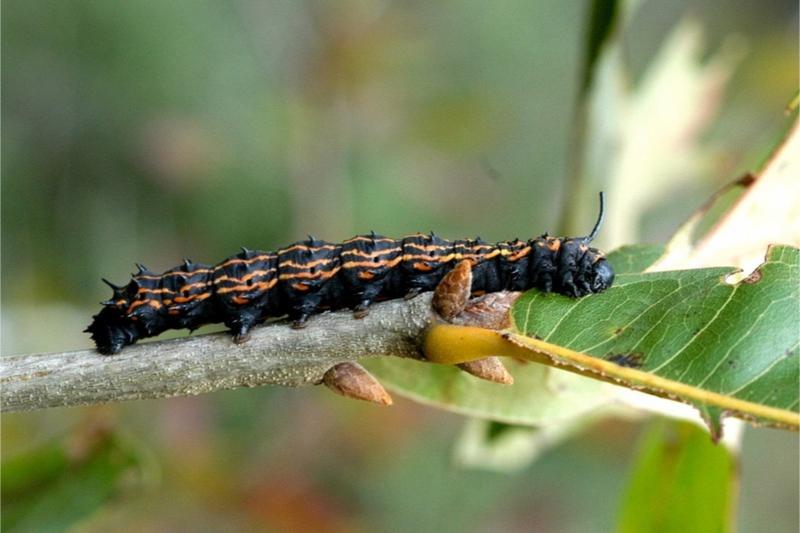
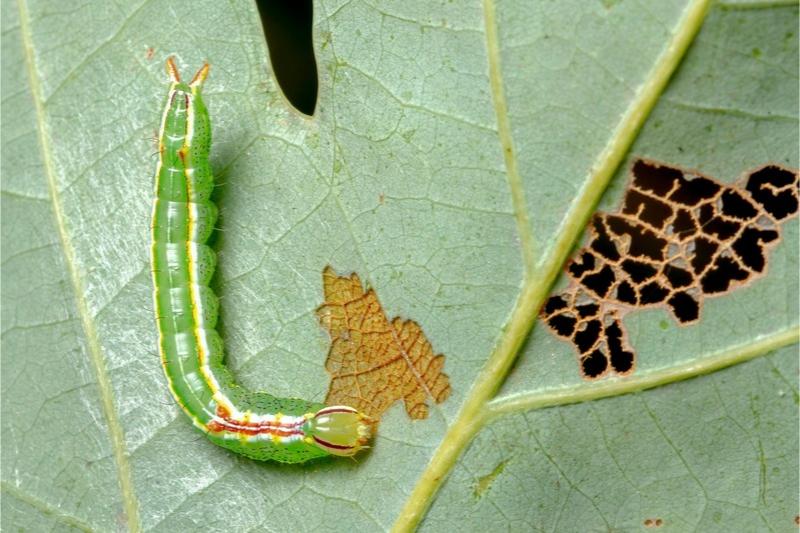
Caterpillars of the beautiful wood-nymph moth (Eudryas grata) eat grape and Virginia creeper leaves.
Photo via Adobe Stock.
Updated: October 8, 2026
The caterpillars of a large number of butterfly and moth species feed on the leaves of trees and shrubs throughout the season. The majority of them do not cause significant damage to the plant, even if some branches are defoliated. Caterpillars are important components of the ecosystem and provide an essential food source for birds (especially nestlings) and other wildlife.
How can I identify a caterpillar?
Although a number of species have a distinctive appearance, caterpillar identification can be challenging. There are over 3,000 species of moths and about 150 butterfly species in Maryland; some of their caterpillars can look alike.
How caterpillars grow
Juvenile insects, including caterpillars, molt several times as they grow. Each stage between molts is called an instar. For example, a caterpillar that just hatched from its egg is in its first instar. After it feeds for a period of time and molts, it will then be in its second instar. The number of instars a caterpillar has depends on the species, but is commonly 4 or 5.
What helps with caterpillar ID?
Appearance
Some caterpillars look different as they grow, when their appearance early in their development (an early instar) changing as they near maturity (a late or final instar). In other cases, a species may have several morphs (variants) with different body colors and patterns, although other traits, like how smooth or hairy they are, remain more consistent across morphs.
Texture: Is the caterpillar hairy, spiny, or smooth? Does it have knobby bumps, tufts of hairs, a single horn on its rear, or pairs of spines only in certain areas (like behind the head) or along its entire back?
Color/pattern: Is its body all one color, or does it have stripes, spots, or an intricate marbling of other colors?
Size: How long is the caterpillar? While body size depends on the instar and the amount of food the caterpillar has, each species will only grow to a certain point once it's ready to pupate and turn into an adult moth or butterfly.
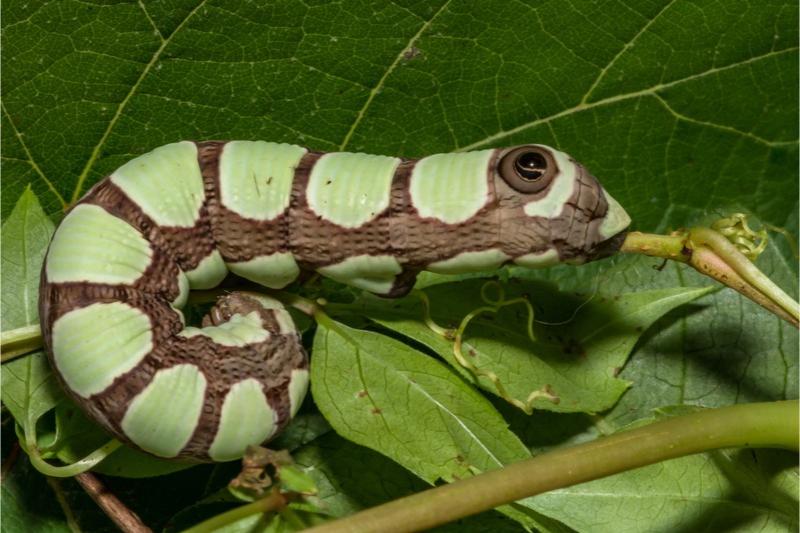
One of the two color morphs of an Abbott's sphinx caterpillar, whose host plants include grape vines (Vitis). Photo via Adobe Stock.
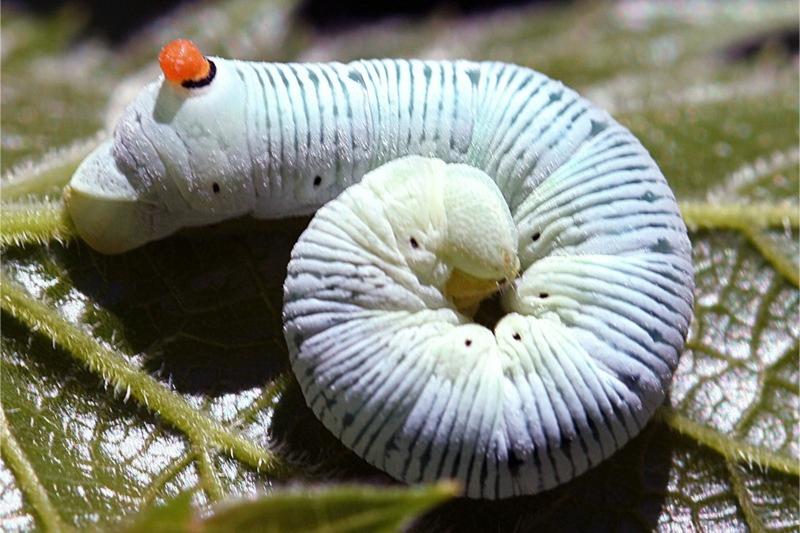
The other color morph of an Abbott's sphinx caterpillar.
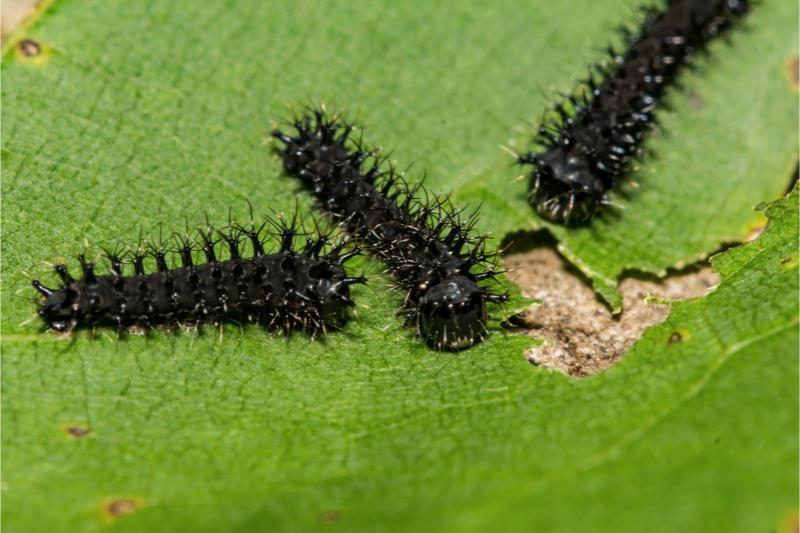
Photo: David Cappaert, Bugwood.org
Young (early-instar) cecropia moth caterpillars are solid black compared to the more mature larvae (pictured later on this page).
Photo via Adobe Stock.
Behavior
Caterpillar behavior can help with identification. Some species are gregarious (living in a group), feeding and sheltering in a cluster together, while others are solitary or only gregarious while young and solitary as they mature. Caterpillars also have a variety of defensive postures or behaviors to discourage predators. While some species have broader diets than others, what caterpillars eat can help to narrow-down identification.
Host plant: What species of tree or shrub is the caterpillar eating?
Concentration: If multiple caterpillars are on one plant, are they living in a group and sticking to one area, or are they scattered around?
Silk: Is there noticeable silk webbing connecting the plant's leaves or stems? Is a silken tent spun around the tip of a branch or the base of a branch?
Body posture when disturbed: Does the caterpillar tuck its head downwards? Does it rear up on its middle legs to raise its head? Does it raise both its head and its rear? Does it deliberately drop off of the plant?
The following sections feature species that people are more likely to notice, either due to the caterpillar's behavior or its host plants being naturally abundant or widely planted.
Caterpillars with prominent silken tents or bags
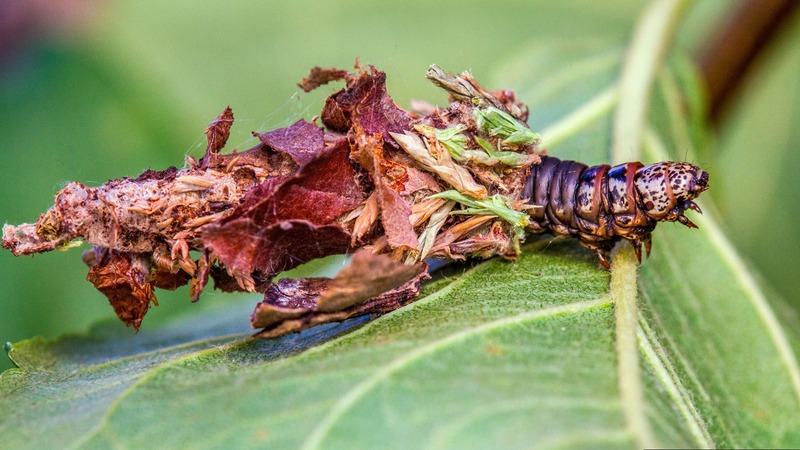
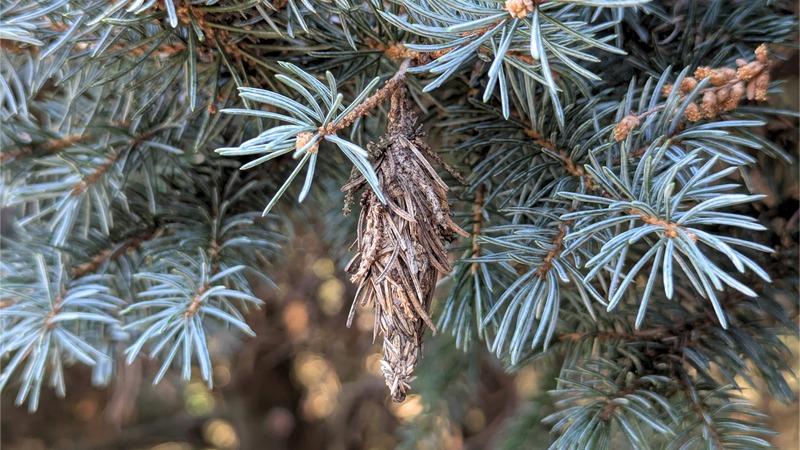
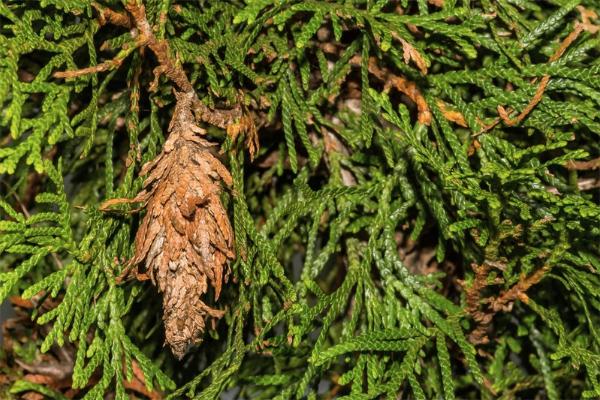
Tent caterpillars and webworms spin prominent silken tents or webs where they shelter or feed. The silk can be spun between branches or can loosely bind several leaves or branch tips together. Bagworms carry their shelter with them, making a dense silken cocoon-like bag — covered in plant debris for camouflage — that they hide inside when not feeding.
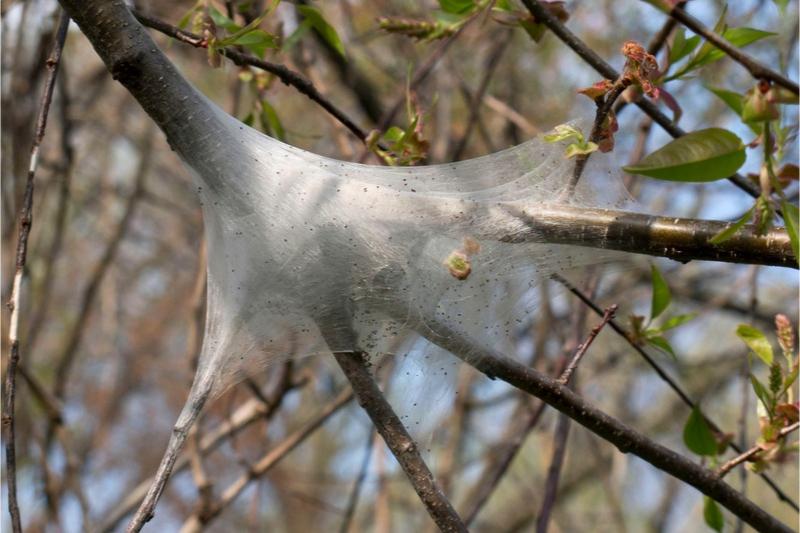
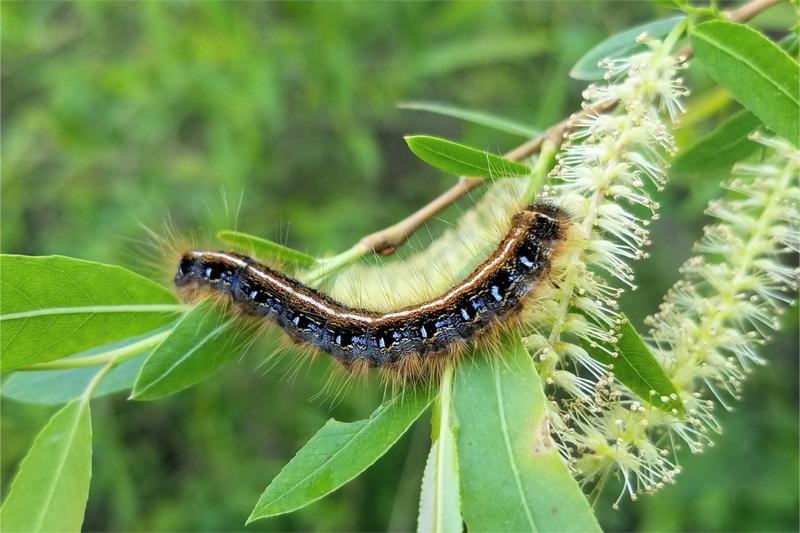
Eastern tent caterpillar
Gregarious behavior
Silk tents are spun in branch crotches (where branches join together or join the trunk)
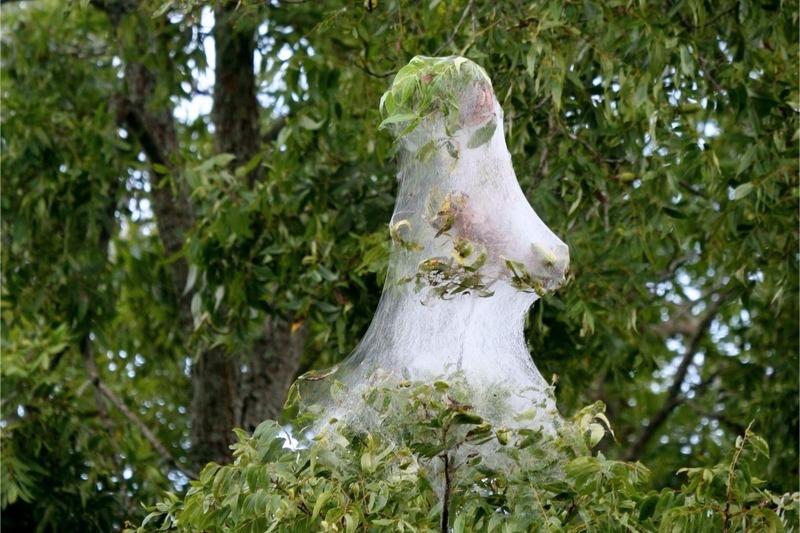
A large fall webworm tent wrapped around the end of a tree branch.
Photo: Johnny N. Dell, Bugwood.org
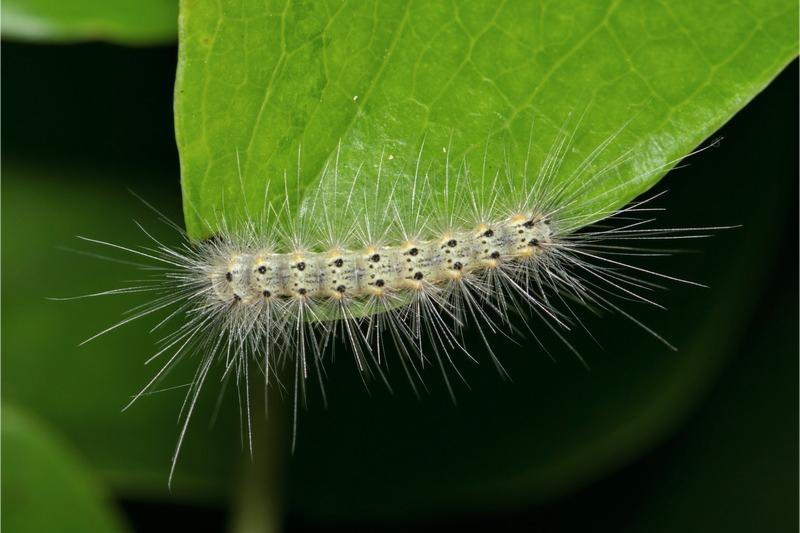
Fall webworm caterpillar. Photo via Adobe Stock.
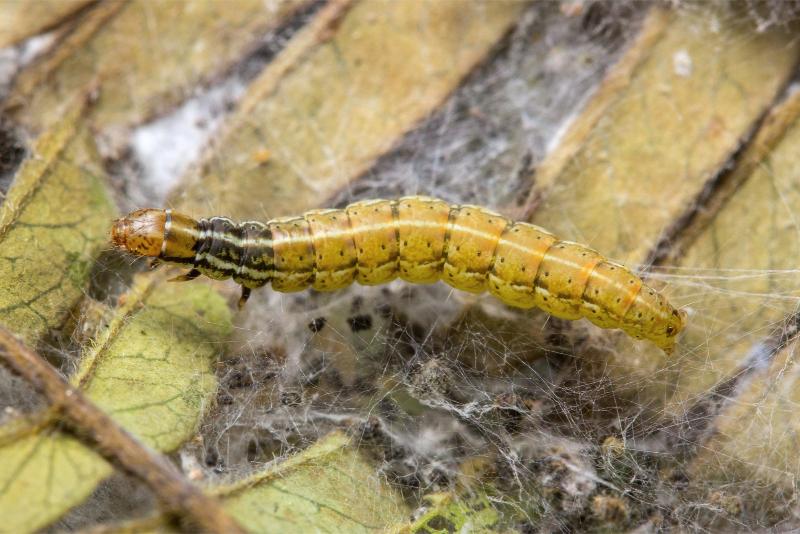
Mimosa webworm
Gregarious behavior
Silk tents are spun in around branch ends/tips
Two generations per year
Caterpillars are present in early summer and from late summer into early autumn
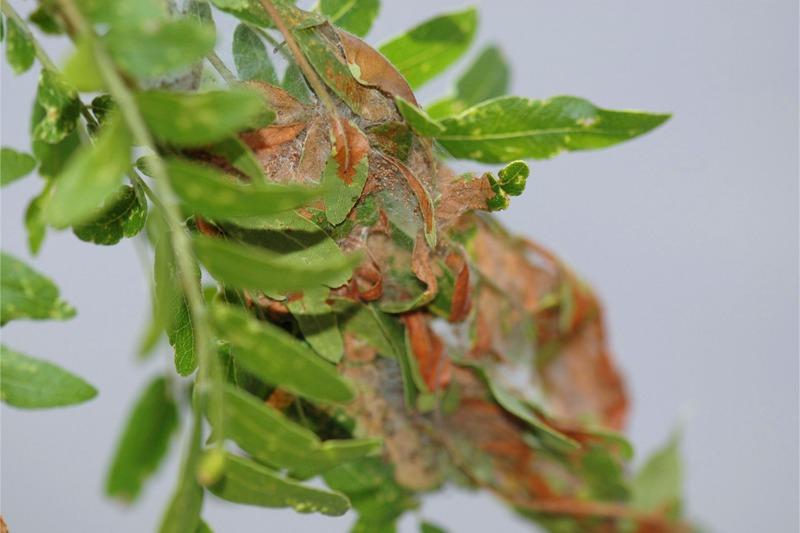
A non-native species, mimosa webworm uses honeylocust (Gleditsia triacanthos, especially thornless varieties), mimosa (Albizia julibrissin; invasive), and black locust (Robinia pseudoacacia) as host plants. For identification and life cycle details, visit:
Evergreen bagworm caterpillars are mostly hidden inside of their bag. Photo: David Cappaert, Bugwood.org
Bagworm cases are a bit easier to spot among blue or green conifer foliage, but they can still be well-camouflaged.
Photo: Miri Talabac, University of Maryland Extension
Other web-making caterpillars
These species create more subtle silken webbing which may be less noticeable from a distance unless caterpillar populations are high.
Euonymus webworm / Spindle ermine
Yponomeuta cagnagella
Photo: Patrick Le Mao, no rights reserved, iNaturalist.org.
Gregarious, with one generation per year. Grows a little over ¾ inch long. Primary host plant is European spindle (Euonymus europaeus); also uses burning bush (Euonymus alatus; invasive), Japanese euonymus (Euonymus japonicus) and 'Manhattan' euonymus (Euonymus kiautschovicus).
Adult moths lay eggs on twigs and in leaf bud axils. Eggs hatch around early August and the young larvae prepare to overwinter. Caterpillar activity resumes in May, webbing together young foliage (and eventually larger branches) as they feed and grow. Caterpillars pupate, emerge as adults, and lay eggs in June.
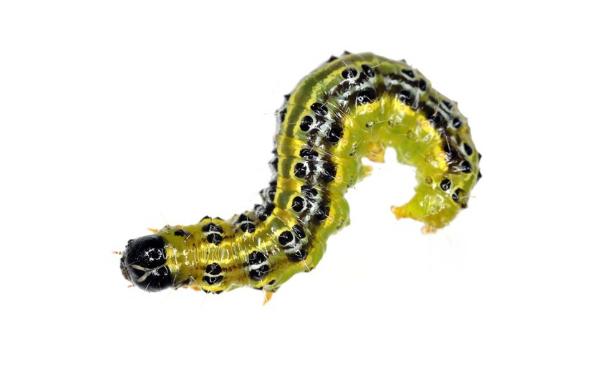
Box tree moth
Cydalima perspectalis
Photo via Adobe Stock.
Grows to about 1½ inches long. Primary host plant is boxwood (Buxus). There are several generations per year.
Adult moths lay eggs in small clusters on leaves (usually on the underside). Immature caterpillars overwinter in a shelter of silked-together leaves. Caterpillar feeding activity from overlapping generations spans April through October. Caterpillars typically pupate in silken leaf shelters on the branches.
Caterpillars with stinging spines or irritating hairs
The caterpillars of some Maryland moth species should not be touched. Their bodies are covered in hairs that can irritate the skin, or they have liquid-filled spines which cause a stinging or burning sensation when the spine is broken off in the skin. A reaction or allergy can be more severe if the hairs or spines contact the eyes, nose, mouth, or any area that has thinner skin (such as the inner arm).
Although the following species are found across the state, they are not frequently encountered. However, they are more likely to be seen compared to a few additional stinging/irritating species that are not shown. All of the featured species are generalists — they can eat a wide variety of tree and shrub species — so only a partial list of host plants is included.
Saddleback
Acharia stimulea
Photo: Matt Bertone, NC State University
Grows to a little over 1 inch long. Hosts include spicebush (Lindera benzoin), buttonbush (Cephalanthus occidentalis), viburnum (Viburnum), blueberry (Vaccinium), oak (Quercus), maple (Acer), and apple (Malus).
Stinging rose caterpillar
Parasa indetermina
Photo: Matt Bertone, NC State University
Grows to about ¾ inch long. Their base color can be orange, reddish, or yellow. Hosts include rose (Rosa), apple (Malus), wild cherry (Prunus), bayberry/wax myrtle (Morella), dogwood (Cornus), maple (Acer), oak (Quercus), hickory (Carya), and redbud (Cercis).
Monkey slug
Phobetron pithecium
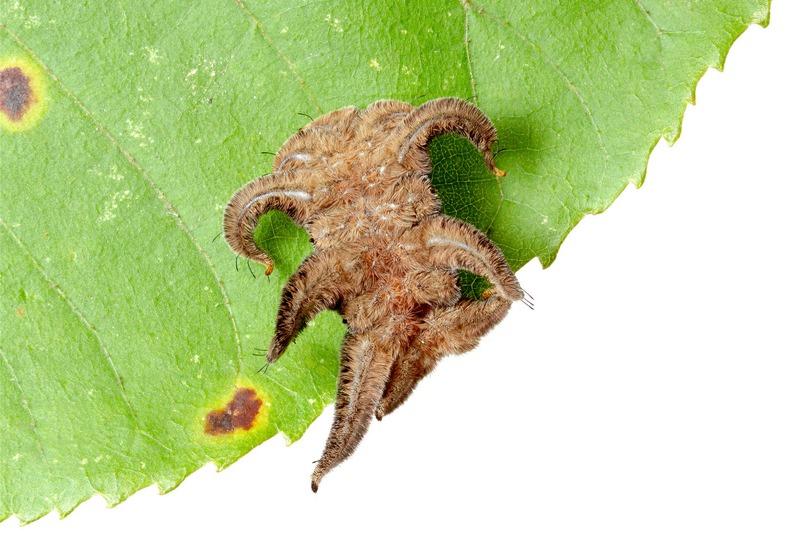
Photo: Matt Bertone, NC State University
Also called the hag moth, these caterpillars grow to about 1 inch long. Hosts include apple (Malus), ash (Fraxinus), sassafras (Sassafras albidum), dogwood (Cornus), cherry (Prunus), persimmon (Diospyros), willow (Salix), and oak (Quercus).
Flannel moth
Megalopyge crispata and M. opercularis
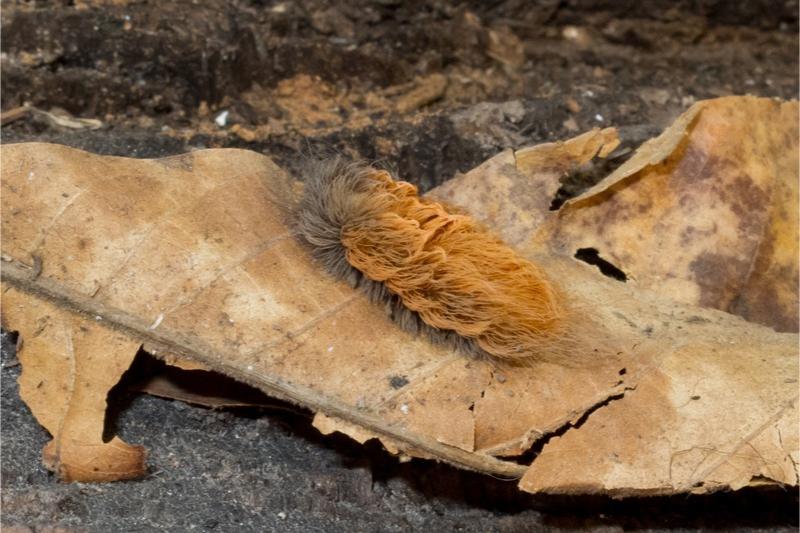
Black-waved flannel caterpillar (Megalopyge crispata). Photo: Miri Talabac, University of Maryland Extension
Flannel caterpillars (M. opercularis is also called the puss caterpillar) grow to just over 1 inch long. Hosts include apple (Malus), birch (Betula), hackberry (Celtis occidentalis), and oak (Quercus).
Io moth
Automeris io
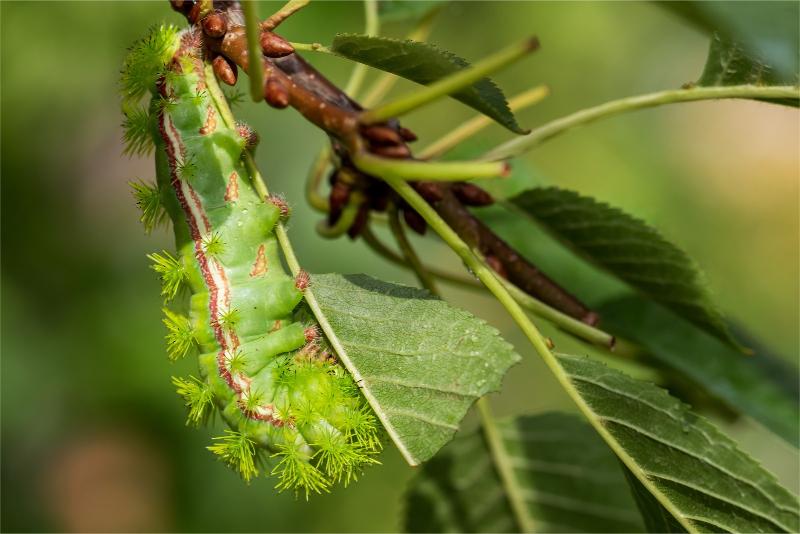
Photo via Adobe Stock.
Gregarious throughout most of its development. Io moth caterpillars reach about 2½ inch long. Hosts include birch (Betula), blackberry (Rubus), cherry (Prunus), redbud (Cercis), oak (Quercus), sassafras (Sassafras albidum), tulip poplar (Liriodendron tulipifera), willow (Salix), sweetfern (Comptonia peregrina), and bayberry/wax myrtle (Morella).
White-marked tussock moth
Orgyia leucostigma
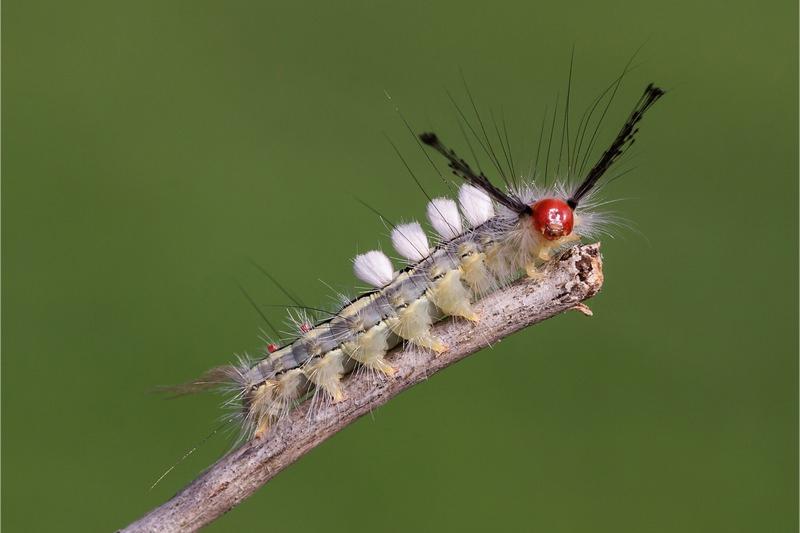
Photo via Adobe Stock.
Grows to a little over 1¼ inch long. Hosts include oak (Quercus), birch (Betula), cherry (Prunus), redbud (Cercis), willow (Salix), rose (Rosa), apple (Malus), spruce (Picea), and hemlock (Tsuga).
Other common caterpillars
Sphinx moths (family Sphingidae)
Also called hawkmoths, the caterpillars (hornworms), often bear a single, stiff horn-like projection at the end of their body. (The horn is harmless to people.) The defensive posture of the caterpillar is a raised upper body with its head tucked under.
Catalpa sphinx
Ceratomia catalpae
Photo: David Cappaert, Bugwood.org
Gregarious throughout most of its development. Grows to nearly 3 inches long. Sole host plant is catalpa (Catalpa).
Pawpaw sphinx
Dolba hyloeus
Photo: Lyn Roueche, no rights reserved, iNaturalist.org
Host plants include pawpaw (Asimina triloba), blueberry (Vaccinium), winterberry holly (Ilex verticillata), inkberry holly (Ilex glabra), and other hollies.
Hummingbird clearwing
Hemaris thysbe
Photo via Adobe Stock.
Grows to about 2 inches long. Host plants include honeysuckle (Lonicera), viburnum (Viburnum), snowberry (Symphoricarpos), and hawthorn (Crataegus).
Wild silkmoths (family Saturniidae)
Despite their common name, this family of moths is not related to the domesticated silkworm. These are some of Maryland's largest caterpillars and adult moths.
Orange-striped oakworm
Anisota senatoria
Photo: Erich G. Vallery, USDA Forest Service - SRS-4552, Bugwood.org
Gregarious throughout most of its development. Grows to a little over 2¼ inches long. Host plants primarily oaks (Quercus); possibly also birch (Betula) and maple (Acer).
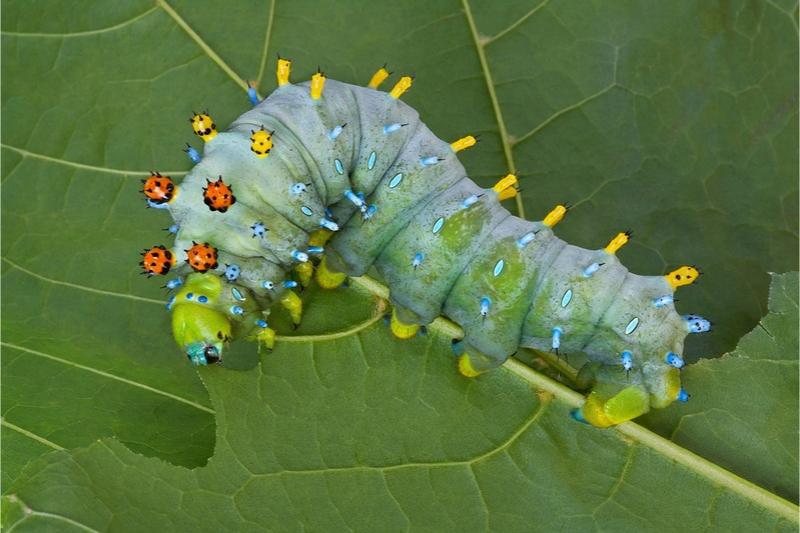
Cecropia moth
Hyalophora cecropia
Photo via Adobe Stock.
Grows to nearly 4 inches long. Host plants include boxelder (Acer negundo) and other maples, wild cherry (Prunus), tulip poplar (Liriodendron tulipifera), sweetgum (Liquidambar styraciflua), willow (Salix), sassafras (Sassafras albidum), and apple (Malus).
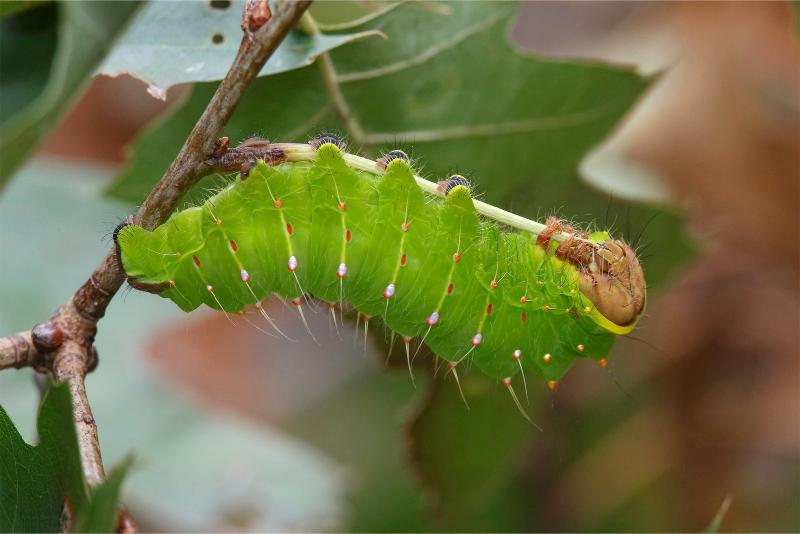
Polyphemus moth
Antheraea polyphemus
Photo via Adobe Stock.
Grows to about 3 inches long. Host plants include hickory (Carya), oak (Quercus), wax myrtle (Morella), basswood (Tilia), birch (Betula), maple (Acer), willow (Salix), and elm (Ulmus).
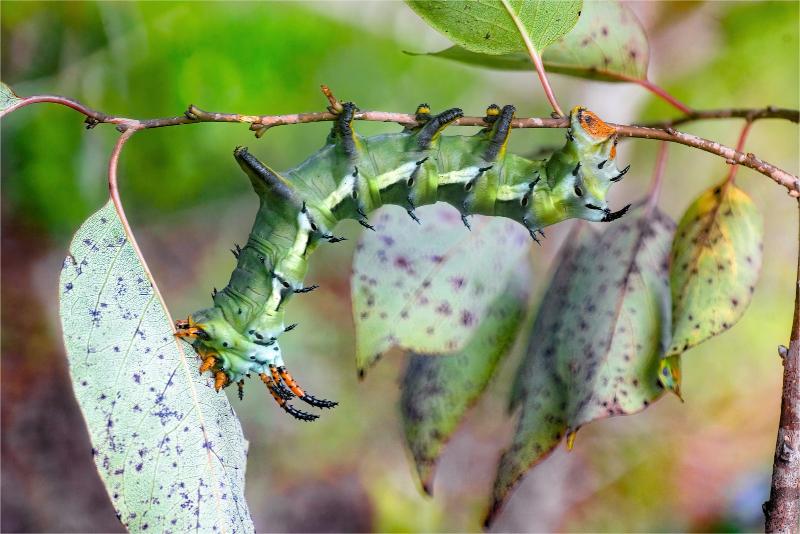
Royal walnut moth
Citheronia regalis
Photo via Adobe Stock.
Also called the regal moth or hickory horned devil. Grows up to 4¾ inches long. Host plants include hickory and pecan (Carya), walnut (Juglans), sycamore (Platanus), sweetgum (Liquidambar styraciflua), wild cherry (Prunus), sumac (Rhus), and persimmon (Diospyros).
Prominents (family Notodontidae)
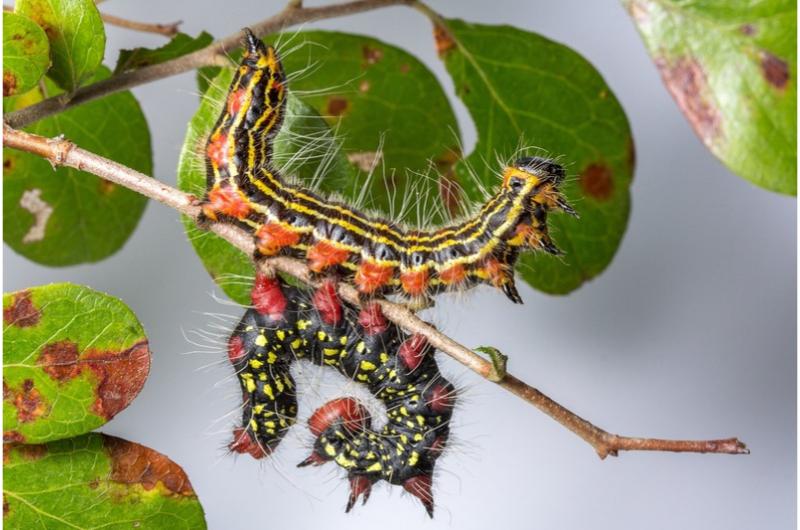
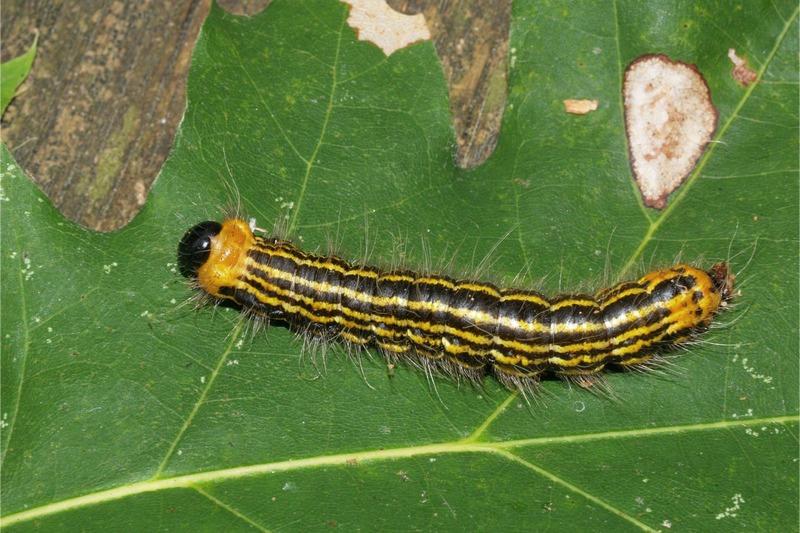
Yellow-necked caterpillar
Datana ministra
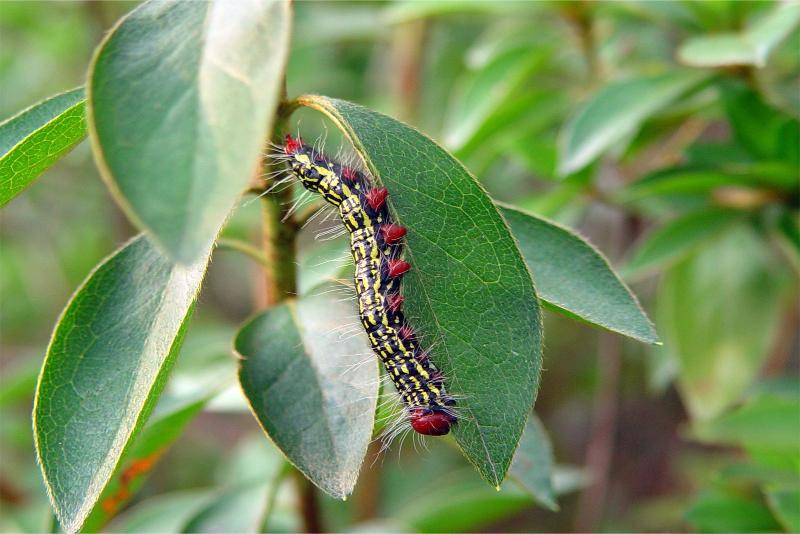
Datana ministra (top) and Datana major (bottom). Photo: Matt Bertone, NC State University
Gregarious in the early stages of its development. Grows to 1¾ inches long. Host plants include apple (Malus), oak (Quercus), blueberry (Vaccinium), birch (Betula), willow (Salix), and beech (Fagus).
Azalea caterpillar
Datana major
Photo: Chris Evans, University of Illinois, Bugwood.org
Gregarious in the early stages of its development. Grows to 1¾ inches long. Host plants include azalea (Rhododendron), apple (Malus), red oak (Quercus rubra), and possibly blueberry (Vaccinium).
Drexel's datana
Datana drexelii
Photo: Bruce Watt, University of Maine, Bugwood.org
Gregarious in the early stages of its development. Grows up to nearly 2 inches long. Host plants include blueberry (Vaccinium), witchhazel (Hamamelis), and sourwood (Oxydendrum arboreum).
Variable oakleaf caterpillar
Lochmaeus (Heterocampa) manteo
Photo: Matt Bertone, NC State University
Grows to about 1¾ inches long. Host plants include beech (Fagus), oak (Quercus), chestnut (Castanea), and possibly also birch (Betula), elm (Ulmus), and maple (Acer).
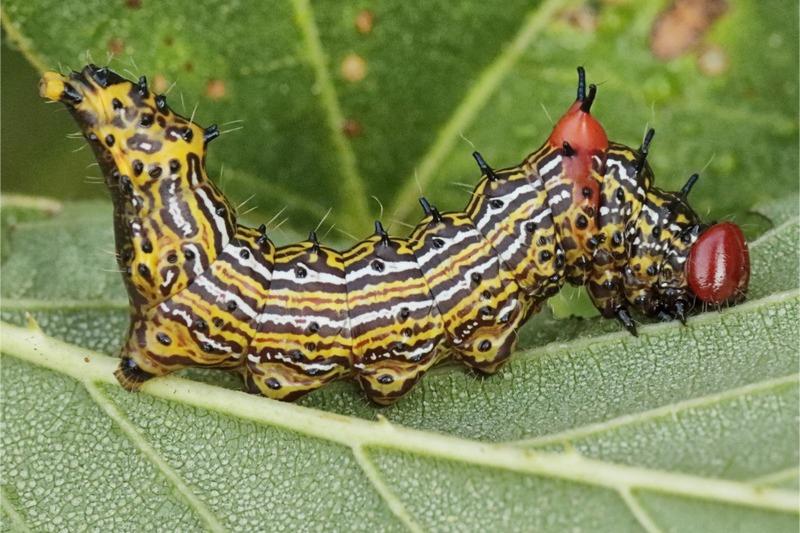
Red-humped caterpillar
Oedemasia (Schizura) concinna
Photo: Dennis White, no rights reserved, iNaturalist.org.
Gregarious throughout most of its development. Grows to a little over 1¼ inches long. Host plants include apple (Malus), birch (Betula), blueberry (Vaccinium), cherry (Prunus), dogwood (Cornus), black walnut (Juglans nigra), maple (Acer), oak (Quercus), persimmon (Diospyros), serviceberry (Amelanchier), viburnum (Viburnum) and willow (Salix).
Other moth and butterfly families
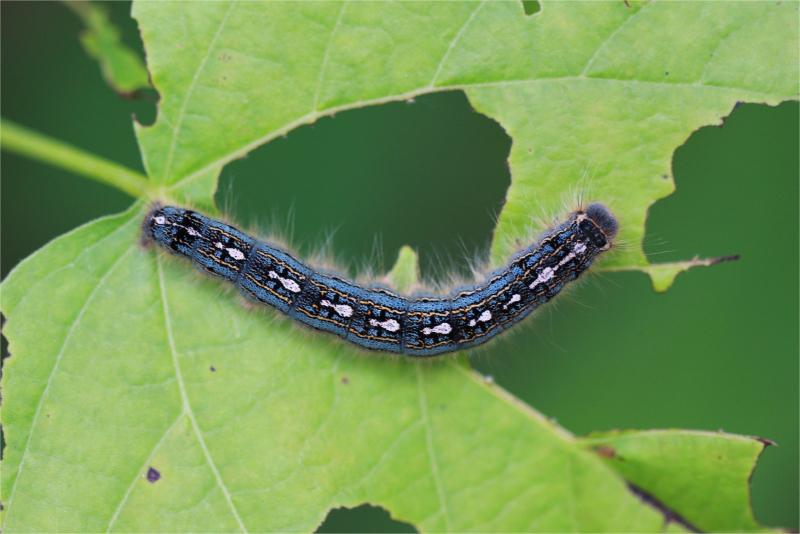
Forest tent caterpillar
Malacosoma disstria
Photo: Steven Katovich, Bugwood.org
Gregarious, but does not make a silken tent. Grows to roughly 2 inches long. Host plants include sweetgum (Liquidambar styraciflua), basswood (Tilia americana), birch (Betula), blueberry (Vaccinium), maple (Acer), oak (Quercus), tupelo (Nyssa), and willow (Salix).
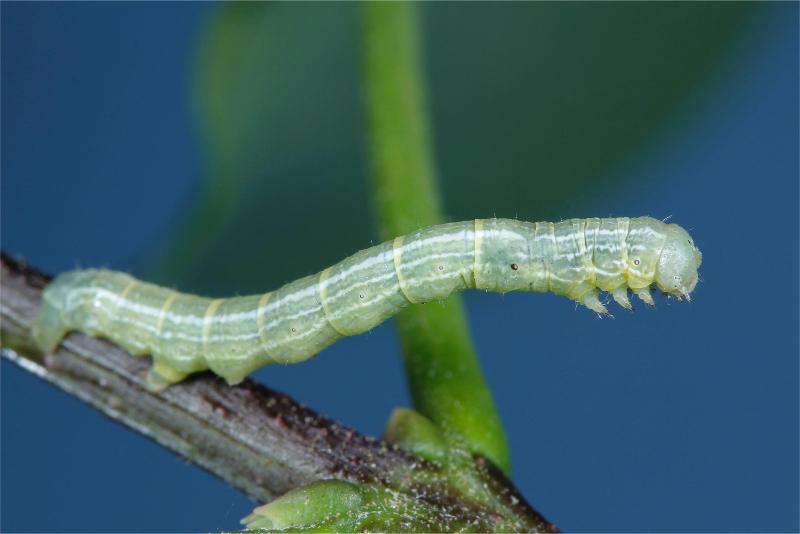
Fall cankerworm
Alsophila pometaria
Photo: Joseph Berger, Bugwood.org
Grows to about 1 inch long. Host plants include apple (Malus), oak (Quercus), maple (Acer), elm (Ulmus), cherry (Prunus), blueberry (Vaccinium), ash (Fraxinus), and willow (Salix).
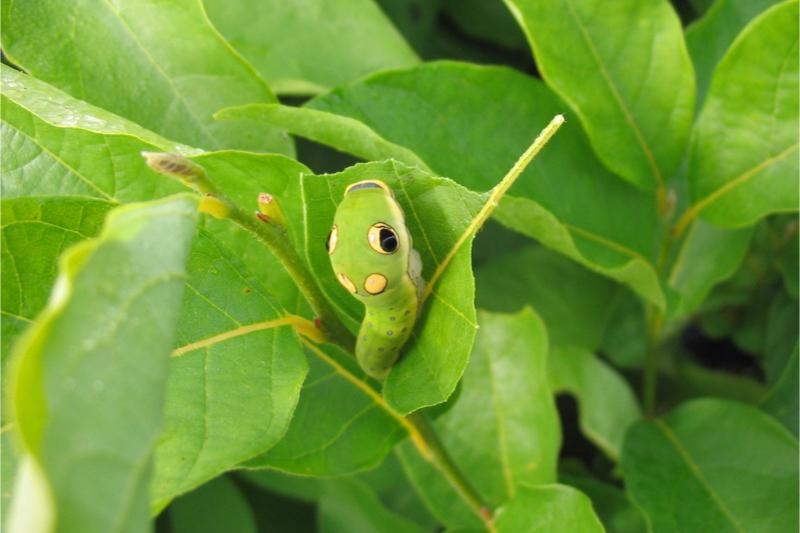
Spicebush swallowtail
Papilio troilus
Photo: Miri Talabac, University of Maryland Extension
Grows to a little over 2 inches long. Primary host plants are spicebush (Lindera benzoin) and sassafras (Sassafras albidum).
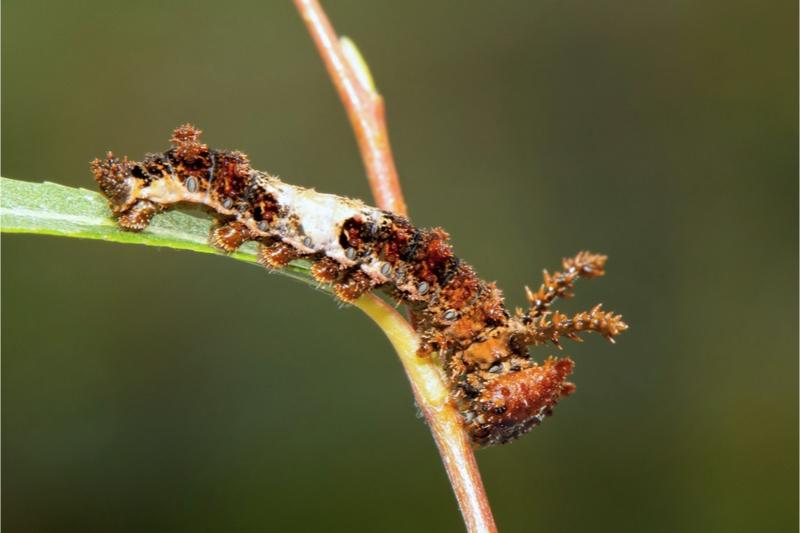
Viceroy
Limenitis archippus
Photo via Adobe Stock.
Grows to about 2 inches long. Host plants include willow (Salix), poplar and cottonwood (Populus), apple (Malus), and cherry (Prunus).
How do I manage caterpillars?
Each caterpillar instar eats progressively more food because the insect is growing rapidly. Early-instar (young) caterpillars may not cause noticeable plant damage, while late-instar (older) caterpillars can quickly defoliate branches or entire plants when populations are high (or when the host plant is still small).
Many caterpillars can be ignored because they do not cause substantial damage and the plant can afford to lose some leaves, especially later in the growing season (closer to when the plant goes dormant). Lots of chewed or disappearing leaves may look alarming, but trees and shrubs typically recover just fine with replacement growth.
In some cases a high-value plant might warrant intervention to control caterpillars, such as when a conifer cannot replace lost foliage. Although one defoliation event usually will not cause the death of a deciduous shrub or tree, repeated defoliations can significantly weaken or kill the plant, especially if it is already struggling from another issue, such as drought or dieback from a disease.
Which caterpillars could warrant control?
The following caterpillars may warrant intervention when they cause prominent damage to trees and shrubs. Each species links to a resource page with life cycle details and management recommendations.
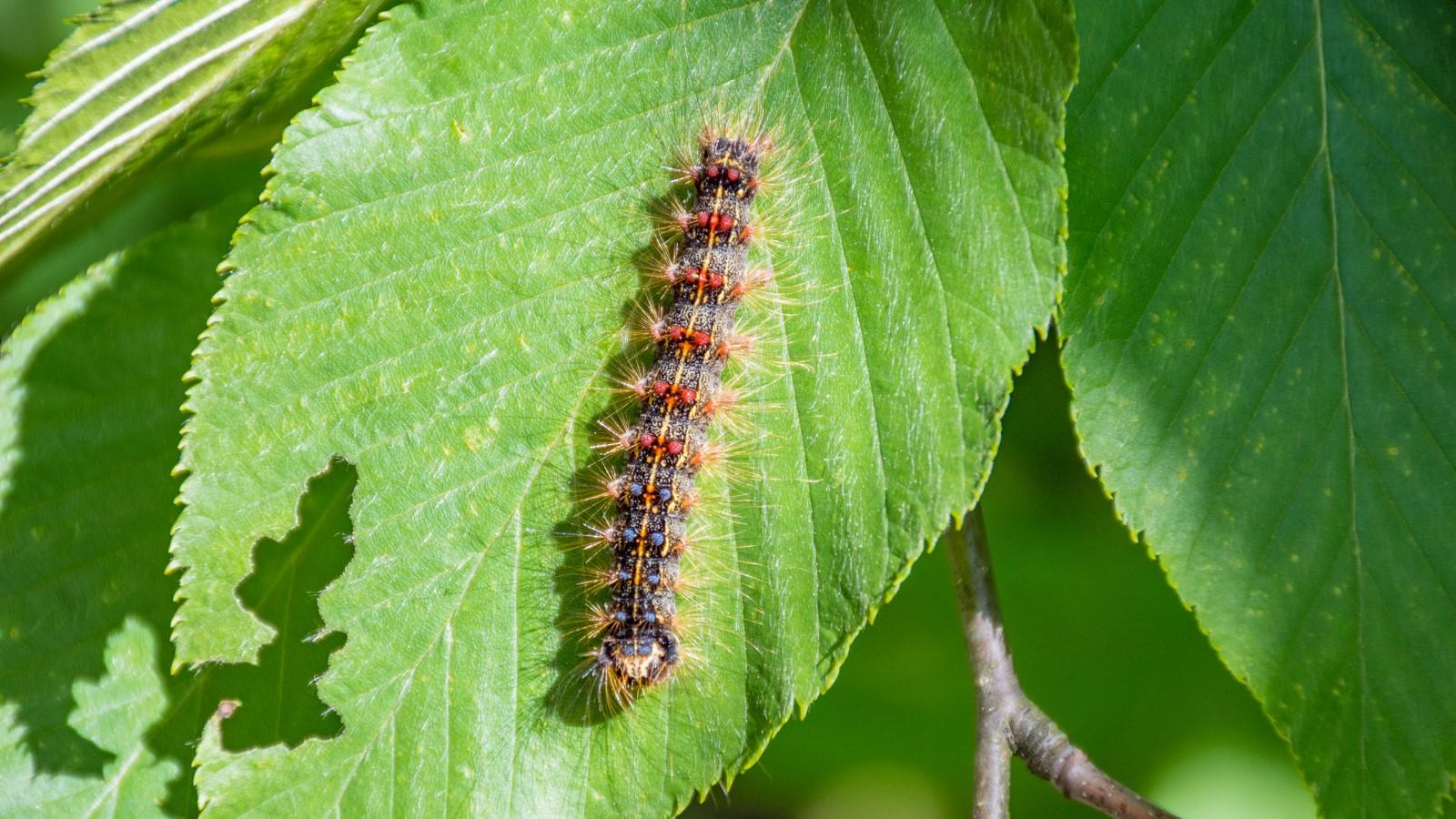
Spongy moth caterpillars prefer oak, but can utilize a wide range of host plant trees, including sweetgum, linden, willow, birch, apple, alder, boxelder, hawthorn, and Colorado spruce.
Bagworm caterpillars can feed on a wide variety of plants, but cause more cumulative damage to conifers (needled evergreens like juniper and spruce) than to deciduous shrubs and trees.
Caterpillars are easiest to manage while they are still young, especially when using an organic or reduced-risk insecticide. For example, Bacillus thuringiensis (Bt, specifically strains aizawai and kurstaki), is only effective on early-instar caterpillars.
Early-season caterpillars which can have population outbreaks which defoliate trees before they've had time to store much energy for recovery should be controlled when larvae are small and before the damage becomes extensive. Examples include spongy moth and spring cankerworm.
Mid- to late-season caterpillars generally do not require control, except potentially on very young trees or if heavy defoliation is occurring. Examples include fall webworm, yellow-necked caterpillars, mimosa webworm, and orange-striped oakworm. Bagworms feeding on deciduous trees can usually be ignored; on most needled evergreens (spruce, juniper, arborvitae, etc.), their feeding can result in more permanent damage since the eaten needles will not grow back.
How do I remove or treat caterpillars?
Pick off caterpillars by hand on shrubs and young trees within reach. (Use gloves in case they have irritating spines or hairs.) You can toss them elsewhere for wildlife to eat, or where the caterpillars may be able to find other plants to eat. Invasive species like spongy moth, euonymus leaf notcher, and box tree moth can be dropped into a container of soapy water or squished.
Prune off the silken "nests" of gregarious caterpillars. Pruning removes one or more years of branch growth, so select the location of pruning cuts carefully.
Insecticide as a last resort
Hire a professional (a certified arborist or certified pesticide applicator) when insecticide is used on larger trees. Good control of a caterpillar outbreak on mature trees can be difficult, especially when a contact spray is used.
Contact-type insecticide sprays like horticultural oil or insecticidal soap need to directly contact the caterpillars in order to work, so thorough spray coverage is essential. Caterpillars hidden inside a silken web or the fold of a leaf will be shielded from such sprays.
Systemic insecticides are absorbed by the plant, and the caterpillars are exposed as they ingest the pesticide. Residual pesticides linger on the surfaces of the plant that was sprayed, and for a time can expose caterpillars that walk over the residues or eat treated leaves before the residue degrades. Insecticides in these categories could potentially harm other organisms that are beneficial or not pests.
Caterpillar look-alikes
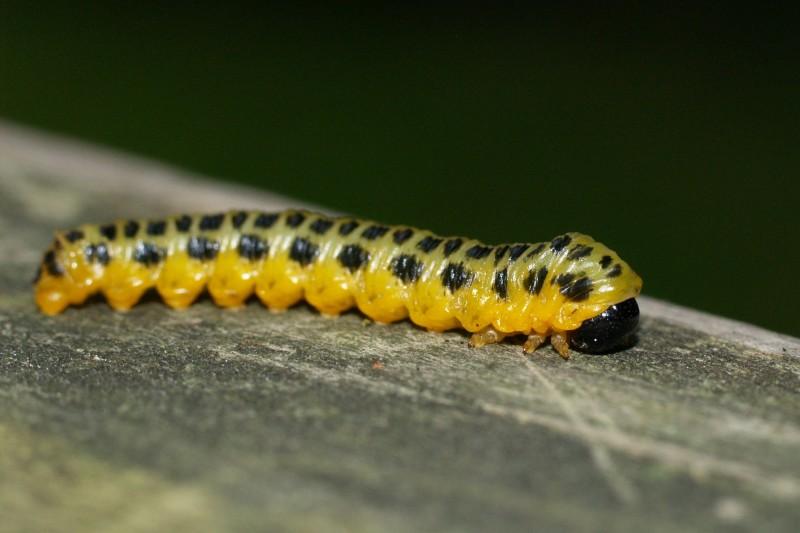
Sawflies are insects that belong to the same order as wasps and bees (Hymenoptera). Their larvae often look like caterpillars and feed on leaves in a similar way. Species identification and management options depend on whether the insect you're seeing is a sawfly or caterpillar.
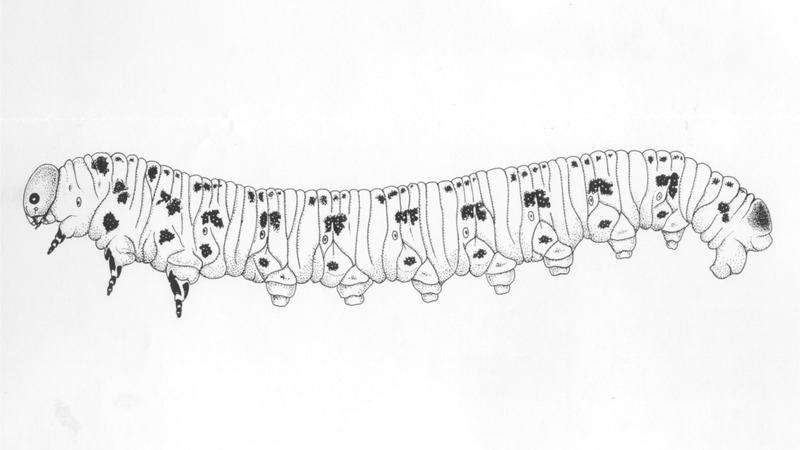
To tell sawfly larvae and caterpillars apart, one feature to look for is the number of legs. Both insects have three pairs of jointed, hardened "true legs" just behind their head. They also have "false legs," called prolegs, which are unjointed, soft, extendable legs on the abdomen.
Most caterpillars have 5 pairs of prolegs — one pair on the end of the abdomen (their rear) and four pairs in front of those. A few caterpillars, like inchworms/loopers, have fewer than 5 pairs of prolegs because they walk differently. Sawfly larvae have more than 5 pairs of prolegs, as shown in the following diagram.
Sawfly eyes are also prominent while caterpillar eyes are much smaller and harder to see.
Side view of a red-headed pine sawfly larva, showing a distinct eye and the legs along one side of its body: 3 true legs (behind the head at left) and 8 prolegs. Illustration: Randall Blackburn, Smithsonian Institution, Bugwood.org
Examples of sawfly larvae
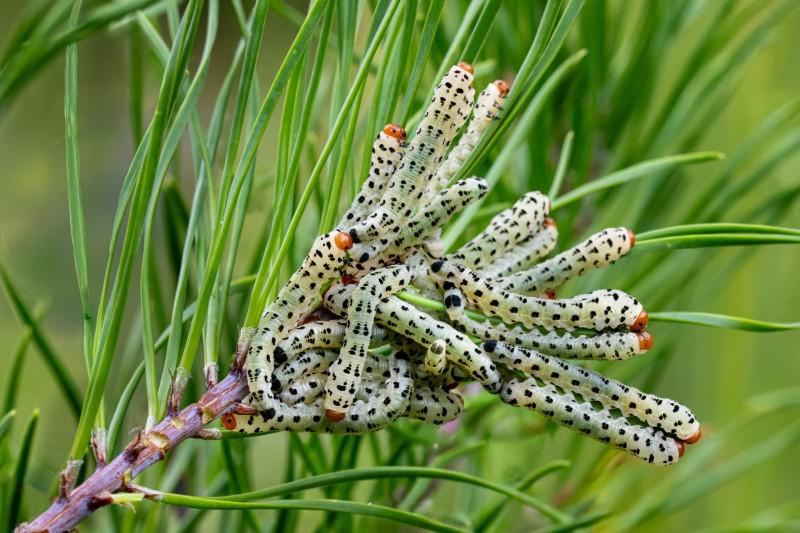
Red-headed pine sawfly. Photo via Adobe Stock.
Dogwood sawfly. Photo: Bruce Watt, University of Maine, Bugwood.org
For the identification and management of common sawfly species, visit: