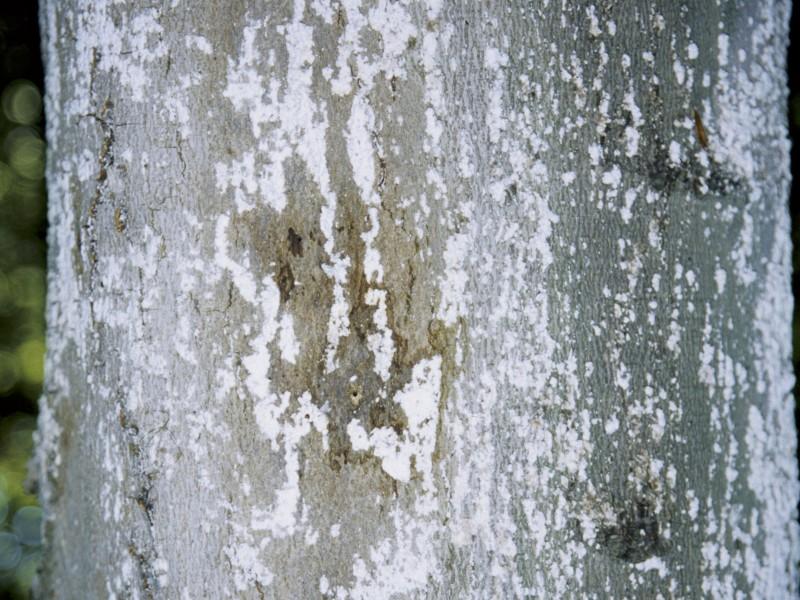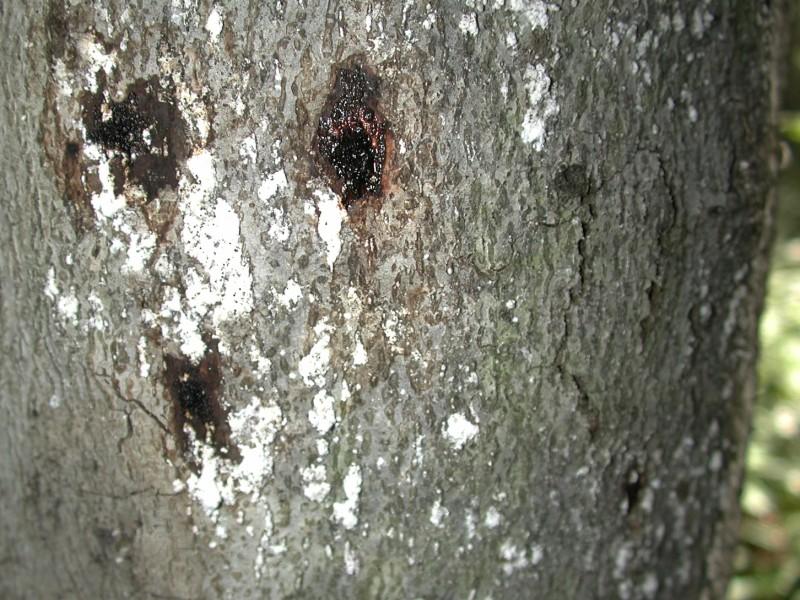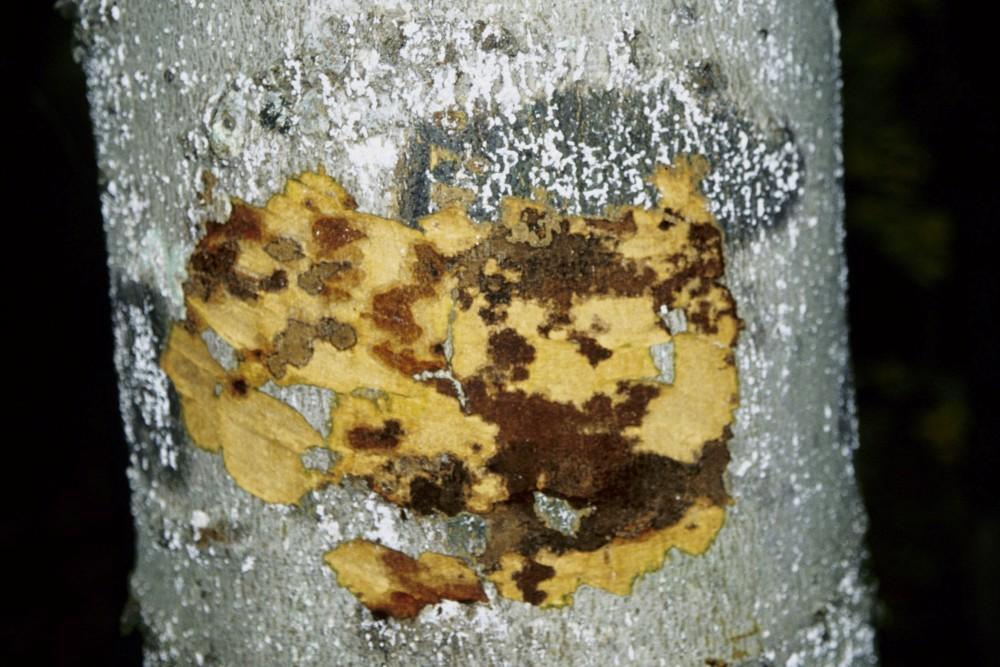
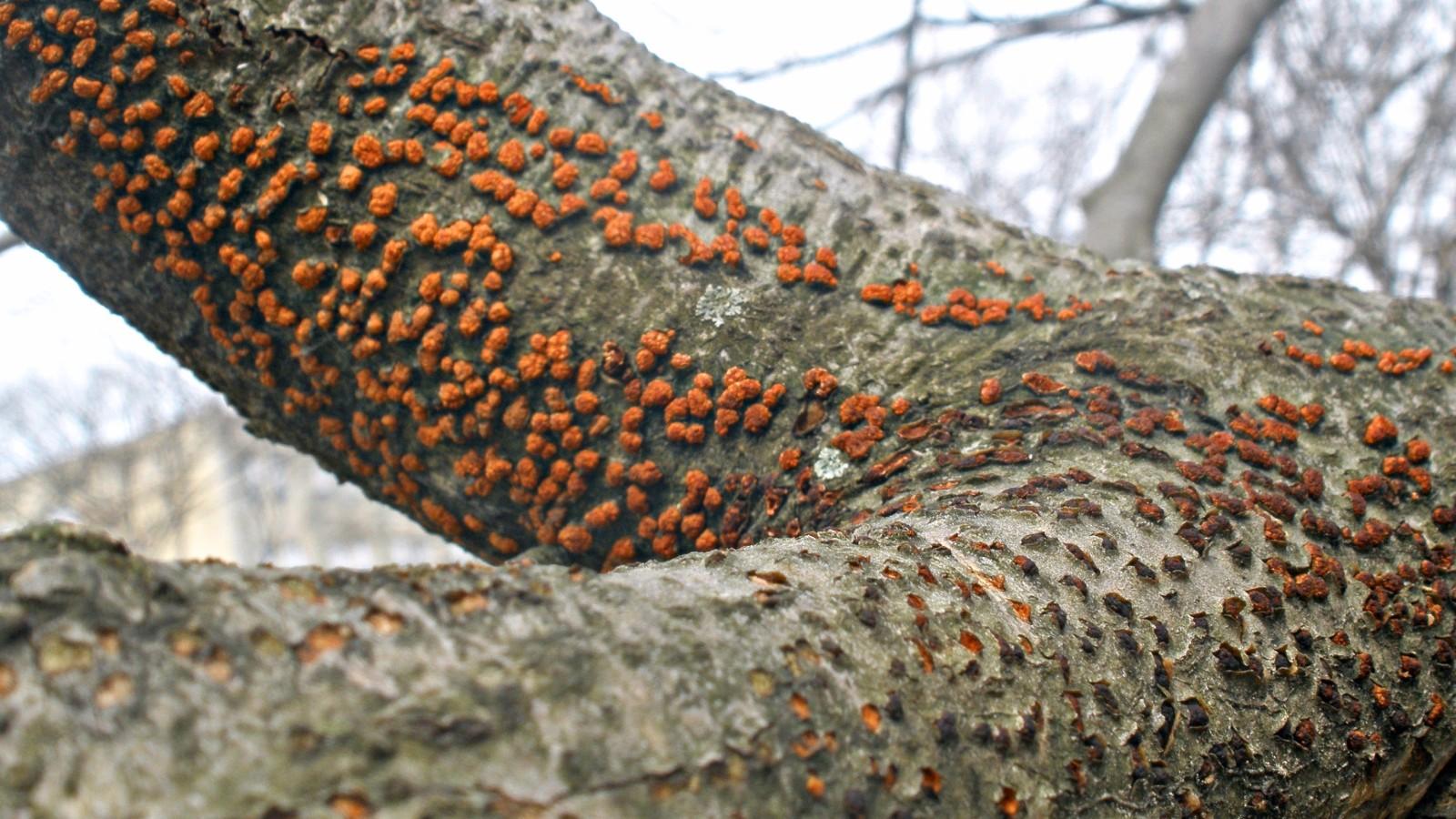
What causes beech bark disease?
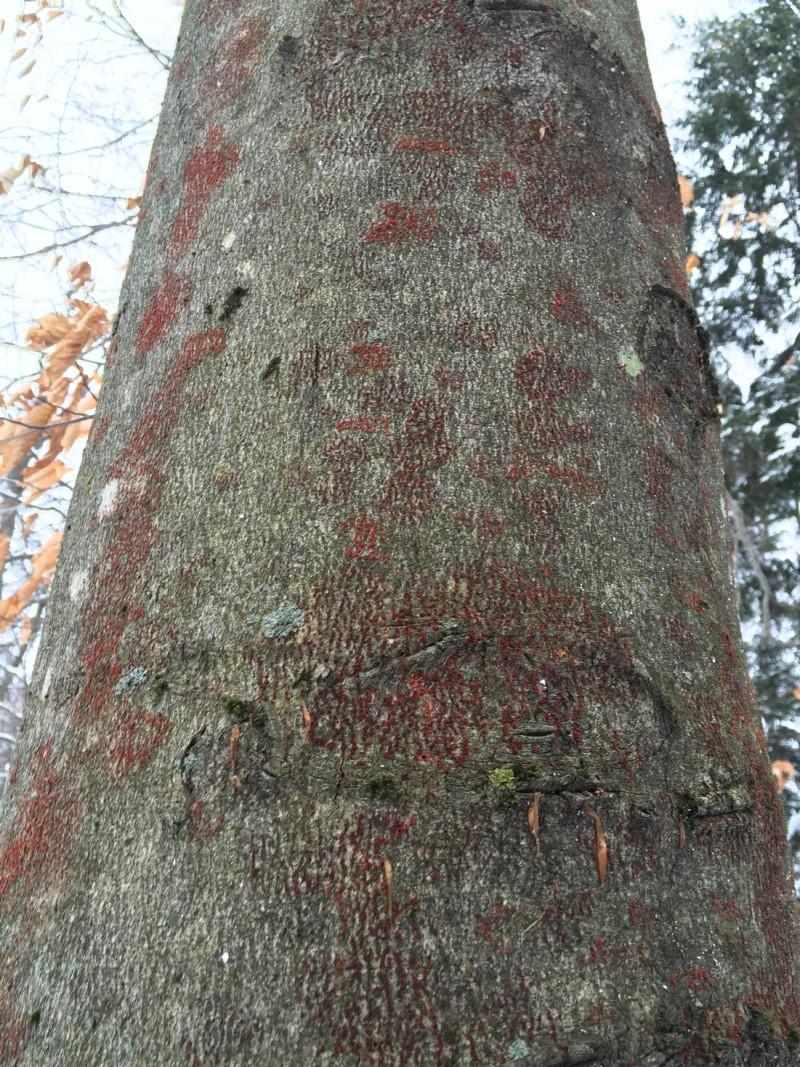
Photo: Richard Hamelin, University of British Columbia, Bugwood.org
Beech bark disease (BBD) is a condition that affects beech trees (genus Fagus) which is caused by two organisms: a scale insect and a fungal pathogen. The insect is a very small non-native armored scale species called beech scale (Cryptococcus fagisuga). The canker-causing fungus belongs to the genus Neonectria, including Neonectria faginata and Neonectria ditissima.
The insect's feeding creates tiny wounds (and after damage accumulates, cracks) in the bark, which in turn give the fungus the opportunity to start an infection. By themselves, the scale insects usually do not kill the tree, although the feeding of high scale populations may weaken them. The canker fungus can ultimately stunt and kill beech trees. In some forest areas, the mortality of beech has approached 50%, and the loss of timber value and food for wildlife is significant. The disease also poses a threat to ornamental beech trees (those planted in managed landscapes).