

The 4 Pillars of Managing Deer Damage
By Luke Macaulay, Ph.D., Wildlife Management Extension Specialist
-
Introduction
Introduction -
From Extirpation to Proliferation: Deer Recovery and Today’s Challenges
From Extirpation to Proliferation: Deer Recovery and Today’s Challenges -
Deer Nutritional Needs & Behavior
Deer Nutritional Needs & Behavior
-
Pillar 1: Hunting for Population Reductions
Pillar 1: Hunting for Population Reductions -
Pillar 2: Habitat Management
Pillar 2: Habitat Management -
Pillar 3: Repellents, Deterrents, & Predators
Pillar 3: Repellents, Deterrents, & Predators -
Pillar 4: Fencing
Pillar 4: Fencing -
Conclusion
Conclusion -
References
References
Introduction
Deer damage can cause significant economic losses for farmers, gardeners, and forest owners. This guide outlines strategies to reduce deer damage using four core tools. While this publication focuses on protection of agricultural crops, the principles discussed are also applicable for reducing damage to forests, landscaping, and gardens. The four core tools are:
- Hunting for Population Control
- Habitat Management: Diverting deer with food and cover
- Repellents, Deterrents, & Predators
- Fencing
Combining methods can enhance effectiveness and offer more options for reducing deer damage. Each method offers unique benefits, limitations, and costs that depend on site-specific factors, such as safety, labor, equipment, and financial constraints.
The following list of considerations can greatly affect the most feasible approaches for reducing deer damage:
- Equipment and materials: Access to and costs of repellents, sprayers, planting supplies, fencing materials, and hunting gear.
- Labor: Availability of skilled and qualified/licensed personnel for mixing and applying repellents, planting and maintaining diversion crops, setting up and maintaining fences, and employing safe and effective hunters.
- Organization of people: Coordination required to manage a hunting lease or group of hunters for effective deer harvesting efforts.
- Administrative costs and regulatory compliance: Expenses and efforts to ensure all hunters complete safety training, obtain licenses, follow applicable laws, tag and check in deer, and handle paperwork for crop damage permits.
- Proximity of neighboring residences: Restrictions due to Maryland’s prohibition on hunting or shooting deer within 150 yards of occupied residences or camps without owner/occupant permission, as well as considerations for safe bullet and projectile trajectories.
- Aesthetic and ecological considerations: Potential changes to farm aesthetics from high fencing, which can also limit wildlife movement beyond deer; certain repellents may function as insecticides, impacting non-target species such as bird chicks (e.g., wild turkey and northern bobwhite quail) that depend on insects for growth.
- Individual interest and preference: Personal priorities that influence how deer damage management approaches are selected and implemented.
Contraception and sterilization, covered later, are very costly and less practical for controlling free-range deer populations, though they can be effective on islands or within high-fenced areas.
Predators, also covered later, can regulate deer populations through fawn predation but remain unreliable for control in areas like Maryland due to variable and dynamic coyote populations and the absence of larger species, with reintroductions hindered by human safety and political concerns.
From Extirpation to Proliferation: Deer Recovery and Today’s Challenges
White-tailed deer were extirpated from large areas of the United States in the 1800s, and restoration efforts in the early 20th century resulted in a significant conservation success story. However, populations were restored with the absence of significant predators in the ecosystem, and populations began to expand rapidly in the latter half of the 20th century.
In the 1980s, populations began to increase and cause negative impacts on humans through deer-vehicle collisions (State Farm estimated that there were 1.8 million deer-vehicle claims in 2024) and causing significant impacts to vegetation and crops. Impacts to forest ecosystems have included over-browsed understories that reduce important cover for ground nesting birds and facilitate the spread of non-palatable invasive species (Rawinski, 2008).
Coyotes, a major deer predator, have expanded across Maryland in recent years, but their density remains too low in many areas to significantly impact deer populations. Research indicates coyotes can affect deer populations, particularly fawns, but their effectiveness in controlling population growth is debated due to numerous environmental variables at play (Bragina et al., 2019; Kilgo et al., 2010). Other natural predators, such as wolves and mountain lions, remain absent from Maryland and many regions where deer density is a problem and re-introductions of these predators in heavily populated areas like Maryland raise concerns about human safety, increased predation on pets and livestock, and as such is politically controversial and has not been seriously considered.
Human hunters remain the primary deer predators, yet hunting alone may not be sufficient to control populations as 1) hunting is not allowed or is not feasible on some properties, providing refuges of high density, and 2) many hunters do not harvest enough female deer, because buck harvests do not affect population growth rates. Hunter numbers have also declined in recent decades; however, most landowners do not have problems finding interested hunters for their property.
Deer Nutritional Needs & Behavior
White-tailed deer exhibit dynamic nutritional demands and activity patterns that vary by season, weather, and life stage, complicating efforts to predict and mitigate crop damage in agricultural landscapes. High-energy needs during lactation and antler growth, combined with crepuscular and nocturnal foraging behaviors influenced by factors like post-rainfall crop growth and low wind, often align with vulnerable crop stages, amplifying damage. Furthermore, white-tailed deer populations can vary dramatically over years in response to habitat changes, disease, and hunting pressure. These factors, discussed below, can help us understand impacts and how to best manage them.
Deer Nutritional Requirements
White-tailed deer consume approximately 2-3% of their body weight in dry matter daily for maintenance (French et al., 1956; Fowler et al., 1967; Verme & Ullrey, 1984). Assuming typical green forage has 60-75% moisture content, this equates to 6-8% of body weight in fresh (wet) green forage—for a 150-pound deer, that’s roughly 9-12 pounds daily. Damage peaks in late May/early June when lactating does’ nutritional demands surge (up to 3-4% dry matter equivalent), coinciding with crop germination. A single deer can destroy many young plants during this particularly vulnerable phase, though plant growth in some crops (in particular soybeans) can outpace browsing pressure later in the season.
Deer diets shift seasonally: forbs dominate spring/ summer, transitioning to browse and hard mast (e.g., acorns) in winter (Hewitt, 2011), although this can vary based on forage availability. Agricultural crops like soybeans—one of the most preferred forages— are readily consumed during spring (Colligan et al., 2011). In the Eastern U.S., mature closed-canopy forests offer limited ground-level forage, funneling deer to adjacent crop fields.
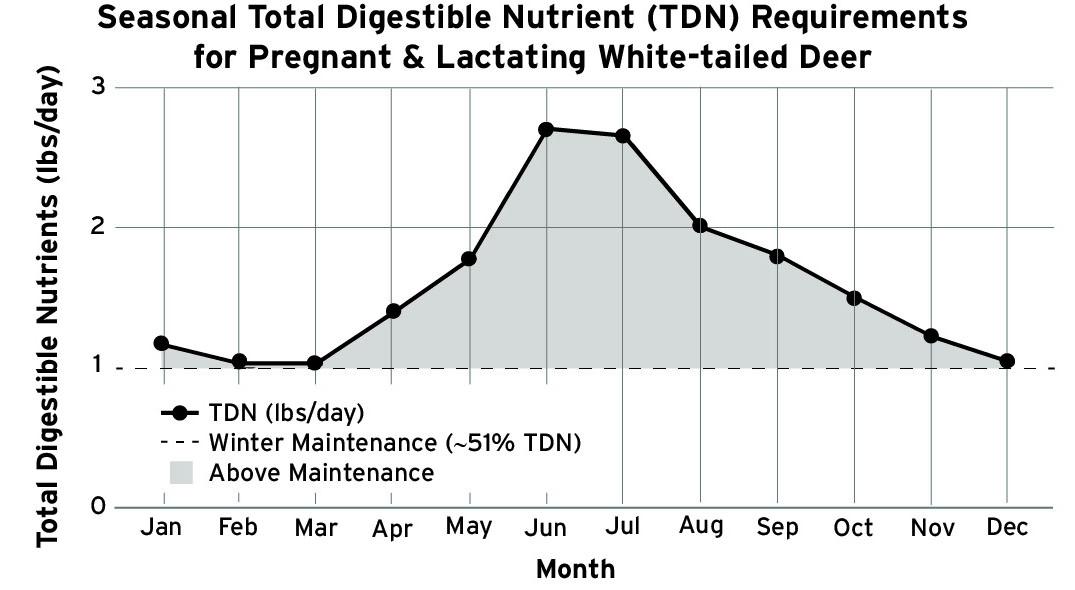
White-tailed deer show annual metabolic changes, with lowest rates in late winter and peaks in summer driven by lactation, fawning, and bucks’ antler growth (April–July) (Moen, 1978; Demarais & Strickland, 2011). These align with highest forage intake and Total Digestible Nutrients (TDN) requirements—a measure of digestible energy from carbs, proteins, and fats for maintenance, growth, and reproduction (Fig. 1).
Activity Patterns
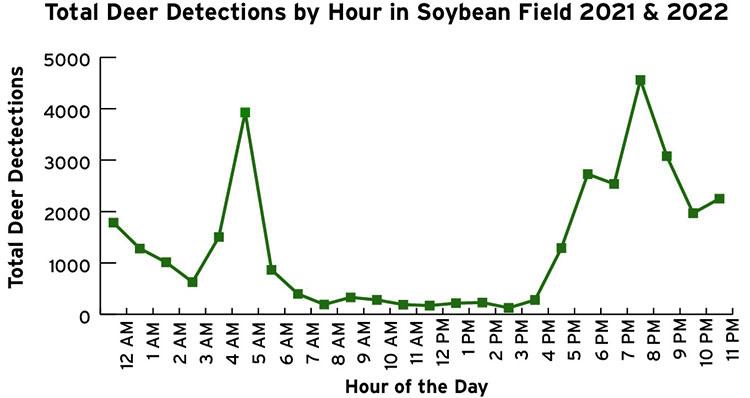
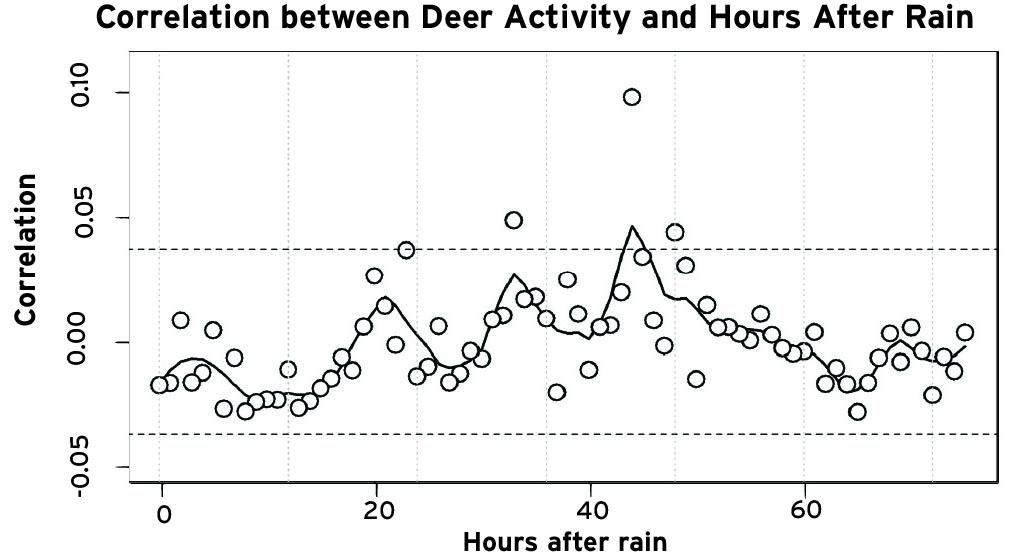
Motion-activated trail cameras deployed on soybean fields at the Wye Research & Education Center (Queenstown, MD) during 2021–2022 revealed how weather, daylight, and moon phase influence deer grazing. We analyzed over 2,600 observations to identify patterns that can inform timing for deterrents, patrols, or hunting (detailed statistical model in Table 1; cross-correlations in Fig. 4). Key findings include:
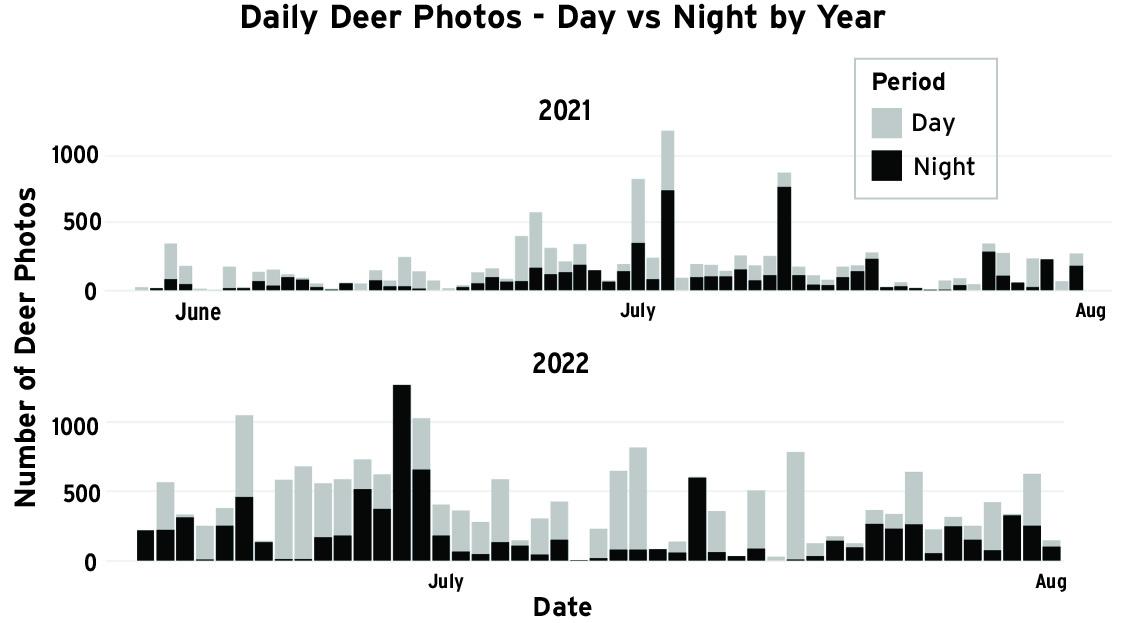
- Time of Activity: Deer show strong crepuscular (dawn and dusk) peaks, with evenings accounting for higher overall grazing. About 64% of activity occurs outside legal hunting hours (beyond 30 minutes before sunrise or after sunset), and just 5 days drove 45% of the 60-day total activity (Fig. 2; Fig. 3). Nighttime foraging is significantly elevated, increasing roughly 40% in full darkness.
- Precipitation: Active rain has little impact, but grazing ramps up 33–48 hours afterward, likely due to palatable regrowth that enhances dawn and dusk feeding (12-hour lagged peaks; Fig. 4).
- Wind Speed: Higher winds suppress activity by about 8% per mph increase.
- Barometric Pressure and Moon Phase: No significant effects on grazing patterns.
These insights can be used to target interventions by time of day and weather to reduce deer grazing in crops.
| Predictor | Coefficient (SE) |
|---|---|
| Barometric Pressure | 0.260 (0.457) |
| Wind Speed | -0.083*** (0.017) |
| Night | 0.334* (0.143) |
| Precipitation | -2.924 (2.060) |
| Observations: | 2,651; Theta: 0.115*** (0.006). *p<0.05; **p<0.01; ***p<0.001 |
Deer Population Variation
Populations fluctuate with habitat quality, drought, flooding, disease, and other stressors, leading to variable damage—low during declines, high post-recovery (Weiskopf et al., 2019). Outbreaks of Epizootic Hemorrhagic Disease (EHD) have been known to cause dramatic declines in deer populations that may take several years for populations to recover.
Habitat enhancements that increase forage can spur rapid population growth and additional damage to crops. As we discuss below, integrating hunting for density control with habitat enhancements is essential to manage damage.
Pillar 1: Hunting for Population Reductions
Population control is an important component in reducing overall deer densities and grazing impacts. Hunting can generate lease income and reduce crop damage, as hunters are willing to pay for access to private property to hunt. It is also an important tool to combine with repellents, temporary electric fences, and habitat diversion efforts, which may be less effective in areas with high density deer populations.
For hunting to significantly reduce populations, female deer need to be the primary area of focus for harvest effort, since they most impact future growth of the population through fawn production. Although buck harvest reduces the population by that individual, it does not affect the future population growth rate as other bucks will readily breed available females. Put another way, even with significant buck harvests, the deer population will often continue to grow. Hunting female deer is key to reducing the overall population and its future growth rate.
Doe harvests are also a key tool for managing a deer herd to maximize trophy buck potential—a key goal for many hunters. By reducing deer densities below carrying capacity, the remaining deer have more abundant food resources, gain more weight, and grow larger antlers (French et al., 1956; Harmel et al., 1989; Turner et al., 2024). Reducing doe populations also increases the buck-to-doe ratio and can result in a smaller overall deer herd (with reduced foraging demands on crops), but with an equal or greater number of quality bucks on the property for hunting. This approach, described as Quality Deer Management or Trophy Management, uses doe harvest, in combination with habitat management, hunter management, and herd monitoring to achieve better buck hunting opportunities (Adams, 2013).
The following best practices can help improve the effectiveness of hunting as a tool to reduce deer populations:
- Target female deer in harvest efforts to reduce population growth rates: To encourage hunting lessees to harvest additional females, landowners can offer reductions in lease rates for the number of females harvested or implement requirements that a certain number of female deer must be harvested every year to maintain the lease.
- Implement intensive hunting efforts by multiple people on a single day. Allowing an area to rest for multiple days or weeks between hunting efforts reduces the ability of deer to pattern hunters and reduces their tendency to transition into more nocturnal behavior.
- Use disturbances to get deer moving on hunt days. During hunting days, drivers can gently walk or drive near areas where deer are likely to be bedded down to get them moving and into range of hunters. Using gentle pressure is helpful as it prevents deer from running rapidly. Check local laws on legality of driving deer (some states allow the use of dogs) and ensure hunters are aware of the drivers’ routes and timing to maintain safety.
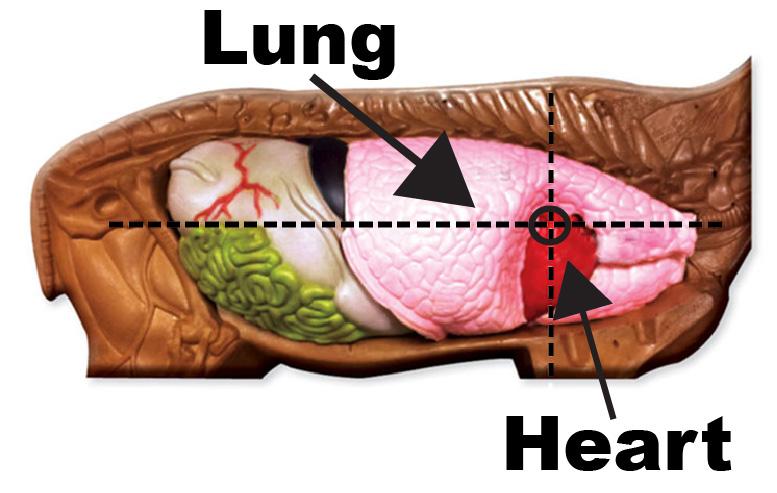
- Shot placement: Two shot placement locations can immediately drop a deer in place, which can prevent a deer from running and flagging its tail. This is important as it reduces the chance that other deer in the group will flee from the area. Harvesting deer in this manner allows for multiple deer to be harvested from a group in a single sitting.
The National Deer Association recommends drawing a vertical line straight up the deer’s front leg, and a horizontal line across the body splitting it in half. This placement can immediately incapacitate deer.
A second shot placement targets the deer’s backbone. This placement requires a high degree of accuracy and knowledge of deer anatomy. Notice that the backbone does not run across the top of the of the body, but dips down in the neck, making this a more difficult shot to successfully execute.
- Utilize firearms: Firearms have greater energy and longer ranges improving one’s ability to harvest multiple deer in a group.
- Order of harvest: When harvesting multiple deer, harvest out the oldest, largest, and wariest female deer first (often the one that is last to enter the field), then progress to the next oldest female, etc. Mature does have higher fawning rates, and removing wary and knowledgeable females helps make future harvest efforts easier.
- Baiting: Where legal, bait and mineral attractants can significantly improve hunting success. Molasses can increase attraction to bait piles. Note: Baiting and feeding are not permitted on state-owned and -managed properties in Maryland, and certain states prohibit all baiting and feeding.
In Maryland, land managers can apply for crop damage permits to harvest female deer year-round. In the eastern region of the state (Region B), hunters can harvest up to 10 female deer each using a regular hunting license during the regular firearms season, allowing for high levels of harvest even without crop damage permits. In western Maryland (Region A), hunters can only take 2 females, so land managers in Garrett, Allegheny, and western Washington counties may need to apply for crop damage permits to increase the harvest of female deer.
Pillar 2: Habitat Management
Manipulating food and cover resources can help shift deer activity away from areas sustaining deer damage. Four key approaches are:
- Establishing food plots to divert deer feeding,
- Managing forested areas to provide more forage,
- Planting alternative crops that are not palatable to deer,
- Managing timing of planting.
An important caveat to this approach is that providing attractive food and cover resources to divert deer from damaging crops also supplies resources that can increase the reproductive success of the deer population. As such, habitat improvement efforts should be combined with hunting to prevent populations from expanding, which would otherwise result in a return of deer feeding pressure on crops in future years.
Food Plots
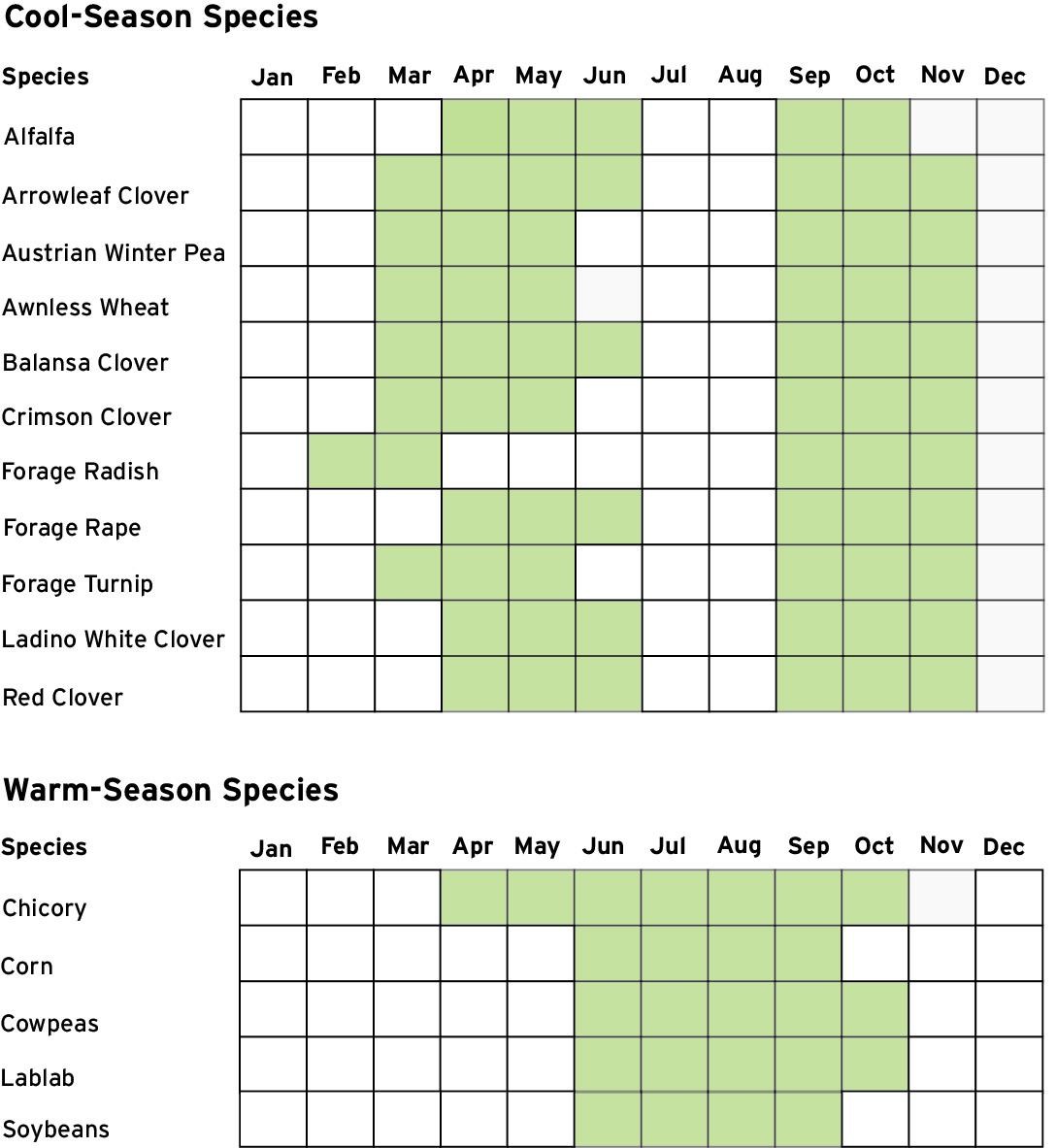
Planting food plots for deer can divert them away from cropped areas that are susceptible to damage. There are two main categories of food plots: cool-season (e.g., clovers, alfalfa, brassicas, peas, vetch, wheat, oats) and warm-season (e.g., soybeans, cowpeas, lablab, corn). Cool season plots produce the most biomass in spring and fall, and warm-season plantings produce the most biomass in summer.
The most vulnerable time for corn and soybeans can be just after planting as seedlings emerge. Matching food plot species that are producing biomass during seedling emergence can help provide food resources and reduce crop damage. Notably alfalfa, arrowleaf clover, balansa clover, rape, white clover, and red clover tend to continue to produce biomass into June when new crop plantings are emerging (Fig. 6).
Cool-season plots can attract deer in fall, winter, and spring and can assist with hunting efforts, but tend to lose vigor or senesce during the hot summer months. Notably, warm-season crops like corn and soybeans will mature and die back in fall, but if left unharvested, they can also be used to attract deer in winter for hunting efforts.
How to Select a Soybean for Diversion
This section will focus on the applicability of soybeans as a diversionary tool for crops, which has been the focus of three years of research at the University of Maryland funded by the Maryland and Delaware Soybean Boards. Many of the concepts are relevant to other food plot species and diversionary goals. For a fuller treatment on other food plot planting options, see Landowner’s Guide to Wildlife Food Plots (Harper, 2019).
Soybeans are an attractive diversionary food plot options for deer, as they grow high levels of biomass, provide high nutritional value, and are highly palatable (Colligan et al., 2011). Multiple varieties of soybeans are available, with many varieties bred for forage characteristics, known as forage soybeans.
The main drawback to using soybeans is that they are highly vulnerable to overgrazing in their first few weeks after germination. If a deer grazes a soybean seedling below the cotyledon, the plant will die. A single deer can eat dozens of cotyledons in a short period. Some approaches for getting soybeans past these vulnerable periods include planting dense populations at narrow row spacings, especially in areas with known deer damage, and using repellents and deterrents (Pillar 3 below), temporary electric fencing (Pillar 4 below), and lethal control (Pillar 1 above) during the vulnerable establishment phase.
Planting timing can be important. Planting sacrificial diversionary plots in high damage areas in advance of main crops can help feed deer while core crop areas are emerging.
Deer Preferences
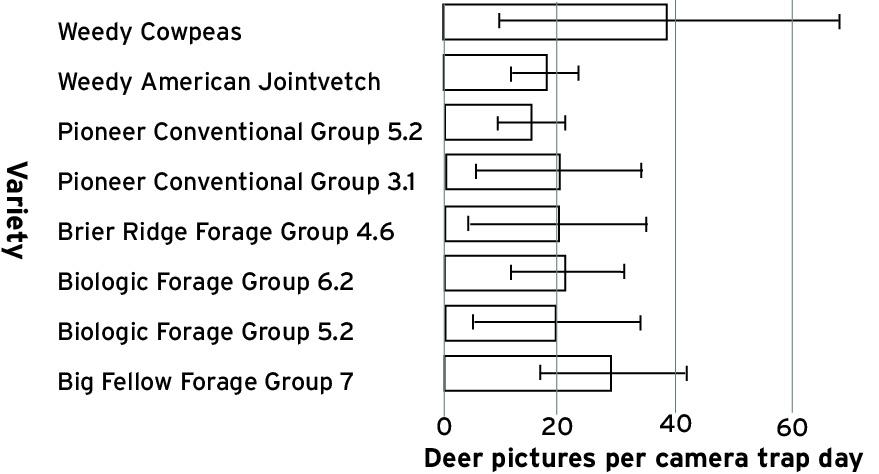
University of Maryland researchers sought to measure deer preferences for different soybean varieties and other commonly planted food plot species. We used trail cameras on replicated strip plots on a 5-acre field over two years to quantify grazing activity on each different variety.
Deer grazing behavior captured on trail cameras was highly variable between varieties (Fig. 7), and we did not detect statistically significant differences between grazing of different soybean varieties. From our research, deer preferences for certain areas of fields were a greater predictor of deer grazing than soybean variety. We found deer grazed more heavily in sections of the field that were a) close to bedding cover, b) more concealed by tree lines or tall vegetation, and c) concealed by swales or slopes.
We have heard anecdotes from farmers and researchers of deer crossing a soybean field to graze on a particular soybean variety (such as edamame) out in the middle of an open field. Although these strong preferences are compelling and may very well show a strong preference for certain varieties by certain deer, we were not able to replicate this type of behavior across the seven varieties of soybeans tested. Additional testing of more varieties, across more regions and replicates, may reveal statistically significant differences. Some of these cases could also be driven by preferences of a single animal or a small group of animals and may not hold across deer populations in different regions.
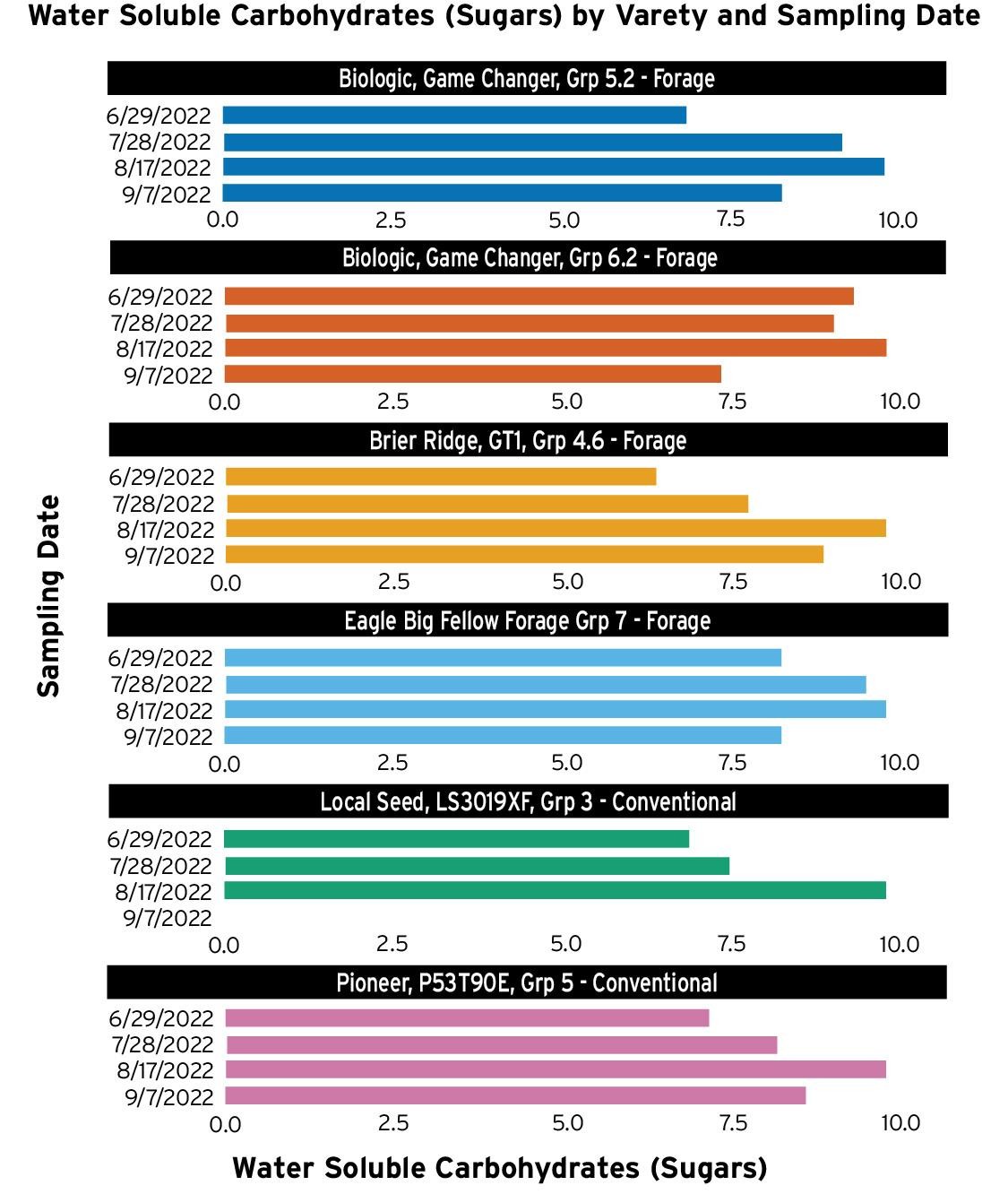
Research at Michigan State University has investigated relative sugar concentrations (measured as water-soluble carbohydrate (WSC)) in soybean leaves as a possible driver of deer preference. This work has demonstrated that WSC concentration varied significantly among soybean brands and varieties sampled since 2019 but is not correlated with important production factors like maturity group or yield. One study compared three varieties of commercial soybean at a single location in 2021, finding that deer browsing was different among varieties and significantly correlated with water-soluble carbohydrate concentration in soybean leaves (Dedecker, 2023). However, as in the Maryland research, landscape factors other than WSC explain the greatest proportion of variation in deer browsing, and browsing itself likely has some effect on WSC concentration in soybeans (i.e., age of leaves on browsed vs. unbrowsed plants).
University of Maryland researchers also tested water-soluble carbohydrate levels across the growing season and found subtle variations in sugar concentrations, but not statistically significant differences (Fig.8).
Although University of Maryland research did not detect statistically significant deer preference among soybean varieties, there are several potentially important factors to consider when choosing a soybean variety as a diversion crop. The research suggested that the most important considerations should be biomass production and browsing resilience (rapid regrowth, leafiness, etc.), which will feed more deer in the diversion areas and prevent damage to core production areas. Other important factors, discussed below, such as maturity group, determinate or indeterminate growth habits, and forage vs. conventional varieties, should be considered when selecting the soybean variety for diversionary planting.
Biomass
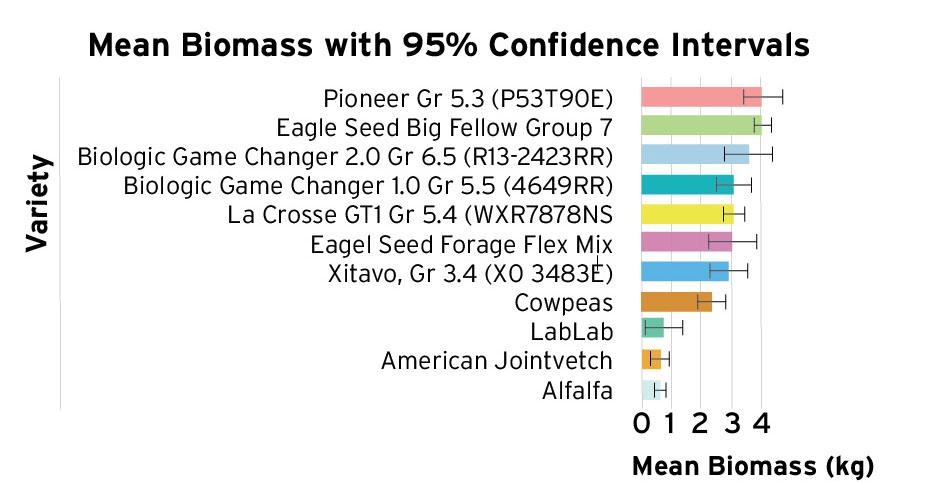
On August 8, 2023, we measured biomass production of soybeans that were protected from deer grazing across 6 replicates of 1m2 plots. Our results showed high variation between replicated plots but did reveal that even conventional soybeans (in this case, a Pioneer Group 5.3) can produce the same average biomass as the highest producing forage soybean (Eagle Seed Big Fellow), although with greater variation between replicates. All forage soybeans produced greater biomass than a conventional group 3.4 soybean (Fig. 9).
The other warm-season food plot species planted (lablab, cowpeas, and American jointvetch) did not produce the same biomass as any of the soybean varieties we planted and do not carry herbicide-tolerant traits that are a core component of most agricultural production systems, making them less suitable for use in agricultural settings.
Maturity group
The maturity group of soybeans determines how early soybean plants mature and lose their leaves. Soybean yields can be negatively impacted if the soybean pods have not matured before the first frost. Planting the appropriate maturity group for a given latitude ensures the maturation of the plant before the first frost. Lower numbers (group 1 or 2) are planted in northern latitudes and result in faster maturity, while higher numbers (7 or 8) will continue vegetative growth later into the summer and mature later in the fall.
Later-maturing soybean varieties tend to produce more biomass, encouraging more deer feeding for a longer period. These varieties will continue to put on new growth later into the summer than earliermaturing soybeans, providing palatable forage for a longer time. This biomass production later in the summer comes at the cost of a reduction in harvestable grain yield (Table 2).
| Variety | Maturity Group | Forage or Conventional | Mean Soybean Yield |
|---|---|---|---|
| Pioneer P31T64E | 3.1 | Conventional | 48.1 |
| Brier Ridge GT1 | 4.7 | Forage | 50.3 |
| Pioneer P53T90E | 5.3 | Conventional | 53.0 |
| Biologic R13-2423RR | 6.0 | Forage | 46.5 |
| Eagle Seed Big Fellow | 7.0 | Forage | 35.9 |
| Dynagrow S72XT80 | 7.2 | Conventional | 46.2 |
Selecting later-maturing soybeans as a field buffer may help protect earlier-maturing soybeans in agricultural settings. Research on the effect of defoliation by deer on soybean yields found that yields are most impacted by defoliation during the vegetative, flowering, and early pod formation stages (Board et al., 1994, Garrison and Lewis, 1987). Later-maturing varieties around a field edge may be more attractive to deer when earlier-maturing soybeans are at a more vulnerable phase of pod development. Additionally, later maturing varieties can provide an attractive food plot to support hunting and lethal control efforts during early deer hunting seasons. Although late maturity groups often produce lower yields in more northern latitudes, leaving the dried crop standing can provide additional opportunities for hunting over unharvested soybeans in winter as deer consume unharvested soybeans from pods.
Determinate or indeterminate
Soybean growth habit—determinate or indeterminate—dictates whether plants complete vertical growth and flower simultaneously (determinate) or flower progressively on lower stems while continuing vegetative growth above for several weeks (indeterminate). Though research has not quantified different deer preferences between growth habits of soybeans, indeterminate varieties may offer superior forage because deer favor new growth, which these plants produce later into summer, alongside higher overall biomass.
Forage or Conventional Soybeans
No universally accepted standards distinguish forage from conventional soybeans, but forage varieties are typically later-maturing for the region, selectively bred for higher leaf biomass, and enhanced palatability/nutrition for livestock. Among forage varieties planted, Brier Ridge GT1 resembled conventional soybeans, with upright growth and similar leaf hairs. In contrast, Eagle Seed Big Fellow had fewer hairs, larger smoother leaves, and grew with viny growth habit that lodged in late summer. Despite these differences, our methods detected no significant deer preferences between forage and conventional types.
Farmer experience
A small survey of farmer experience showed varied results but an overall satisfaction with reduced damage from using forage soybeans. Eight farmers selected an average score of 7 on a scale of 0-10 in terms of how well the forage soybeans reduced damage. Two farmers with lower ratings noted that the soybeans were completely grazed down by deer before they had a chance to establish, suggesting that larger areas need to be planted, a higher population, or that some additional protection during establishment is needed. Some farmers experienced challenges with matching herbicide-resistant traits between forage soybeans and their conventional crops, leading to lost crops due to spray drift from conventional soybeans.
Forest Management
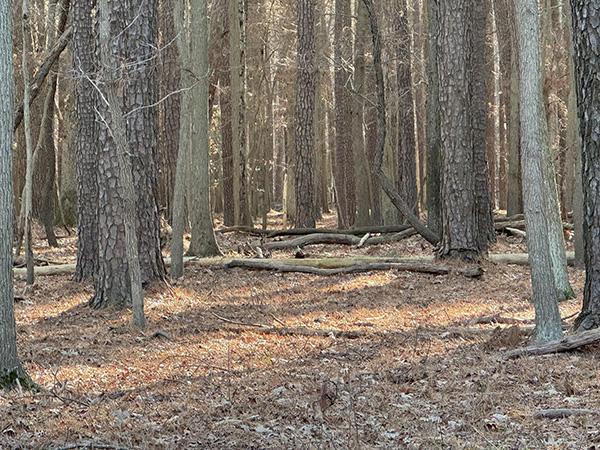
Many Maryland forests feature closed canopies with minimal understory vegetation for deer forage (Fig. 10), funneling them to crops when no fields or meadows are available. Deer prefer bedding and grazing in covered areas, so management practices that reduce canopy cover, increase sunlight, and boost understory food/cover can keep them in forests.
Farmers and landowners can enhance forested habitat for deer via the following practices, but as noted earlier, pair them with population control (e.g., hunting) to avoid boosting carrying capacity and long-term population increases:
- Clear-cuts: Remove all trees in a designated area to create open patches, promoting rapid regrowth of diverse understory plants and young trees that provide abundant forage and cover for deer.
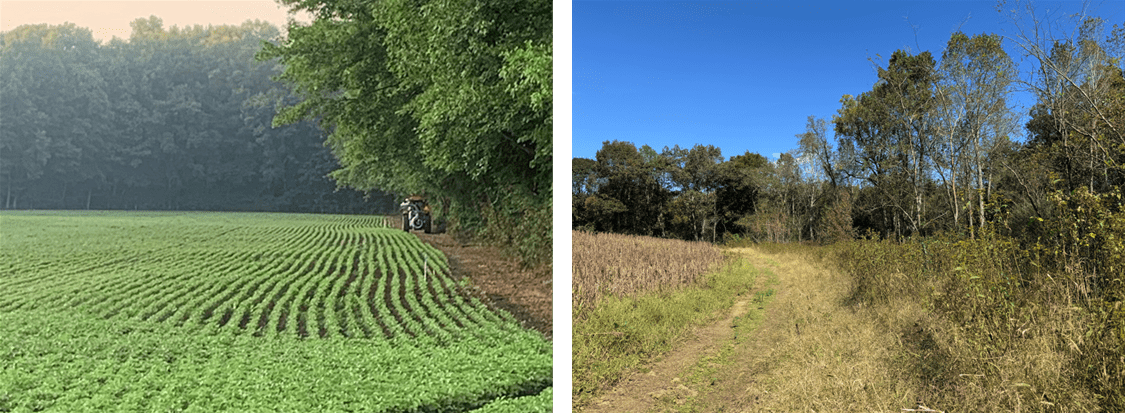
- Edge feathering: Gradually cut back treelines along field edges to create transitional zones from open grassland to shrubs and young forest, fostering herbaceous vegetation and thick cover that deters deer from crops while boosting field-edge yields by reducing tree shading and root competition (Fig. 11).
- Crop tree release (a.k.a. chosen tree release): Release high-value “crop” trees (e.g., oaks) by removing competing trees within their canopy. This enhances acorn production—a key winter deer food—and overall habitat for ground-nesting birds like wild turkeys.
- Rotational cuts: Harvest trees in rotating blocks to maintain uneven-aged stands, sustaining sunlight penetration and a mix of forage layers without full clear-cutting.
- Forest thinning: Reduce tree density to lessen competition, improving herbaceous understory growth and acorn yields (especially when prioritizing oaks), though it may favor shade-tolerant species regeneration like invasive Japanese stiltgrass, American beech, and maples. Monitor these stands to avoid suboptimal regeneration.
- Targeted herbicide or girdling for stand improvement: Kill undesirable trees (e.g., invasives) via chemicals or bark removal to favor desirable species, increasing light to the forest floor and stimulating diverse, deer-preferred vegetation.
One habitat improvement practice that can help near crop fields is the practice of “edge-feathering,” where forests are cut back along field edges to create a more gradual natural transition between the forest to a grassland into an agricultural field (Fig. 11). This transition zone creates abundant herbaceous vegetation and thick cover that deer can feed in without having to venture into crop fields. Manage edge-feathering zones as follows:
- Grasslands/transitions: Mow or disk annually (February/March) to preserve winter cover and minimize nesting-season impacts; or use prescribed fire (February–April 15; contact Maryland DNR Forest Service for permits/training).
- Shrub zones: Mow, disk, apply selective herbicide, or burn every 2–3 years.
- Young forests: Herbicide-kill select trees to sustain sunlight and herbaceous growth.
These weedy habitats offer diverse forage and superior cover over mature, understory-poor forests.
Contact the Maryland Forest Service for tailored forest management plans.
Alternative crops
Some crops are not appealing to deer as forage, or are not substantially damaged by deer browsing, and can be planted as an alternative to soybeans and corn. Grain sorghum and grass hay are the two most common crop alternatives that are not significantly consumed by deer. Winter cereals may also be browsed by deer without significant yield reductions.
- Grain Sorghum: If planting sorghum, check with your local buyers to ensure a market for the harvest. Harvest immediately upon maturity as deer will graze mature grain heads.
- Grass Hay: Deer do not generally graze heavily on grass, so grass hay can be grown without significant deer damage. Alfalfa hay, on the other hand, is a preferred deer forage. Wildlife Note: Hay cutting April 15–July 15 kills ground-nesters (e.g., turkeys, bobwhite quail, meadowlarks), deer fawns, turtles, and others. For wildlife-friendly hay practices, see Freebury & Macaulay (accepted).
Time of Planting
To minimize deer damage, planting strategies can attempt to target crop emergence before or after peak lactation (June–July), when deer metabolic and nutritional demands are highest. This strategy is difficult to implement, but possible for some scenarios.
Early spring planting of soybeans leverages abundant natural forages, potentially allowing crops to mature past the tender, palatable stage by early June, when fawning and lactation peak in Maryland. However, planting too early risks seed failure due to wet, cold soils, as soybean germination requires a minimum soil temperature of 50°F (with an optimum of 70–77°F) to prevent chilling injury and ensure uniform emergence. This strategy also depends upon availability of other food resources as soybeans are a highly preferred forage.
Alternatively, delaying planting until after neighboring fields are sown diverts deer to those earlier-emerging crops during the vulnerable seedling phase, reducing pressure on fields planted later. Yet, late planting risks late-season drought and heat stress, potentially leading to reduced yields, stunted growth, or increased pest and disease susceptibility due to a shortened growing season.
Pillar 3: Repellents, Deterrents, & Predators
Chemical Repellents
Chemical repellents use an unpleasant odor or taste that discourage deer grazing. These repellents contain active ingredients, such as soaps (ammonium and potassium fatty acids/salts), hot peppers (capsaicin), bloodmeal, and rotten eggs (putrescent egg solids), that temporarily deter deer from feeding on or near the treated plants.
Note that commercial products are mentioned in this publication solely for the purpose of providing specific information. Mention of a product does not constitute a guarantee or warranty of products. Reference to commercial products or trade names is made with the understanding that no discrimination is intended and no endorsement by University of Maryland Extension is implied.
Varying Use on Edible Plants
Chemical repellents have variable label language and instructions for use in edible crops. Landowners can generally spray soap-based repellents (like DES-X and Hinder) on edible crops up until the day of harvest. Bloodmeal repellents (e.g., Plantskydd) should not be applied to edible parts of fruit and vegetables, or soybeans and corn once they have entered their reproductive growth stages (flowering and tasseling). Products containing putrescent egg solids (e.g., Plotsaver) are not labeled for use on food crops, but can be sprayed around the perimeter of crops, or directly on ornamental plants and landscaping to deter deer grazing. Thiram-based fungicides have varying pre-harvest interval restrictions on their use for edible crops and may be more appropriate for ornamental and non-edible crops. Read the label of repellent products for specific information on allowable application sites, methods, and limitations for use on edible plants.
Application methods
Repellents can be sprayed directly on plants or can be applied as a perimeter barrier. Direct spraying of farm crops can be accomplished using traditional boom sprayers or air-blast sprayers that create a mist several hundred feet into the crop. Some perimeter repellents, such as Plotsaver, are implemented by spraying on a ribbon that is strung up around the affected area. Others involve hanging deterrents or applying them on the ground. Bar soaps suspended from socks along field edges, including Irish Spring, Ivory, and other tallow-based soaps, have been shown to deter deer browsing activity in localized areas where other food resources are available (Fargione & Richmond, 1991).
Application Timing
Plants are most vulnerable to deer as seedlings. For example, grazing below the cotyledon of a soybean plant will kill it. As such, early application of repellents soon before or after germination is important to reduce damage during this vulnerable time. Reapplication windows vary according to several factors, but many repellents recommend application every 2-3 weeks. The exact timing should take into consideration heavy rainfall (which can wash the repellents off leaves), plant growth rate (new growth often doesn’t retain repellents and is more vulnerable), deer density, and the particular repellent used. Most repellents recommend three applications over the early growing season to ensure adequate coverage.
Limitations
Repellents include some important considerations:
- Habituation: Chemical deer repellents appear to lose their effectiveness over time as deer get accustomed to their taste and/or smell. This is especially problematic in areas with high deer densities or areas with few alternative food resources. Rotating repellent types is often recommended to improve effectiveness.
- High Deer Densities: When deer feeding pressure is high, repellents are less likely to be effective. We found repellents to be effective for one year in a high-deer density situation. However, the second year of the study experienced a drought when crop growth slowed significantly leaving small plants vulnerable for a longer period of time. In this case the repellents were far less effective. Deer may also have habituated to the use of the same repellents in the second year.
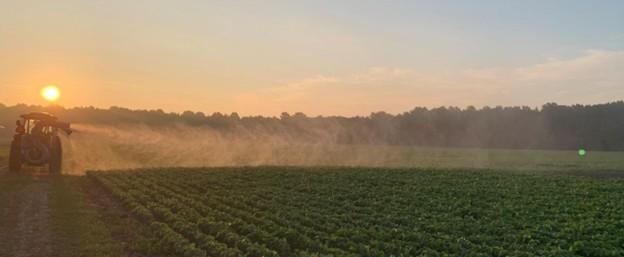
- Long rainy periods: One challenge to the use of repellents is that long periods of regular rainfall can make application timing decisions difficult, as repellents are regularly washed off leaves. They can also make fields too wet for traditional boom sprayer access. One potential solution for applying repellents to wet fields is to use an air-blast sprayer that can be sprayed from the field perimeter. These sprayers can apply repellents hundreds of feet into the field and be quite effective (Fig. 12).
- Alternative food availability: If crops serve as the only available food source in an area, protection grows increasingly difficult. Farmers can successfully protect a small area when abundant food exists nearby, but small fields (less than 5–10 acres), that are surrounded by woody cover and lacking other food resources, often suffer intense damage and cannot withstand deer grazing, even with regular repellent treatments.
- Drought conditions: When faced with little to no food resources in their preferred habitats, deer will graze on crop areas treated with repellents to avoid starvation. Additionally, if all food resources in an area are sprayed with repellents, deer will likely become habituated to repellents more quickly.
Repellent options & costs
We have compiled a list of repellents based on active ingredients (Table 3). Recommended application frequency varies, but is usually between 7-30 days between applications, with frequency increasing in times of frequent rainfall or when significant new plant growth occurs.
| Active Ingredient | Use on Edibles | Product Names |
| Soaps of Fatty Acids & Salts | Yes |
|
| Bloodmeal | Yes, but not on edible parts of the plant |
|
| Capsaicin (Chili Pepper) | Varies |
|
| Garlic Oil | Yes |
|
| Peppermint Oil | Yes |
|
| Predator Urine Granules | Yes - repellent placed on the ground |
|
| Putrescent Egg Solids | No |
|
| Thiram Fungicide-Based Products | No |
|
| Zeolite | Yes |
|
Pricing for repellent products varies significantly, as products designed for small home gardens are prohibitively expensive for cropped areas (Table 4). Costs can vary depending on the concentration used and volume of product sprayed, but this information provides a starting point for cost assessment based on 2024 pricing.
| Product Name | Pre-mixed Cost per 1,000 Square Feet | Concentrate Cost per 1,000 Square Feet | Concentrate Cost per Acre |
|---|---|---|---|
| Bobbex | $9.00 | $392.04 | $56.63 |
| Deer Out | $6.75 | $294.03 | $87.12 |
| Deer Stopper II | $5.00 | $217.80 | $114.56 |
| DeerPro Spring/Summer Repellent | N/A | N/A | $112.39 |
| Des-X | N/A | N/A | $20.00 |
| Garlic Barrier | N/A | N/A | $7.41 |
| Hinder | N/A | N/A | $24.00 |
| I Must Garden | $6.00 | $261.36 | $108.90 |
| Liquid Fence | $13.99 | $609.41 | $173.80 |
| Miller’s Hot Sauce | N/A | N/A | $31.80 |
| Nature’s Mace | $6.42 | $279.66 | $38.77 |
| Plantskydd | *1 | *1 | $28.00 |
| Plotsaver (perimeter ribbon spray) | N/A | N/A | $27.45 (assuming 5-acre square plot including posts & ribbon) |
| Shake Away | $1.36 | $59.24 | N/A |
| Spotrete F | N/A | N/A | $19.60 |
| Trico Pro | N/A | N/A | $135.30 |
¹ Covers 500-600 plants that are 1 foot tall
Repellent Research
Guerisoli and Pereira (2020) conducted a meta-analysis of over 200 deer repellent studies, finding that meat, blood, predator urine, hair, and feces were the most effective repellent active ingredients, followed by sulfurous compounds, eggs, and hot peppers, but they did not evaluate the use of soaps.
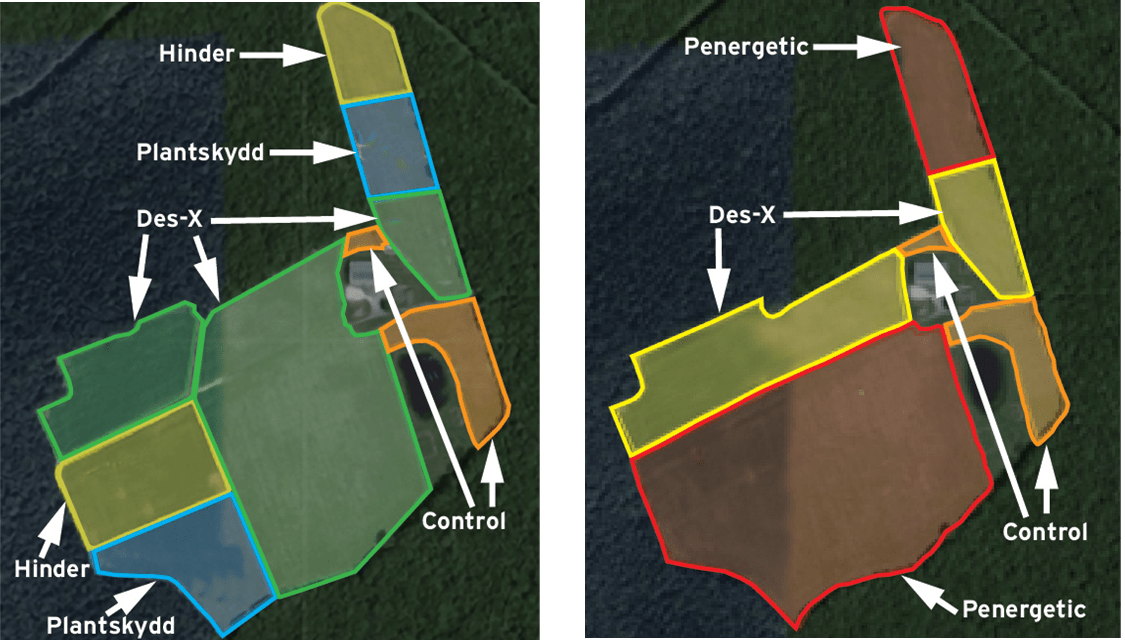
University of Maryland researchers conducted research on four different repellents in 2023 and 2024 on a farm near Harrington, Delaware, that experiences heavy deer damage. In 2023, we tested two soap-based products, DES-X and Hinder, in addition to the bloodmeal-based Plantskydd. In 2024, we narrowed the study to test DES-X with Penergetic (a newer zeolite-based product).
At the study site, the owner, Joe Streett, regularly sees 70+ deer in his 35-acre field, which is surrounded by approximately 1000 acres of mature closed-canopy forests with limited understory. In 2022, we measured deer-caused soybean crop losses by using exclosure cages and estimating potential yield in the absence of deer grazing against actual yields across the entire field. We calculated a yield loss of approximately 66% (actual 17.2 bu/acre vs. potential ~50.6 bu/acre based on deer exclosure yields), which amounted to a gross harvest value of $215/acre and a harvest revenue loss of approximately $417/acre using 2023 soybean prices of $12.50/bushel.
Researchers and Mr. Streett also applied repellents to a small 3.5-acre field separated from his main field, but repellents were not able to deter grazing in this small area with heavy deer pressure and in both years the crop experienced a 100% loss.
Methodologically, it’s important to note that measurements of yields are highly variable, as shown in our results. This can be due to measurement errors, variations in soil fertility, shading, competition with trees for moisture and nutrients, and many other factors in addition to deer grazing. Due to implementation constraints, our study was limited to three treatments in each year, with one replicate in the back 3.5-acre field excluded due to total crop loss. We used 11 exclosure cages in 2023 and 5 cages in 2024. The variation between replicates results in high error bars between treatments.
Additionally, we used different methodologies in measuring caged yields to unprotected soybeans between years that could affect direct comparability between 2023 and 2024. In 2023, yield measurements inside and outside cages were taken from the same row of soybeans (10’ strips), providing a tightly paired comparison. In 2024, exclosure cages (10’ diameter) were placed approximately 50 feet from the field edge and the entire yield of the 10’ diameter circle was compared against yield monitor data from much larger unprotected areas (e.g., 2.2–7 acres per treatment). Interior field yields are consistently higher, and exterior edges are lower due to deer grazing and shading/moisture competition from trees (Fig. 13). This difference introduced more variation in the yield data from unprotected areas in 2024, making protected vs unprotected plots less directly comparable.
2023 Repellent Study Results
In 2023, in cooperation with Mr. Streett, University of Maryland researchers tested three repellents. We selected repellents based on pricing under $30/acre per application to ensure economic feasibility. We researched over a dozen products on the market and selected Plantskydd, Hinder, and DES-X (an insecticidal soap) as three repellents to test. The farmer applied each of the three repellents on three separate occasions—June 1, June 14, and July 6—in three replicates on the farm using a small area of the farm as a control. After the spraying, deer vacated the entire field.
The research revealed limitations described above with regards to difficult decisions on the best timing to spray due to ongoing rainstorms over multiple days. Additionally, uneven initial germination across the field presented challenges in first application timing on whether to spray emergent seedings or waiting for the entire crop to come up before spraying.
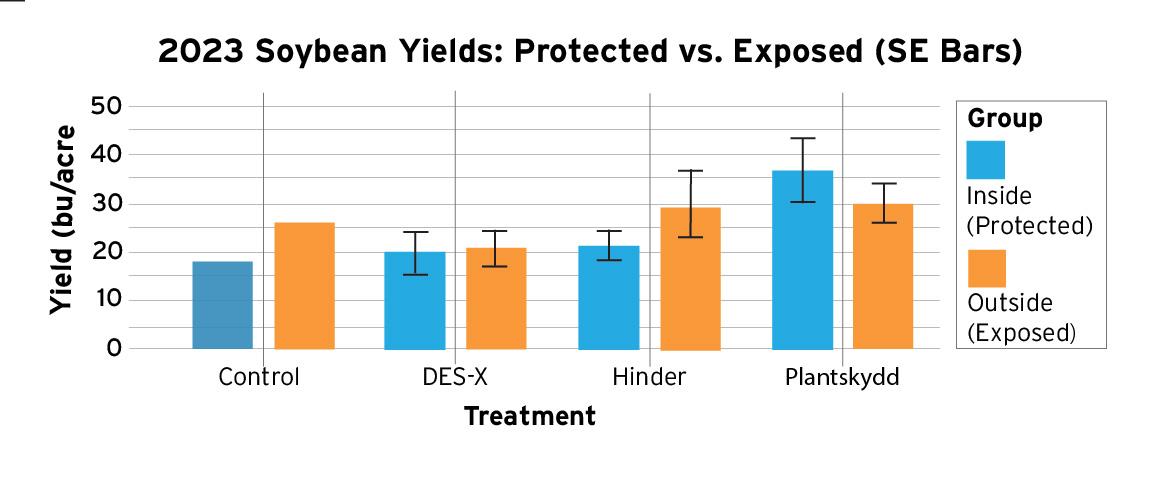
Despite the challenges, yields increased significantly in 2023 with use of repellents from 2022 harvests, reaching 48.8 bu/acre ($610/acre gross; $520/acre net after $90/acre repellent + labor costs). Yield measurements inside and outside deer exclosure cages placed around the perimeter of the field were not significantly different, suggesting high effectiveness of repellents in this situation (pooled mean difference: -1.48 bu/acre, p=0.692). We also did not find significant differences between the effectiveness of deer repellents tested, with mean yields higher in unprotected crops than inside cages for DES-X, Hinder, and even the control (possibly affected by sprays in the rest of the field). Plantskydd showed the opposite trend, with a higher yield inside at 36.77 bu/acre in the caged exclosure, and lower yield in the unprotected area of 30.07 bu/acre, though the differences were not significant (Table 5 & Fig. 14). In all. the sprayed areas not protected by cages actually had a mean yield improvement of 0.77 bu/acre more than the exclosures suggesting high effectiveness (although not statistically significant).
| Treatment | n (pairs) | Inside Cage Mean Yield (bu/acre) ± SD | Outside Cage Mean Yield (bu/ acre) ± SD | Mean Diff (In - Out) | p-value | Significant (p < 0.05) |
|---|---|---|---|---|---|---|
| Control | 1 | 17.96 | 26.16 | -8.20 | N/A | N/A |
| DES-X | 4 | 19.76 ± 8.91 | 20.85 ± 8.77 | -1.09 | 0.904 | No |
| Hinder | 3 | 21.42 ± 5.24 | 29.36 ± 12.18 | -7.94 | 0.215 | No |
| Plantskydd | 3 | 36.77 ± 11.56 | 30.07 ± 6.92 | 6.70 | 0.294 | No |
In total the repellents combined to provide an 183% yield increase from the previous year without repellents (2022 yield 17.2 bu/acre vs 2023 yield 48.8 bu/acre). The repellents were so effective that deer vacated the entire field and did not graze on the unsprayed control area.
2024 Repellent Study Results
We narrowed the study in 2024 to test the effectiveness of the least expensive option, DES-X, against a new product called Penergetic, which claimed to only require a single application that would be effective through rainfall and could be applied to the soil before germination.
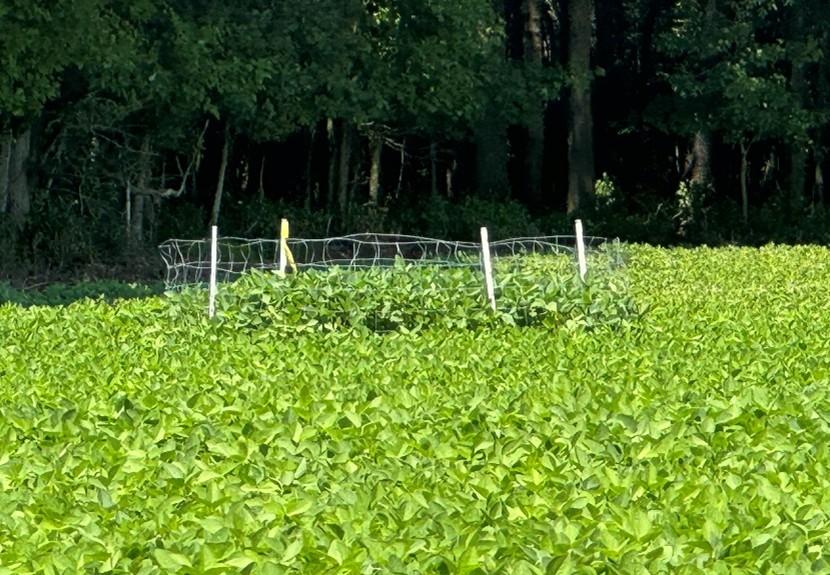
Unlike the clearer benefits experienced in 2023, deer grazing behavior differed in 2024. After the first planting on June 10, 2024, approximately half of the soybean field was sprayed with Penergetic before soybean germination. The farm experienced drought conditions, and deer did not appear to be significantly deterred by the Penergetic repellent. Deer grazing and drought combined to require replanting around the outer edges of the field on June 28 prior to any application of DES-X. After the second planting, the farmer reapplied both Penergetic before germination and DES-X after germination. The drought continued, but unlike 2023, deer entered the field and regularly grazed on the treated soybeans of both treatments leading to obvious differences in exclosures and the rest of the field (Fig. 15).
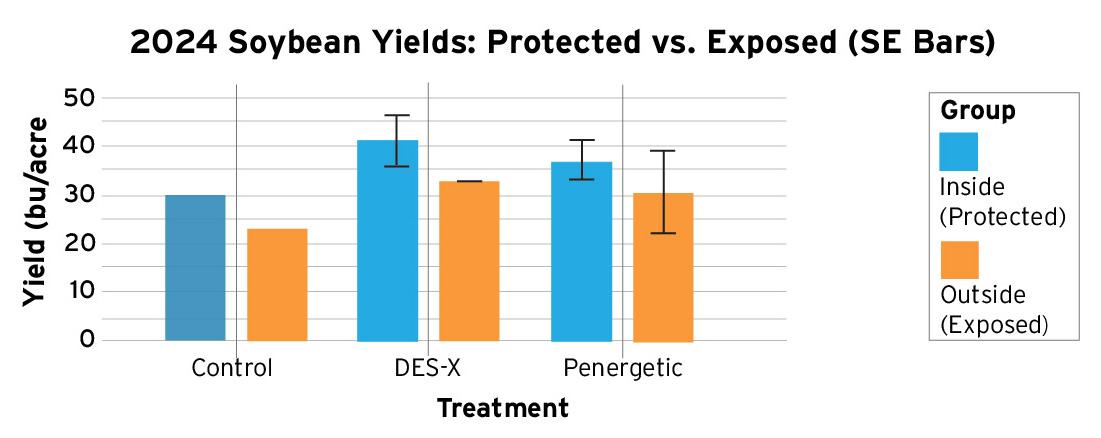
Our deer exclosures showed high variability in yields (DES-X: 36.2 and 46.7 bu/acre; Penergetic: 32.5 and 41.7 bu/acre; control: 30.1 bu/acre), with an overall exclosure mean of 37.44 bu/acre. Field yields averaged 33 bu/acre in DES-X areas, 31.5 bu/acre in Penergetic areas, and 26 bu/acre in controls (overall field yield: 32.25 bu/acre, or $403/acre gross; $313/acre net after repellent costs). Statistical tests (Welch’s t-test) revealed no significant differences between sprayed areas and protected exclosures (p=0.211 overall; p=0.354 for DES-X, p=0.666
for Penergetic) or between treatments and controls (p=0.209), though sprayed yields trended ~23% above controls.
While high variability in exclosures muddied clear separations, the absence of significant per-treatment differences between sprayed areas and protected plots—along with the higher overall yields in sprayed areas compared to the control—suggests repellents offered meaningful protection in 2024, albeit less reliably than in 2023.
We did not see any statistically significant differences between the areas sprayed with Penergetic and DES-X and the areas with caged exclosures, in addition to lower overall yield in the control area suggests that repellents offered some protection. However, the lower overall yields in unprotected sprayed areas compared to cages (7.5 bu/acre lower compared to 0.77 bu/acre higher in 2023) suggests that repellents in 2024 were not as effective as in 2023 (Table 6 & Fig. 16).
| Treatment | n | Inside Cage Mean Yield (bu/acre) ± SD | Outside Cage Mean Yield (bu/acre) ± SD | Mean Diff (In - Out) | p-value | Significant (p < 0.05) |
|---|---|---|---|---|---|---|
| Control-No spray | 1 | 30.10 | 23.00 | 7.10 | N/A | N/A (n=1) |
| Des-X | 2 | 41.45 ± 7.42 | 33.00 ± 0.00 | 8.45 | 0.354 | No |
| Penergetic | 2 | 37.10 ± 6.51 | 30.50 ± 12.02 | 6.60 | 0.340 | No |
Research Summary
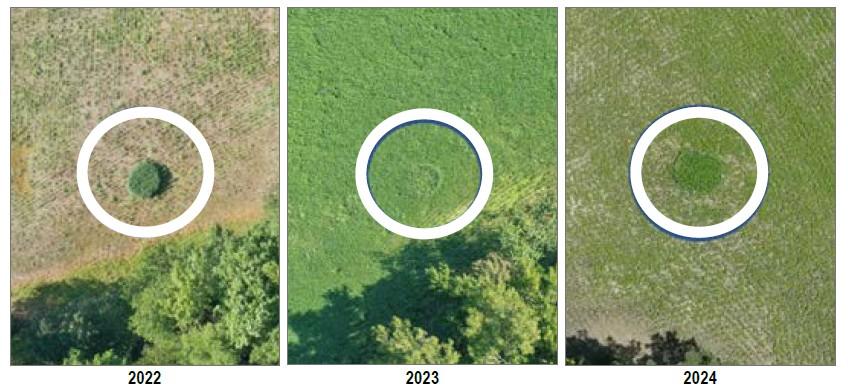
Our research highlights the variable effectiveness of repellents. In the first year of the study, repellents paid for themselves and the labor involved in application; however, the waning effectiveness in the second year highlights the inherent variability in repellent effectiveness across locations and years. Aerial imagery shows the variation from 2022 without any protection, 2023, when repellents were highly effective, and 2024, where repellents helped, but not as effectively (Fig. 17).
Several factors likely contributed to this, including:
- Drought conditions may drive deer to rely on crops more heavily, even if sprayed with repellents.
- Using the same repellent (DES-X) two years in a row may have reduced its effectiveness in the second year as deer habituated to the repellent.
- The combined repellent value of the Hinder, Plantskydd, and DES-X in 2023 may have increased the repellent effect in the larger field.
Past research has also found that when deer feeding pressure is high, repellents are less effective (Byers et al., 1990; Curtis and Rieckenberg, 2005; DeDecker and Tollini, 2018). Others have also experienced difficulty achieving soybean yield improvements from repellents due to high deer density and possibly habituation (Tollini et al., 2020). DeDecker and Tollini (2018) found that two applications of DeerPro Spring/Summer (putrescent egg solids) significantly reduced deer damage and soybean yield loss at one location, but not another, likely based on pronounced location differences in deer pressure, crop management practices, and timing. The results highlight the importance of an integrated management approach that incorporates deer density reduction, consideration of other available food sources, and habituation in protecting crops using deer repellents.
Deterrents
Dogs
Dogs can be an effective deer deterrent and can pay for their expenses in areas with high deer damage. The four key considerations are:
- The ability to visit areas needing protection daily to feed and water the dogs and to charge geo-fence collar batteries.
- Installation costs if using buried perimeter wire for containment.
- Efficacy of the dog’s demeanor and specific training as a crop protection animal (VerCauteren et al., 2005).
- Area limitations. Initial research with a pair of crop protection dogs effectively reduced damage on a 75-acre farm in Montgomery County, Maryland, but the maximum area that can be protected remains an area of ongoing research.
Breeds
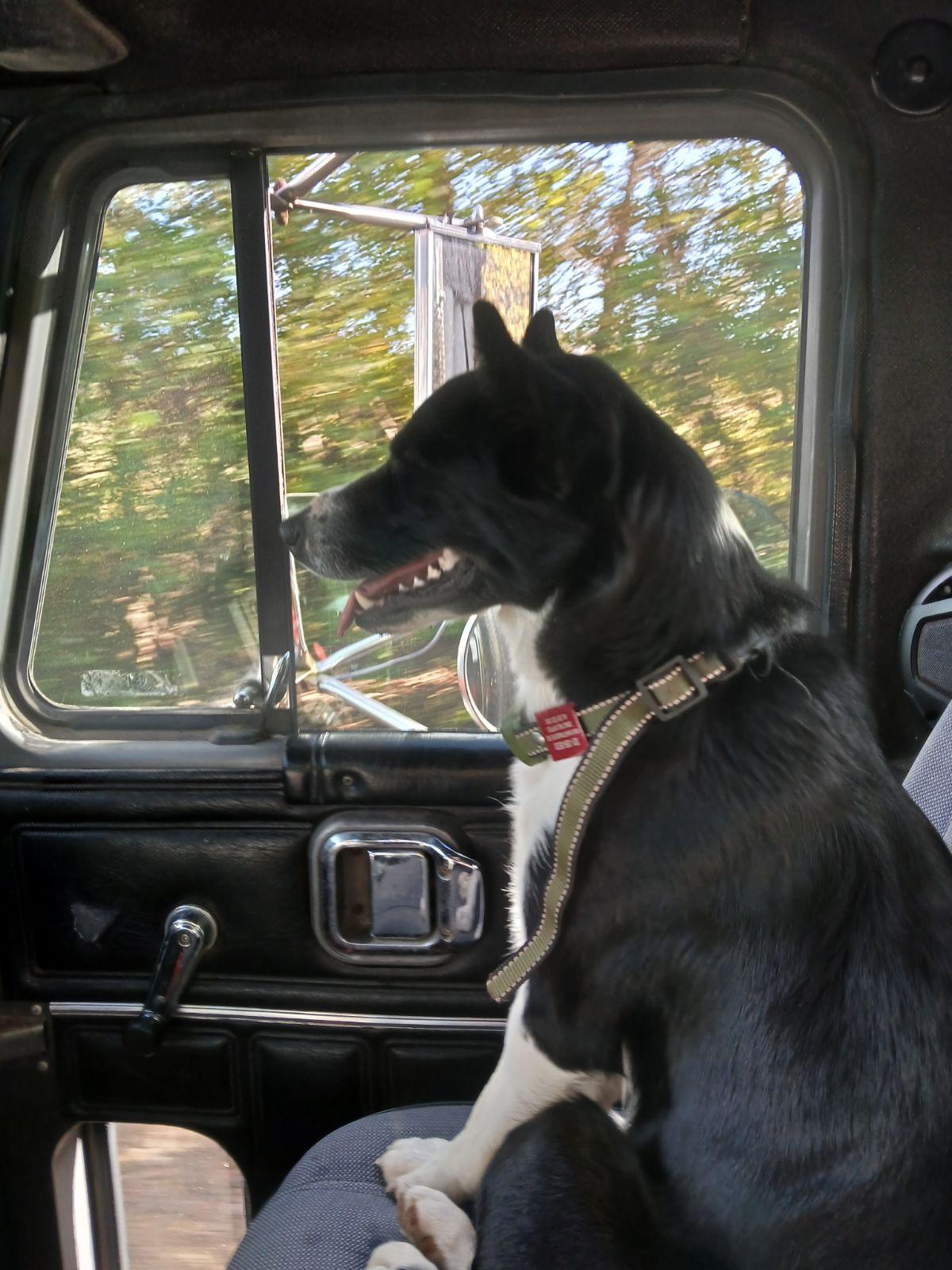
Research suggests a variety of breeds can be effective, such as high-energy dogs that like to roam and cover ground during the season when crop protection is needed. If winter damage to orchards is a problem, breeds with thick coats that can remain outdoors during cold weather are preferred. If summer crop damage is a problem, breeds with lighter coats that can handle hot summer temperatures will likely be more effective.
A pilot study in Montgomery County, Maryland, found that a pair of dogs—a border collie and a Catahoula—worked well in reducing crop damage on a 75-acre farm. The border collie excelled at identifying deer locations, while the size and strength of the Catahoula provided stronger deterrence than the border collie alone.
Beringer (1994) used border collies with good results to reduce deer damage in 5-acre plots on a white pine plantation and suggested that Australian shepherds and blue heelers would also be effective due to their herding instincts. Curtis & Rieckenberg (2005) used labradors, labrador-mix, husky/collie mixes, and German shepherd mixes to reduce damage in apple orchards up to 15 acres in size and found significant economic benefits. VerCauteren et al. (2005) used a Siberian husky-malamute mix to reduce deer damage in organic vegetables more effectively than temporary electric fencing, but at a higher long-term cost than permanent fencing. Livestock guardian dog breeds may not be as effective in reducing deer damage (Woodruff, 1995).
Containment
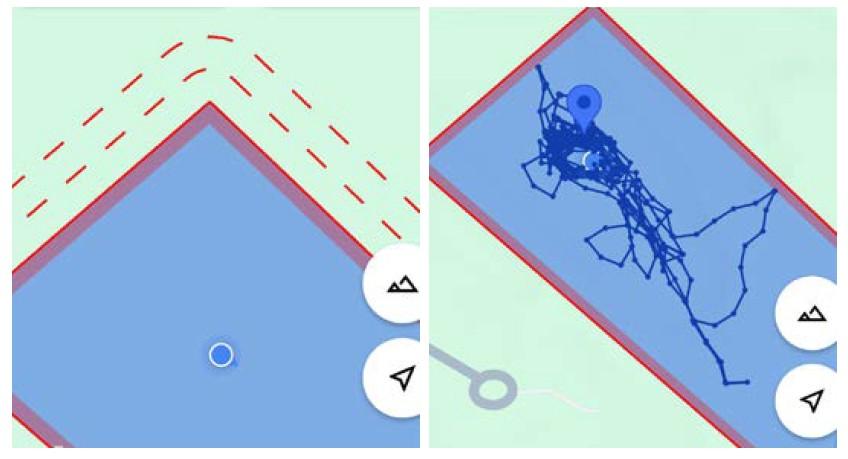
Recent advancements in GPS technology have created the ability to create geo-fences that are programmed into an electric collar, which can contain dogs without needing to install any physical boundary, allowing for much lower installation costs and the ability to quickly change boundaries of protection zones. One farmer has successfully trained his dogs on a geo-fence in less than 30 minutes (J.P. Jamison, personal communication, July 12, 2025). This farmer used two different collars, a Spot-On collar and Dogtra collars. He found the Dogtra collars had stronger static correction levels needed to contain his larger Catahoula. Dogtra offers several models with various capabilities. The Dogtra GPS Fence model allows for the creation of multiple geo-fences for containment and provides for 4 layers of containment utilizing warning beeps, warning vibration, and custom levels of static correction for each layer. It does not provide real-time location data of the dog location, but the locations can be downloaded when in close proximity to the collar. At the time of writing, GPS-enabled collars need daily battery changes.
Prior research studies have used a buried wire to trigger the static correction in the collar. The collars for these “invisible fences” have much longer battery life up to several months, but require up-front installation of a perimeter wire around the boundaries of the area to be protected.
Land Area
Farmers currently utilizing geo-fences have successfully reduced deer damage on a 75-acre farm (J.P. Jamison, personal communication, July 12, 2025). Topography and the dogs’ ability to observe the property are likely to affect the land area that can be protected. VerCauteren et al. successfully protected 1.2-hectare pastures with cattle (2008) and vegetable fields up to 3.7 hectare in size (2005) using dogs. Curtis (2005) successfully protected apple orchards up to 15 acres, and Beringer (1994) protected 5-acre white pine plots. Our pilot study suggests far larger areas can be protected than the 15-acre successes reported in prior research (Curtis and Rieckenberg, 2005; Beringer, 1994).
Daily Visitation
Oftentimes, the worst deer damage occurs in areas distant from homes, barns, and roads, and in areas with low topography surrounded on multiple sides by trees and cover, so encouraging dogs to patrol these areas by providing food and shelter in these areas will likely yield the greatest deterrent results. The challenge for protecting crops in these more distant areas is the labor and time costs involved in regularly caring for and feeding dogs in remote fields far from daily farm operations.
Tips and Considerations
Our pilot study (J.P. Jamison, personal communication, July 12, 2025) and work by other researchers (Beringer et al., 1994) have shared the following suggestions to achieve the best results with using dogs as a deterrent:
- Dogs must be out patrolling at night, as deer often graze at night.
- Consider breeds that are appropriate for the time of year when damage protection is needed. Breeds should have thick coats for cold winter work and lighter coats for summer work.
- Create a mowed path along the boundary to encourage dogs to patrol.
- Extend the dog protection boundary 10m beyond the crops that should be protected.
- Place shelter and food in locations with high damage to increase dog activity in those areas.
- Spayed and neutered dogs are likely less inclined to stray beyond fence boundaries and less likely to attract other unwanted dogs to the area.
- Using dogs in pairs may reduce straying activity by dogs in search of social interaction.
Noise & Light Deterrents
Propane Cannons
Propane cannons are programmed to ignite gas to create a loud explosion, usually between 100-125 decibels. Deer can habituate to them, but they can be effective for short-term applications, up to approximately one to two weeks, although moving the cannon weekly and varying the explosion frequency can extend the period of protection. The landowner in our repellent study used a propane cannon that would fire every 8-12 seconds all day long. The result was a successful corn crop in a 3.5-acre field surrounded by woods that was never able to produce a harvest despite repellent applications due to deer damage, which speaks to the cannon’s efficacy. The landowner moved the propane cannon every few days to a week to improve its deterrence effect, although it may have moved deer to nearby fields to graze. Some cannon models are designed to rotate to change the direction of the explosion. If people reside nearby, they may object to the sound as a form of noise pollution. Some counties have ordinances that limit their use to certain times of the day and prevent their use within particular distances of structures.
Various motion-activated products, e.g. Margo Critter Guard, which emits a 105db siren with flashing lights, and devices that use ultrasonic signals combined with strobe flashes are available. These tools may have similar constraints with habituation as propane cannons, but may work to repel deer from small areas that have additional food resources available elsewhere.
Predators
Coyotes, a major predator of white-tailed deer, have expanded across Maryland and the southeastern United States, primarily affecting deer through predation on fawns. Field studies in South Carolina have shown that coyote predation significantly reduces fawn survival, limiting recruitment into deer populations (Kilgo et al., 2012). While coyotes can lower deer population growth rates in some areas, their overall impact is limited and highly variable due to compensatory responses in deer (e.g., improved survival in other life stages), as well as environmental factors like coyote density, habitat, and learned behaviors (Bragina et al., 2019). In Maryland, coyote density often remains too low to exert significant population-level effects, contributing to inconsistent control of deer populations.
Other predators, including black bears, bobcats, wolves, and mountain lions, may reduce deer density in certain contexts, but wolves and mountain lions are absent from Maryland and many regions with high deer density. Eliminating trapping and predator control efforts can facilitate predator populations and contribute to lower deer density under specific circumstances. However, the inherent variability in wild animal behavior and population dynamics makes it challenging to predict where and when predators will effectively control deer populations. Both deer and predator behaviors, as well as their population characteristics, vary significantly over time and across locations, limiting their reliability for mitigating ongoing deer-related damage on desired timescales.
Reintroducing larger predators, such as wolves and mountain lions, is not currently feasible in areas with high human population density, like Maryland, due to concerns about human safety and increased predation on livestock and pets. Such reintroductions are politically controversial and have not been seriously considered at the time of writing. While these predators are slowly recolonizing areas where they were previously extirpated, their population expansion to levels sufficient to impact deer density in Maryland is likely decades away. Even then, their effectiveness will depend on learned behaviors and available food resources, similar to the variability observed with coyotes.
In summary, while coyotes can prey on deer fawns and contribute to population regulation in localized settings, their impact is not strong or consistent enough to serve as a reliable management tool for overabundant deer populations, particularly in regions like Maryland with low coyote density (Kilgo et al., 2010). The absence of larger predators and ecological variability further limit predators as an immediate solution for managing deer-related damage.
Pillar 4: Fencing
Fencing offers an effective means to exclude deer from specific areas, with the most suitable type depending on priorities such as deer exclusion efficacy, installation and maintenance requirements, lifespan, and financial cost (VerCauteren et al., 2006). For long-term, 100% protection, 8-10' tall woven or welded wire fencing provides the most reliable barrier but has the highest cost. More affordable alternatives include plastic mesh netting, which offers high efficacy but is less durable and prone to breakage. Multi-strand high-tensile electric fencing, particularly permanent versions with at least five wires or two-tiered systems, generally costs less to install than woven wire, significantly reduces deer penetration when properly maintained, and can achieve near-full exclusion. Temporary electric poly-tape fencing offers the lowest upfront cost and may suffice for seasonal damage reduction or for smaller areas, but is less reliable overall. All electric fencing options require vegetation management (e.g., via herbicide or mowing) to prevent shorting (which can be mitigated by de-electrifying bottom wires) and benefit from baiting strands with molasses or peanut butter to condition deer to avoid the fence. Each of these approaches is described in detail below.
We discuss the following options for excluding deer from crops, gardens, or high-value plants, providing an overview of types, installation considerations, and effectiveness.
- 8-10’ Tall Fencing
- Plastic mesh
- Welded or woven wire
- Electric Fencing
- Temporary 1, 2, or 3 strand
- Two-tiered
- Permanent high-tensile
- Gate Considerations
- Individual Tree/Shrub Protection
- Tree tubes
- Wire cages
Partial “winged” fences have been tested in at least two research studies, with Hildreth et al. (2012) finding a 13.5% reduction in crop damage. However, Johnson et al. (2014) found winged fences to not have a statistically significant reduction in crop damage. Partial fencing may work temporarily to reduce damage, but deer may learn to move around the fence edge over time.
Landowners should consider the aesthetic and ecological impacts of fencing, which can separate certain wildlife populations and reduce connectivity and corridors on the landscape. For example, electric fences installed close to the ground can impact turtles’ movement (Ferronato et al., 2014), but managers can reduce such unintended effects by keeping electric fencing for deer at least 18” off the ground—which also helps prevent vegetation shorting out the electrified fence. Additionally, woven-wire fences can lead to collisions by wildlife including deer and birds (VerCauteren et al., 2006), but can be mitigated by increasing fence visibility with flagging or plastic mesh.
High fences for deer have been identified as a significant source of mortality for grouse in Scotland, and may have similar impacts on our native ruffed grouse (or other grouse species in other parts of the U.S.); Baines and Andrew (2003) found a 49-91% reduction in mortality rates for various grouse species when two additional 1’-wide plastic mesh sections were hung at the top and middle of deer fences. In areas with ruffed grouse populations, land managers may want to consider incorporating additional budget for marking the fence to reduce grouse mortalities or try other solutions.
8’-10’ Tall Fencing
Research has found that 8’ tall fences will effectively exclude deer from an area. Although in rare cases deer may occasionally be able to leap this height of fence, researchers conducted drives of deer in fences of this height on multiple attempts and found 100% deterrence using 8’ tall fences (VerCauteren et al, 2010). Eight-foot-tall fences can be constructed out of plastic mesh, welded, woven, or high-tensile wire. Deer are discouraged by 7’ fences, and even to some extent by 5’ fences around smaller areas, but the lower the height below 8 ft, the greater the chance deer will jump over them.
8’-10’ Plastic Mesh Fencing
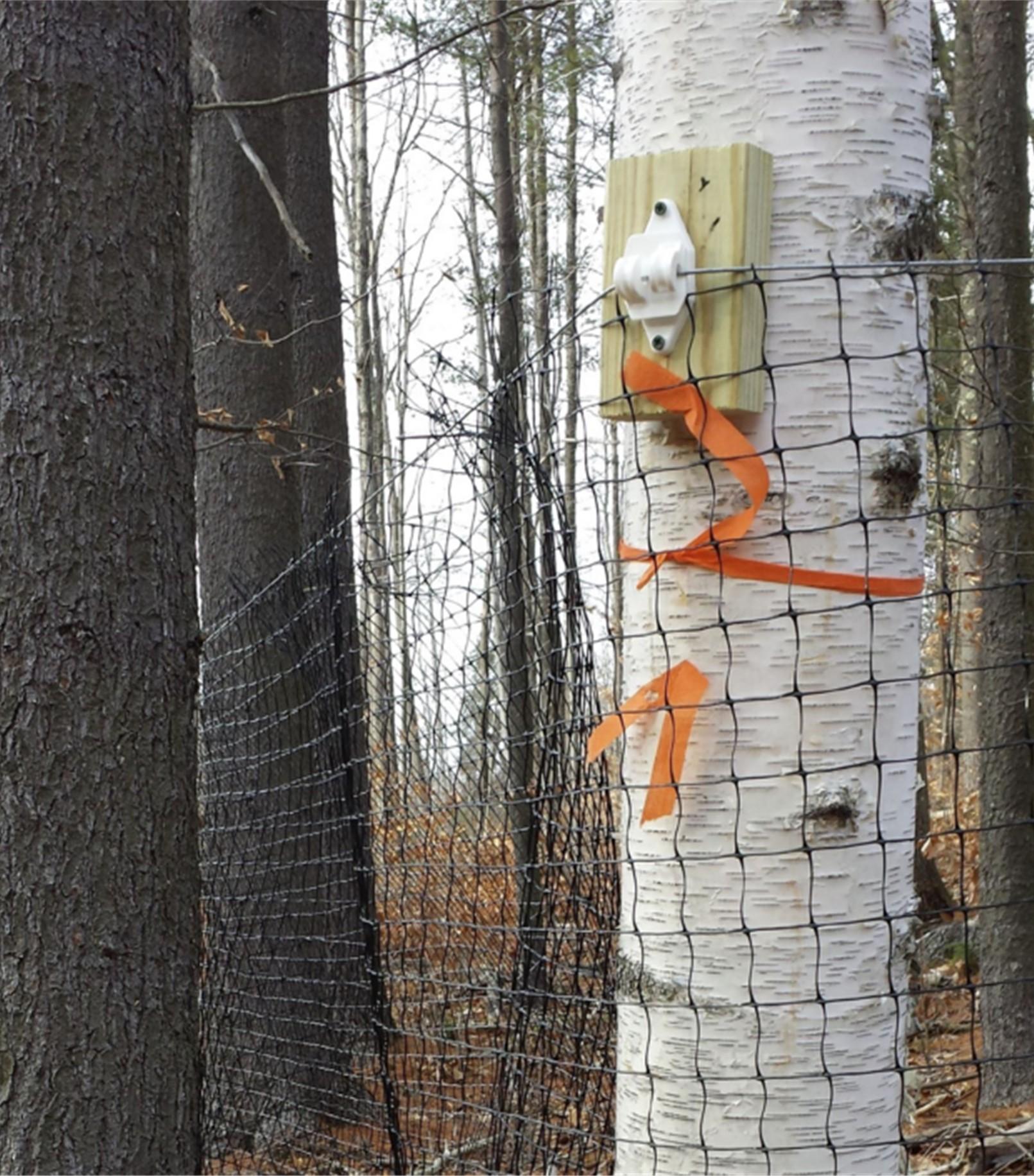
Cornell University researchers have developed a low-cost, high-fencing design that uses existing trees surrounding an area of interest to serve as posts. The design uses 12-gauge high tensile wire as the upper support for the plastic mesh and hog rings to attach the mesh fence to the wire (Smallidge et al., 2018). The wire and fence are prevented from growing into trees by using batten strips of pressure-treated lumber that are nailed to the tree with galvanized nails driven through fender washers, which allow the nails to float off the tree as it grows. Plastic electric fence insulators are used to attach the 12-gauge high-tensile wire to the battens. Finally, wire tensioners are used to increase the tension of the 12-gauge high-tensile support wire (Fig. 20).
Manufacturers of plastic mesh fencing advertise that it lasts 10-15 years, compared to 20-40 years with wire fencing. Despite this shorter lifespan, its low cost, light weight, and ability to be deployed against existing trees or lighter-weight posts may be a preferred option for farms surrounded by wooded lots or who want a more easily deployed solution at a lower cost. Plastic mesh fences can be easily damaged by falling limbs, other debris, or animals themselves, so regular maintenance is needed to maintain their integrity.
8-10’ High Wire Fencing
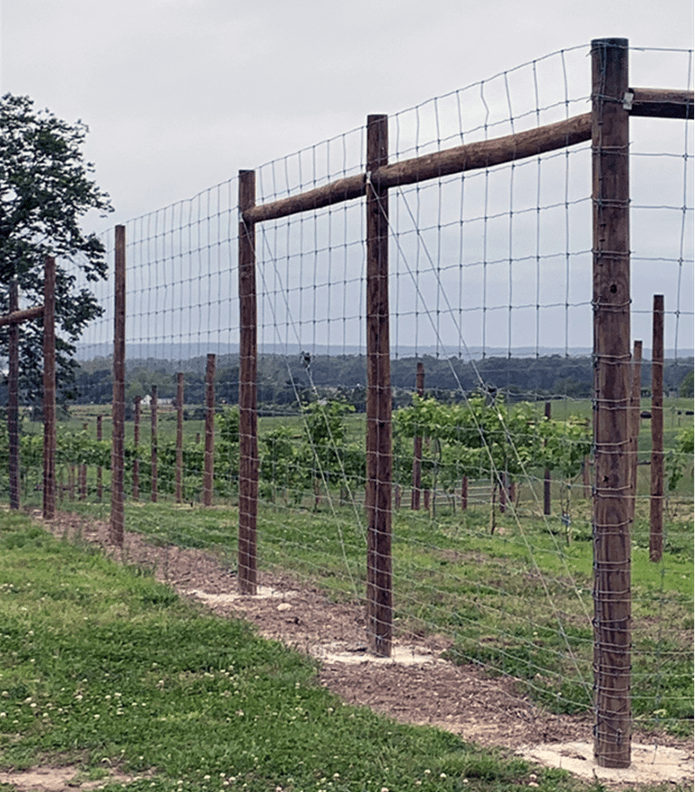
A longer-term and more durable option than plastic mesh fencing, wire fences can effectively exclude deer from an area sustaining deer damage. Some of these wire fences include a graduated mesh size with smaller mesh openings in lower areas to prevent fawns (or other animals) from entering, and larger openings higher up on the fence (Fig. 21).
These fences are a significant capital investment and are usually reserved for high-value crops, although some crop producers have found a significant return on investment from these fences. Land managers should consider long-term maintenance and care needs to protect the investment. The most important maintenance component is from trees and tree limbs falling on and damaging the fence, and at water crossings, where high water flows can damage the fencing.
Electric Fencing
Properly installed and maintained electric fencing can be highly effective at excluding deer, with efficacy generally increasing as the number of strands of electrified wires increases. Electric fencing is generally less expensive to install than welded or woven wire fences, and has similar costs of installation as plastic mesh fences, depending on configuration. The primary maintenance considerations for electric fences include 1) regular maintenance in the form of herbicide spraying and/or mowing to ensure that vegetation doesn’t grow high enough to contact and short out the electrified wire; 2) for temporary electric fences with 1-2 electrified strands, baiting of the electrified wire baiting to train deer to stay away from the fence; and 3) managing any trees or limbs that may fall on the fence.
Temporary Electric Fencing
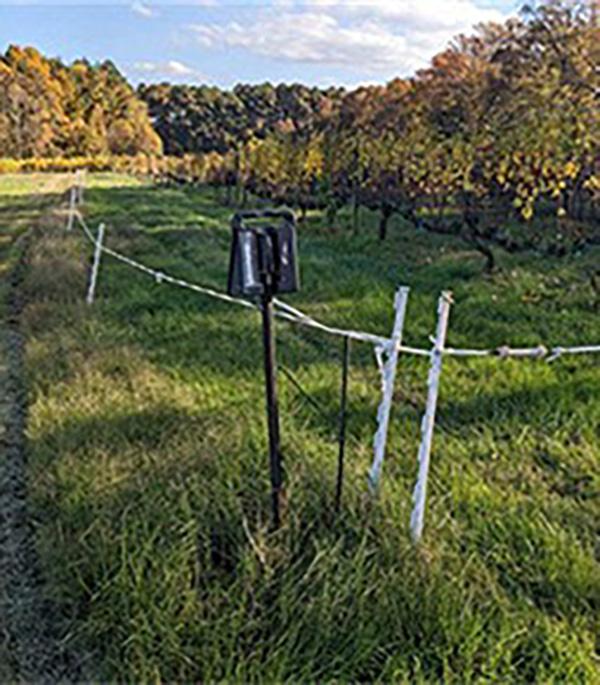
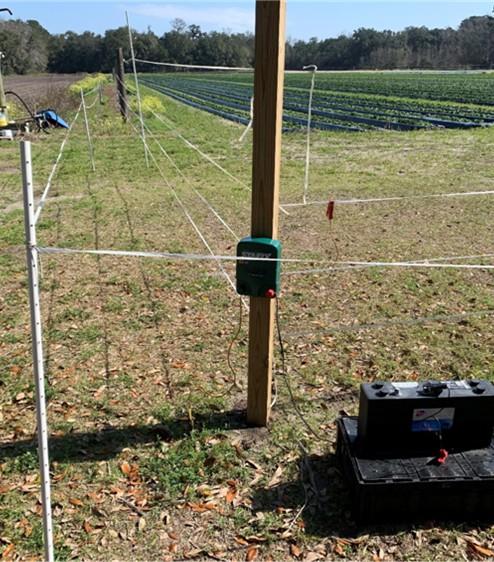
Temporary electric fencing has been shown to reduce er damage in smaller areas by as much as 90% (Hyngstrom & Craven 1988, Johnson et al 2014). Polytape is often recommended over wire due to increased visibility to deer, lower maintenance costs, and ease of installation. These temporary fences can be constructed of one to five or more strands of electrified wire, with increasing strands improving fencing effectiveness, but also increasing the time and cost of installation (Fig. 22).
Research has found these fences may be better suited to smaller areas, as fencing large fields where there is little other forage available may lead to increased testing and breaking of the fence, leading to increased maintenance and repair costs. Some farmers manage this by performing a daily check of the electric fencing.
Seamans and VerCauteren (2006) found a 5-strand polyrope fence was 99% effective, although one yearling doe continually penetrated the fence, showing that some deer can learn to repeatedly penetrate these fences.
Baiting temporary electric fences every 1-2 weeks with peanut butter or molasses (directly on the wire, Polytape, or on an aluminum tab) will encourage deer to lick the electrified strand and learn to avoid the fence. This training is also important because the hollow hair of deer can be somewhat insulating, and light brushes from the thicker parts of their coat may not result in a shock. Additionally, if deer are partway through a fence and receive a shock, their instinct is to jump forward leading to the fencing getting pulled down and shorted out. Training can reduce testing and deer breaking down the fence, which can cause significant time in repair and/or re-installation.
Two-Tiered Electric Fencing
Two-tiered fencing structures make the enclosure more effective than single-tiered electric fencing, as deer have poor depth perception and have difficulty discerning the distance needed to jump the fence (Fig. 23). The inner tier does not need to be electrified. This setup takes up more area on the landscape, but can be highly effective in preventing deer incursion in an area. The outer fence should be regularly baited to train deer to avoid the fence.
High tensile electric fencing
Permanent electrified high-tensile wire fencing can be highly effective in preventing deer incursion. The 5-wire fence design developed by Penn State researchers has been shown to reduce deer damage and can be modified for local conditions (Palmer et al., 1985). The original fence design included a bottom wire 10” from the ground, and 12” spacing for the 4 upper wires. Increased protection can be experienced by adding additional wires and decreasing the spacing between them. Selders & McAninch (1987) describe designs for a 6-wire fence with an 8” bottom wire, and 5 additional wires at 10” spacing (for a total height of 58”), which they note can be effective against raccoons, groundhogs, and rabbits (Fig. 24).
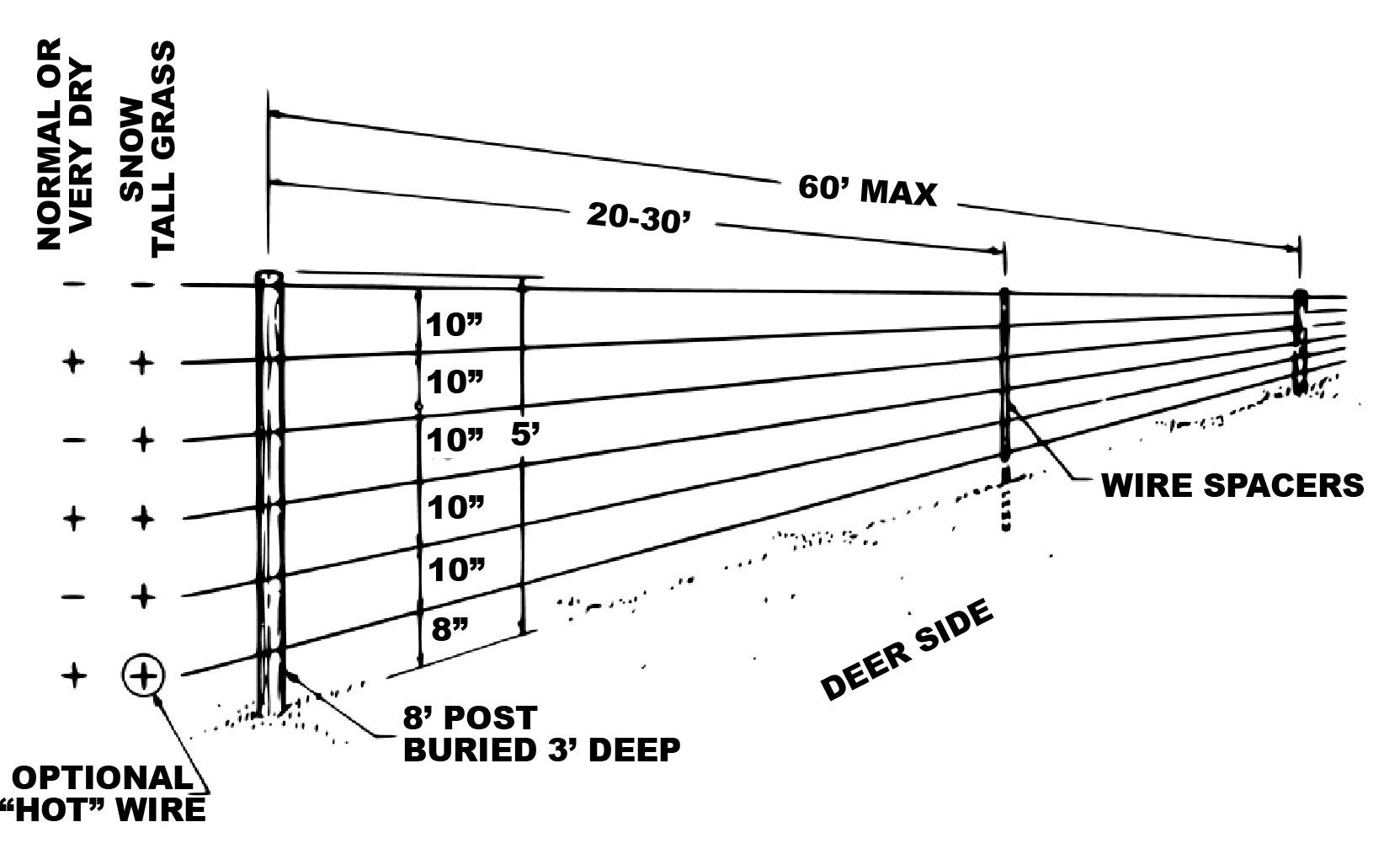
These fences can have multiple strands of electrified wire and can be configured with alternating positive and negative wires, so that a deer receives a shock if an animal contacts 2 adjacent wires or a single positive wire and the ground. This design also helps deliver shocks in dry conditions when the deer is not well grounded. A switcher can be added to the system that will allow for changing the hot wires to different configurations. For example, de-electrifying the bottom wire prevents shorting of the fence in snow or with vegetation contacting the lowest wire (see “optional hot wire” in Fig. 24).
High-tensile wire is less expensive than welded or woven wire fencing. Maintenance costs are required to keep vegetation off the fence, which will result in electrical shorts. Although baiting may improve efficacy, past research suggests that baiting is not necessary, as the multiple electrified strands increase the likelihood of shocking.
Fence repairs from falling trees and tree branches are similar to other fencing designs.
Gate Considerations
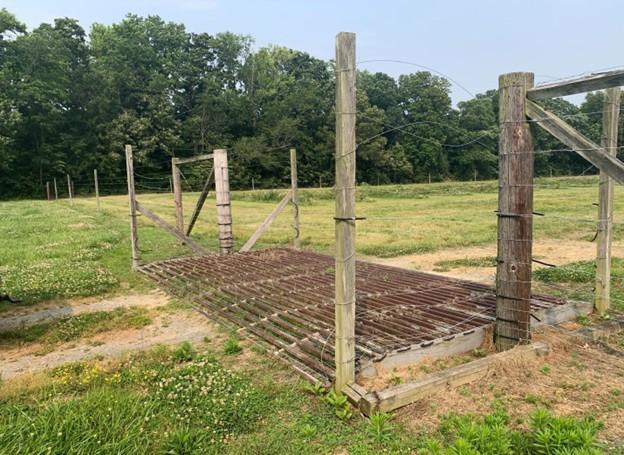
Entry and exit from fenced areas is an important consideration when selecting a fence, especially for more permanent installations. Two innovative options include electrified spring-loaded gates or a cattle-guard type system that deters deer entrance (Fig. 25).
Individual Tree & Shrub Protection
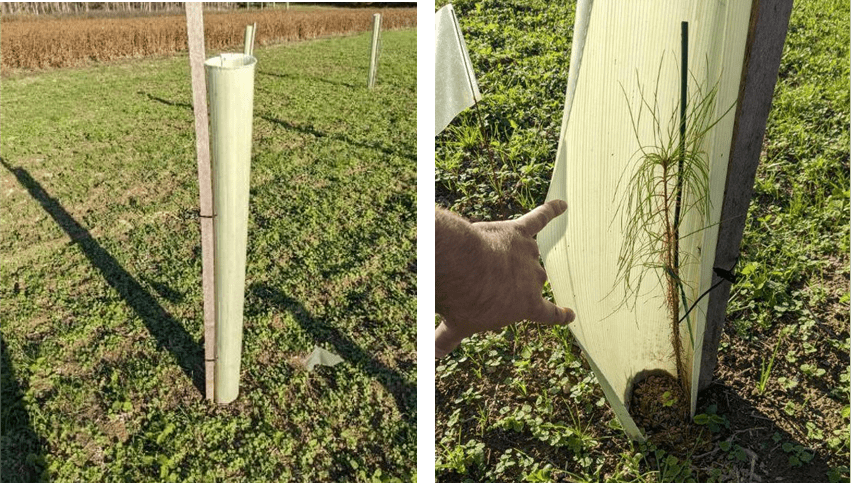
Tree tubes are a standard form of protection to prevent deer grazing on any new tree plantings and are a standard practice with commercial tree planting efforts (Fig. 26). Tubes are available in biodegradable form, but have considerably higher costs than standard plastic tree tubes. Tubes are installed with seedling trees, which grow up and out of the tube.
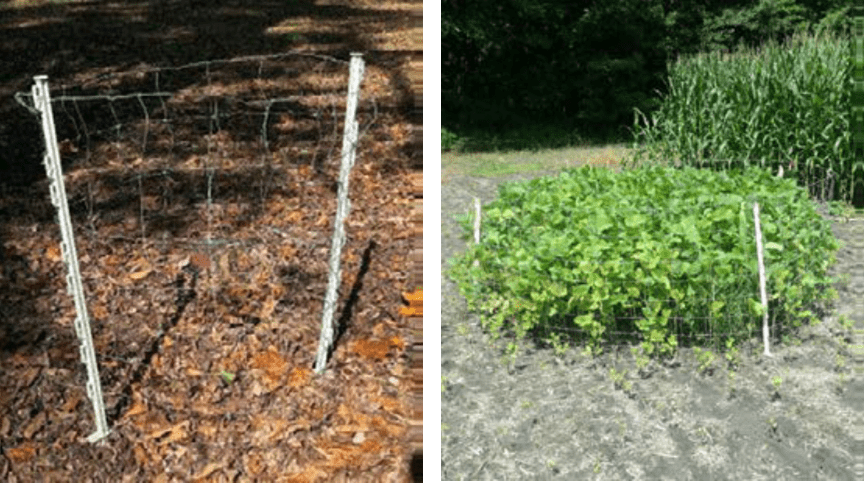
Wire cages are also an effective way to protect larger shrubs and bushier young trees from grazing damage. They can be constructed of 3-5’ wire mesh fencing and can be held in place using step-in posts. Four-foot-tall mesh fencing protects the majority of trees, but deer may browse on the edges of plants as they overhang the edge of the fence; 5-foot-tall fences provide better protection if needed. Three-foot-tall cages can be expanded to circular areas approximately 10’ in diameter. These provide excellent protection against deer, but deer will begin to jump inside exclosures larger than 10’ in diameter (Fig. 27). In forestry situations, leaving tree tops and slash piles in place following a timber harvest can protect new seedlings and support forest regeneration.
Contraception and Sterilization
Contraception
For contraception to be effective, managers need to regularly dose a high proportion of the female deer in a population, and immigration of deer from outside the area must be minimal.
Pharmacological drugs for contraception continue to evolve, but at the time of writing, researchers have found the greatest effectiveness using a porcine zona pellucida (PZP) vaccine. This drug has 2 forms, one that is effective for one year and another pelletized form that is effective for 2-3 years. These can be administered through capture and hand injection, with estimates ranging from $500-$1300/deer for capture cost, with an average labor hour of 6.7 hours/deer (Rutberg, 2019). Capturing deer and hand administering the contraception allows researchers to tag the deer, which enables them to track which animals have been dosed and to more accurately schedule regular boosters. If deer are not captured, but darted only, researchers estimate a cost of $100/deer, assuming a $15/hour labor cost and an estimated labor time of 3 hours per darted deer. The vaccine costs at the time of writing are approximately $25/dose for the form effective for 1 year, and $225-500/dose for the pelletized form that is effective for 2-3 years. These costs do not include lodging, vehicles, permitting, and darting equipment.
Researchers target 90% treatment with immunocontraception to effectively reduce populations over time. PZP has been shown to reduce pregnancy rates by approximately 80-90%, and its use has stabilized and reduced populations over time in closed and controlled systems, such as islands or areas contained with a high fence (Rutberg, 2019). However, researchers have found contraception efforts to be quickly confounded in free-range populations, as even modest immigration rates can reverse any gains from contraception efforts.
Contraception Example
We provide a model example of the challenges associated with using contraception to reduce deer populations. Consider a hypothetical 1000-acre site with 100 deer that are entirely fenced with no immigration. Assuming that approximately 70 of the deer are female, managers would target darting 63 deer to achieve 90% treatment. If deer are captured, tagged, and hand-injected with the 1-year form of the drug at a lower cost estimate of $500/deer, the cost would be approximately $31,500, with an estimated time commitment of 422 labor hours. If only darting and not capturing is employed, the cost would be approximately $6,300, with an estimated time commitment of 189 man-hours, but without the ability to reliably know which deer have been dosed, a major challenge in achieving 90% treatment. The maximum effective range of dart guns is approximately 40 yards.
Current contraception drugs achieve an approximately 85% pregnancy prevention rate. At this rate, approximately 10 of the 63 darted deer could become pregnant. In addition, we estimate that approximately five of the seven females that were not darted would also become pregnant, leading to the addition of approximately 15 new fawns (assuming a fawning rate of 1 fawn/doe). Assuming a fawn survival rate of 40% (Vreeland et al, 2004), the result is an additional six deer added to the population, despite intensive contraception efforts.
Studies have found an estimated adult mortality of 17% (Wiskirchen 2023), resulting in an anticipated loss of 17 adults and a recruitment of 6 fawns, leading to an overall population reduction of 11 from the original 100, or a total of 89 deer after one year of intensive contraception efforts.
This process would need to continue for several years to see significant population declines. As deer populations are reduced, costs may increase due to increased difficulty of darting deer as they become more wary and experienced in evading darting efforts.
Using contraception in open environments becomes more difficult as immigration of other deer can quickly confound such efforts. If not captured and marked, female deer are very difficult to differentiate from each other and require a high degree of familiarity and expert knowledge to dose a deer only once in a season and not miss any. Although female deer have high site fidelity, 10-15% of the female deer in a population immigrate to or emigrate from the contraception site (Porter et al 2010), leading to difficulty in achieving high contraception rates. In our example 1000-acre site, if unfenced, only 11 deer immigrating into the site (well within the range of estimated immigration) would lead the deer population to remain the same despite the intensive contraception effort.
It is important to note that deer are highly variable in their behavior, and that deer in more rural environments can be more difficult to capture and dart than those living close to humans daily and that exhibit little fear of humans. This could lead to variable labor costs to achieve success. As such, contraception is more feasible in a closed environment (fenced areas or on islands), and in areas with deer that are relatively tame and more susceptible to being darted.
Sterilization
Sterilization costs are greater than the capture and injection of deer, as a surgical operation must be performed by a veterinarian. Estimated costs can vary widely, but can range between $1000-$5000 per deer. As with contraception efforts, immigration of deer in free-ranging populations can quickly reverse any reductions in population growth rates. Research suggests that sterilization is only practical and feasible in enclosed populations on islands or that are contained within a high fence.
Conclusion
A variety of tools can be implemented to address deer damage, including habitat adjustments, repellents, fencing, and population control. Habitat, repellents, and population control efforts can be used in combination to improve overall effectiveness.
Population control methods, such as hunting, enhance the overall effectiveness of other damage control methods by reducing overall browsing pressure. Unlike the other approaches that involve costs, landowners can receive income by organizing a paid hunting lease on their property. These hunting leases must include stipulations that hunters focus their efforts on reducing female deer populations.
Chemical repellents and deterrents, such as dogs and propane cannons, can effectively deter deer from an area. Chemical repellents can be effective for a single year, but deer may habituate to their taste and odor over time. Dogs can effectively keep deer away, but require daily visitation for feeding, must be kept out at night, and may not be able to patrol areas much larger than 100 acres. Propane cannons can work in very short-term situations for a week or two.
Habitat management, including food plots and forest thinning, can divert deer away from vulnerable areas by creating alternative foraging sites. They can also be used to enhance hunting success and population control. Without managing deer numbers, habitat improvement efforts can lead to increased populations that put additional pressure on surrounding lands.
Fencing can be an effective long-term tool to prevent deer damage, but comes with high capital expenditures for permanent constructions, or higher maintenance requirements for more temporary electric fences.
Deer damage is a challenging problem, and each situation involves different constraints and costs for what practice may work best. These four approaches offer the most feasible options available at this time and can be implemented in various ways to significantly reduce deer damage.
References
Adams, K. (2013). QDM vs. trophy and traditional deer management. National Deer Association. https://deerassociation.com/qdm-vs-trophy-traditional-deer-management/
Beringer, J., Hansen, L. P., Heinen, R. A., & Giessman, N. F. (1994). Use of dogs to reduce damage by deer to a white pine plantation. Wildlife Society Bulletin, 22(4), 627–632. https://www.jstor.org/stable/3783088
Board, J. E., Wier, A. T., & Boethel, D. J. (1994). Soybean yield reductions caused by defoliation during mid to late seed filling. Agronomy Journal, 86(6), 1074–1079. https://doi.org/10.2134/agronj1994.00021962008600060027x
Bragina, E.V., Kays, R., Hody, A., Moorman, C.E., Deperno, C.S. and Mills, L.S. (2019), Effects on white-tailed deer following eastern coyote colonization. Journal Wild Mgmt., 83: 916-924. https://doi.org/10.1002/jwmg.21651
Byers, R. E., Carbaugh, D. H., & Presley, C. N. (1990). Screening of odor and taste repellents for control of white-tailed deer browse to apples or apple shoots. Journal of Environmental Horticulture, 8(4), 185–189. https://doi.org/10.24266/0738-2898-8.4.185
Colligan, G. M., Bowman, J. L., Rogerson, J. E., & Vasilas, B. L. (2011). Factors affecting white-tailed deer browsing rates on early growth stages of soybean crops. Human–Wildlife Interactions, 5(2), 321–332. https://doi.org/10.26077/ks16-jx36
Craven, S., Hygnstrom, S., & Peterson, P. (2001). Controlling deer damage in Wisconsin. University of Wisconsin-Extension, Cooperative Extension. https://webhosting.cals.wisc.edu/wp-content/uploads/sites/383/2017/09/G3083.pdf
Curtis, P. D., & Rieckenberg, R. (2005). Use of confined dogs for reducing deer damage to apple orchards. In D. L. Nolte & K. A. Fagerstone (Eds.), Proceedings of the 11th Wildlife Damage Management Conference (pp. 149–158). University of Nebraska–Lincoln. https://digitalcommons.unl.edu/cgi/viewcontent.cgi?article=1103&context=icwdm_wdmconfproc
DeDecker, J., & Tollini, C. (2018). Trialing DeerPro Spring & Summer repellent to control white-tailed deer depredation of soybeans. Michigan State University Extension. https://www.canr.msu.edu/news/trialing_deerpro_spring_summer_repellent_to_control_white_tailed_deer
DeDecker, J., & Tollini, C. (2019). Trialing deer repellents to control white-tailed deer damage to soybeans. Michigan State University Extension. https://www.canr.msu.edu/news/trialing-deer-repellents-to-control-white-tailed-deer-damage-to-soybeans
DeDecker, J. (2023). Do deer have a sweet tooth? In M. Staton & M. Seamon (Eds.), 2023 Michigan soybean on-farm research report. Michigan State University College of Agriculture & Natural Resources. https://www.canr.msu.edu/soybeans/uploads/files/2023%20OnFarm%20Research%20Report%20smaller.pdf
DeDecker, J., Kapp, K., & Kunkle, L. (2022). Early maturity soybean variety and deer preference trials. Michigan State University Upper Peninsula Research and Extension Center. https://www.canr.msu.edu/uprc/uploads/2022%20Soybean%20Variety%20Report.pdf
Demarais, S., & Strickland, B. K. (2011). Antlers. In D. G. Hewitt (Ed.), Biology and management of white-tailed deer (pp. 107–133). CRC Press. https://doi.org/10.1201/9781482295986-7
Fargione, M. J., & Richmond, M. E. (1991). The effectiveness of soap in preventing deer browsing. In Proceedings of the Fifth Eastern Wildlife Damage Control Conference (Paper 41). University of Nebraska–Lincoln. https://digitalcommons.unl.edu/ewdcc5/41
Fowler, J. F., Newsom, J. D., & Short, H. L. (1967). Seasonal variation in food consumption and weight gain in male and female white-tailed deer. Proceedings of the Annual Conference of the Southeastern Association of Game and Fish Commissioners, 21, 24–32.
French, C. E., McEwen, L. C., Magruder, N. D., Ingram, R. H., & Swift, R. W. (1956). Nutrient requirements for growth and antler development in the white-tailed deer. The Journal of Wildlife Management, 20(2), 221–232. https://www.jstor.org/stable/3796954
Garrison, R. L., & Lewis, J. C. (1987). Effects of browsing by white-tailed deer on yields of soybeans. Wildlife Society Bulletin, 15(4), 555–559. https://www.jstor.org/stable/3782582 Guerisoli, M. M., & Pereira, J. A. (2020). Deer damage: A review of repellents to reduce impacts worldwide. Journal of Environmental Management, 271, Article 110977. https://doi.org/10.1016/j.jenvman.2020.110977
Harmel, D. E., Williams, J. D., & Armstrong, W. E. (1989). Effects of genetics and nutrition on antler development and body size of white-tailed deer (Report No. PWD-BK-7100-155). Texas Parks and Wildlife Department.
Harper, C. A. (2019). Landowners’ guide to wildlife food plots (Publication No. PB-1874). University of Tennessee Extension, University of Tennessee Institute of Agriculture. https://utia.tennessee.edu/publications/wp-content/uploads/sites/269/2023/10/PB1874.pdf
Hewitt, D. G. (Ed.). (2011). Biology and management of white-tailed deer. CRC Press. https://doi.org/10.1201/9781482295986
Hildreth, A. M., Hygnstrom, S. E., Blankenship, E. E., & VerCauteren, K. C. (2012). Use of partially fenced fields to reduce deer damage to corn. Wildlife Society Bulletin, 36(1), 199–203. https://digitalcommons.unl.edu/cgi/viewcontent.cgi?article=1372&context=natrespapers
Hygnstrom, S. E., & Craven, S. R. (1988). Electric fences and commercial repellents for reducing deer damage in cornfields. Wildlife Society Bulletin, 16(3), 291–296. https://www.jstor.org/stable/3782102
Johnson, H. E., Fischer, J. W., Hammond, M., Dorsey, P. D., Walter, W. D., Anderson, C., & VerCauteren, K. C. (2014). Evaluation of techniques to reduce deer and elk damage to agricultural crops. Wildlife Society Bulletin, 38(2), 358–365. https://doi.org/10.1002/wsb.408
Kilgo, J. C., Ray, H. S., Ruth, C., & Miller, K. V. (2010). Can coyotes affect deer populations in southeastern North America? The Journal of Wildlife Management, 74(5), 929–933. https://doi.org/10.2193/2009-263
Kilgo, J. C., Ray, H. S., Vukovich, M., Goode, M. J., & Ruth, C. (2012). Predation by coyotes on white-tailed deer neonates in South Carolina. The Journal of Wildlife Management, 76(7), 1420–1430. https://doi.org/10.1002/jwmg.393
Moen, A. N. (1978). Seasonal changes in heart rates, activity, metabolism, and forage intake of white-tailed deer. The Journal of Wildlife Management, 42(4), 715–738. https://doi.org/10.2307/3800763
Palmer, W. L., Payne, J. M., Wingard, R. G., & George, J. L. (1985). A practical fence to reduce deer damage. Wildlife Society Bulletin, 13(3), 240–245. https://www.jstor.org/stable/3782485
Porter, W. F., Underwood, H. B., & Woodard, J. L. (2004). Movement behavior, dispersal, and the potential for localized management of deer in a suburban environment. Journal of Wildlife Management, 68(2), 247–256. https://doi.org/10.2193/0022-541X(2004)068[0247:MBDATP]2.0.CO;2
Rawinski, T. J. (2008). Impacts of white-tailed deer overabundance in forest ecosystems: An overview. Northeastern Area State and Private Forestry, Forest Service, U.S. Department of Agriculture. http://msaf.forest.mtu.edu/Tours/05Deer/USFS-2008.pdf
Rutberg, A. (2019). PZP immunocontraception for deer: Fact sheet. Tufts Center for Animals and Public Policy, Cummings School of Veterinary Medicine. https://avalonnaturepreserve.org/wp-content/uploads/2020/01/Deer-PZP-Fact-Sheet-4-19.pdf
Saskatchewan Ministry of Agriculture. (n.d.). Pasture and forage for white-tailed deer. https://www.saskatchewan.ca/business/agriculture-natural-resources-and-industry/agribusiness-farmers-and-ranchers/livestock/cattle-poultry-and-other-livestock/elk-and-deer/pasture-and-forage-for-white-tailed-deer
Seamans, T. W., & VerCauteren, K. C. (2006). Evaluation of ElectroBraid fencing as a white-tailed deer barrier. Wildlife Society Bulletin, 34(1), 8–15. https://doi.org/10.2193/0091-7648(2006)34[8:EOEFAA]2.0.CO;2
Selders, A. W., & McAninch, J. B. (1987). High-tensile wire fencing (NRAES-11). Natural Resource, Agriculture, and Engineering Service Cooperative Extension. https://extension.wvu.edu/files/d/21e01092-7e08-4379-9c0b-7d3e5710d767/nraes-11-fencing.pdf
Smallidge, P. (2018). Low-cost fence designs. Cornell Small Farms Program, Cornell University. https://smallfarms.cornell.edu/2018/01/low-cost-fence-designs-2/
Swihart, R. K., & Conover, M. R. (1990). Reducing deer damage to yews and apple trees: Testing Big Game Repellent, Ro-Pel, and soap as repellents. Wildlife Society Bulletin, 18(2), 156–162. https://www.jstor.org/stable/3782130
Tollini, C., DeDecker, J., Jean, M., Kosal, A., Brandt Farms, & Robere Farms. (2020). Can deer repellents prevent soybean yield loss? Michigan State University Extension. https://www.canr.msu.edu/news/can-deer-repellents-prevent-soybean-yield-loss
Turner, M. A., Harper, C. A., Strickland, B. K., Lashley, M. A., Wilber, M. Q., & McKinley, W. (2024). Correlating male white-tailed deer antler size with female body mass across multiple spatial scales. The Journal of Wildlife Management, 88(7), Article e22626. https://doi.org/10.1002/jwmg.22626
University of Missouri Extension. (2022). Nutritional requirements of white-tailed deer in Missouri (Publication No. G9487). https://extension.missouri.edu/publications/g9487
VerCauteren, K. C., Lavelle, M. J., & Hygnstrom, S. (2006). Fences and deer-damage management: A review of designs and efficacy. In Proceedings of the 22nd Vertebrate Pest Conference (pp. 163–168). University of California–Davis. https://digitalcommons.unl.edu/cgi/viewcontent.cgi?article=1093&context=icwdm_usdanwrc
VerCauteren, K. C., Seward, N., Hygnstrom, S., & Beckerman, S. F. (2005). Dogs for reducing wildlife damage to organic crops: A case study. In D. L. Nolte & K. A. Fagerstone (Eds.), Proceedings of the 11th Wildlife Damage Management Conference (pp. 286–293). University of Nebraska–Lincoln. https://digitalcommons.unl.edu/icwdm_wdmconfproc/130
VerCauteren, K. C., Vandeelen, T. R., Lavelle, M. J., & Hall, W. (2010). Assessment of abilities of white-tailed deer to jump fences. In Proceedings of the 14th Wildlife Damage Management Conference (pp. 54–59). University of Nebraska–Lincoln. https://digitalcommons.unl.edu/cgi/viewcontent.cgi?article=2340&context=icwdm_usdanwrc
Verme, L. J., & Ullrey, D. E. (1984). Physiology and nutrition. In L. K. Halls (Ed.), White-tailed deer ecology and management (pp. 91–118). Stackpole Books.
Vreeland, J. K., Diefenbach, D. R., & Wallingford, B. D. (2004). Survival rates, mortality causes, and habitats of Pennsylvania white-tailed deer fawns. Wildlife Society Bulletin, 32(2), 542–553. https://doi.org/10.2193/0091-7648(2004)32[542:SRMCAH]2.0.CO;2
Weiskopf, S. R., Ledee, O. E., & Thompson, L. M. (2019). Climate change effects on deer and moose in the Midwest. The Journal of Wildlife Management, 83(4), 769–781. https://doi.org/10.1002/jwmg.21649
Wiskirchen, K. H., Jacobsen, T. C., Ditchkoff, S. S., Demarais, S., & Grand, J. B. (2023). Adult white-tailed deer survival in hunted populations on public and private lands. Wildlife Society Bulletin, 47(3), Article e1391. https://doi.org/10.1002/wsb.1391
Woodruff, R. A., & Green, J. S. (1995). Livestock herding dogs: A unique application for wildlife damage management. In Proceedings of the 12th Great Plains Wildlife Damage Control Workshop (pp. 457–462). University of Nebraska–Lincoln. https://digitalcommons.unl.edu/gpwdcwp/457
LUKE MACAULAY, PH.D.
University of Maryland Extension, Wildlife Management Specialist
lukemac@umd.edu
This publication, The Pillars of Managing Deer Damage (EB-2024-0740), is a part of a collection produced by the University of Maryland Extension within the College of Agriculture and Natural Resources.
The information presented has met UME peer-review standards, including internal and external technical review. For help accessing this or any UME publication contact: itaccessibility@umd.edu
For more information on this and other topics, visit the University of Maryland Extension website at extension.umd.edu
University programs, activities, and facilities are available to all without regard to race, color, sex, gender identity or expression, sexual orientation, marital status, age, national origin, political affiliation, physical or mental disability, religion, protected veteran status, genetic information, personal appearance, or any other legally protected class.
When citing this publication, please use the suggested format:
Macaulay, L. (2026). The 4 Pillars of Managing Deer Damage (EB-2024-0740). University of Maryland Extension. go.umd.edu/EB-2024-0740