SNAP-Ed Resources
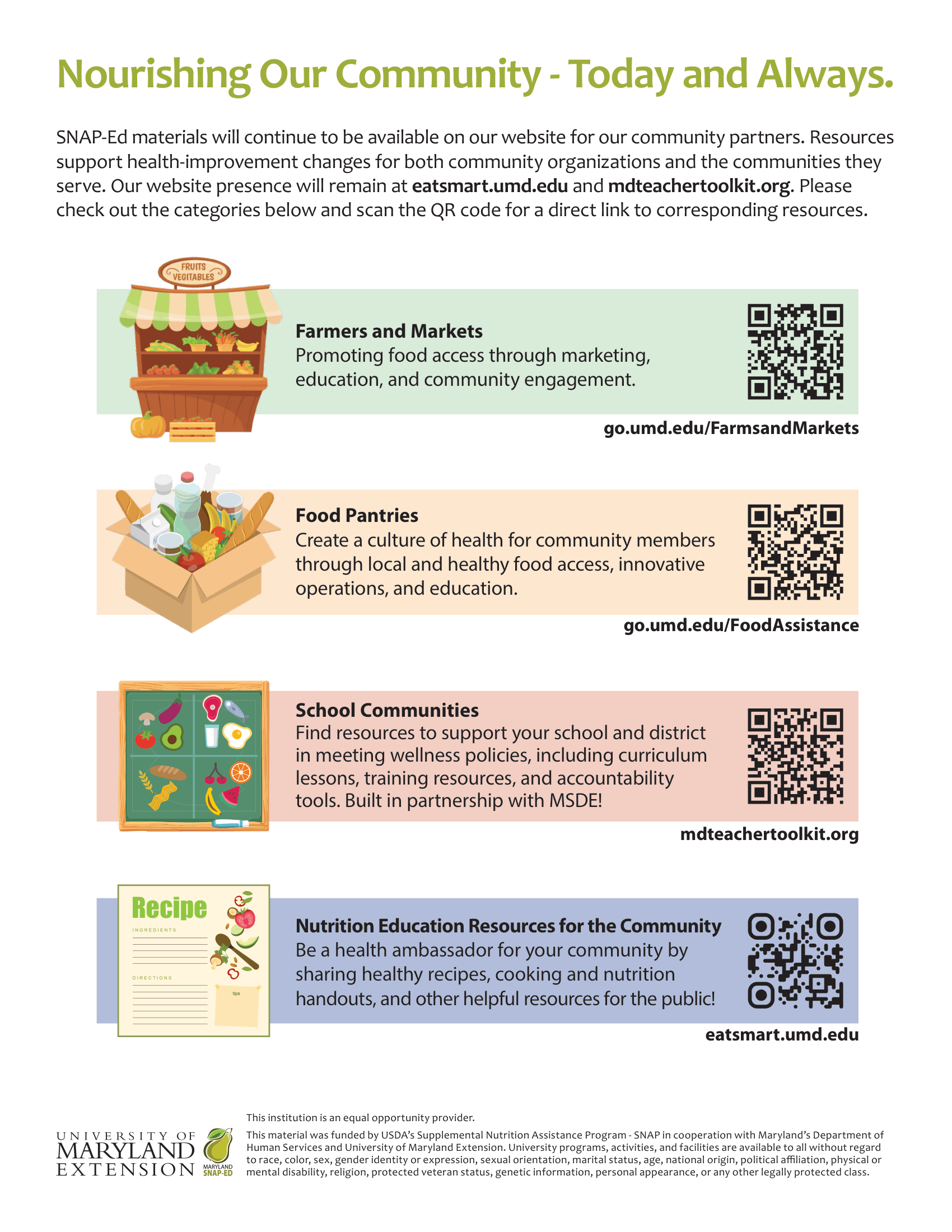
While SNAP-Ed programming has ended, many resources remain available. Recipes, curricula, and tools for teachers, farmers, and community organizations are available at eatsmart.umd.edu.
Additional Resource Links:
- Farms + Markets
- Food Assistance
- Finding Food
- Nutrition Education
- Maryland Expanded Food and Nutrition Education Program (EFNEP)
- Maryland Teacher Schoolkit
About SNAP-Ed
Maryland Supplemental Nutrition Assistance Program Education (SNAP-Ed), a 100% federally funded program within the University of Maryland Extension (UME), delivered comprehensive programs that promote healthier environments and improve the health and well-being of low-income families across the state. This program helped local Maryland families lead healthy lives by increasing food access, improving nutrition, and promoting physical activity. Through partnerships with state and community organizations across Maryland, SNAP-Ed provided comprehensive programs that included delivering nutrition education and cultivating policy, systems, and environmental-level changes.
After its funding was eliminated in HR1, SNAP-Ed operated a limited program and sunset its operations in FY26. Below is a summary of the program and an overview of its contributions to supporting the health and wellbeing of Marylanders. See the Outcome Report section for further details on program impacts and what will be lost.

SNAP-Ed programs introduced children and adults to healthy options and provided them with the skills and knowledge to make healthy choices. Further, SNAP-Ed worked with local partners to foster or strengthen policies, systems, and environments that support families’ healthy choices. SNAP-Ed worked directly with individual sites to effect change, while also establishing broader partnerships at the state, district, agency, or county level to broaden reach across multiple sites within a system. SNAP-Ed collaborated closely with over 770 partner organizations to design programs that meet the needs of clients where they live, work, and learn. Partners included community sites that serve families, such as youth education sites (schools, early education centers, and out-of-school programs) and food access sites (food pantries, farmers’ markets, and farm stands). Nutrition education programs available to youth and adult audiences consisted of hands-on activities, including gardening, food preparation, and tasting opportunities. SNAP-Ed complemented those educational programs with site- and system-level efforts aimed at creating a healthier environment by bringing more nutritious food and beverage options, as well as increased physical activity opportunities, resources, and marketing to participants.
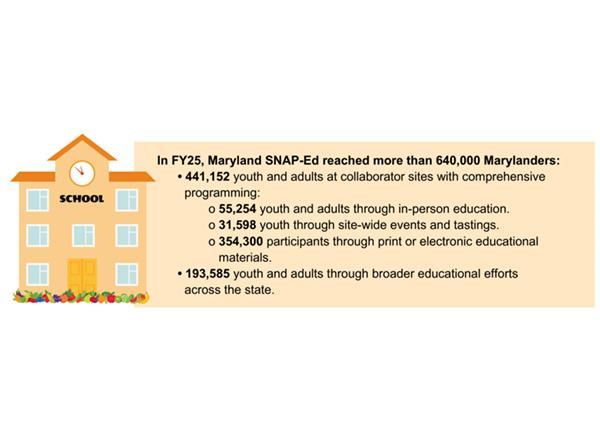
SNAP-Ed provided nutrition education programs at youth sites across Maryland, reaching children and their families. Programs worked to establish a healthier cafeteria environment, a greater connection to local food access, including farms, on-site gardens, and food pantries, as well as supporting teachers in providing access to water, healthy celebrations, and physical activity resources for the school community.
Comprehensive educational programming at food access sites helped farmers and food pantries make operational changes that supported shoppers’ healthy choices. SNAP-Ed worked with food pantry collaborators to increase procurement and promotion of healthy food options, including maximizing local produce donations, gardening efforts, and education and tasting of nutritious recipes. SNAP-Ed connected local farmers and farmers’ markets with low-income Marylanders to increase access to locally grown fruits and vegetables and maximize benefit redemption on healthy food options. SNAP-Ed supported farmers with marketing and promotion efforts, facilitating EBT acceptance at markets and farm stands, and fostering community connections.